The gods of these stories are not all gods. Some of them are licensed and some are not, and the difference is administrative.
Imperial China maintained a canon of sacrifices — a statutory list of the spirits entitled to state offerings. Entry meant funding, official visits at set seasons, and maintenance of the building. A shrine not on the canon was a 淫祠, an illicit shrine: not false, not powerless, simply unrecognised — and therefore, in principle, demolition waiting for a magistrate with the nerve.
This is the institution behind 《毀陳友諒廟》, and Yuan Mei gives you all of its moving parts in three hundred characters.
1. The list is consulted
A new magistrate arrives, pays the ritual visits required of him, and is told there is one more temple where he should burn incense. He goes. Three images in royal caps, seated in a row, very solemn.
問:「何神?」竟無知者 — “What god is this?” It turned out that nobody knew.
公歸搜志乘祀典,不載此神 — he went home and searched the local gazetteer and the canon of sacrifices. This god was not entered.
That is the whole argument, and it is not a religious argument. It is a records search. The cult has four centuries behind it, punctilious visits from every previous magistrate, and no entry anywhere in the documentation.
2. The clerk’s objection is about risk, not truth
The clerk does not claim the god is real. He claims the god is dangerous to offend:
神素號顯赫,歷任官參謁頗肅,毀之恐觸神怒,禍且不測
The god has long been called very potent. Every magistrate in the succession has paid his respects punctiliously. If you destroy it you may provoke his anger, and no one can say what will come of it.
This is the argument that keeps an unlicensed shrine standing for four hundred years: not belief, insurance. Every predecessor has signed off on the risk, so the risk has a precedent, and no individual official wants to be the one who broke the run.
3. Deregistration is done in person, in public
The magistrate’s answer is procedure of the most theatrical kind:
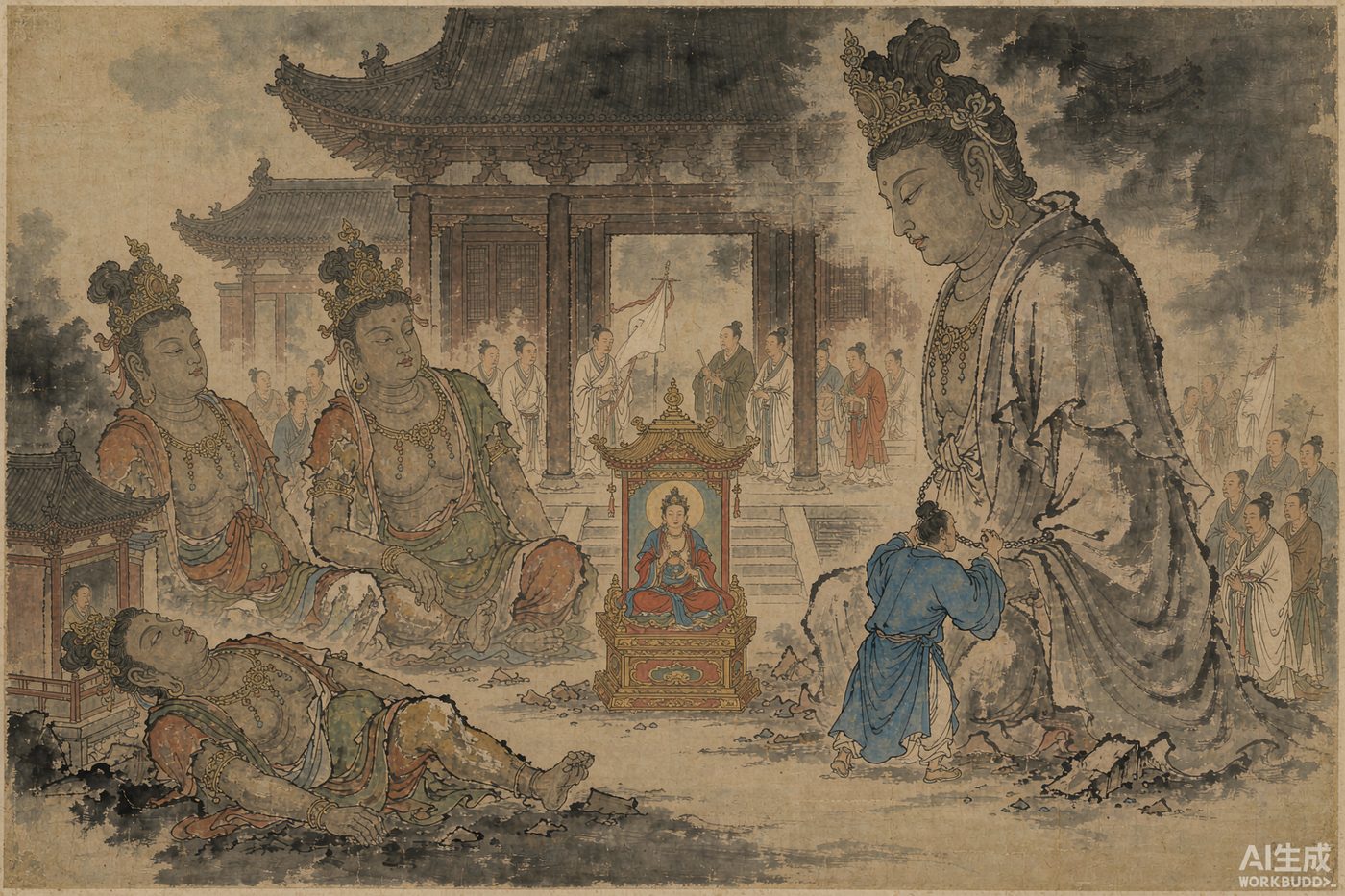
擇日朝吏民於廟,手鐵鎖系神頸曳之
He appointed a day, assembled the officials and the people at the temple, and with his own hands put an iron chain round the god’s neck and hauled on it.
Not delegated to runners, not done at night. In daylight, in front of the county, with his own hands — because the point is to be witnessed. The images go over; 新其屋宇,改奉關帝 — the building is refitted and Lord Guan installed. Note what happens to the premises: they are reused. The premises were never the problem.
4. The test is whether anything happens
久之,竟無他異
A long time passed, and there was not the slightest sign of anything.
This is the empirical half of the system, and the tales are full of it. Some gods push back — in 《五郎君》 a spirit storms the prison and burns the government offices and the state capitulates and grants him a cult. Some do not, and the one that does not is revealed as having had nothing but reputation. 竟無他異 is the finding of an experiment.
5. Somebody always kept the master copy
Still uneasy, the magistrate does something remarkable: he writes to the Celestial Masters at Longhushan and asks who it was. The reply is the best surviving document of this institution:
神系元末偽漢王陳友諒弟兄三人,兵敗,死鄱陽湖,部曲散去,為立廟荊州。建於元至正某年,毀於國朝雍正某年趙大夫之手,合享血食四百年。
The god is Chen Youliang, the false prince of Han at the close of the Yuan, with his two brothers. Their army was broken and they died at Poyang Lake, and their scattered soldiery built a temple for them at Jingzhou. Erected in such and such a year of the Zhizheng era. Destroyed in such and such a year of the Yongzheng era of the present dynasty, by the hand of Counsellor Zhao. Four hundred years of sacrificial offerings in all.
A county cannot identify a god in its own temple; a hereditary Daoist institution four hundred miles away can, down to the founding year and the name of the man who pulled it down. The file is closed with a total: four hundred years of sacrifice.
6. The three ways a shrine loses its licence
The collection preserves all three.
Never had one. Chen Youliang’s temple, above.
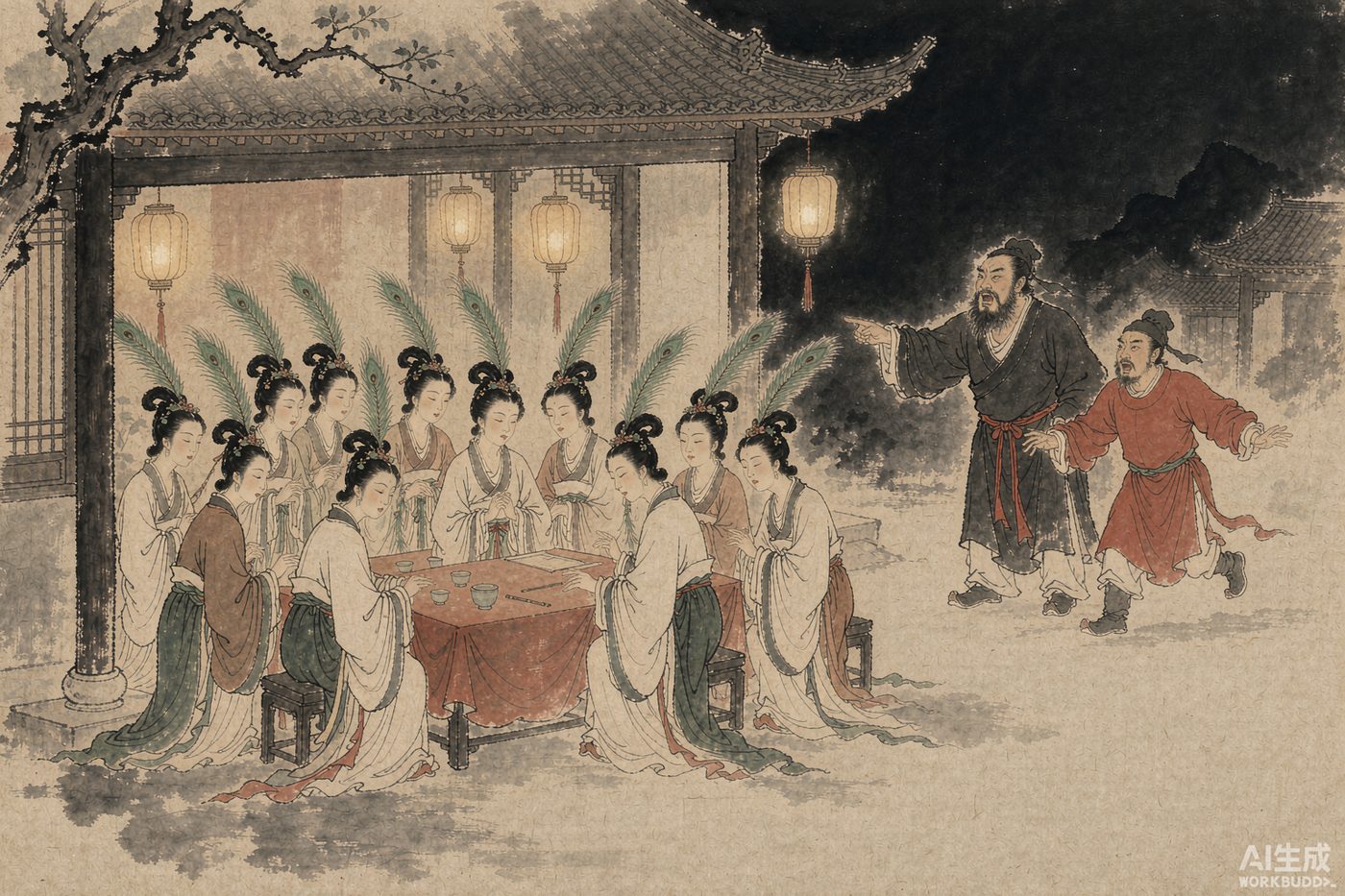
Had one by mistake. In 《十姨廟》 a shrine to the poet Du Shiyi is rebuilt by illiterate villagers as a shrine to Ten Aunts, because the title 拾遺 sounds like 十姨. The error stands until scholars who can read arrive.
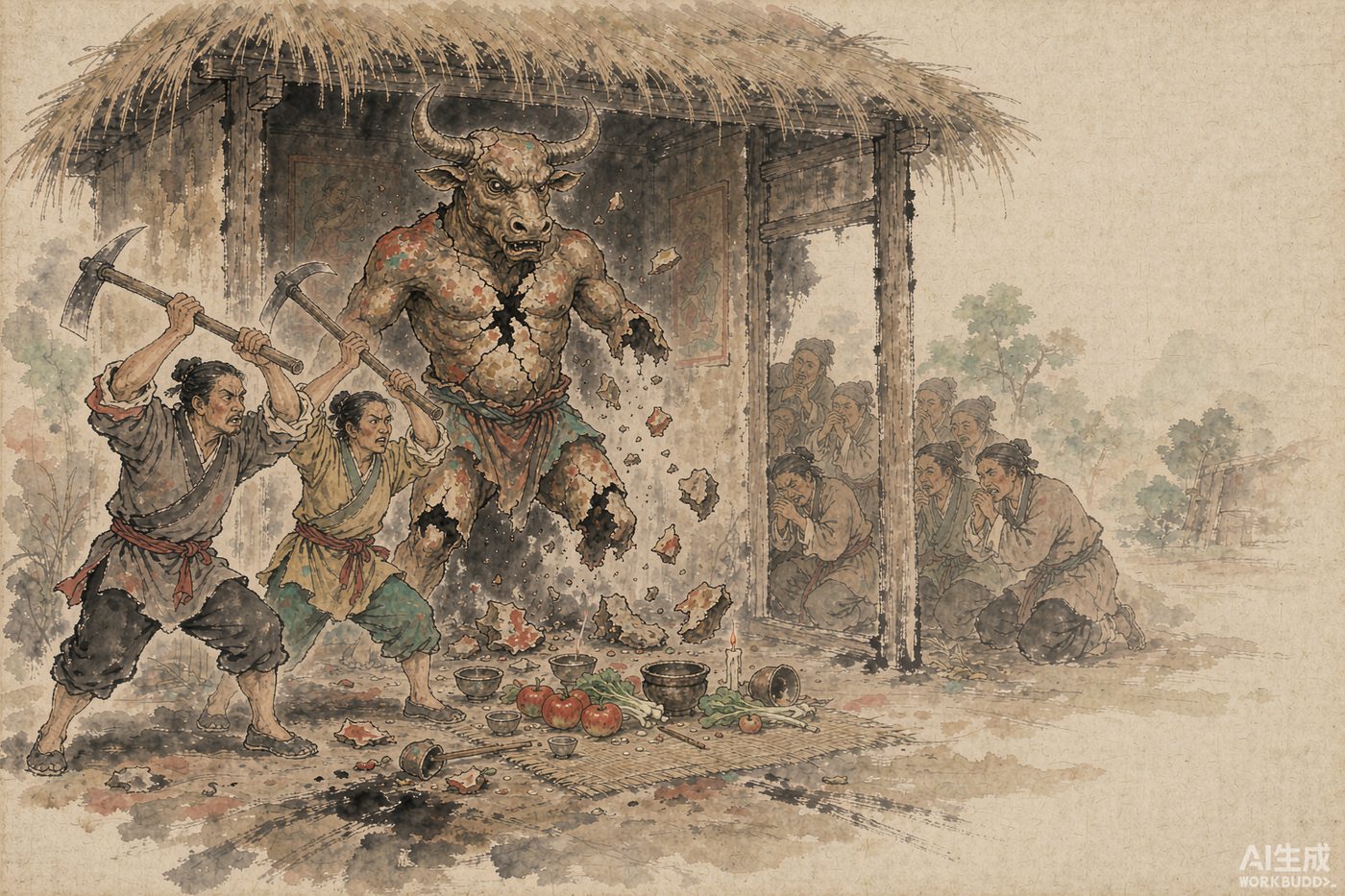
Forfeited it. In 《牛頭大王》 a demon temple runs for years and delivers — the epidemic clears, prayers for sons are answered — and then a father whose son dies after an auspicious divination takes a hoe to the statue. Performance is audited, and a cult can fail an audit.
7. Why this matters for a story
The canon turns “is there a god here?” from a metaphysical question into a records question, which is far more useful. Ask instead:
- Is this shrine on the canon, and who put it there?
- Who has stopped visiting, and when?
- Does the local register still have the god’s name, or does only the distant archive?
- If a magistrate chains the statue tomorrow, will anything happen — and does anybody in the county actually believe it will?
A licensed god and an unlicensed god are two different creatures with two different plots available to them. In these tales the paperwork is not a detail around the religion. It is the religion, and the gods who understand that are the ones who survive.
For the other half of this machinery — what a writ to a god looks like, and how you get one — see Filing With Heaven. For how gods are appointed and promoted in the first place, see How a God Gets a Post.