Chinese religion is usually described by its peaks — the Jade Emperor, the Queen Mother of the West, Guan Yu, Bao Zheng. But the tradition actually runs on a very large number of very small gods, and they are the ones who turn up in the stories.
What distinguishes them is not size of power but specificity of job. A small god has a post, and the post is a place: a door, a hearth, a bridge, a patch of ground, the ceiling of one room. They are the infrastructure of the sacred, and they behave accordingly — as employees, not as ideals.
The household staff
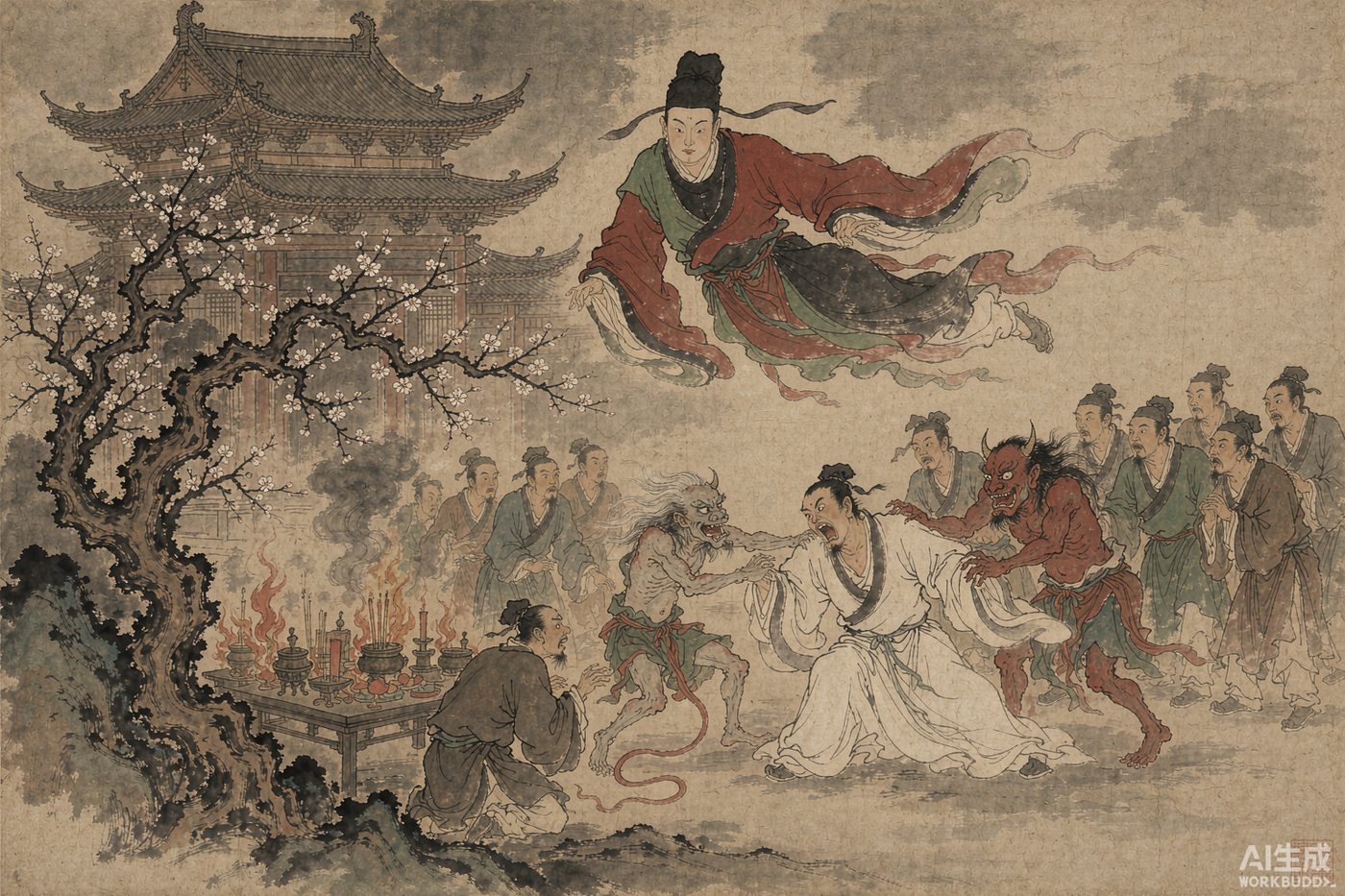
- Door gods (门神) — pasted in pairs on the two leaves of a door at New Year, originally generals who stood watch over a sleeping emperor. Their function is exclusion. In 痴鬼恋妻 the door god stops a dead husband at his wife’s second wedding and only lets him in when he knocks his head on the ground and begs. This is not cruelty; it is the job description.
- The god of the ceiling (中溜神) — the least-known household deity in Chinese religion, whose job is to police the interior. In the same story he drives the ghost out of the bridal chamber once the candle is out. Yuan Mei names him in passing, which is one of the few places the role is described at all.
- The god of the hearth (灶神) — who reports on the household to Heaven once a year, which is why his paper image is burned and renewed at New Year. The mechanism is surveillance, and everyone in the house knows it.
The roadside staff
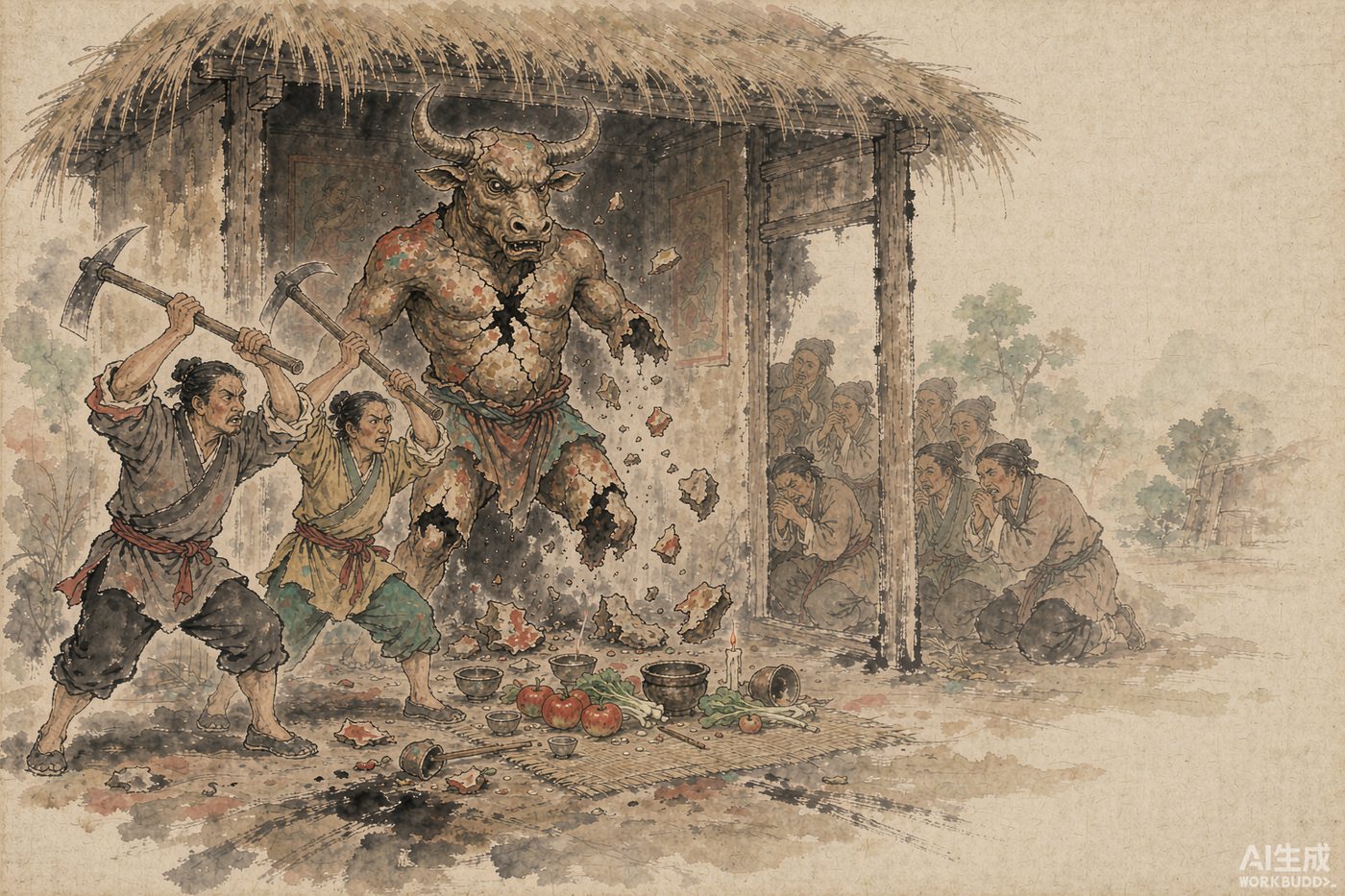
- The Earth God (土地神) — the lowest rank in the celestial bureaucracy, with jurisdiction over one piece of ground. Every village has a shrine. In 平阳令 the Earth God arrives in a locked loft, flatters a cruel magistrate’s vanity, promises help, and leaves; Yuan Mei never explains why, and the story is colder for it.
- The bridge god (桥神) — jurisdiction over one crossing. In 城隍杀鬼不许为聻 a ghost is prevented from crossing a bridge and has to ride over in a nightsoil man’s bucket. Small gods are the reason a town is not a flat space.
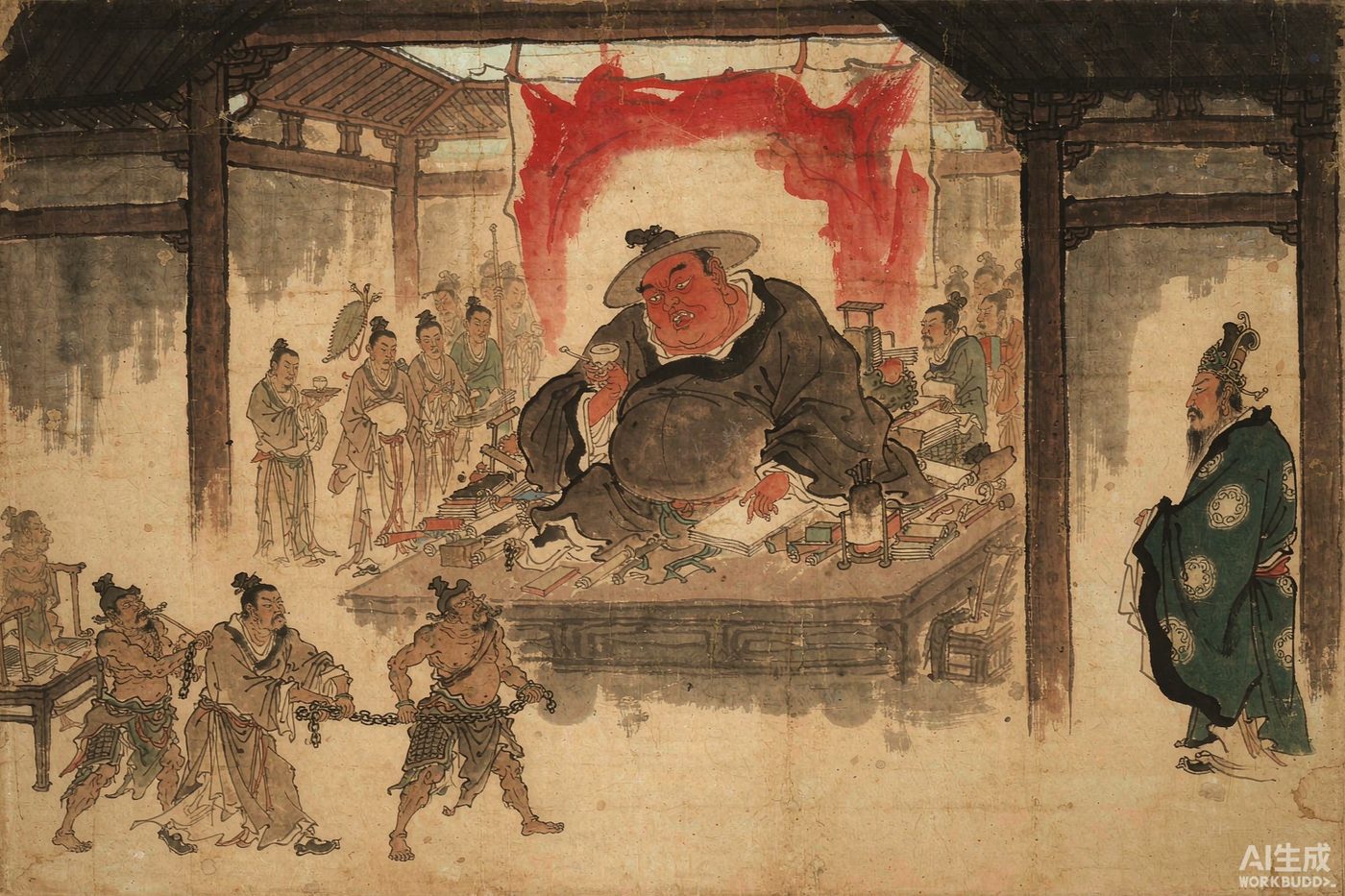
- The City God (城隍) — the largest of the small gods, a magistrate of one city, with a yamen, clerks, cangues and a court. He is the interface between the living and the dead for a whole urban population, and in 酆都知县 his counterpart Bao Zheng endorses the cancellation of a tax paid to the underworld.
The ones who are not gods at all
Two figures in the collection look like deities and are not, and the distinction matters.
Lady Zibuyu (子不语娘娘) is a wooden doll, an inch long, invisible and audible, worshipped in an upper storey and consulted on every business decision. She is a monster — and she is the best adviser the household ever had. When the family’s good fortune reaches exactly three thousand ounces she leaves.
The ghost who seizes surplus (掠剩鬼) is a damned soul with a job: the profits of officials and merchants all have a fixed quota, and whatever is gained above it he claws back. He is not a punisher. He is an accountant.
Why this matters for the universe
The practical consequence of a world staffed by small gods is that every boundary is policed and every threshold has an employee. A ghost cannot simply walk anywhere; it is stopped at doors, at bridges, at ceilings, at the edge of a patch of sunlight.
Which means the hero of a story in this universe does not need a great weapon. He needs to know which small god has jurisdiction over the place he is standing, and to file with that one.