The one thing most readers outside China know about the Chinese afterlife is the forgetting drink. Cross the Bridge of Helplessness, and an old woman hands you a bowl that washes the previous life away before you are born again. It is usually told as a mercy: oblivion as kindness, the soft eraser of sorrow.
That telling misses the interesting part. In the classical stories the forgetting brew is not a mystical mercy at all. It is a bureaucratic step — a measured dose drawn from a stocked dispensary, administered as routine as a stamp on a form. The tradition treats forgetting as logistics, and the logistics are stranger and more specific than the legend suggests.
1. The standard account: one bridge, one bowl
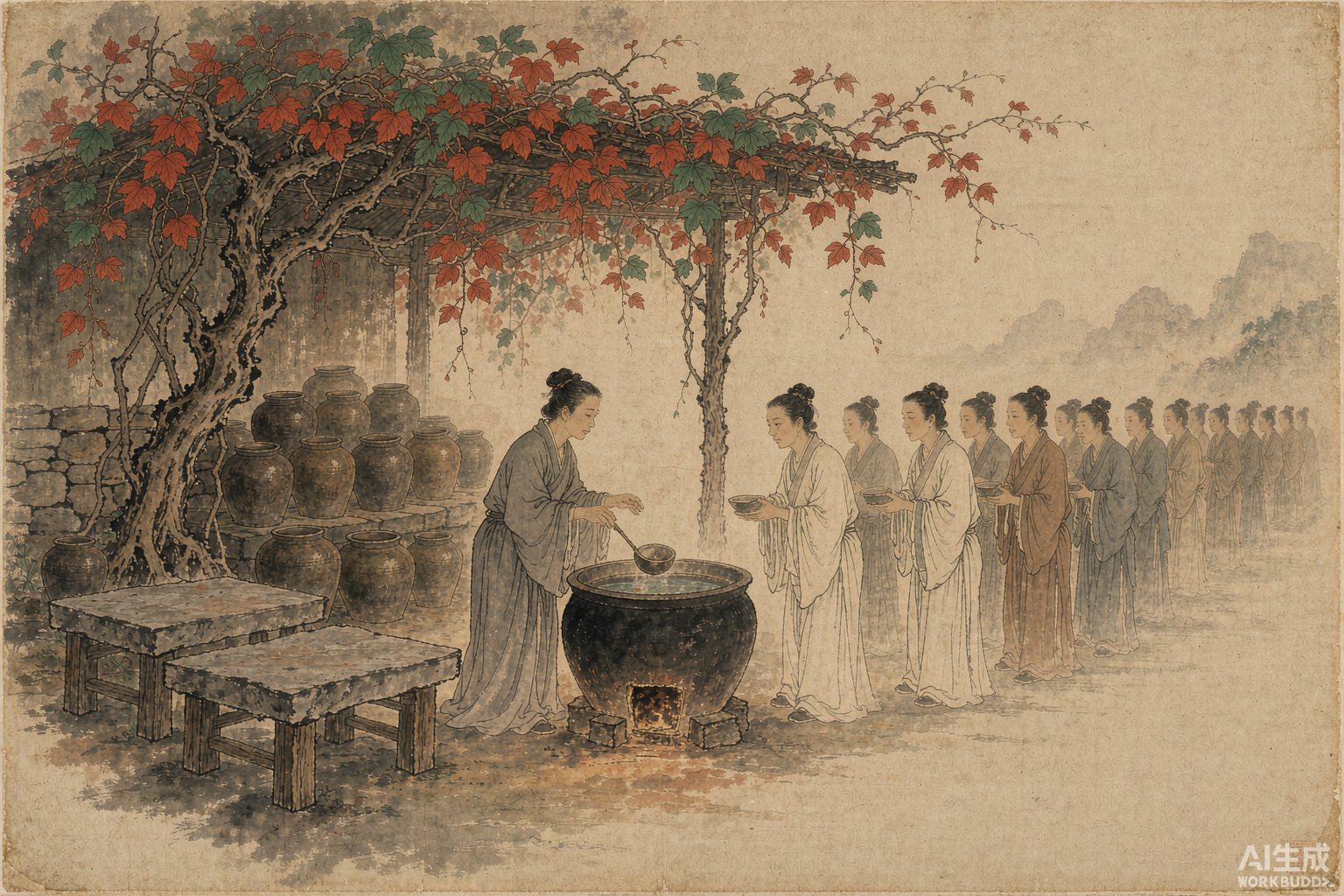
In the mainstream picture the soul reaches Fengdu, the Dark Capital, is judged from the ledger of its deeds, and then walks out across the Bridge of Helplessness. On the far side Meng Po — the Old Lady Meng — serves the broth of forgetfulness. Drink, and the life just lived, and the judgment just received, are wiped clean. You are reborn ignorant, and the wheel turns.
The point of the brew is precisely to make reincarnation non-traumatic. A soul that remembered every previous life would arrive freighted with grief, debts, and grudges too heavy to live with. Oblivion is the lubricant of the cycle. This is why the Chinese cosmos has no eternal punishment by memory, the way a Western hell torments by recall — here memory is the thing removed so the wheel can keep spinning.
2. The deeper account: five draughts, not one
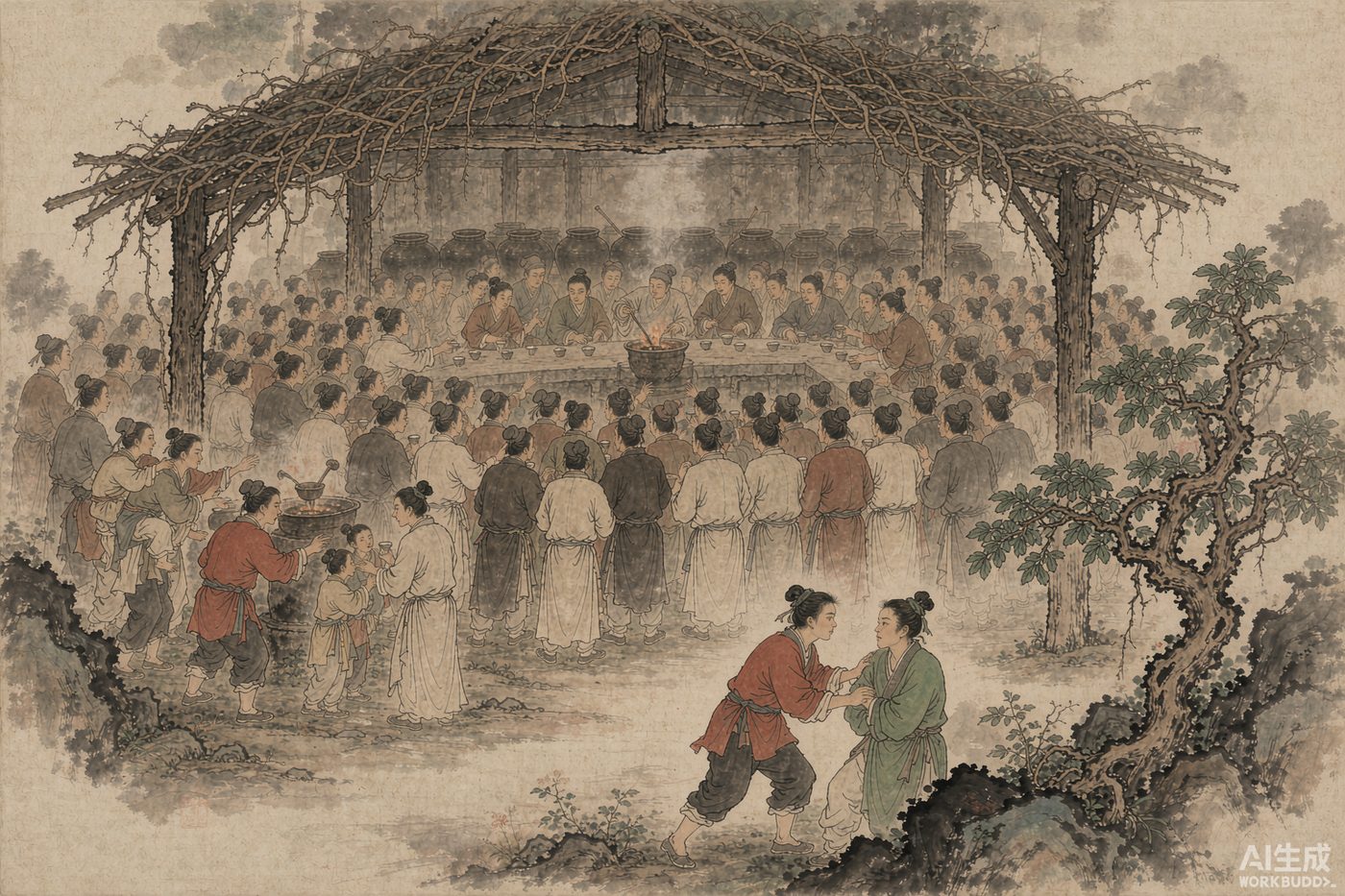
A late classical tale, 《孟婆庄》 (Meng Po’s Village, from the Xieduo collection), pulls the curtain back further. Meng Po is not a lone crone with a single cauldron. She runs a dispensary at Fengdu: a shelter of pulled vines, stone tables, and rows of stone jars against the wall, with a furnace and a ladle. And she does not stock one brew. She stocks five:
- 迷 (confusion) — the standard erasing draught
- 长 (longevity) — for those who are to live long
- 调 (concord) — for those who are to be harmonious
- 乱 (chaos) — for those who are to be troubled
- 资 (ingot) — for those who are to be wealthy
Each soul is given the mixture that suits its next station. A forgetful person in this world is, literally, someone who got too much of the 迷 draught. Forgetting is not a single recipe applied to all; it is a formulary, dosed to the destination. The dispensary is the cosmos’s pharmacy, and rebirth is the prescription.
3. The face office: beauty and fortune are exchangeable
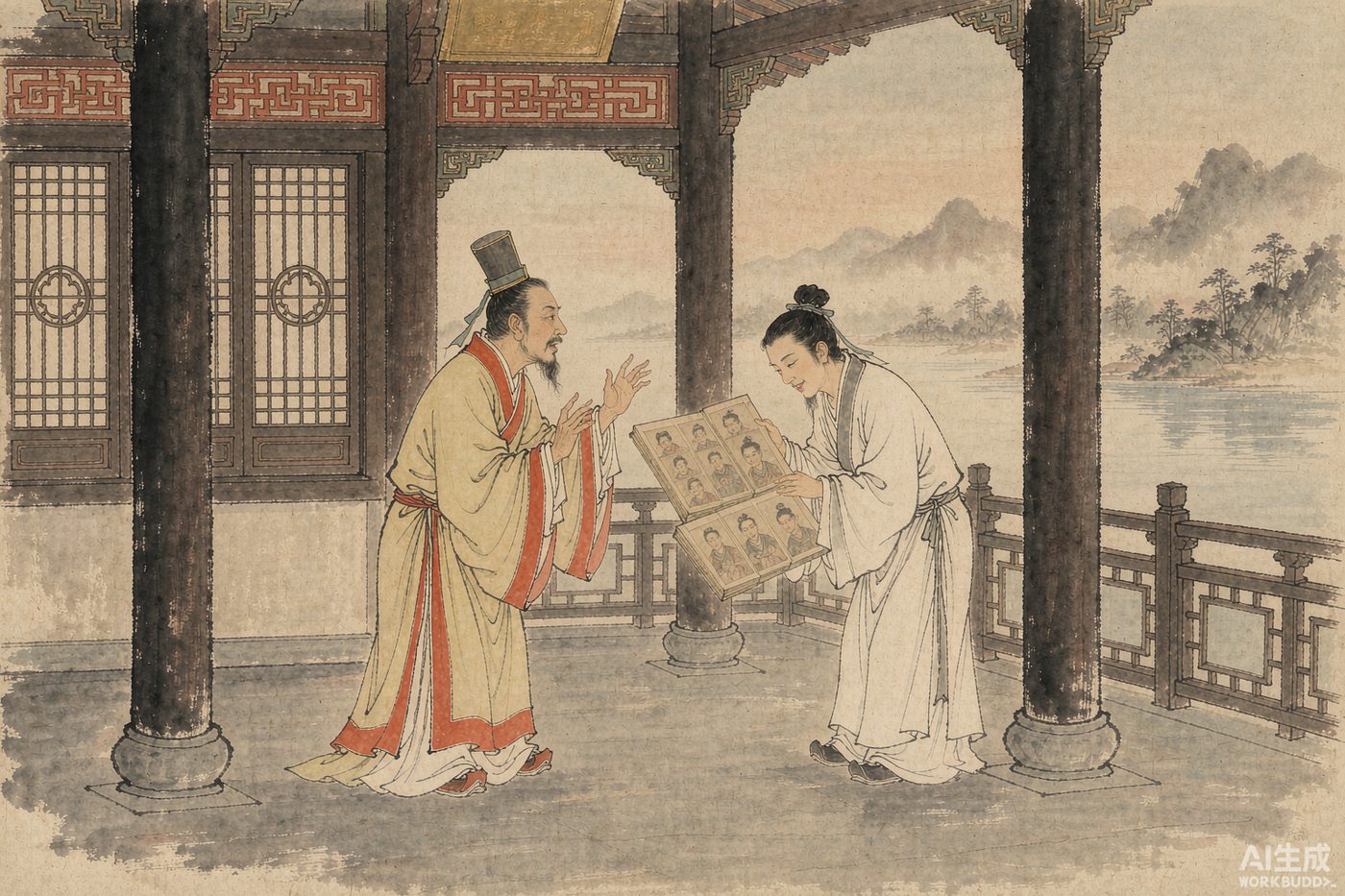
The same collection gives the mechanism a companion office. In 《面目轮回》 (The Wheel of Faces), the Wheel-Turning King keeps draughtsmen who paint the face you will be born with. They hold two registers: the ugly faces of the eminent, and the handsome faces of the poor. Beauty and fortune are not random and are not coupled — they are deliberately cross-allocated at a stated rate. The sorrowful beautiful girl was wealthy in a past life; the plain scholar was noble. The world looks unfair because, in this account, it was deliberated, dosed, and painted before anyone arrived.
Put the two offices together — the forgetting dispensary and the face-painting registry — and you have a complete pre-natal bureaucracy: one department decides what you will remember, another decides what you will look like, and both answer to the Wheel. Rebirth is paperwork.
4. Why ghosts remember, and why that is the whole point
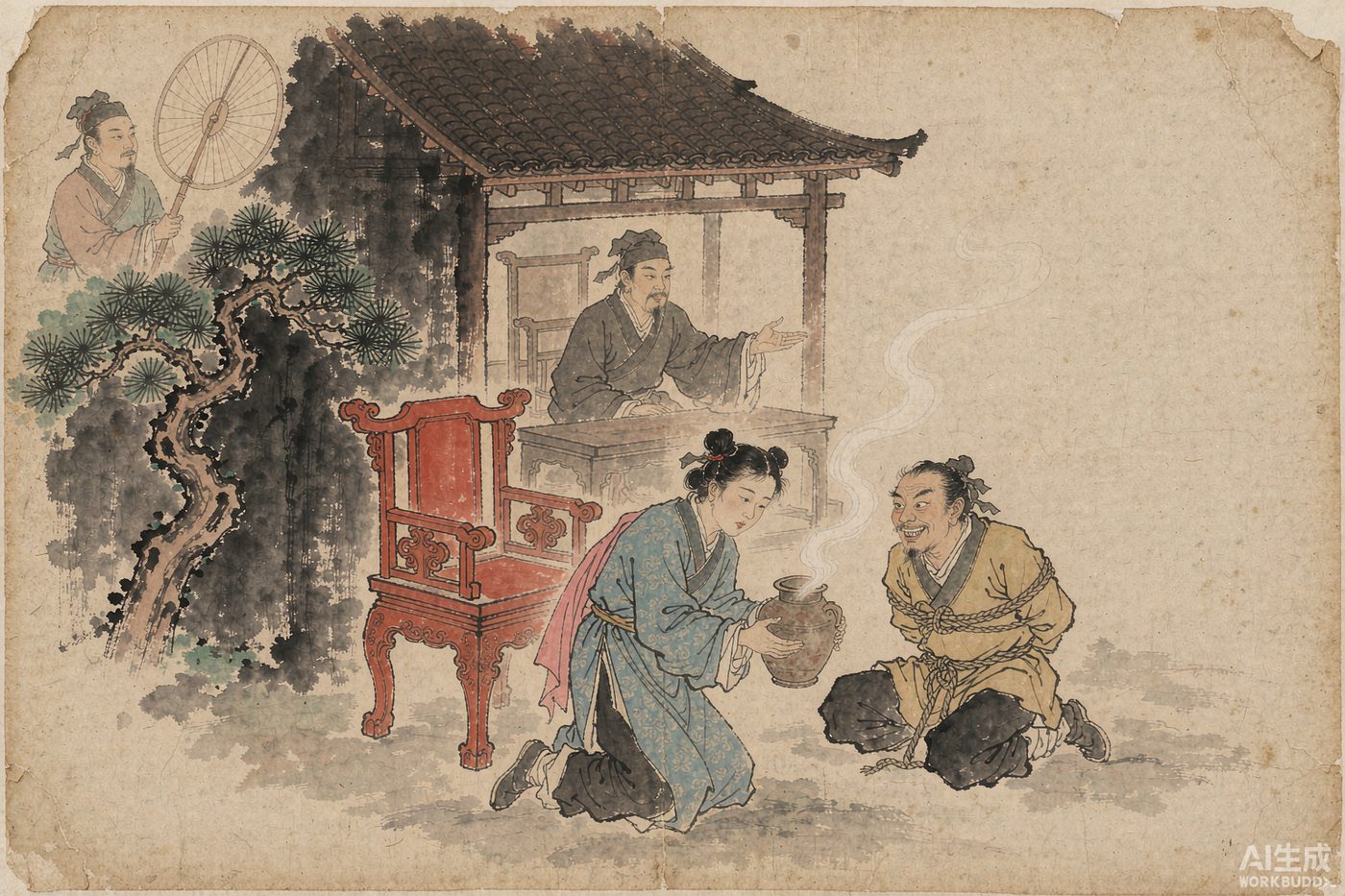
Here is the hinge that makes the system coherent. A ghost in these stories is, almost by definition, a soul that did not drink. It skipped the dispensary — because it died violently, because its body was never buried, because a debt was never settled, because a grief was too strong to wash away. Its unfinished business is the memory the brew was meant to erase.
So the ghost is not a different kind of being from the reborn. It is the same soul at an earlier stage of processing — the one that walked up to the bridge and refused the bowl, or never made it there. This is why so many ghost stories are solved by paperwork: a proper burial, a repaid debt, a righted wrong. The underworld does not want to punish the ghost. It wants to process it. The brew is the last step, and the ghost is simply not there yet.
5. The leak
The system is not perfect. Some souls come back with fragments — the child who remembers a past life, the stranger who is recognized by a lover across centuries, the person born with a terror they cannot name. These leakages are the cracks the stories crawl through. A formulary administered by an understaffed otherworldly civil service will occasionally under-dose, and the remembered sliver is exactly what lets a tale begin.
That is the quiet genius of the forgetting brew: it is not magic, it is administration, and like all administration it is fallible, dosed, and occasionally appealed.