It is tempting to read the Chinese pantheon as a set of beings who simply are divine. The texts do not support it. In zhiguai and in the two great Song-Qing collections, divinity behaves exactly like an office in the imperial bureaucracy: it is granted, documented, transferred, audited, and revoked.
This is the single most useful thing to understand about the universe, because it means every god has a superior and a job description.
Appointment
The standard form of appointment is a document.
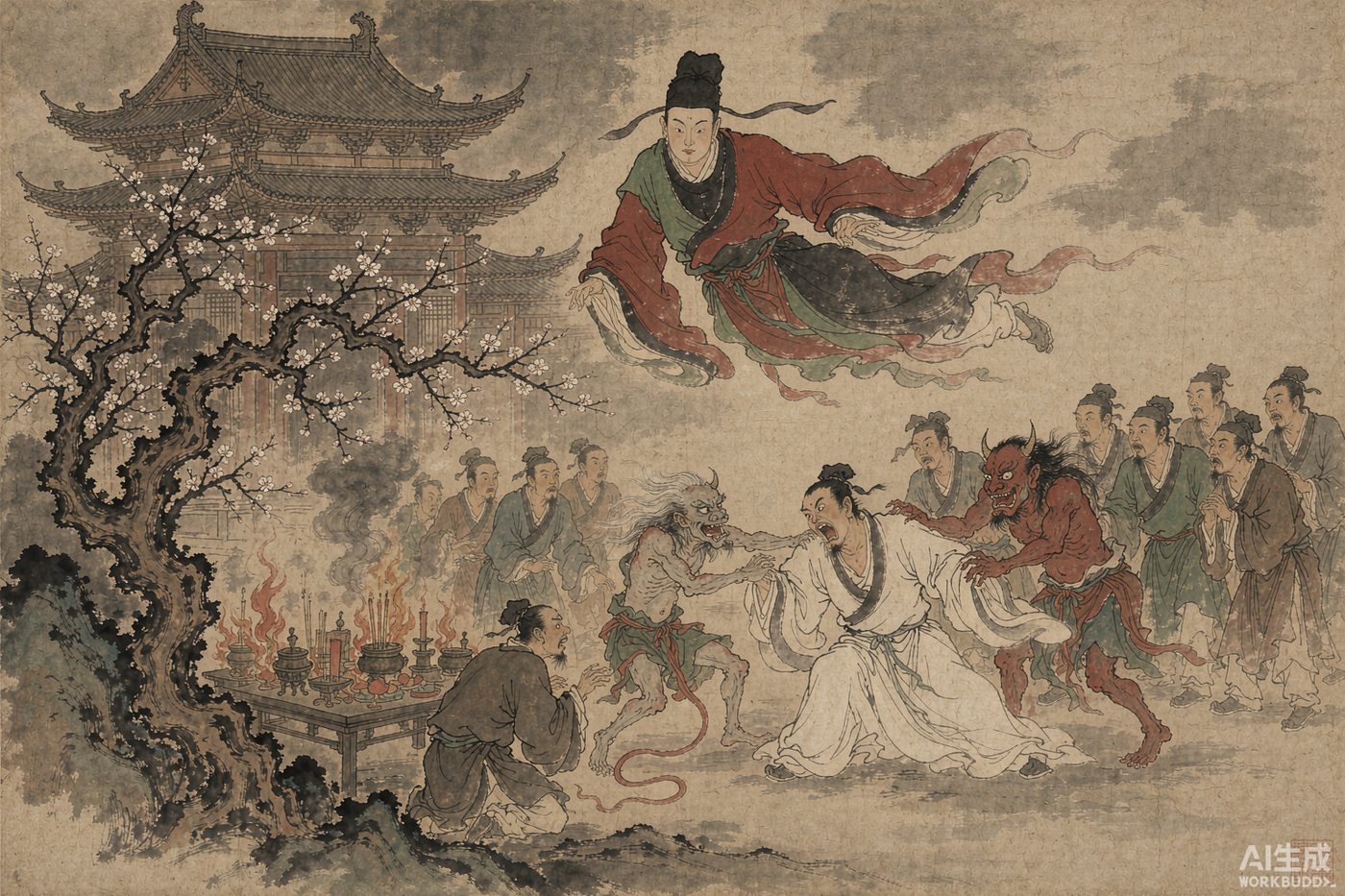
- By celestial writ. In 《曾尚書》 a dead minister receives 天符 appointing him Earth God of a mountain shrine. He then has to meet the handover gifts — 私觐礼 — that the whole yamen of officials owes, and his first act is to ask his sons for several thousand sheets of dyed paper to burn.
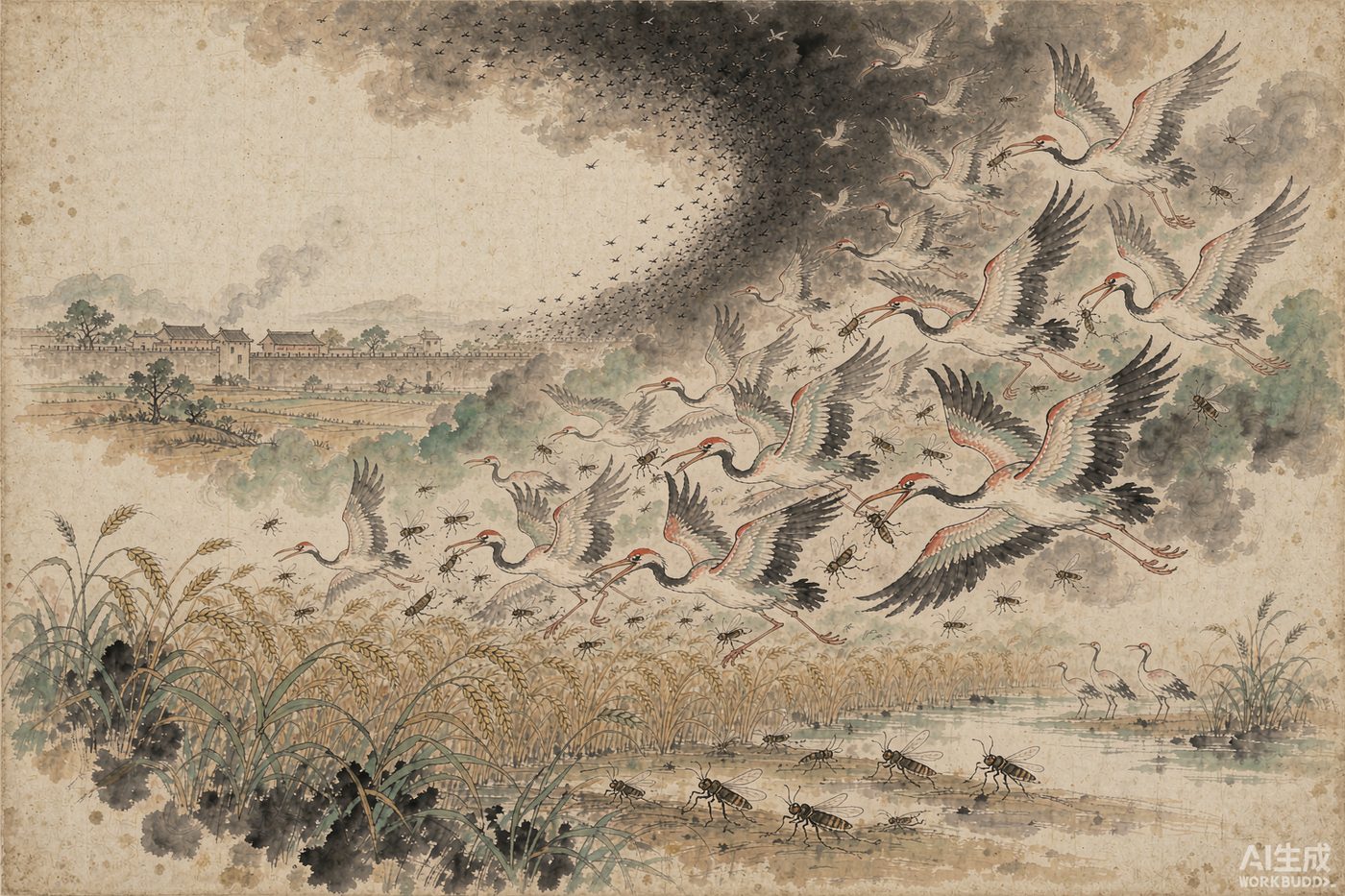
- By imperial edict. In 《護國大將軍》 a water bird that clears a locust plague is enfeoffed Protector-General of the State by an edict from the court. The bird did not ask; the memorial was filed by local officials and the throne conferred the rank.
- Posthumously, by petition. In 《河朔漁叟》 a prefect wants a military title memorialised for the old fisherman who killed the flood dragon. The fisherman refuses the title and the gold and dies on the spot, and the shrine then invents a genealogy for him: General Four, son of the Dragon Girl Third Sister.
Note what these have in common: the appointment follows the function, and it is recorded on paper.
Promotion
Guan Yu’s career is the case study.
In 《关神断狱》 he explains that he was promoted three grades for weighing consequences correctly — for preferring a reputation for inaccuracy to taking a life. And in the same breath he explains the deputising system: there is a shrine of Lord Guan in every village in the empire and only one Lord Guan, so Heaven appoints a locally-upright ghost to run each shrine while the real Guan Yu stands at the left hand of God.
So the same deity can be simultaneously:
- the real thing, promoted and absent,
- a job title held by different ghosts in different places,
- and a brand under which local administration is conducted.
Deputising
The 掠剩鬼 in 《掠剩鬼》 is not a god at all but a damned soul with an assignment: the profits of officials and merchants all have a fixed quota, and whatever is gained above it he claws back. He says plainly that there are many of his kind in the world of men, and points them out in the street.
So divinity here is a posting that can be given to the dead as punishment or as employment, and it comes with a remit, a quota and an address.
Impeachment
In 《城隍神酗酒》 a City God is drunk on duty and beats an innocent man. The correction does not come from within the underworld; it comes from Guan Yu, one rank up, who writes a formal judgement: the City God to be impeached and punished, the joker’s span cut short, the negligent magistrate fined three months’ salary, and the victim compensated with a next life and a degree at twenty.
Afterwards the god’s clay statue falls over for no reason. The temple is audited.
Dismissal
The most important case, because it is the only one where a god is removed by ordinary people.
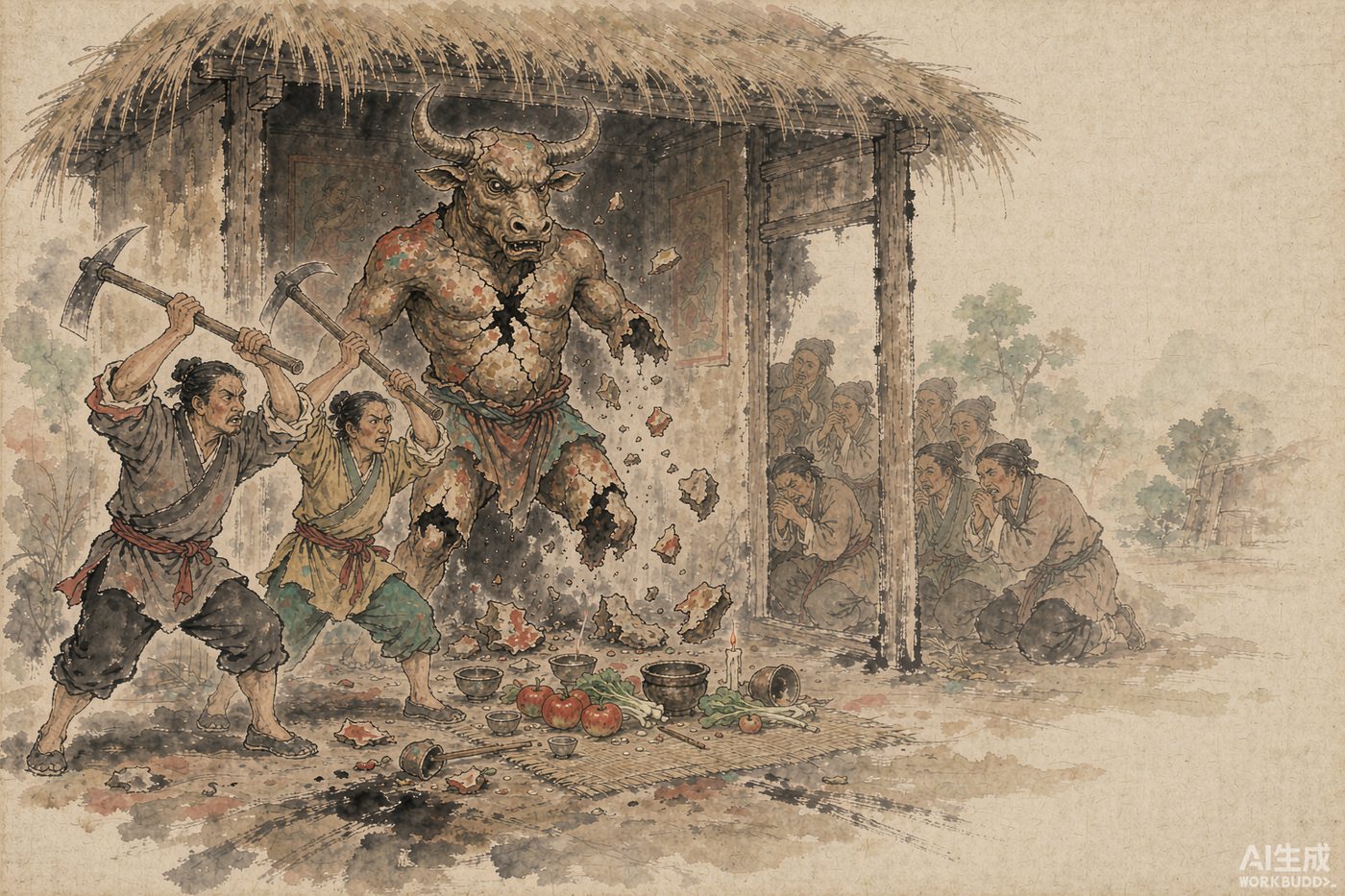
In 《牛头大王》 a demon demands blood food in a dream, the village builds him a temple, and he delivers: the epidemic clears, prayers for sons work, and the cult runs for years. Then a father’s boy dies after an auspicious divination, and the father takes a hoe and smashes the statue to pieces and destroys the temple.
The whole village expects a dreadful retribution. There is none. Afterwards it is silent, and nobody knows where King Ox-Head went.
A god who fails once on a countable promise has no authority. The contract is the source of the power, and the contract is enforceable from below.
What this means for a story
If divinity is a career, then the hero of a story in this universe does not need a greater power. He needs:
- To identify which office has jurisdiction over his problem — bridge, door, ceiling, earth, city, or sea.
- To check whether the incumbent is actually in post — because half the shrines are run by deputies, and some by the wrong god entirely.
- To find the paperwork — the writ, the edict, the confession, the register entry.
- And to know that the office can be vacated, by Heaven, by a superior god, or by a farmer with a hoe.
Which is why the most effective characters in these collections are not the strongest. They are the ones who know which desk to go to.