Zhang Hong, a licentiate of Hangzhou, died of dysentery in the summer month. His family was poor and had no coffin, so they went to beg help from his uncle. The uncle lived at Haining, and the journey there and back took five days — and on the fifth day Hong revived.
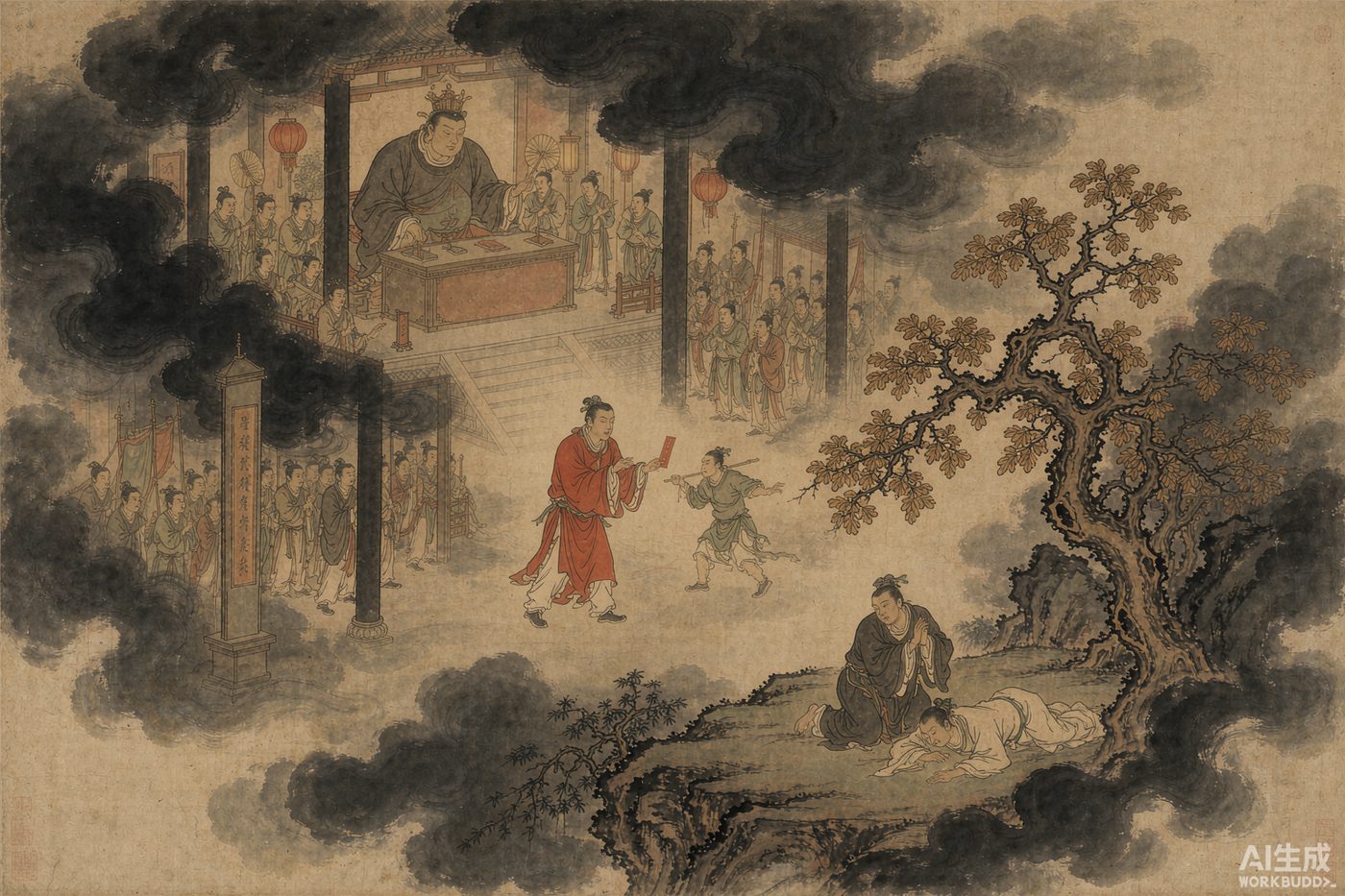
He said he had been taken to God’s court to stand trial, and was already entered in the death register. Then God said: “He is a licentiate,” and sent him under the escort of an officer to the Confucian school.
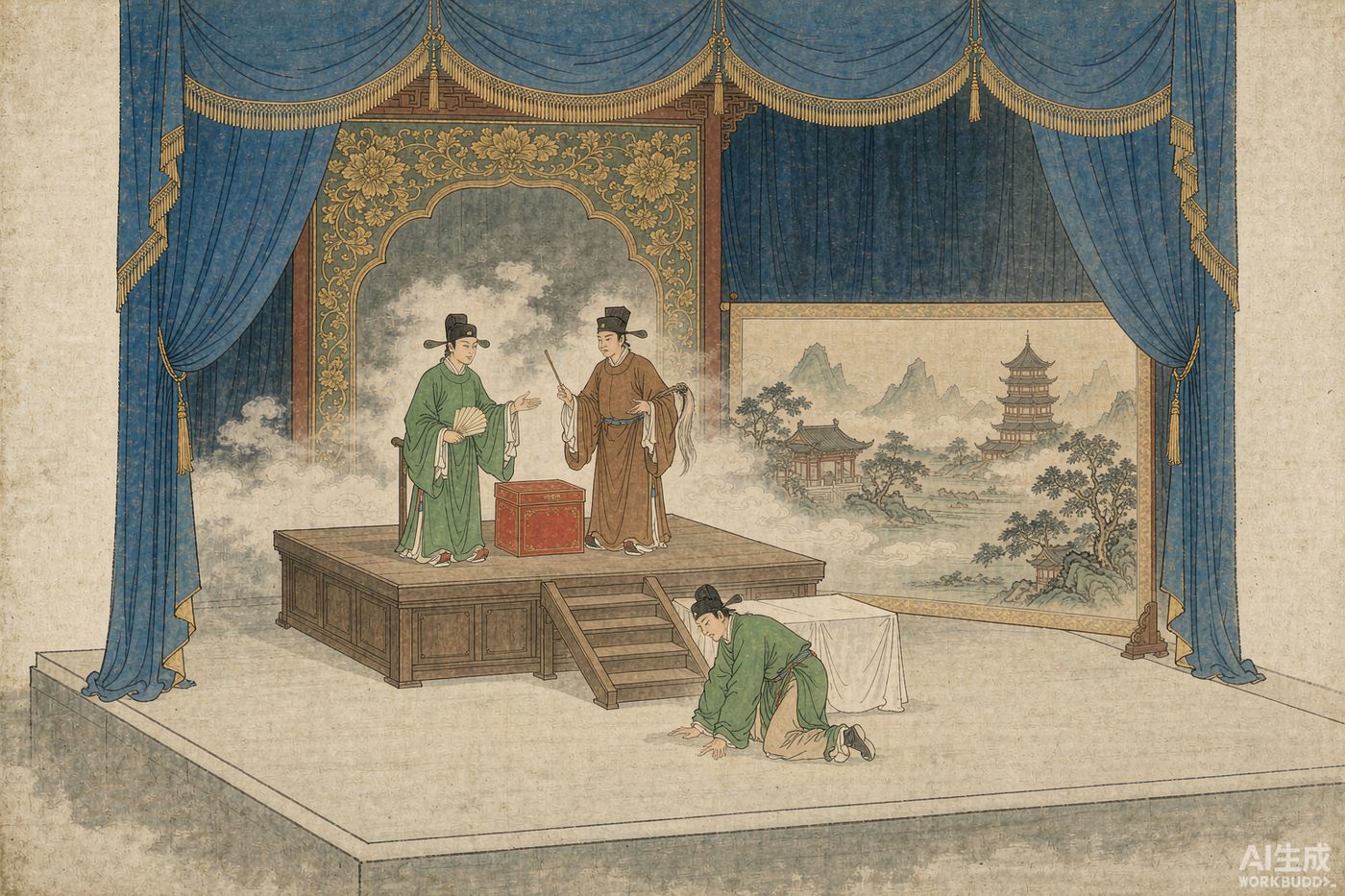
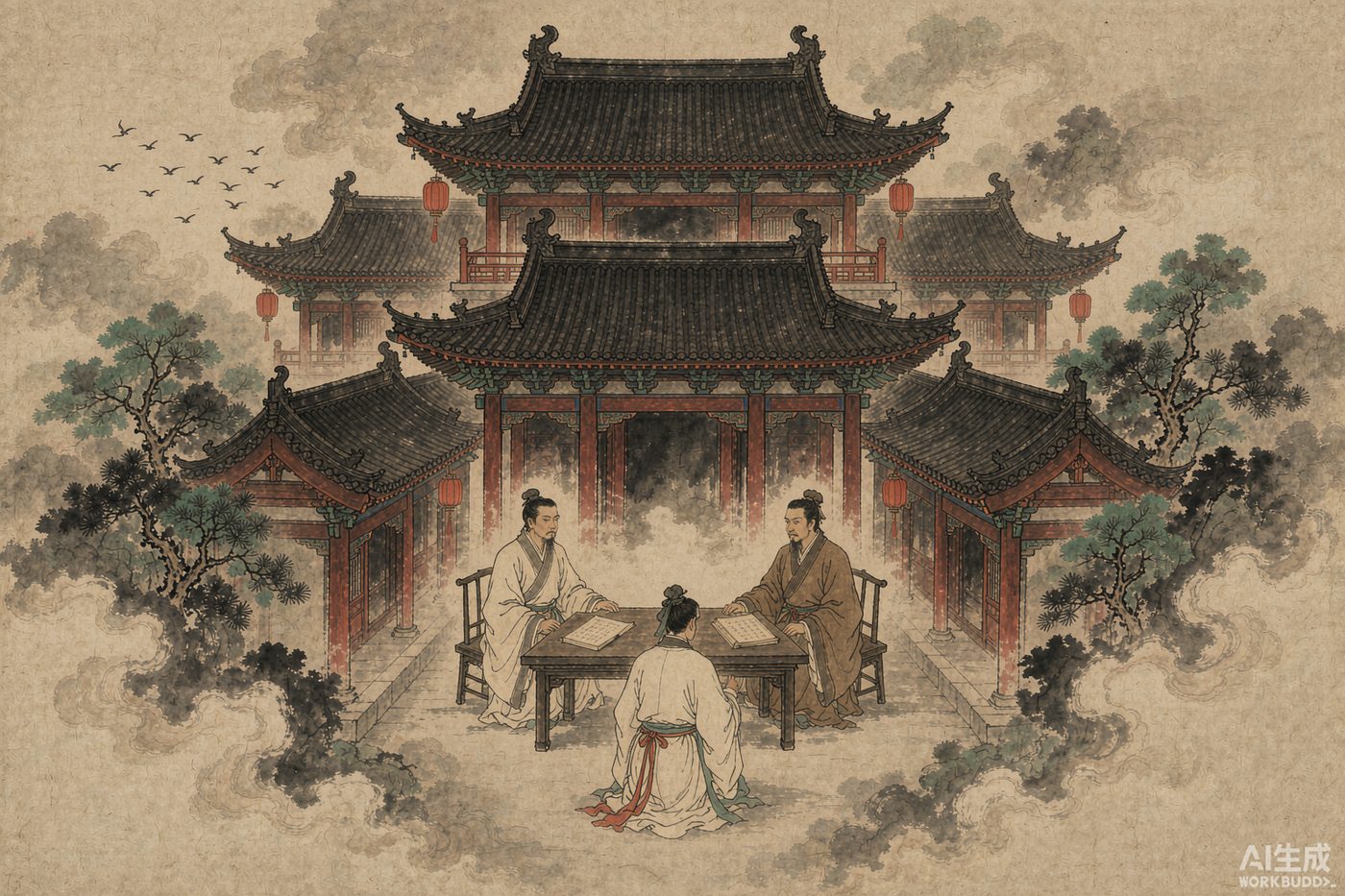
There they brought out two of the ancient masters, who said: “This man’s case is already decided on file, but it must have the decision of the two of us.” One master said: “The crime is light but the intent is heavy. He deserves death.” The other said: “Even so, there is room for pity. He was not the ringleader. Commute the sentence one degree, and if he mends his ways within five years, let that be the end of it. His father was an official in Lingnan and did good to the people — take him first to see his father.”
So the original escort took him to the shrine of meritorious officials in Lingnan to see his father. The father cried out: “He is no son of mine!” and refused to receive him.
His mother came out from the side room, weeping. “Your father no longer acknowledges you,” she said. “You must go back quickly and reform. But you have been dead a long time, and I fear your corpse has spoiled. If you can return, return; if not, come back to God’s court and they will dispose of the matter there. On no account borrow another man’s body!”
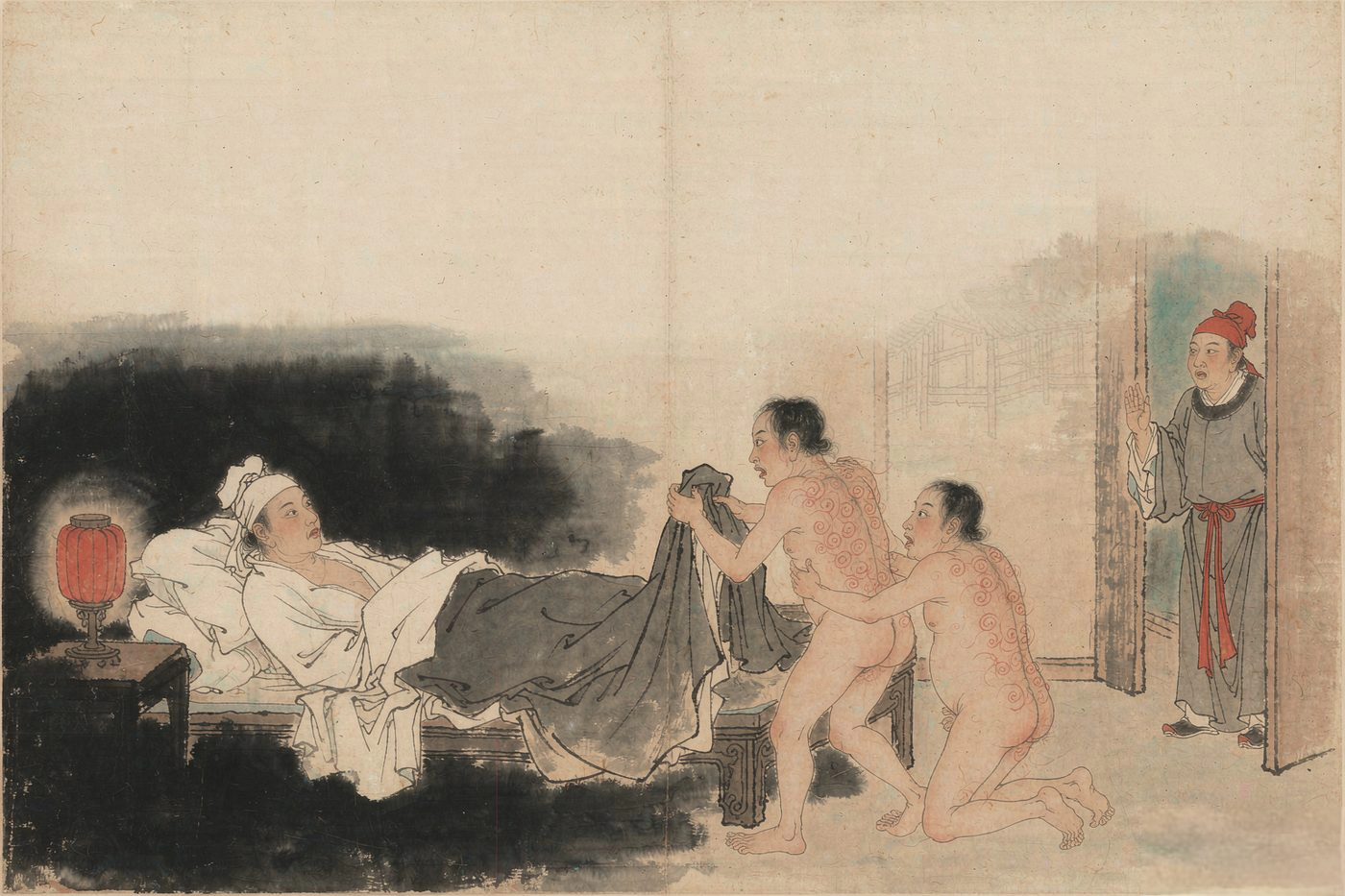
She sent a ghost servant home with him to see whether the family would acknowledge him. When they reached the house, they found the corpse still lying there unspoiled, with a lamp and a bowl of rice beside it. The escort pushed Hong down onto the corpse, and the corpse stirred at once. His wife and children wept and stared in alarm. The ghost servant called out: “They acknowledge him! We can report to the mistress!” — and departed.
Hong was alive again. People crowded round to ask him about the hidden business of his trial, but he would not speak of it. Then, before the five years were out, Hong died in earnest.
His cousin, a man named Gang who was a friend of the scholar Mao Qiling, told Mao the truth of it.
“When the armies of the Great Qing came down on Hangzhou, the Prince of Lu went north, and the women of his palace were hidden in the house of the Meng family at Tangxi. My brother was lured by a certain Wang into a plan to inform on them for the reward — then he repented, and did not put his name to it. The five men who did inform together with Wang all died sudden deaths. My brother died and revived, but his cunning nature never changed. Later, quarrelling with the Taoist Zhu over a crane, he secretly inserted the Taoist’s name into a pirate case, and so brought about his death. He failed the teaching of the two masters and disobeyed the words of his own mother. No wonder he did not live out his years.”
Asked which masters of the school Hong had named, Gang said: “One was Yan Hui. The other was Zifu Jingbo.”