Stories/ 谐铎/ Why the Star-God of Literature Is Blue

Why the Star-God of Literature Is Blue

奎垣真像

SourceXieduo (Miscellaneous Bell)
AuthorShen Qifeng
EraQing dynasty · c. 1790
Writtenc. 1790
Reading the FateImmortalsSatire
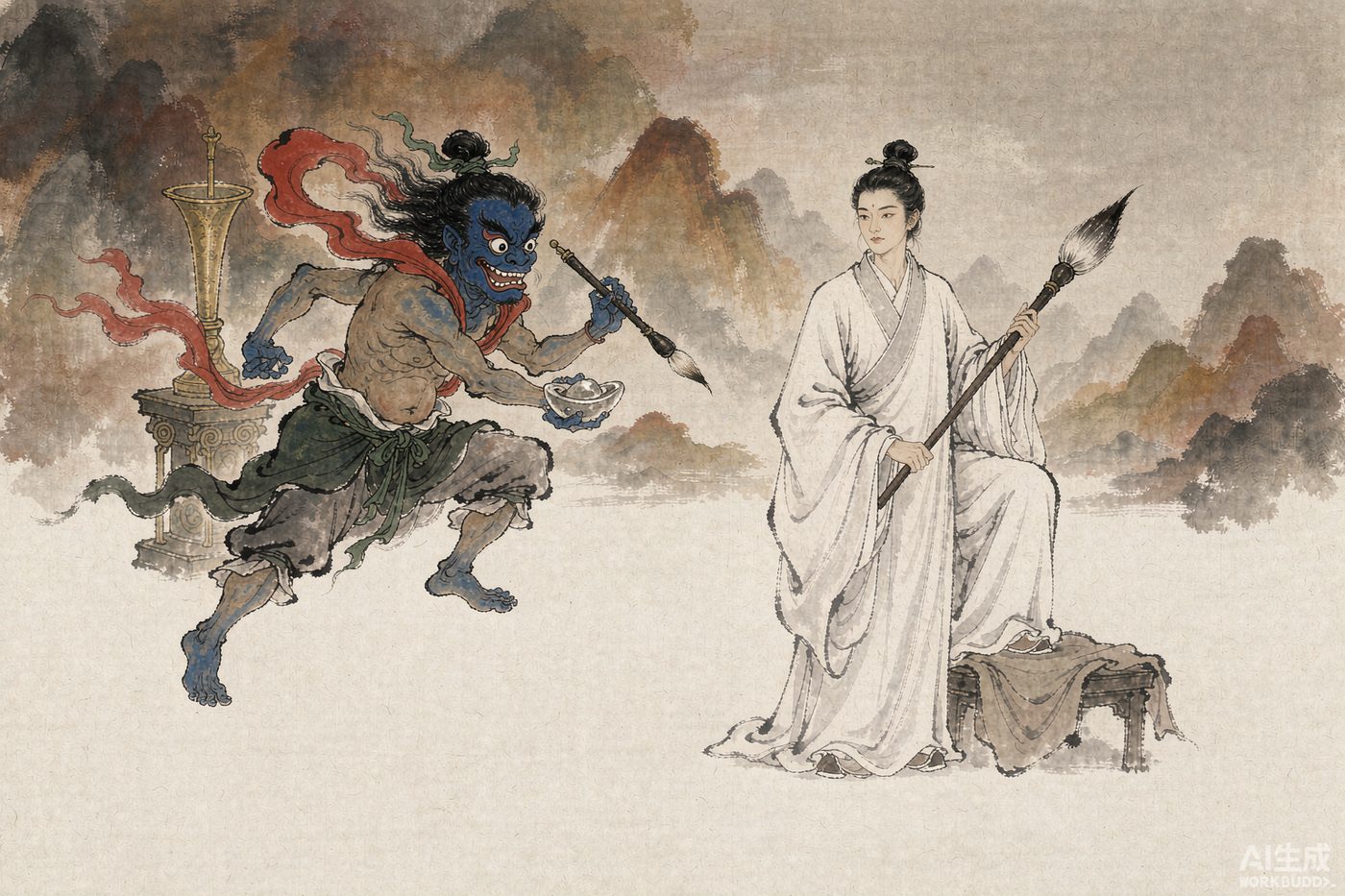
A blue-faced star god with a brush in one hand and a silver ingot in the other, a golden measure at his side, facing off against a fountain pen wielding robed scholar, ink wash painting
Illustration generated by AI, based on the ancient Chinese text.

Chen Zhelu of Yangzhou was a great joker. While I was on the staff of Commissioner Quan of the salt administration, Chen came daily to talk and jest. One day he said to me:

“In our district there is the Great King of Hanggou, the God of Wealth. On New Year’s Day, carrying the year’s celestial tribute up to the Hall of the High Firmament, he was stopped on the road by the God of Poverty, who demanded a loan of thirty thousand taels. ‘The tribute has its fixed quota,’ said the King. ‘How could I lend it to you?’ The God of Poverty insisted, and in the end the King took a small ingot from his robe and gave it to him. The God of Poverty was furious and went to complain to the Cultured Patriarch — the qilin-spirit of the sequel to the Journey to the West.

The Patriarch was sitting in the literary arena, crossing the brush-formation. Hearing the God of Poverty’s case he was enraged, and led the champions of the pen in a brush-formation to surround the King. The King drew his sword and fought, but wherever the brush-points reached, his men were scattered. In terror the King went to the constellation of the Star of Literature to beg help from the Emperor Wenchang.

The Emperor came out to see him. ‘We have never met,’ he said. ‘What brings you here?’ The King told him the cause. ‘You bullied others with your wealth and deserved this,’ said the Emperor. ‘But for a pen-point to hold the world in terror is no blessing to my teaching either.’ He ordered his Red-Robed attendant to summon the Star of Literature.

The Star came: a white, delicate face, as gentle as a maiden. The Emperor set out the whole matter and told him to settle it. ‘My face is not enough to frighten anyone,’ said the Star. ‘What can be done?’ The Emperor thought a long while. The Red-Robed attendant stepped forward: ‘Beg the Emperor to lend him a false face. Change the skin and anything can be done.’ The Emperor smiled and agreed, and gave him a golden measure besides, telling him to go with the King.

When they arrived, the Cultured Patriarch was wielding his brush like a rafter, boasting that he could sweep away an army of a thousand. The Star hurled the golden measure, and the brush’s strength could not hold; the Patriarch threw down his pen and fled. The Star recovered the pen and found the ingot the God of Poverty had borrowed, and returned with the King in triumph. The Emperor gave him pen and ingot both, and appointed him to hold the golden measure for all generations.

Which is why to this day the Star of Literature is painted blue-faced and hideous, a brush in his right hand, an ingot in his left, with a golden measure standing beside him.”
Original classical Chinese text · 原文

扬州陈蔗鹿,素滑稽。予客鹾政全公幕,陈日来谈谑。一日,谓予曰:「吾郡有邗沟大王,财神也。元旦解天饷赴灵霄殿,路逢穷神要之,欲贷银三万。大王曰:『天饷有正额,何得贷汝?』穷神固索,不得已,出怀中小金锭予之。穷神怒,赴诉于文明教主,即《后西游》所称麒麟精是也。」时教主坐文坛,渡笔阵,闻穷神语,大怒,帅文坛健将,排笔阵以围之。大王拔剑斗,然笔锋所到,辄披靡。大王惧,赴奎垣求援于文昌福曜。帝君出见曰:'与君素昧平生,何得来此?'大王告以故。帝君曰:'君等恃财傲物,自应罹此祸。然以笔尖横行天下,亦非吾教之福。'命朱衣人召魁星。魁星至,面白皙,文弱如处子。帝君备述其事,命收之。魁星曰:'面目不足以惊众,奈何?'帝君沉思良久。朱衣进曰:'乞帝君赐以假脸。面皮一变,则诸事可为矣!'帝君笑诺之,又授以金斗,令同大王去。至则文明教主方挥笔如椽,自谓千人军可以横扫。魁星掷以金斗,毫弱顿不能支,弃笔而遁。魁星收其笔,并搜得穷神所贷金锭,别大王奏凯而归。帝君即以笔与锭赐之,令其世掌金斗。故至今传魁星像,蓝面狰狞,右手持笔,左手持锭,而旁竖一金斗云。 铎曰:"此弄笔狂生脑后针也!视为谈天炙輠则过矣!"

From 《奎垣真像》, Xieduo. Translated in full. 奎垣 is the constellation of the Star of Literature; 文明教主 is the Cultured Patriarch, identified as the qilin-spirit of the sequel to Journey to the West; 笔阵 is the brush-formation, the army of letters; 魁星 is the Star-God of Literary Success, whose icon shows a blue face, a brush in the right hand, an ingot in the left, and a golden measure beside him. 铎曰 is Shen Qifeng's closing comment.

Source. From Xieduo (Miscellaneous Bell) (谐铎), by Shen Qifeng , c. 1790. The original text is in the public domain; this English rendering and the accompanying notes are original work.
Where this fits in the universe: Gods and Immortals · Reading the Fate: The Doom Is Fixed, the Address Is Not

Keep Reading

Related Stories

Southern Song dynasty · 1176, the bingshen year of Chunxi · 夷坚志

The Thunder God Answers a Memo

雷州雷神

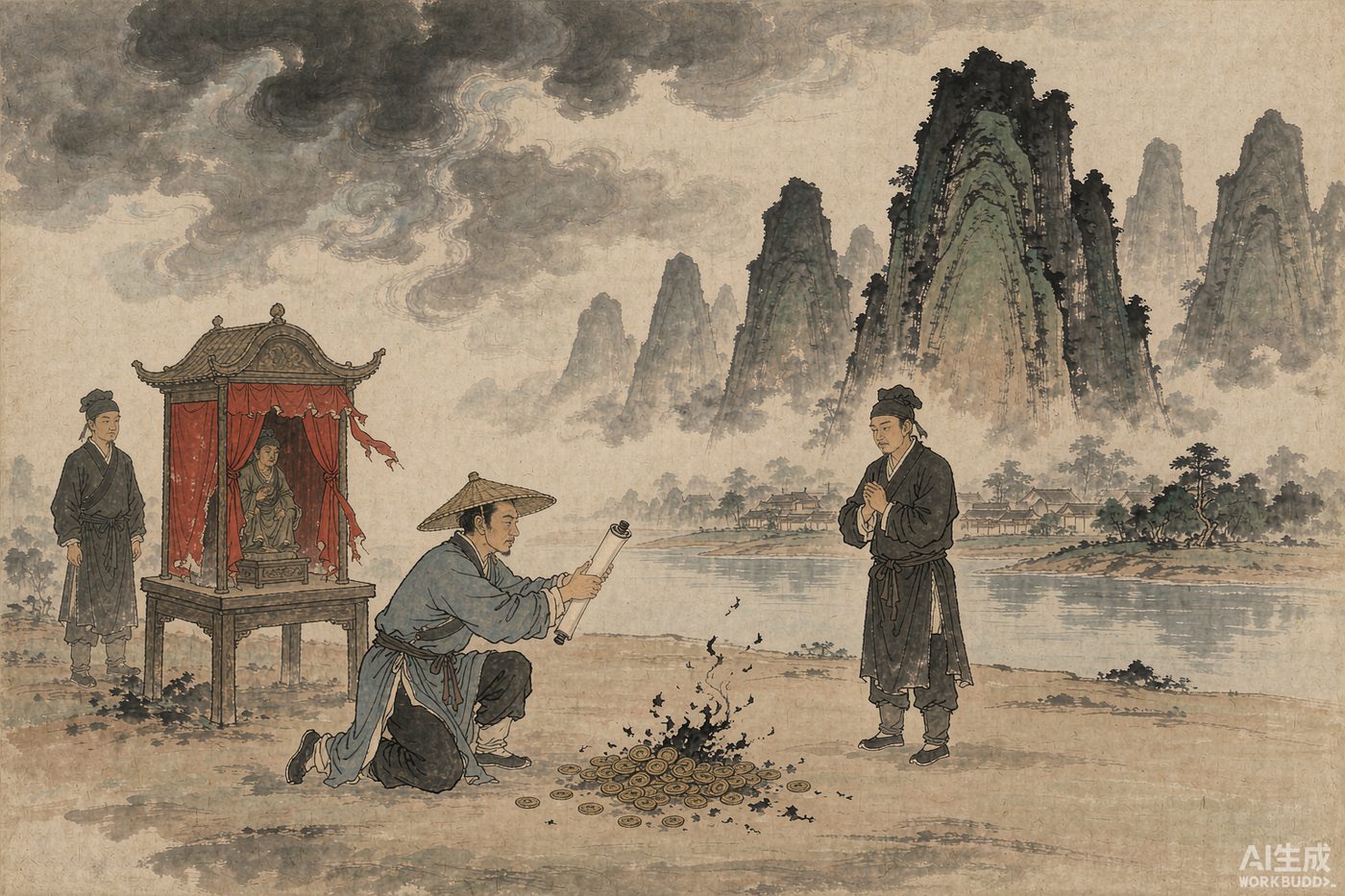
Guilin has had no rain for months, so the prefect does what a prefect does: he writes an official memo to the Thunder God and sends a courier five hundred li to file it. The god replies on the memo, in writing, with a date and a gratuity — and the courier spends the tip on the road home.

ThunderDeityOfficialdom
Qing dynasty · c. 1790 · 谐铎

The Oracle Slips of General Bu's Temple

卜将军庙灵签

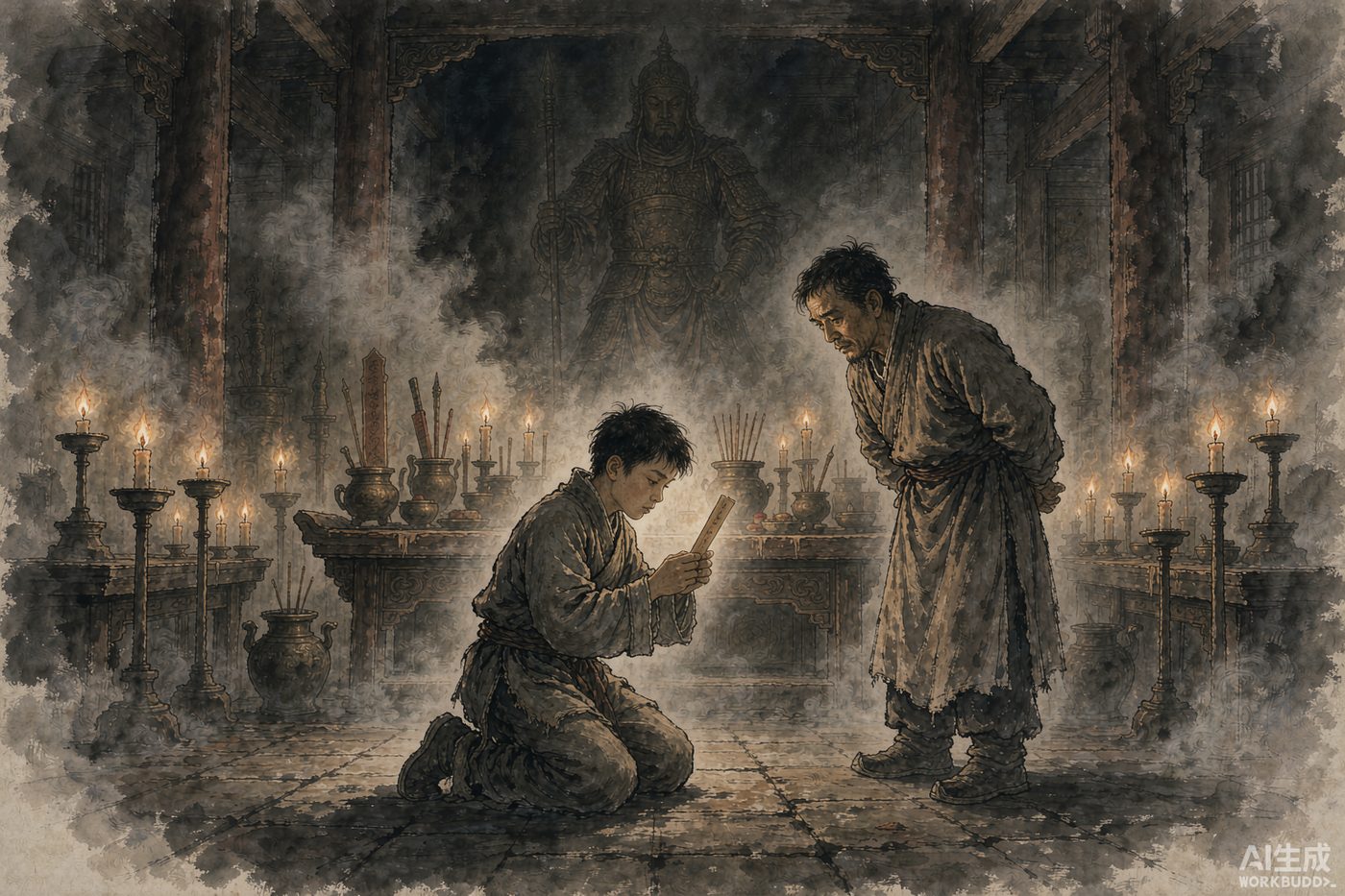
At nine years old Shen Qifeng prays at General Bu's temple and draws a slip that promises his 'old universe' back at mid-autumn. Thirty years later he works out that the prophecy was a word-game on the examiners' names — and that it was right.

Reading the FateOmensSmall Gods
Qing dynasty · c. 1790 (tale set under the Ming) · 谐铎

The Temple of the Traitor's Lackey

黑衣太仆

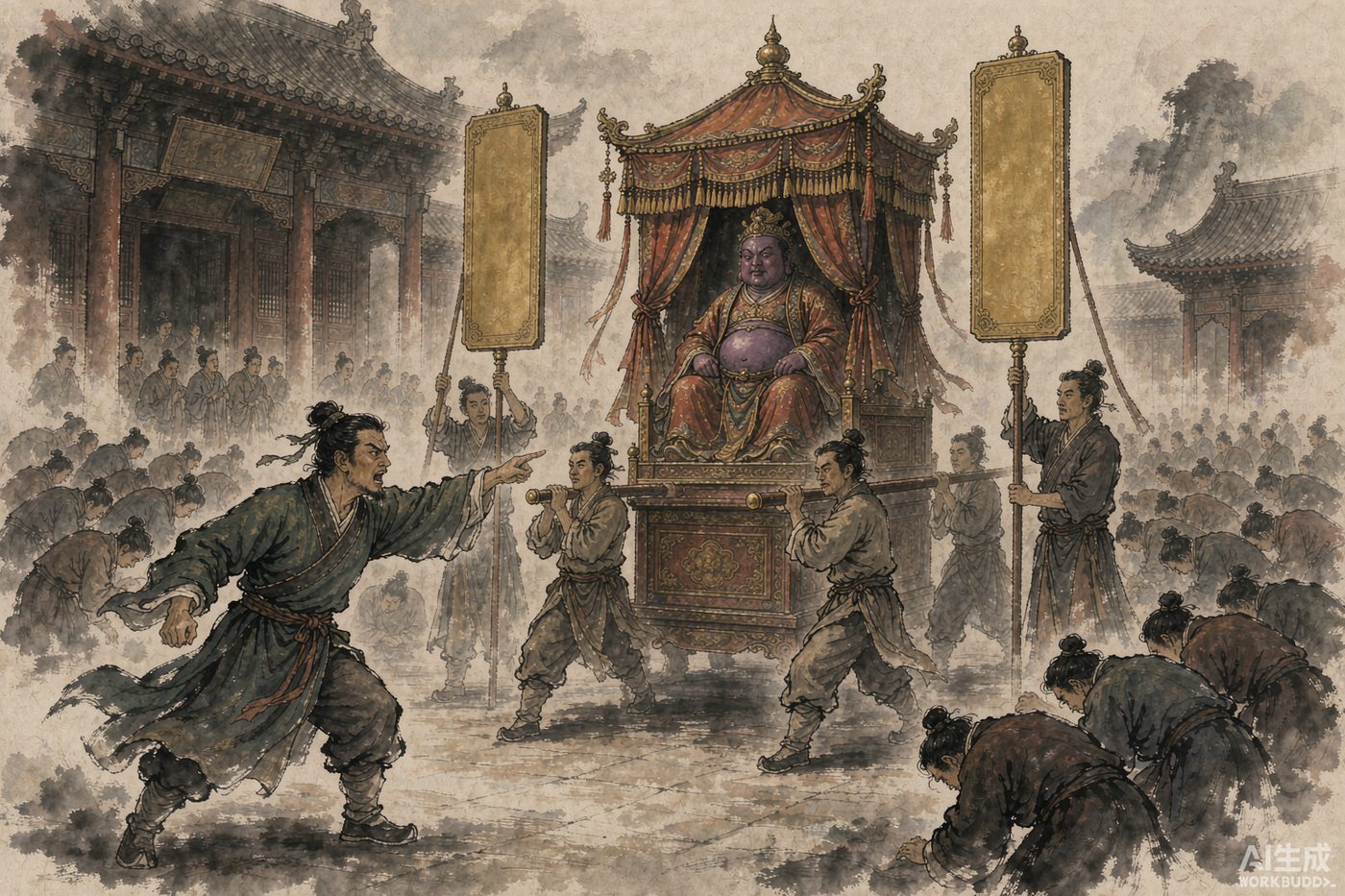
At a county festival a god is carried past on a sedan chair, and the golden placards name him 'Grand Steward of the Chancellor's House'. A young scholar asks who he is — and discovers the whole town is worshipping a tyrant's doorkeeper, and asking him for heavier bribes.

Small GodsSatireOfficialdom