Sun Xiugu of Hangzhou was sixteen years old, and had been raised in the Li household as a future daughter-in-law. Old Man Li had taken his son away on a long journey, and there was only one old woman left in the house besides the girl.
A ruffian of a neighbour named Yan Hu saw that Xiugu was pretty, and one day, on the excuse of asking for a light, fell to talking and turned the talk to testing her. Xiugu would have none of it. He then sent one of his own favourites as bait, to simper and pose and try to lead her astray. Xiugu told her mother-in-law, and her mother-in-law cursed them and drove them off. Yan Hu flew into a fury and swore at them: “Slave girl, if you won’t take a kindness, I will not rest until I have had you.”
Morning and evening he threw bricks and forced at the door. The Li family had always been poor, the plank walls were thin, and they had almost no kin or friends; and Yan was a man who would stop at nothing, so that no neighbour dared cross him. So the two women held on to each other and wept.
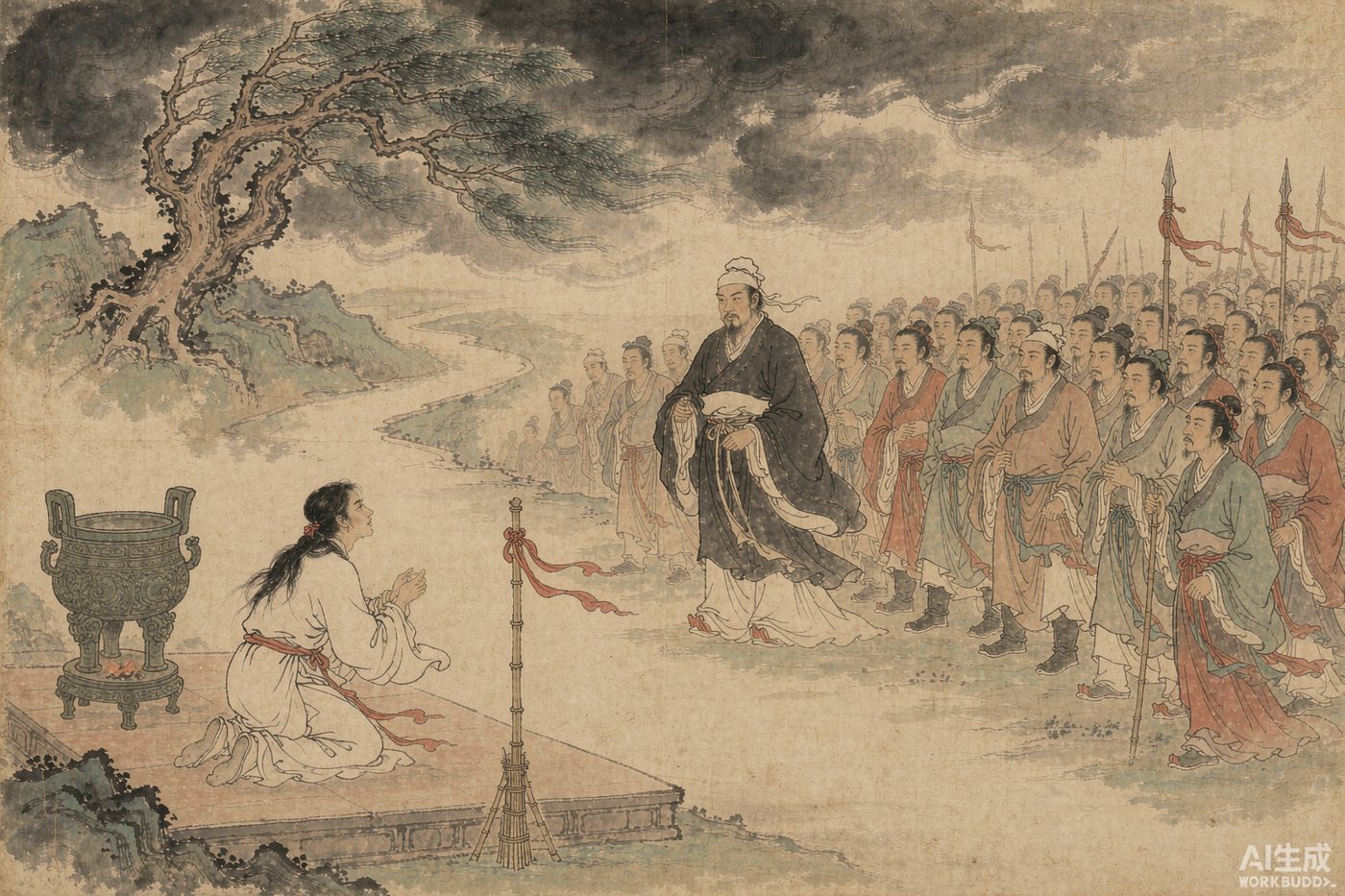
One morning Xiugu rose and was combing her hair, when Yan and his companion climbed onto the roof of the house and exposed themselves to her. Xiugu could not bear the insult. She secretly sewed her inner and outer garments firmly shut, layer over layer, and quietly drank bittern and died.
Her mother-in-law wailed aloud and wanted to bring a case before the magistrate, but there was nobody to draw up the petition for her. Then suddenly a strange fragrance rose from the place where Xiugu lay and went straight out into the streets and lanes, and everyone passing by stared at everyone else in astonishment.
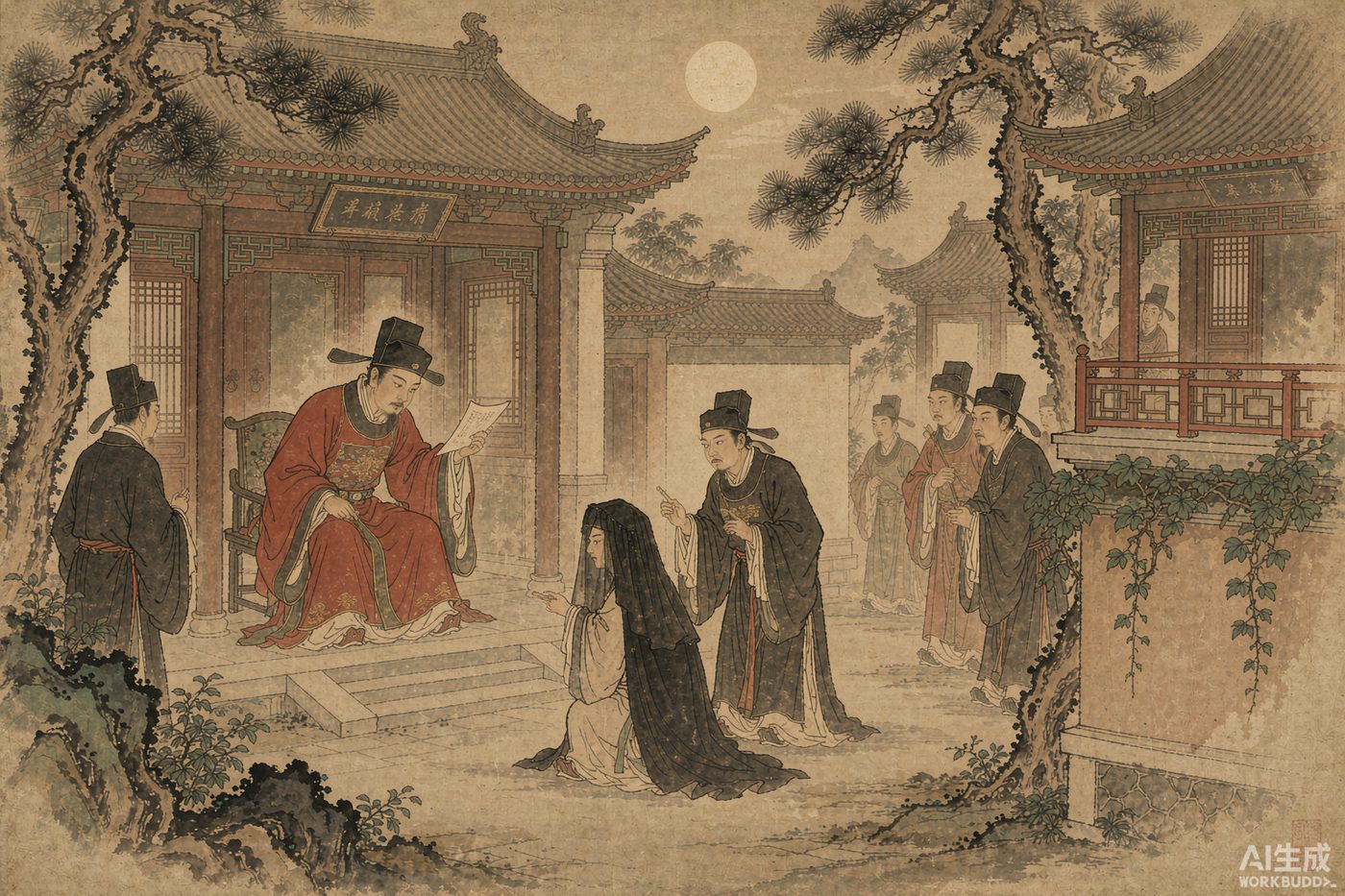
Yan Hu heard of it. He collected dead cats and dead dogs and every kind of filth and laid it all about the Li gate to confuse the smell, and the fragrance grew the stronger for it. It happened that an officer of the arrest bureau was passing that way; he smelled it and thought it strange, questioned the neighbours in the lane, got at the wrong that had been done, and reported it to the prefect and the county magistrate. Yan Hu was brought to the law, and Xiugu was commended to the throne. To this day her archway still stands on West Lake.
Now the second: there was a man of the Fan family, in the countryside of Jingzhou prefecture, very rich, who died young. His son was six, and lived with his elder sister. The sister was nineteen, could read and keep accounts, and managed the household with great order.
A ruffian of the clan, Fan Tong, trading on the boy’s youth, came again and again to borrow money. The sister gave in to him at first; then, the demands never ending, she could not. Fan Tong was furious, and he and his faction laid a plan to be rid of the sister and swallow the estate. So when the City God’s festival was held, they drowned her in the river. They also tied up and drowned a young man of a money shop, binding his corpse with two sashes, and reported it for inquest, saying that the two had long been lovers and, for fear of being found out, had agreed to die together. The county magistrate believed it, and ordered nothing more than coffins and burial. The whole Fan estate passed into the hands of the clan ruffians.
A year later the prefect of Jingzhou, Zhou Zhongxuan, came into office, and passing by Fan’s daughter’s grave, a strange fragrance rose from it. He questioned his clerks, and among them was one who knew of the wrong, and who told him the whole matter. So he had both graves opened and the bodies examined. Each was as it had been in life, and on hands and feet and necks were the marks of bonds.
He had Fan Tong arrested and questioned — but Fan Tong had, a few days before, been haunted to death by a vengeful ghost. The prefect brought wine and food and incense and paper and made the offering at the daughter’s grave in his own person, and set up a slab that read: The Grave of the Virtuous Maiden Fan.
After the wrong had been made clear, both bodies rotted away.