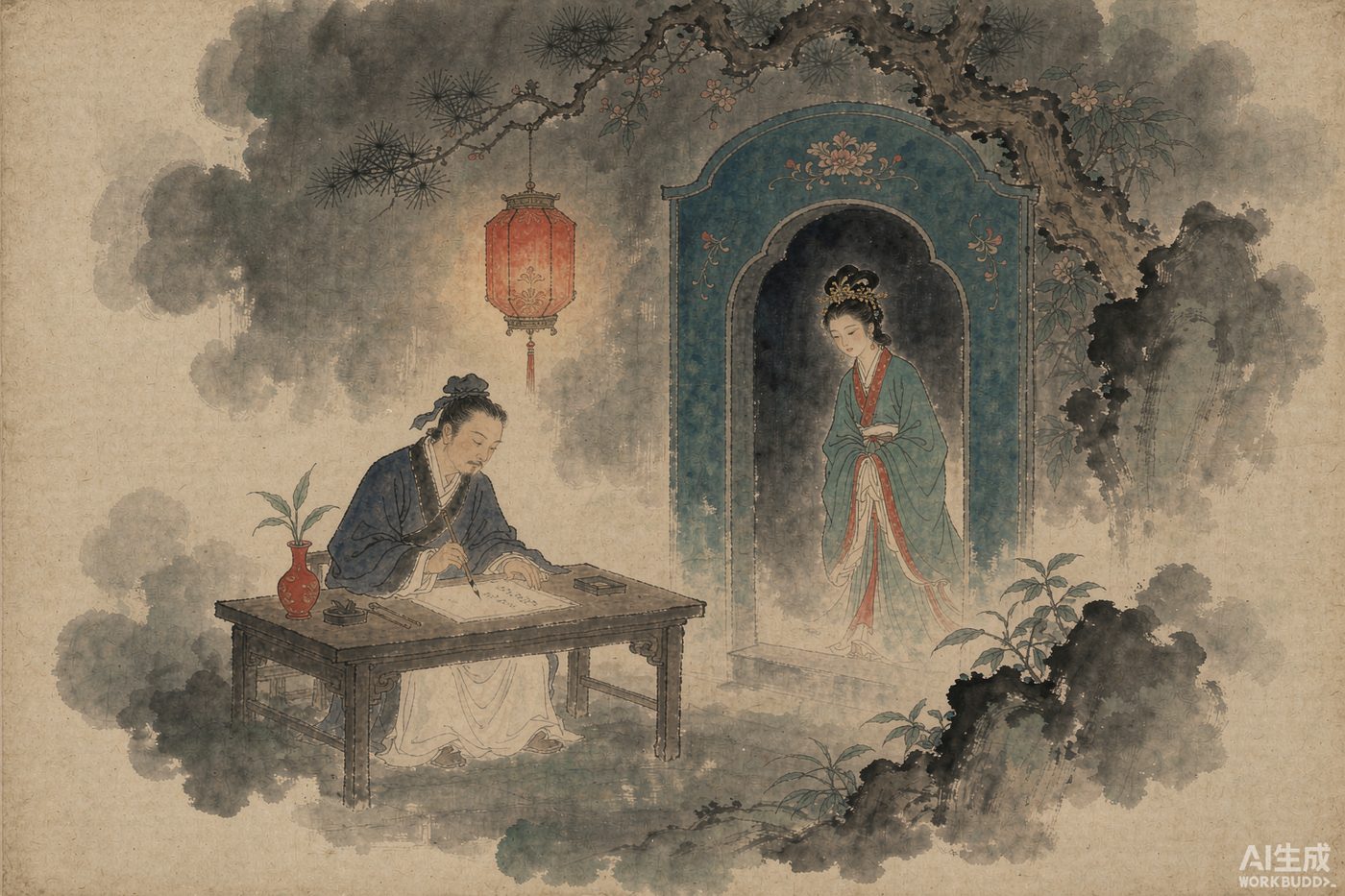
Mr Gu Lanwan of Changzhou lived in the ruins of the Mao family garden, kept his gate shut and turned callers away, and amused himself with poetry.
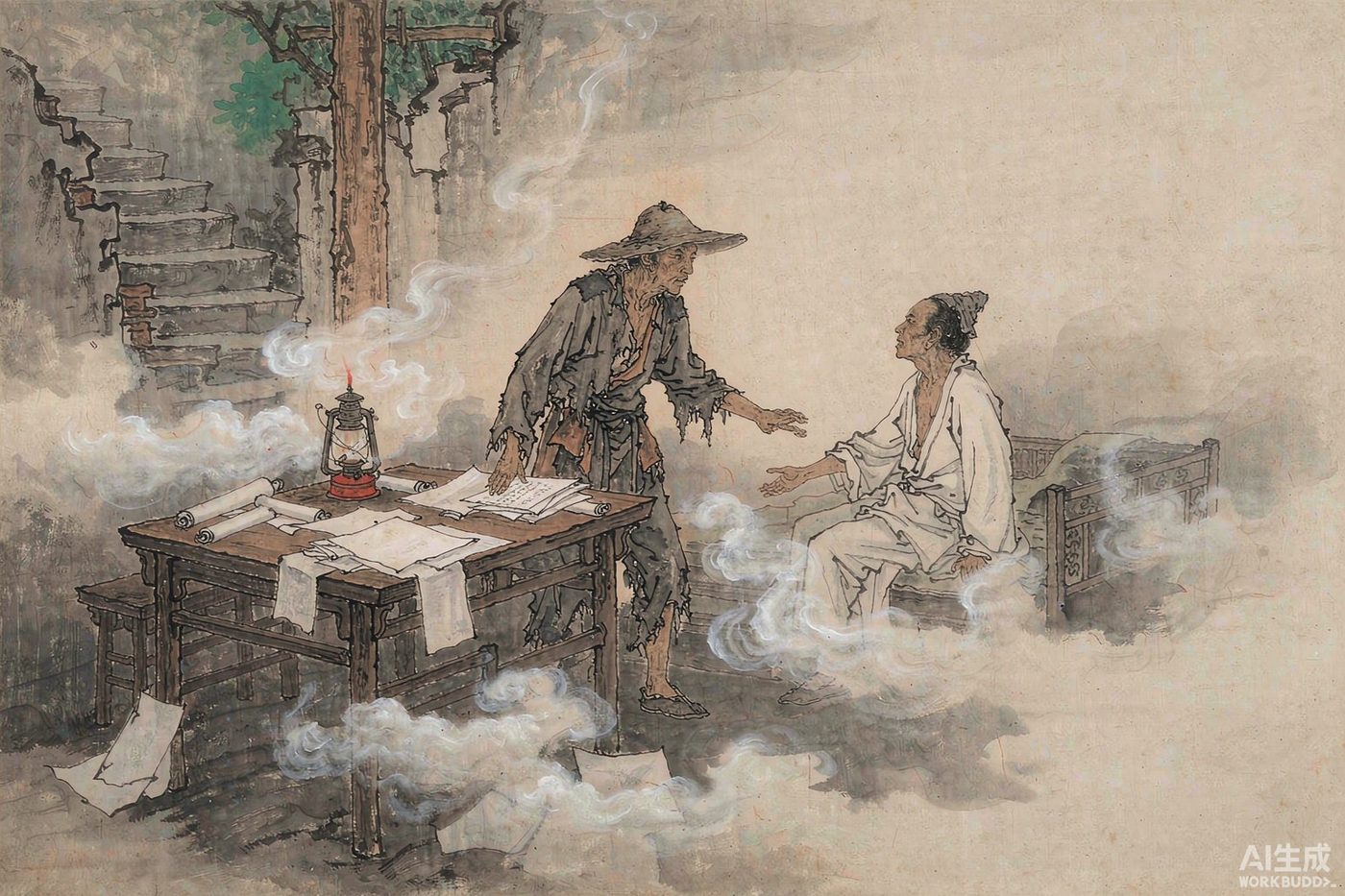
One evening he drank a little and lay down. He heard the sound of a table struck with great violence, woke, and looked — and there was a man under the lamp turning through his manuscript, intoning to himself again and again. Then the man slapped the table, stood up, and said:
“Marvellous! This is the true echo of Qinglian and Huanhua.”
Gu got down from the bed at once and bowed to him, and asked where he came from.
The man said: “The truth, then. I am a thief from the north suburb. My parents are old and the house is poor, and I have nothing to give them worth eating. I came into your room hoping to come away with something, and I happened to see the poems on the desk. It struck the thing I have always loved, and before I knew it I was chanting aloud. I have alarmed you.”
Gu said: “Since you are so taken with it, you must have something to teach me.”
So the man went through the manuscript, criticising as he went.
“The pieces in the collection all have the High Tang manner. Only in the regulated verse on Spring — apricot blossom, cold-food day, rain the whole morning; willow households, wind the whole day — there you have already dropped into the low tune of the Late Tang.”
And he pointed at the lines after the Song of Everlasting Sorrow: How was it that none heard the private vow, and yet the priest of Hongdu knew it?
“This too is frivolous, and it wounds honest generosity. Li Yishan’s the Prince of Xue is drunk, the Prince of Shou is sober is not without its edge, but in the end it loses the poet’s purpose of generous honesty.”
Gu said: “Your poetics show a spot of the leopard. Might I hear some good piece of your own?”
He said: “Since trouble came on my house, everything I wrote I threw into the flames. But for you I will chant once.”
He clapped his hands and sang:
Begging rice at the Golden Gate, the road is far and dim; empty-handed sleight-of-hand in the young men’s quarter. I beg you, sir, do not compose The Passing of the High Carriage — take care the bright pearl does not slip out of the brocade bag.
Gu said: “With such a gift for poetry, how have you fallen as low as this?”
The man sighed. “If I could not write poetry I should not have fallen as low as this. You, sir, should still urge yourself on.”
While they talked, dawn came. Gu set out a measure of rice and saw him to the gate, and said: “I count it fortune to have made a friend in poetry. I should like to keep your name.”
The man said: “No need. No need. When we meet again, just call me the thief who could verse.”
With that he shouldered the rice and was gone.
The Duo comment: “Zhuangzi records grave-robbing done with the Odes and the Rites; read the passage on green green the barley and there is the true heir of the Three Hundred Poems. In the school of thief-poets, this one is the last of the line. Those who went out at night by Hengtang — a Dai Ruosi, a Shi Chong — had talent to match the age. He could only manage verse, and so he remained a petty thief.”