Stories/ 子不语/ The Temple That Ran on Poison

The Temple That Ran on Poison

鸩人取香火

SourceZibuyu (What the Master Would Not Discuss)
AuthorYuan Mei
EraQing dynasty · Qianlong era, c. 1736–1798
Writtenc. 1788
DeitySmall GodsSatireJustice
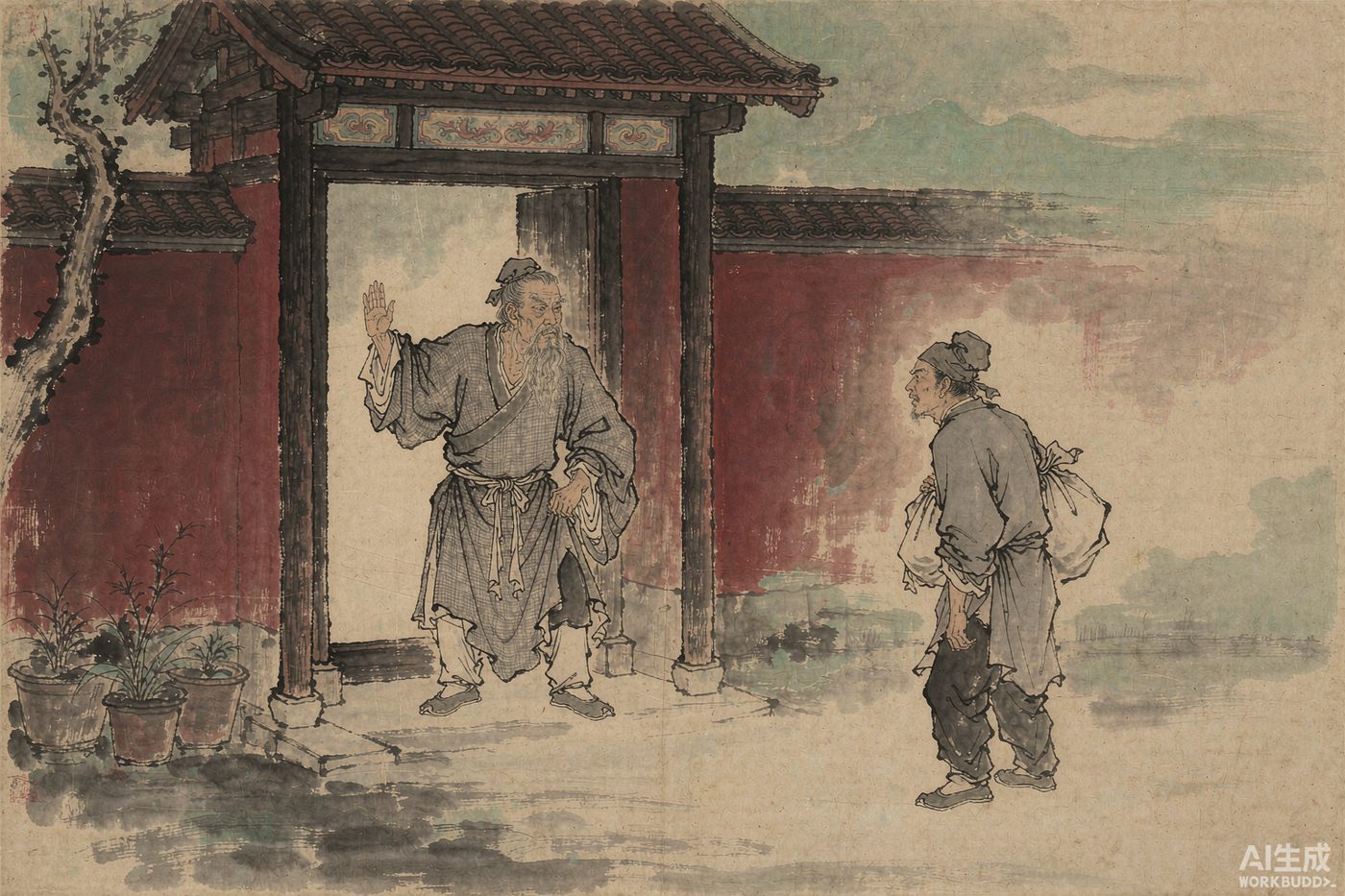
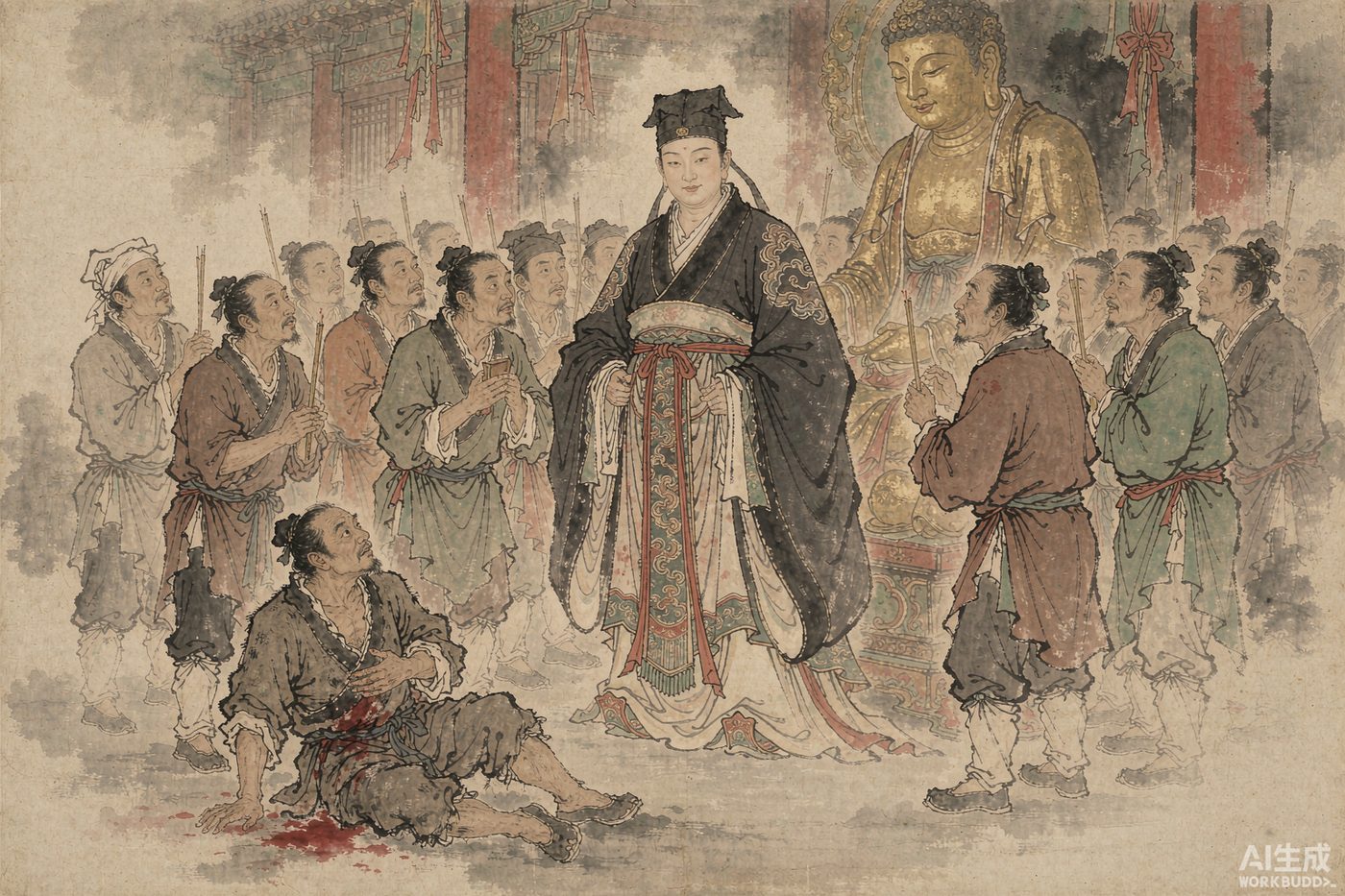
A Daoist priest in embroidered ritual robes stands calmly beside a huge newly gilded seated god statue while a rough-dressed man collapses bleeding in the foreground and a dense crowd presses forward with incense sticks
Illustration generated by AI, based on the ancient Chinese text.

Liao Ming, a Daoist of Hangzhou, collected money and set up a temple to the Holy Emperor, with an image.

On the day of consecration the men and women of the town and the countryside swarmed in to burn incense. Suddenly a ruffian came in, sat himself down insolently beside the Holy Emperor, and pointed at the image and mocked it. The crowd tried hard to stop him. The Daoist said: “Never mind. Let him do as he likes. There will surely be a retribution.”

In a moment the ruffian fell to the ground crying that his belly hurt, rolled about without stopping, and died, with blood running from all seven openings.

The crowd was terrified and took it for the Holy Emperor’s awful power. The incense trade flourished; the Daoist grew rich on it.

A year later his confederates quarrelled over the division of the money, and one of them informed: “Last year that ruffian’s insult to the god — the Daoist bribed him to do it. And as for his death: the Daoist had first given him poisoned wine, and the ruffian did not know it.”

The authorities dug up the bones and examined them: they were indeed blue-black. The Daoist was executed, and the Holy Emperor’s incense declined.
Original classical Chinese text · 原文

杭州道士廖明,募钱立圣帝庙塑像。开光之日,乡城男妇蜂集拈香。忽一无赖来,昂然坐圣帝旁,指像侮慢之。众人苦禁,道士曰:「不必,听其所为,当必有报。」须臾,无赖仆地,呼腹痛,盘滚不已,遂死,七窍血流。众大骇,以为圣帝威灵,香火大盛,道士以之致富。逾年,其党分财不匀出首:「去年无赖之慢神,乃道士贿之,教其如此。其死,乃道士先以毒酒饮之,而无赖不知也。」有司掘验其骨,果青黑色,遂诛道士,而圣帝香火亦衰。

From 《鴆人取香火》, Zibuyu juan 14. Translated in full. 开光 is the eye-opening rite that makes an image fit to receive worship; 香火 (incense and fire) is the standard measure of a temple's income; 鸩 is a poisonous bird, and 鸩人 means to poison someone.

Source. From Zibuyu (What the Master Would Not Discuss) (子不语), by Yuan Mei , c. 1788. The original text is in the public domain; this English rendering and the accompanying notes are original work.
Where this fits in the universe: How a Shrine Gets Built

Keep Reading

Related Stories

Qing dynasty · Qianlong–Jiaqing era · 谐铎

The Temple of the Ten Aunts

十姨廟

A temple near Duqu holds ten beautiful women. Nobody remembers that it was built for Du Fu, whose office of Reminder sounded to country ears like Ten Aunts.

DeitySatirePoetry
Qing dynasty · Qianlong era, c. 1736–1798 · 子不语

The God Nobody Could Name

毁陈友谅庙

Arriving at a new post, a magistrate is told there is one more temple he must burn incense at. Nobody knows what god is in it. He searches the gazetteer: not listed. So he puts an iron chain round the statue's neck and pulls. Then he writes to the Celestial Masters to ask who it was.

DeitySmall GodsOfficialdom
Qing dynasty · Qianlong era, c. 1736–1798 · 子不语

The Spirit Who Played the Father

怪诈人父

A spirit takes a fancy to a schoolmaster's maid, moves in, and demands board. When the household tries to sell the house to be rid of him, he meets the buyer at the door in the shape of the schoolmaster's long-dead father and warns him off in the name of filial law.

TricksterMonsterSatire