Stories/ 谐铎/ The Talented Man Chastened

The Talented Man Chastened

才士惩骄

SourceXieduo (Harmonious Warnings)
AuthorShen Qifeng
EraQing dynasty · Qianlong era, c. 1736–1798
Writtenc. 1790
SatireOfficialdom
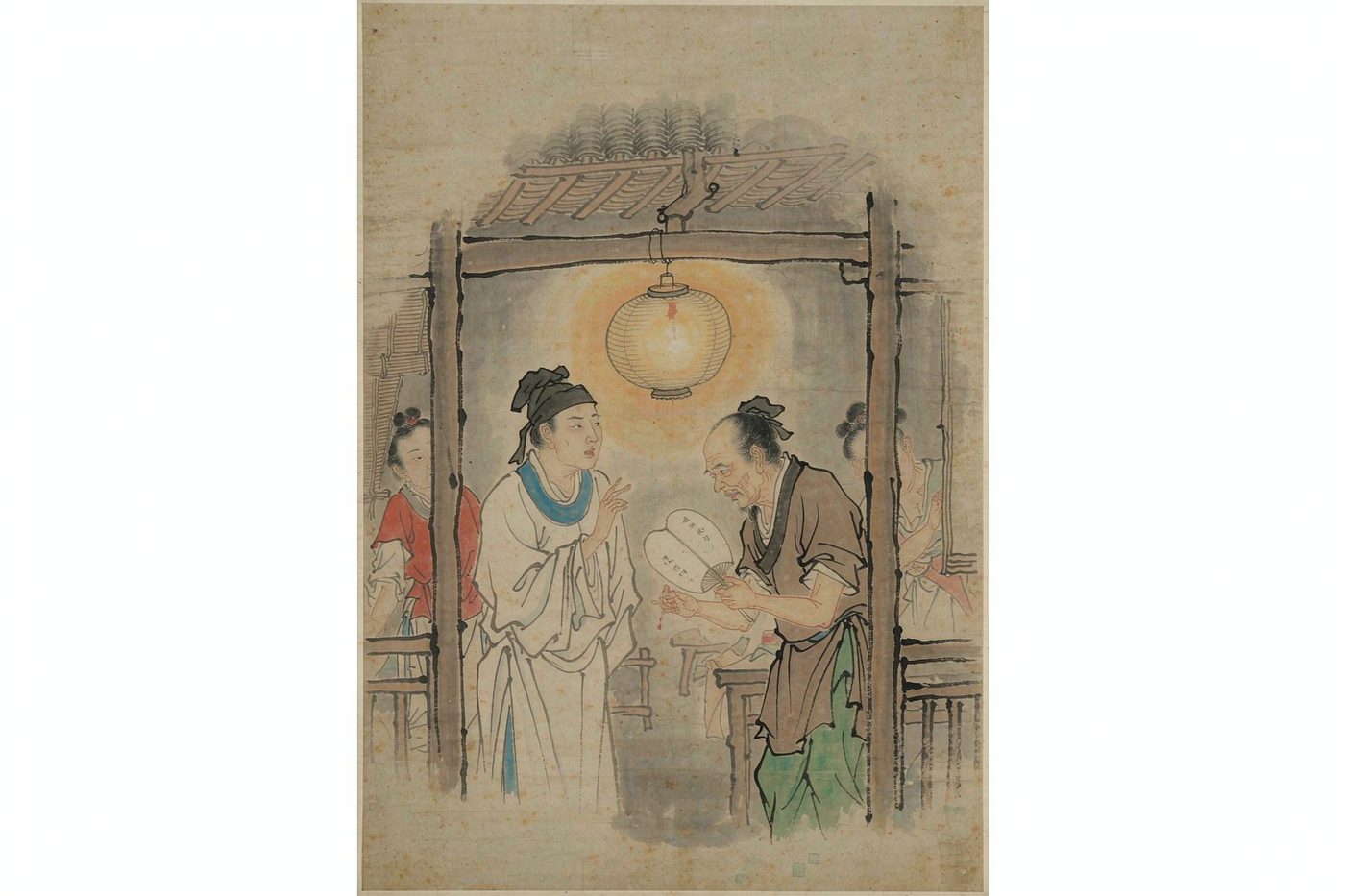
A flustered scholar in a village farmhouse watches an old man study a fan inscription by lamplight, ink-wash painting
Illustration generated by AI, based on the ancient Chinese text.

Tong Yinnian, a Hanlin of mine and a same-year graduate, one day passed my studio and laughed: “Heroes deceive men; famous men have settled habits — and sometimes it serves to humiliate themselves.” Asked, he said: “Yesterday I toured Wu Mountain, caught in rain, and lodged at a village farmhouse. An old man produced a fan and asked for an inscription. I despised him and scrawled carelessly — I wrote ‘stove’ as ‘turtle,’ and reversed ‘peacock’ to ‘sparrow-king.’ Thinking the country boor would not know the meaning, I did not correct it. I falsely attributed it to my same-year, the top graduate Huang, and left.

“The old man looked at the fan and smiled: ‘I have long lacked a proper pairing for wine-stove; now the tea-turtle on the fan is heaven-made!’ Then scrutinising: ‘The village boor was short of schooling; I do not know what a sparrow-king is — perhaps like Gengcang, Laobo sorts?’ Then solemnly: ‘Your excellency’s talent tops the universe; why borrow the top graduate’s name? Even to write his surname, the form of address needs care — he is in fact my disciple.’ Hearing this, my face sweated like rain. I asked his name and residence, and learned the old man was a famous examination master of Zhejiang who had lived in Wu ten years.”

I listened, also startled. I record this as a warning to the frivolous talented.

The Duo comment: Is there a man in the world who may be despised? Tong despised the old man, and the old man’s contempt for Tong was greater, because the old man was a master and his settled habit was thus entrenched. Both may be warned.
Original classical Chinese text · 原文

中翰童君引年,予同年友也。一日,过书斋笑曰:“英雄欺人,名流结习,而有时适以自侮。”询之,曰:“昨游吴山,遇雨,投宿村农家。老者出一扇索书。心轻之,率意涂抹。笔床茶灶,‘灶’字误书龟字,‘孔雀’两字,颠倒错写。度乡愚不谙文义,未即改正。诡托同年黄殿撰名归之。老者执扇视,笑曰:“老拙向以酒灶二字,未有确对。今扇头茶龟两字,岂非天造地设?‘又审视久之,曰:“村愚幼欠读书,米知雀孔是何物?想即庚仓、劳伯之类耶?’继又肃然致敬曰:“中翰才名,足冠宇宙,何必嫁名殿撰,必欲书渠姓氏,称呼尚烦斟酌,彼实愚老之门下士也。‘闻其言,颜汗如雨。叩其名氏里居,始知老者为浙中名进士,侨寓于吴十年矣。” 予听之,亦为愕然。记此为才人轻薄者戒。 铎曰:“天下有可轻之人哉?童君轻老者,而老者之轻童君弥甚,彼惟名进土,故结习沈锢如是。两可为戒也。”

From 《才士惩骄》, Xieduo. A careless young Hanlin's fan-inscription blunders are exposed by the 'boor' he patronised.

Source. From Xieduo (Harmonious Warnings) (谐铎), by Shen Qifeng , c. 1790. The original text is in the public domain; this English rendering and the accompanying notes are original work.

Keep Reading

Related Stories

Qing dynasty · Qianlong era, c. 1736–1798 · 子不语

Poor Ghosts and Rich Ghosts

穷鬼祟人富鬼不崇人

A thousand coffins heaped like a mountain behind a convent, and the monks say the place is peaceful all year because these are all rich ghosts. Yuan Mei asks how a city can produce so many rich ghosts.

GhostUnderworldJustice
Qing dynasty · Qianlong–Jiaqing era · 谐铎

The City of Dung Beetles

蜣螂城

A young man whose whole body smells of orchid is shipwrecked on an island where everyone covers their noses at him. He can smell it too. It takes one bath.

SatireOtherworldMoney
Qing dynasty · Qianlong–Jiaqing era · 谐铎

The Man With No Vapour

無氣官

A qi-reader at the capital's Liuli Market names every official's post from his breath. Then one man walks in whose vapour matches nothing in the five elements.

SatireDivinationOfficialdom