Stories/ 子不语/ The Swordsman Who Came for the Judge

The Swordsman Who Came for the Judge

姚端恪公遇剑仙

SourceZibuyu (What the Master Would Not Discuss)
AuthorYuan Mei
EraQing dynasty · Kangxi era, 1662–1722
Writtenc. 1788
JusticeSwordOfficialdomImmortal
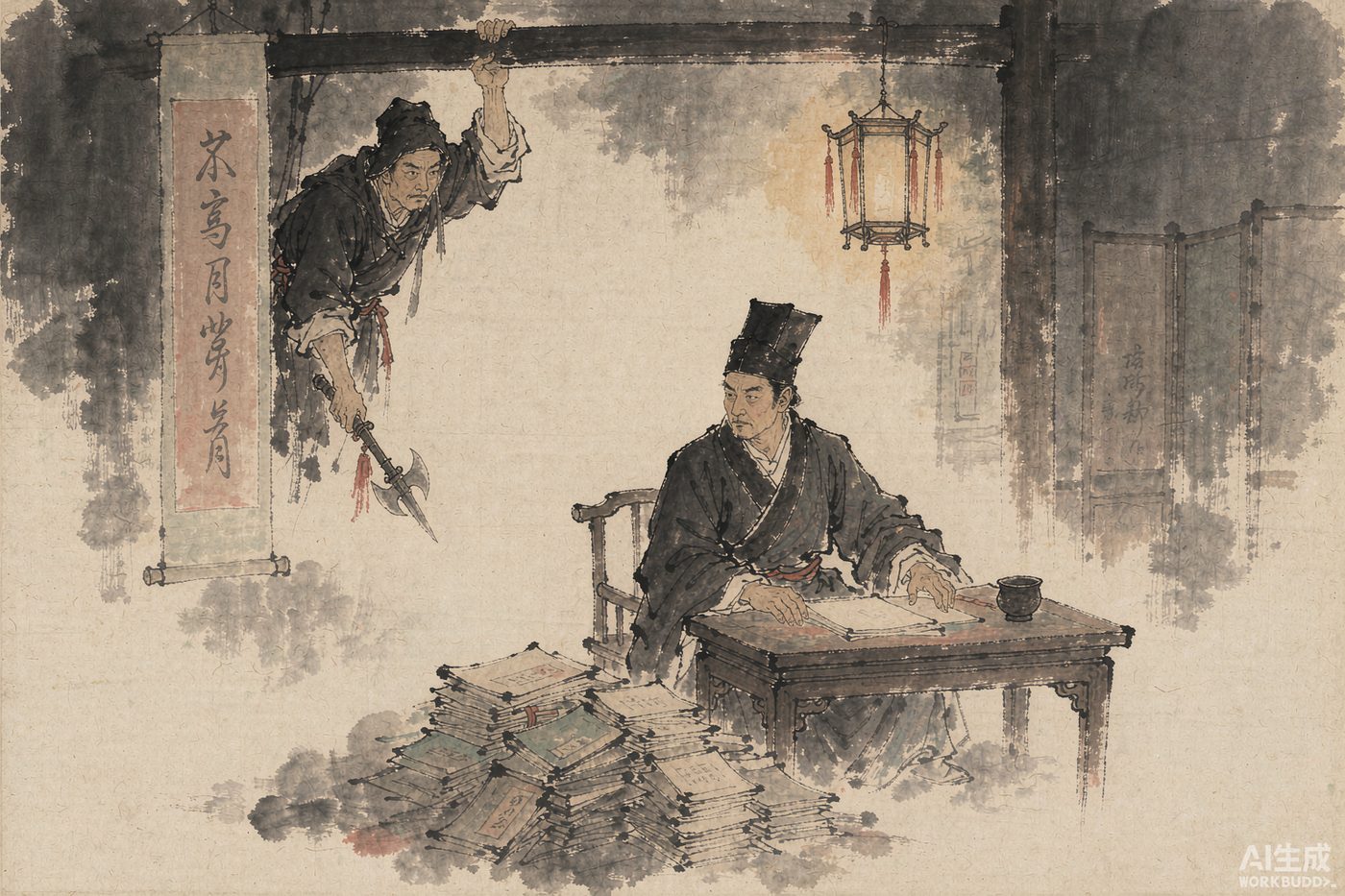
Night in a Qing official's hall, a magistrate seated at a low desk over a heap of case papers under a single lamp while above him a lean man in dark travelling clothes hangs one-handed from a rafter holding a short dagger
Illustration generated by AI, based on the ancient Chinese text.

At the beginning of the dynasty, when Lord Yao Duanke of Tongcheng was Minister of Justice, a certain man of Shanxi was about to be convicted in a case of murder.

The man bribed the lord’s younger brother Wenyan with a hundred thousand in gold, asking to be spared. Wenyan agreed, but feared the lord’s uprightness, and dared not put it to him; he hoped that the man would be let off, and meant to take the money privately.

One evening the lord was judging cases under the lamp, when of a sudden a man came down from the rafters with a dagger in his hand.

“Are you an assassin?” the lord asked. “What have you come for?”

“I have come for the man of Shanxi.”

The lord said: “That man ought not by law to be spared. If he is to be spared, then the law of the state is ruined, and I shall have no face to stand in the court. Better to die.” And he pointed at his own neck. “Take it.”

The visitor said: “You must not. But why did your brother take the money?”

“I did not know.”

“I had judged that you did not know,” said the visitor.

He sprang out, and there was only the sound on the roof tiles of wind sweeping leaves.

At that time Wenyan had just left the capital to take up a prefectural post. The lord hurriedly sent someone to warn him. At Dezhou he had already lost his head in the carriage.

According to his servants: “The master finished his breakfast at the inn, got into the carriage and went a few li, and then suddenly shouted, ‘What a cold wind!’ We hurried up with wadded clothes to look, and his head was gone, and there was nothing but blood.”

Duanke wrote these lines on the White Cloud Pavilion of the Ministry of Justice:

I always feel my breast full of the will to live; one must know that the world has many bitter people.

Original classical Chinese text · 原文

国初桐城姚端恪公为司寇时,有山西某以谋杀案将定罪。某以十万金赂公弟文燕求宽,文燕允之,而惮公方正,不敢向公言,希冀得宽,将私取之。 一夕者,公于灯下判案,忽梁上男子持匕首下,公问:「汝刺客耶,来何为?」曰:「为山西某来。」公曰:「某法不当宽。如欲宽某,则国法大坏,我无颜立于朝矣,不如死。」指其颈曰:「取。」客曰:「公不可,何为公弟受金?」曰:「我不知。」曰:「某亦料公之不知也。」腾身而出,但闻屋瓦上如风扫叶之声。 时文燕方出京赴知州任。公急遣人告之。到德州,已丧首于车中矣。据家人云:「主人在店早饭毕,上车行数里,忽大呼『好冷风!』我辈急送绵衣往视,头不见,但血淋漓而已。」端恪题刑部白云亭云:「常觉胸中生意满,须知世上苦人多。」

From 《姚端恪公遇劍仙》, Zibuyu juan 15. Translated in full. 姚端恪公 is Yao Wenran (1620–1677), posthumous name Duanke, a real Minister of Justice; 司寇 is the classical title for that office; 劍仙, sword immortal, is the figure of the Tang swordsman legends — an adept who kills by art rather than by force; 德州 is the city in Shandong on the road south from Beijing.

Source. From Zibuyu (What the Master Would Not Discuss) (子不语), by Yuan Mei , c. 1788. The original text is in the public domain; this English rendering and the accompanying notes are original work.
Where this fits in the universe: Lü Dongbin

Keep Reading

Related Stories

Tang dynasty · 9th century · 唐·裴铏《传奇·聂隐娘》

Nie Yinniang

聂隐娘

A nun takes ten-year-old Nie Yinniang from her home and returns her five years later — trained to fly over rooftops, kill at a word, and carry a dagger two inches long. The greatest swordswoman in Chinese fiction comes home.

SwordTransformation
Tang dynasty · 9th century · 唐·裴铏《传奇·昆仑奴》(《太平广记》收)

The Kunlun Slave

昆仑奴

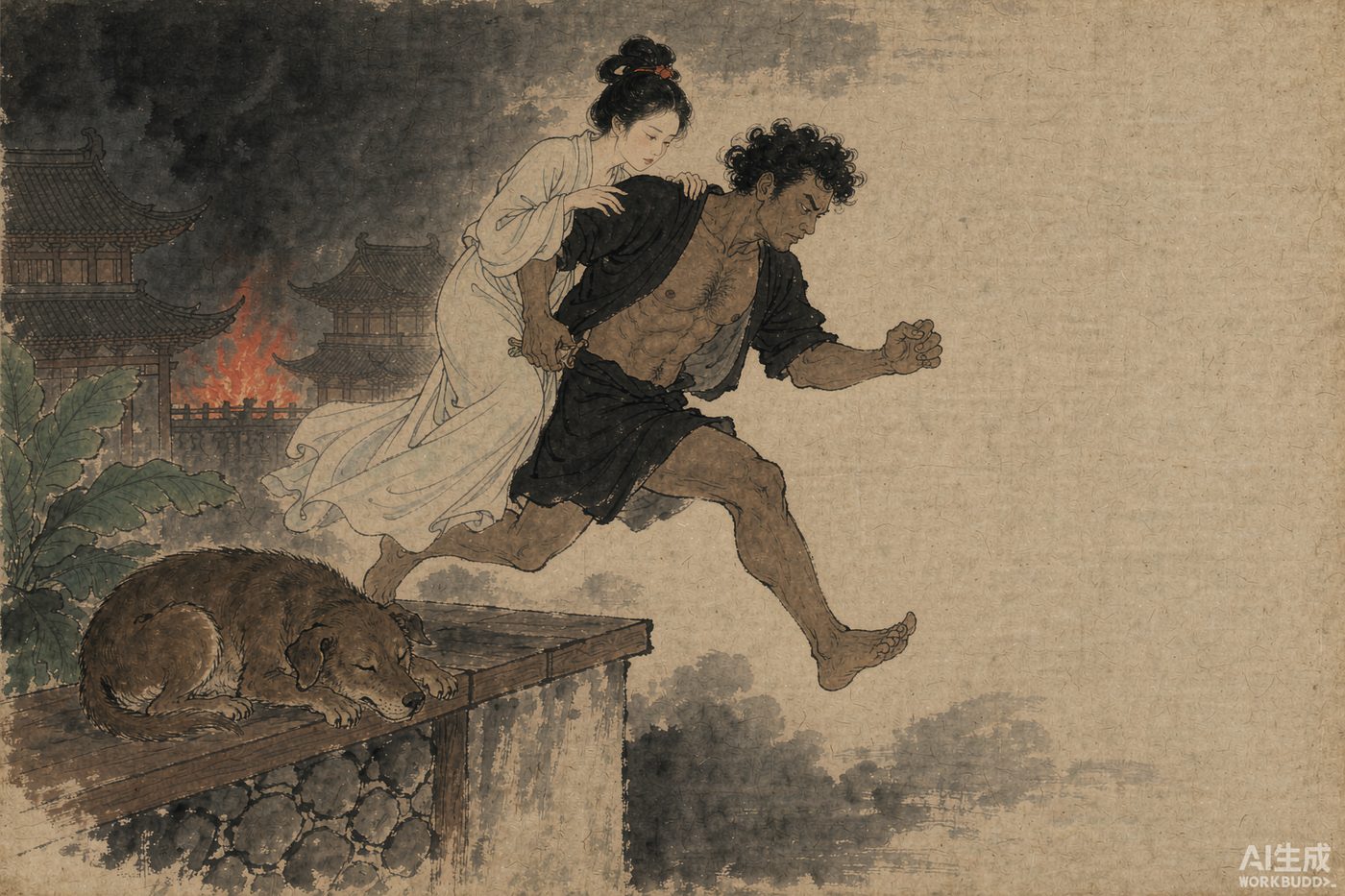
A young guardsman falls in love with a concubine who signals him in a code of fingers. His master's slave — a dark-skinned man called Mo Le — reads the code, and carries her over ten walls in one night.

SwordLoveTrickster
Qing dynasty · Qianlong era, c. 1736–1798 · 子不语

The True Judge Bao and the False

真龙图变假龙图

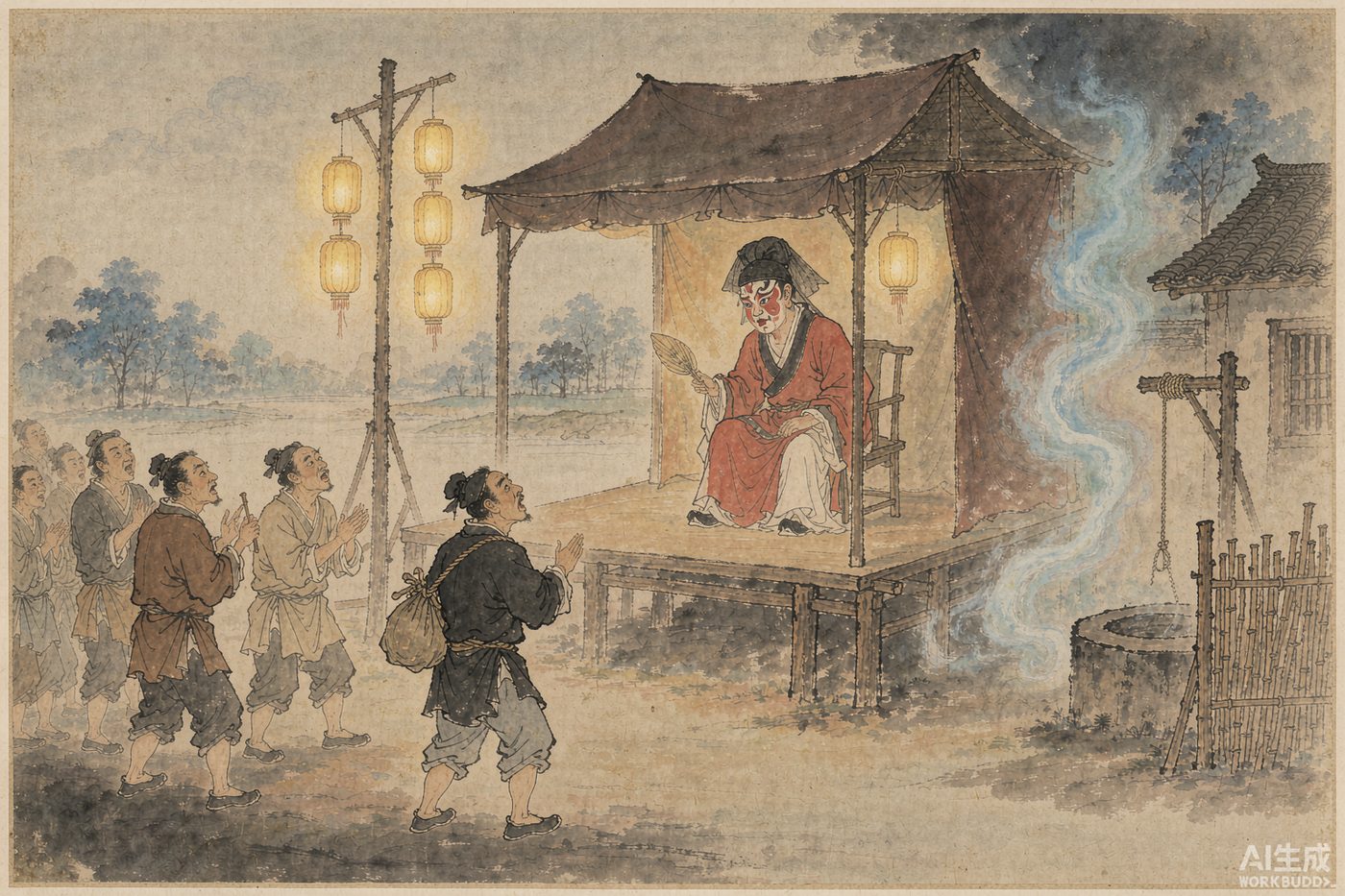
A magistrate who models himself on Bao Zheng finds a rotting corpse in a well and tortures a confession out of an adulterous couple, to public acclaim. A year later the husband walks back into town from Sichuan and stops to watch the opera they are performing about his own murder.

JusticeSatireOfficialdom