Stories/ 夷坚志/ The Sorcerer and the Seaside Shrine

The Sorcerer and the Seaside Shrine

金山廟巫

SourceYijian Zhi (Record of the Listener)
AuthorHong Mai
EraSouthern Song dynasty · late 12th century
Writtenc. 1160–1200
Small GodsSorcererFengdu
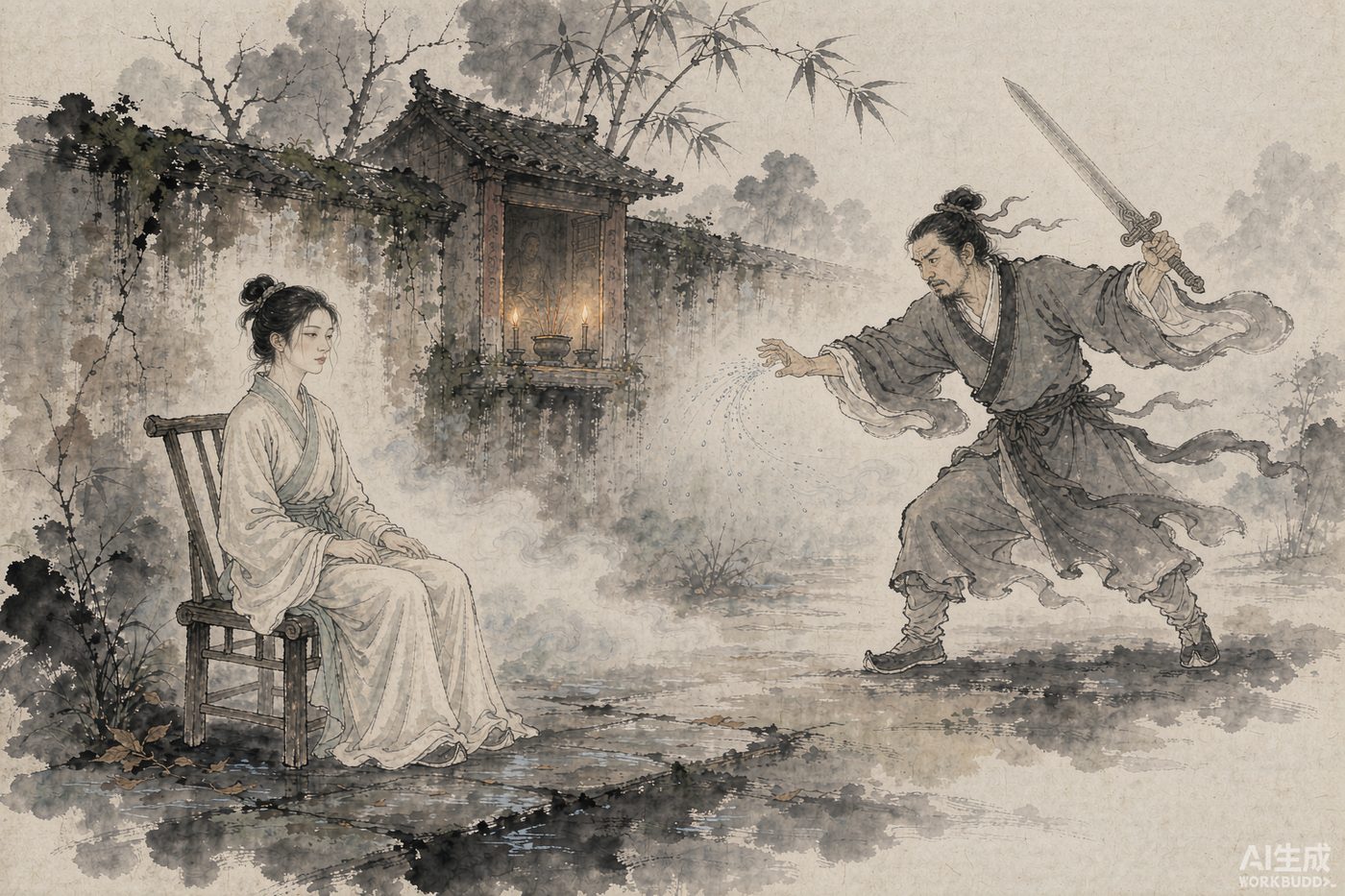
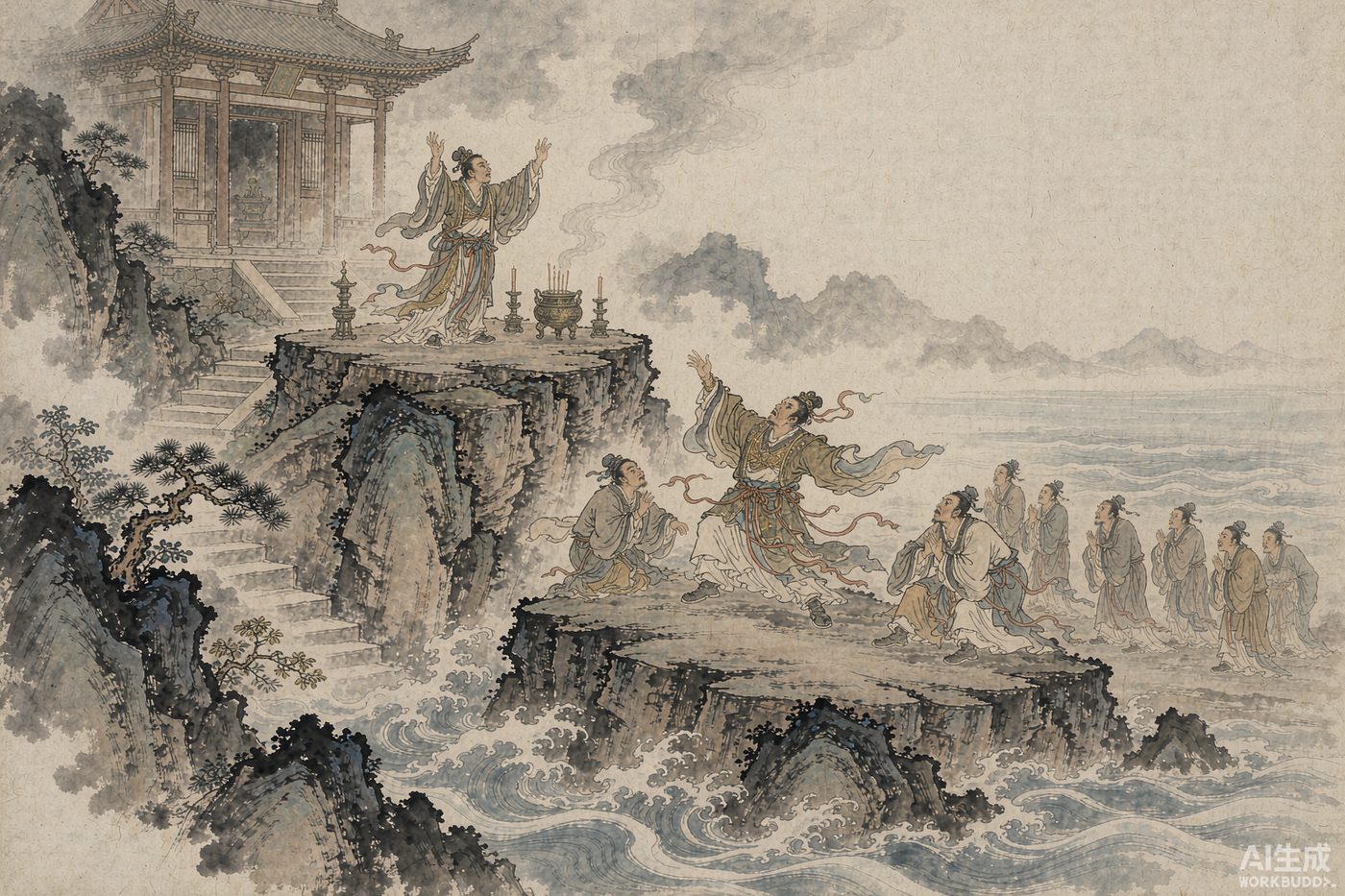
Ink-wash: a seaside temple on a rocky shore, a priest in mid-incantation, a sneering man collapsing while onlookers shrink back, waves behind
Illustration generated by AI, based on the ancient Chinese text.

The Gold Mountain Temple at Huating stood by the sea; it was the shrine of General Huo of Han. Tradition said that when Qian the Martial-Serene ruled Wuyue, the god often lent invisible troops to aid him, and so the splendid shrine was built.

At the end of the Chunxi era, the locals gathered in throngs for a festival. A sorcerer was just burning incense and opening his prayer, chanting of blessings and curses, when Shen Hui, a steward of the Qian family, alone had no faith and jeered and mocked. His friends urged him to stop, fearing he would draw disaster. The sorcerer pronounced a harsh rebuke, and Shen was just arguing back when suddenly he stumbled and fell, foam flowing from his mouth, as if struck senseless.

His servant ran to tell his family; his wife came to see and bowed to the sorcerer begging for his life. The sorcerer said: “He did not repent and apologize early; the god is already furious. He has seized and registered his spirit-soul and delivered it to Fengdu — death is in an instant, beyond saving.”

His wife, at a loss, could only beat her breast and weep over the body. Then Shen suddenly sprang up. The onlookers scattered in fright, thinking a violent ghost drove him. Shen laughed: “I was only playing with you all; I saw nothing at all.” The sorcerer slunk away in dread, and all in the temple left.
Original classical Chinese text · 原文

華亭金山廟瀕海乃漢霍將軍祠相傳云當錢武肅霸吳越時常以隂兵致助故崇建靈宫淳熙末縣人因時節競集一巫方焚香啓祝唱說福沴錢寺正家幹沈暉者獨不生信心語謔玩侮所善交相勸止恐其掇禍巫宣言詈責甚苦暉正與争辨俄踉蹡仆地涎流于外若蹶暈然從僕奔告其家妻子來視拜巫乞命巫曰悔謝不早神已盛怒既執録精魄付酆都死在頃刻不可救矣妻子彷徨無計但拊尸泣守暉忽奮身起傍人驚散謂強魂所驅沈笑曰我故戲諸人耳初無所覩也巫悚然潜出闔廟之人亦捨去

From 《金山廟巫》, Yijian Zhi. Translated in full. 金山廟 is the Gold Mountain Temple by the sea, said to be the shrine of Han general Huo; 錢武肅 is Qian Liu, the founder of the Wuyue kingdom, who claimed the god lent him invisible troops; 酆都 is Fengdu, the capital of the dead. The tale is a contest of skepticism versus the god's temper.

Source. From Yijian Zhi (Record of the Listener) (夷坚志), by Hong Mai , c. 1160–1200. The original text is in the public domain; this English rendering and the accompanying notes are original work.
Where this fits in the universe: Fengdu: The City of Ghosts · The Small Gods

Keep Reading

Related Stories

Southern Song dynasty · 1167, the third year of Qiandao · 夷坚志

The Land God of Jianju Abbey

簡寂觀土地

A generous man dies and is appointed earth god of a Taoist abbey. A year later he comes to his father in a dream with a complaint: the roof leaks, the rain runs down his face, his whole body is soaked, and nobody repairs the shrine. His father and his son dream it separately, compare notes, go and look — and rebuild it.

Small GodsDeityJustice
Southern Song dynasty · 1195 · 夷坚志

The Brother Who Traded a Sickness

李夢旦兄弟

In 1195 a family is swept by pestilence; only the younger brother is spared, because in a dream the gods had already assigned the elder's five days of sickness to him. He bargains his way out — and learns the underworld keeps a transfer desk.

PlagueUnderworldFengdu
Southern Song dynasty · 1190 · 夷坚志

The Girl Claimed by the Neighbor Shrine

張承事女

A pious girl falls into a trance; a traveling exorcist is routed by whatever speaks through her. A nap by a bridge shows him the truth: the god of the neighbor's shrine wants her for a wife, and her parents once promised her.

PossessionSmall GodsMarriage