Pan Jia of Changxi in Fuzhou had a wife, née Li, who was very pretty. She was twenty-three when she married.
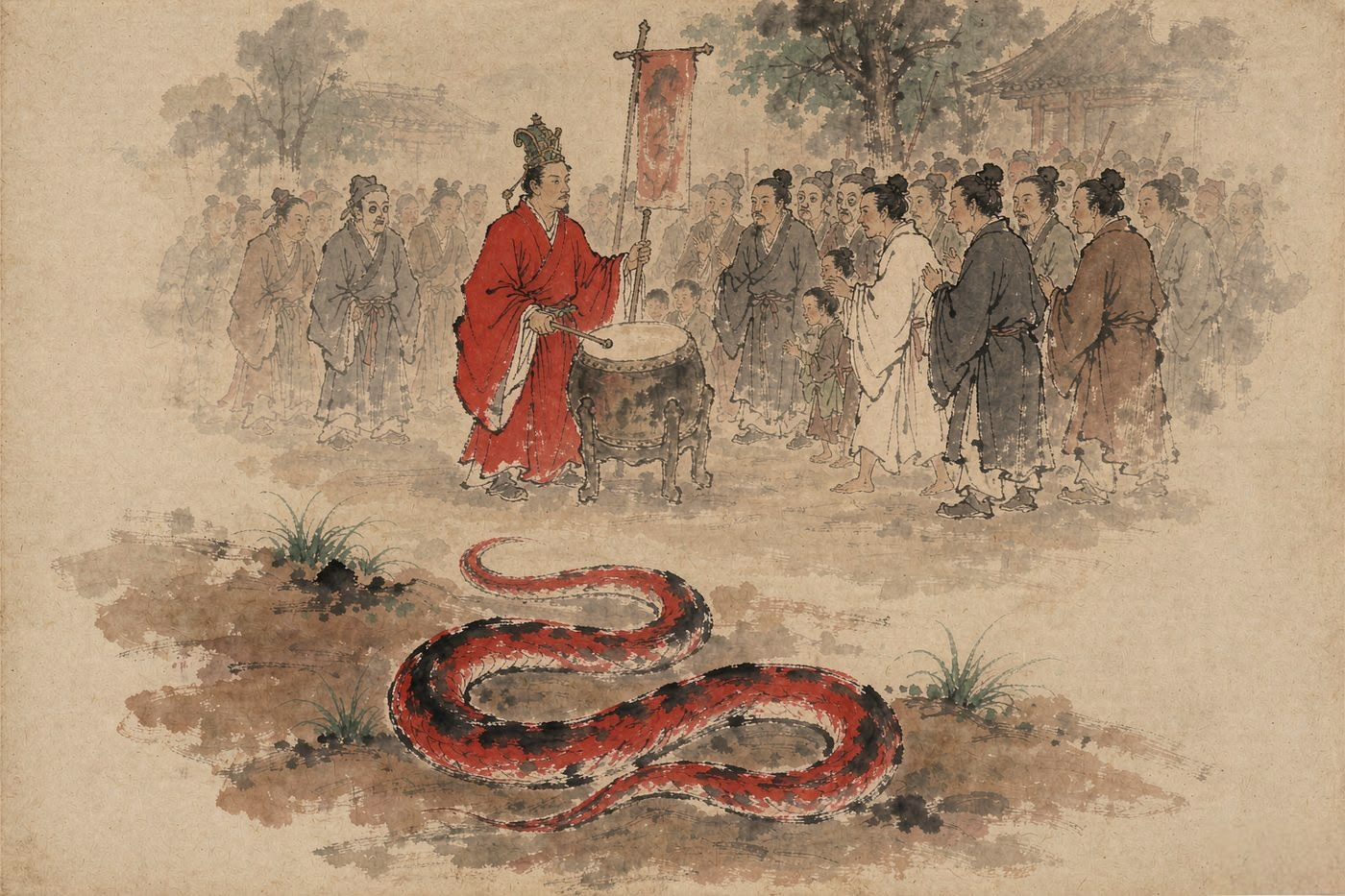
Two years later she went out to the garden with her sisters-in-law and the other women, and on the path they saw a red snake coiled up and lying perfectly still. Li fixed her eyes on it and looked hard. By the time she was home she was ill.
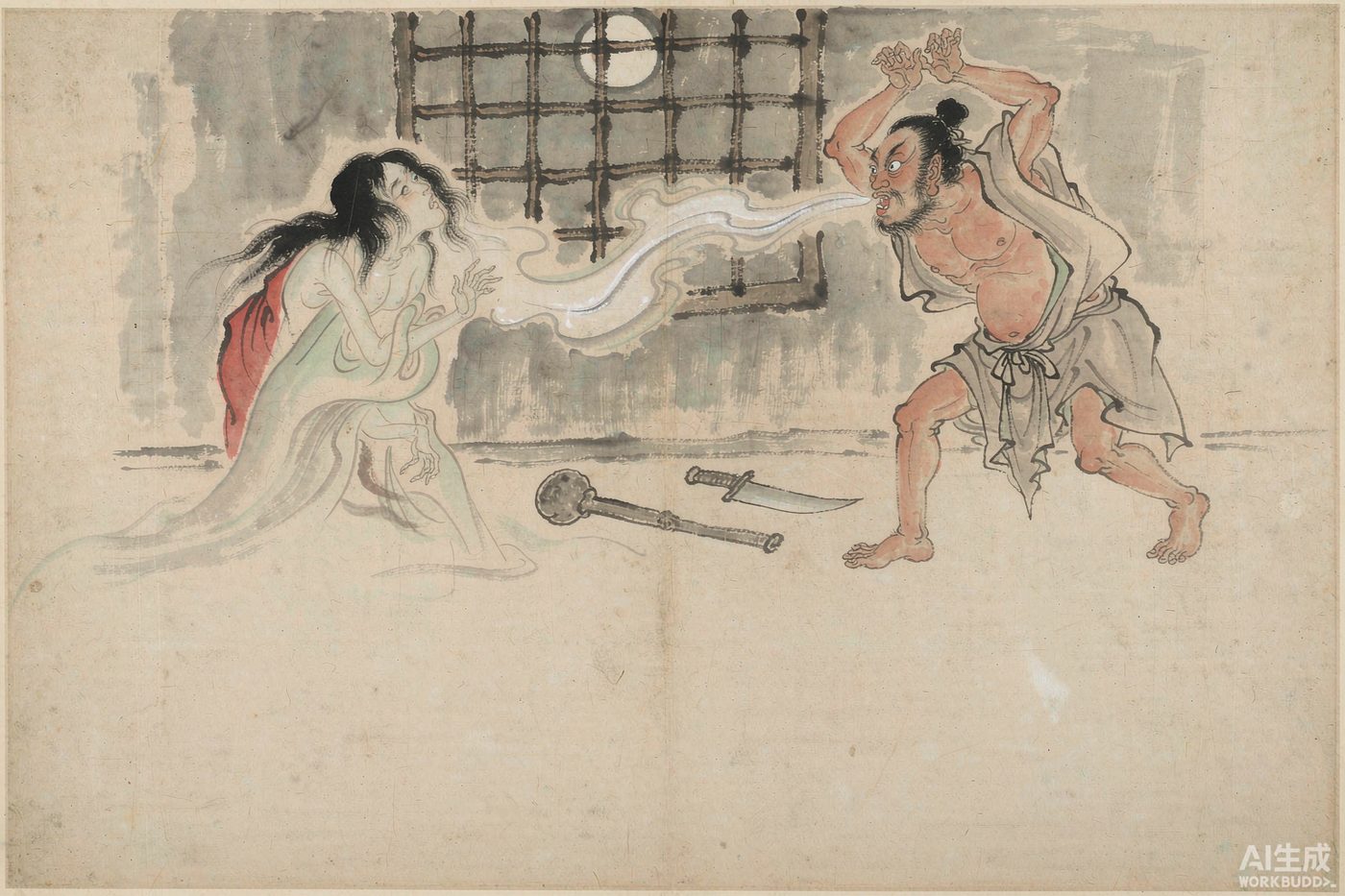
At first she laughed and talked without measure and threw out wild, unaccountable remarks, but she still answered people when they spoke to her. Then it got worse, and she changed entirely into other shapes. Sometimes she was in heavy paint and fine clothes, new clean shoes and cap, her hair stacked with flowers. Sometimes her hair was down and she was naked — not a thread on her — going barefoot down the high road, not avoiding the mud or the thorns. People gathered in the street to look, and it made no impression on her at all.
Pan was afraid she would get herself killed. He shut her in an empty room and watched her day and night.
Then he sent for the village medium, a son of the Ma family, to hold an examination.
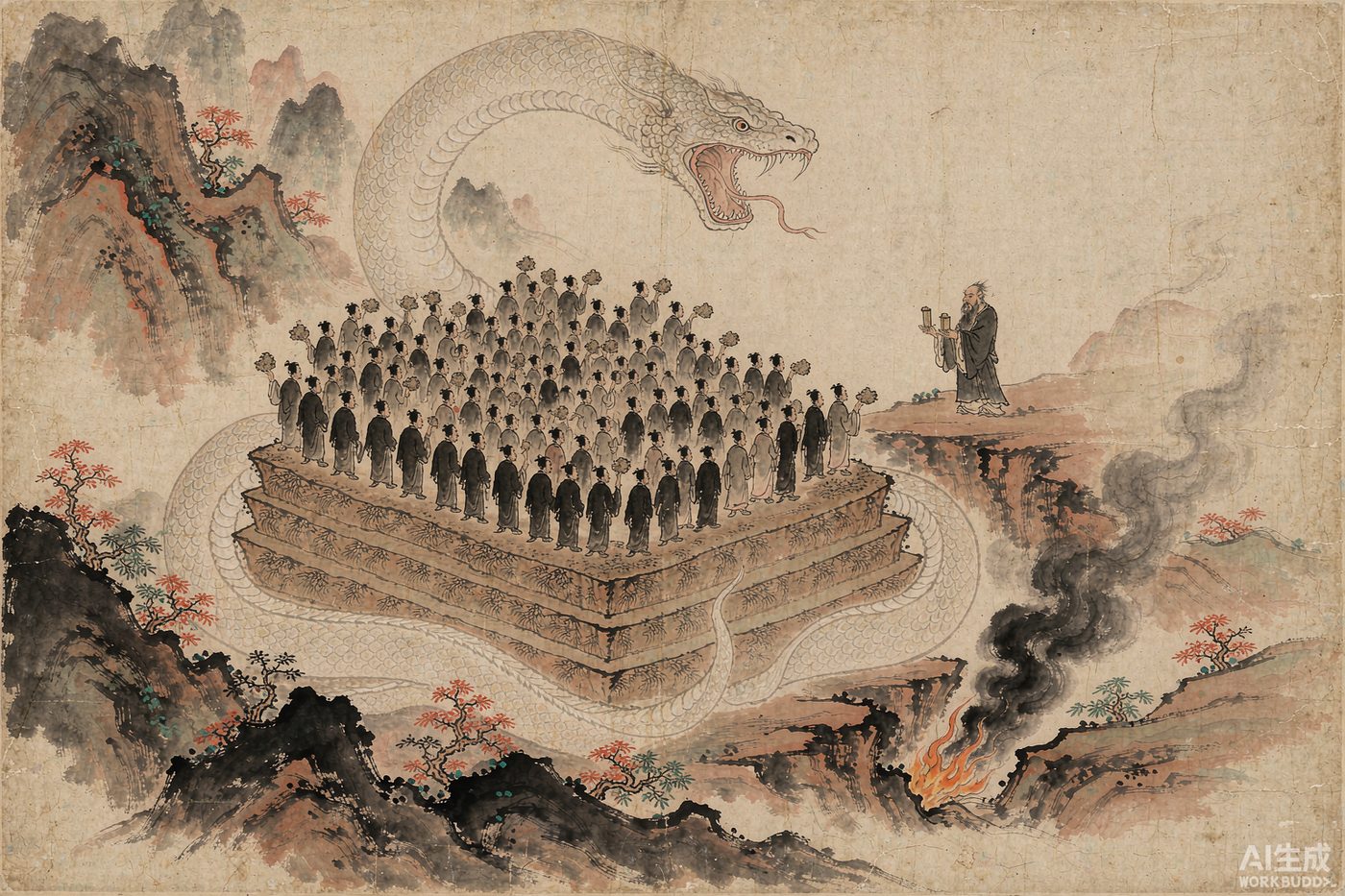
The medium put on a red coat and gathered some dozens of neighbours and serving-boys, rigged out like a Nuo exorcism troupe. They circled the foot of the hill where Li had gone walking, beating gongs and drums, and set up a great banner with four characters written on it. They shouted until their voices gave out, crying: burn the mountain, catch the ghost. Any snake or creeping thing they came across they caught and carried home, and poured wine and vinegar over it as an offering to the god.
At night he brought Li out, and the two of them answered each other, chant and response. The medium gathered up broken crockery and trod on it with bare feet. At first Li imitated him, and her feet were cut and bled. Then the medium heated a brick red-hot and stood on it; he brought a cauldron of water to a full boil, dipped in his hand, and put his head in it and walked around twice. Li could not do any of these.
So she drew in her arms and submitted.
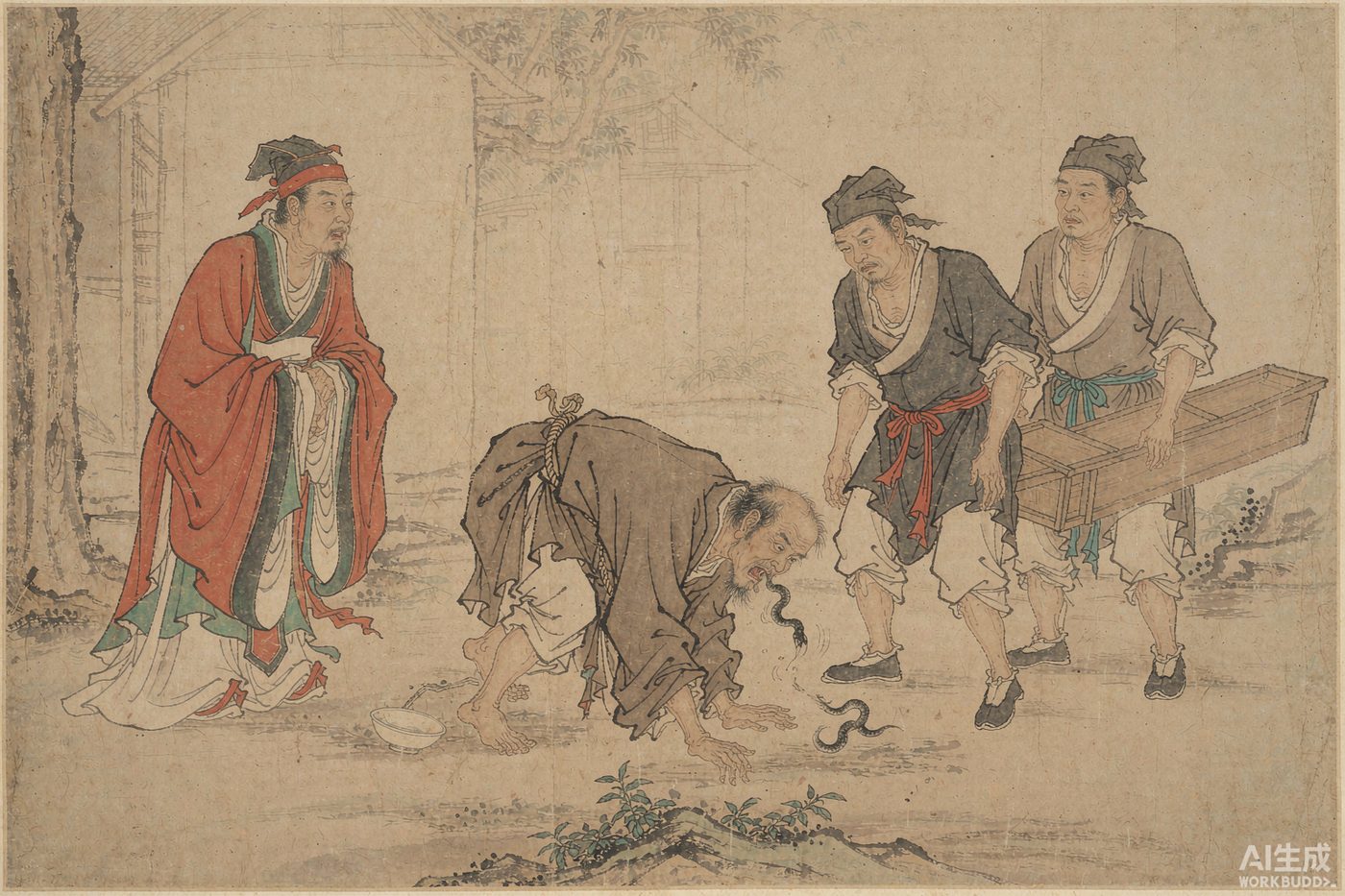
The medium poured out the boiling water and made her wash her feet in it, sat her on a small stool, and took a deposition from her: her name, and a signed statement that she would not offend again. Then he detailed a man to escort it out of the gate. A hundred paces on, it fell to the ground.
Pan picked her up and got her back to her room. She knew nothing at all, and lay stupefied as if drunk. After a night and a day her wits came back somewhat, and she was deeply ashamed. It was a full twenty days before she was steady again.
When they asked her what had come over her, she could not say. She was ashamed of it, that was all.