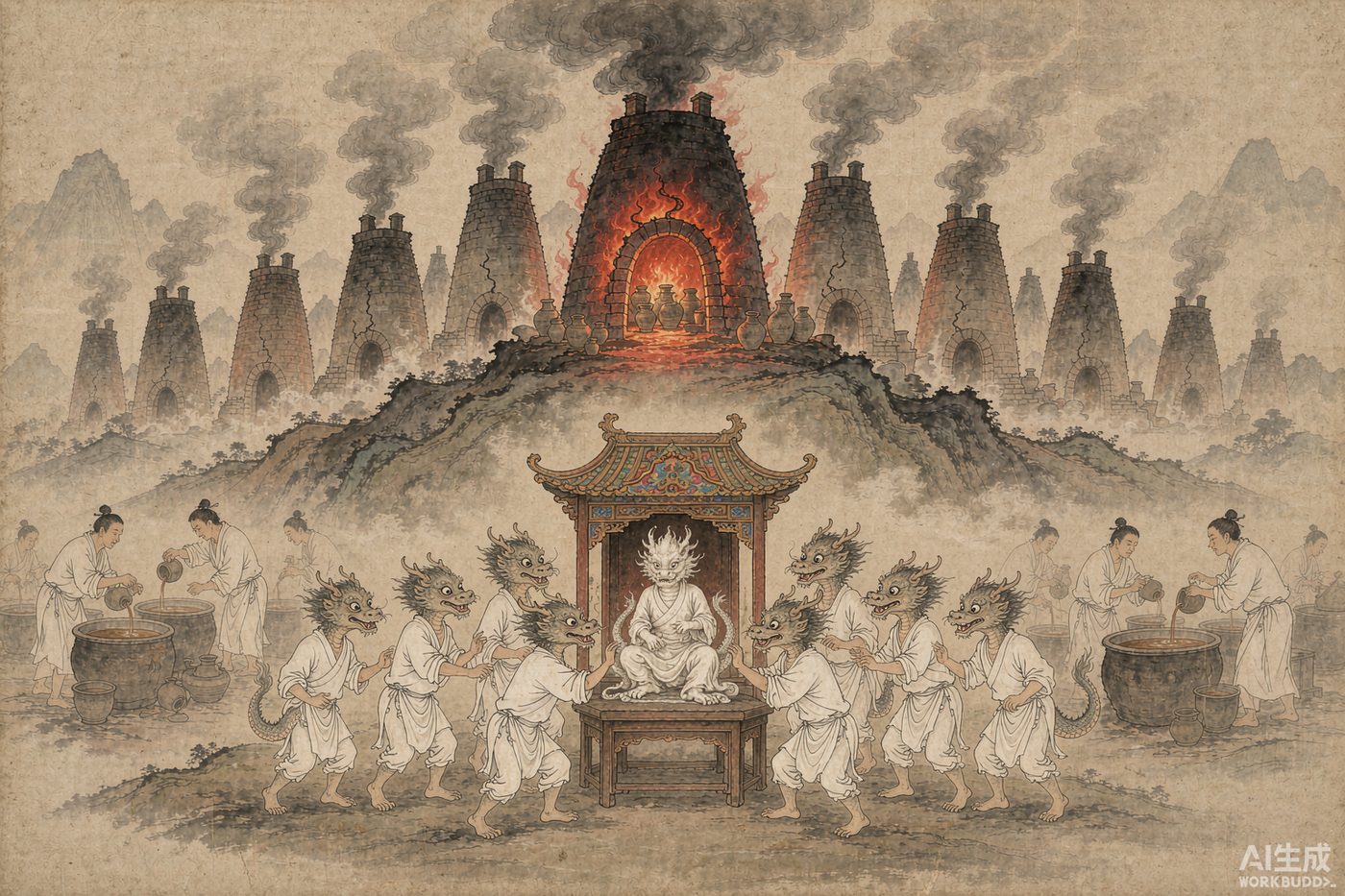
The Liang family of White Dragon Valley in Tongzhou were potters, and had been potters for generations. They were very well off. They had set up ten kilns, all of them firing earthenware — and of the ten, only one produced good work. In the other nine, every time the fire was broken open and the wares drawn out, the vessels were mostly warped and crooked and out of true. Yet when they were taken to market, people competed to buy them. It was like this with every firing, and nobody could see the reason.
There was an old shrine in the valley called the White Dragon Temple — named, of course, after the valley. Its responses had long gone quiet, and the village paid it no honour.
Then Liang dreamt that the old dragon turned himself into a man and came to see him.
“I have nine sons,” he said. “They are all grown now, and they have nowhere to be. I have lodged them, one to each, beneath the kilns of your house. Whenever you have fired before this, they have exerted themselves to help you in secret.”
“Since those nine kilns were built,” said Liang, “we have never once got a single good vessel out of them. It has been on my mind constantly. What help is this you speak of?”
The dragon said: “How is it you do not understand? The wares are poor and the profit is thick. Is that not my sons’ doing?”
Then Liang started up in awe, and bowed, and thanked him.
“If you will build a temple for them,” said the dragon, “then in time to come you will receive great blessing besides.”
Liang promised, and woke. That same day he called the workmen and had the timber prepared, and raised a new shrine on the old site: an image of the old dragon seated in the centre, and nine seats ranged to east and west for his sons.
When the work was finished, the people for miles around came to know of it, and came to look and to worship, and were glad. After that, in a fierce drought, they prayed — and the rain fell without waiting for anyone to choose a day.
And Liang’s trade did better than before.