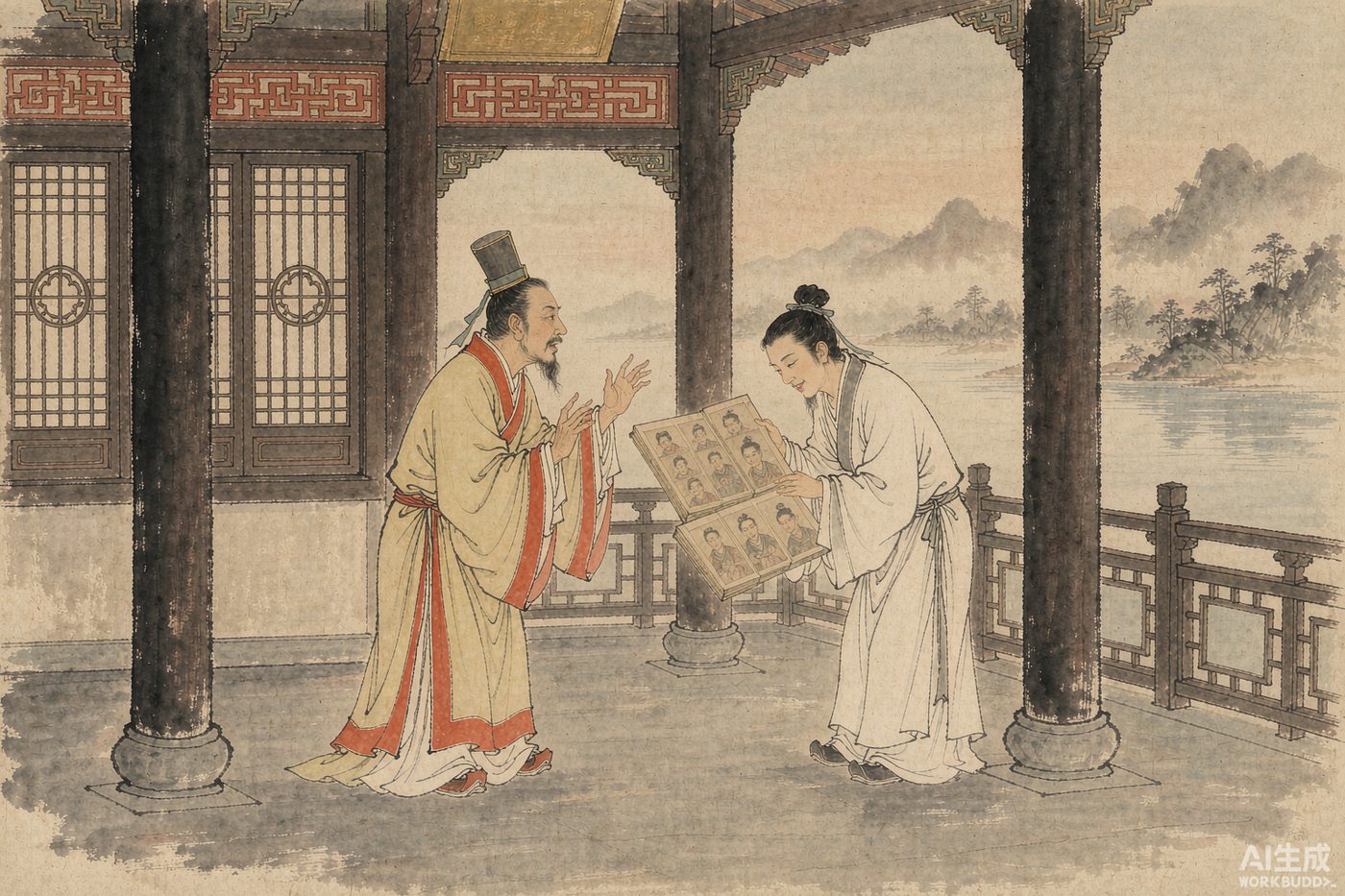
Mr. Cao Nengshi, at the end of the Ming, having passed the metropolitan examination, was travelling over the Xianxia Pass when the hills and the light on the water seemed to him like a scene he had visited in a former life.
He lodged for the night at an inn and heard a woman in the next house weeping very bitterly. He asked why, and was told: “She is keeping the thirtieth anniversary of her dead husband.”
He asked the year, month and day of the man’s death — and they were the year, month and day of his own birth. So he went into the house and pointed out one room after another, one path after another, without the least error. The family was astonished all round and came to look at him.
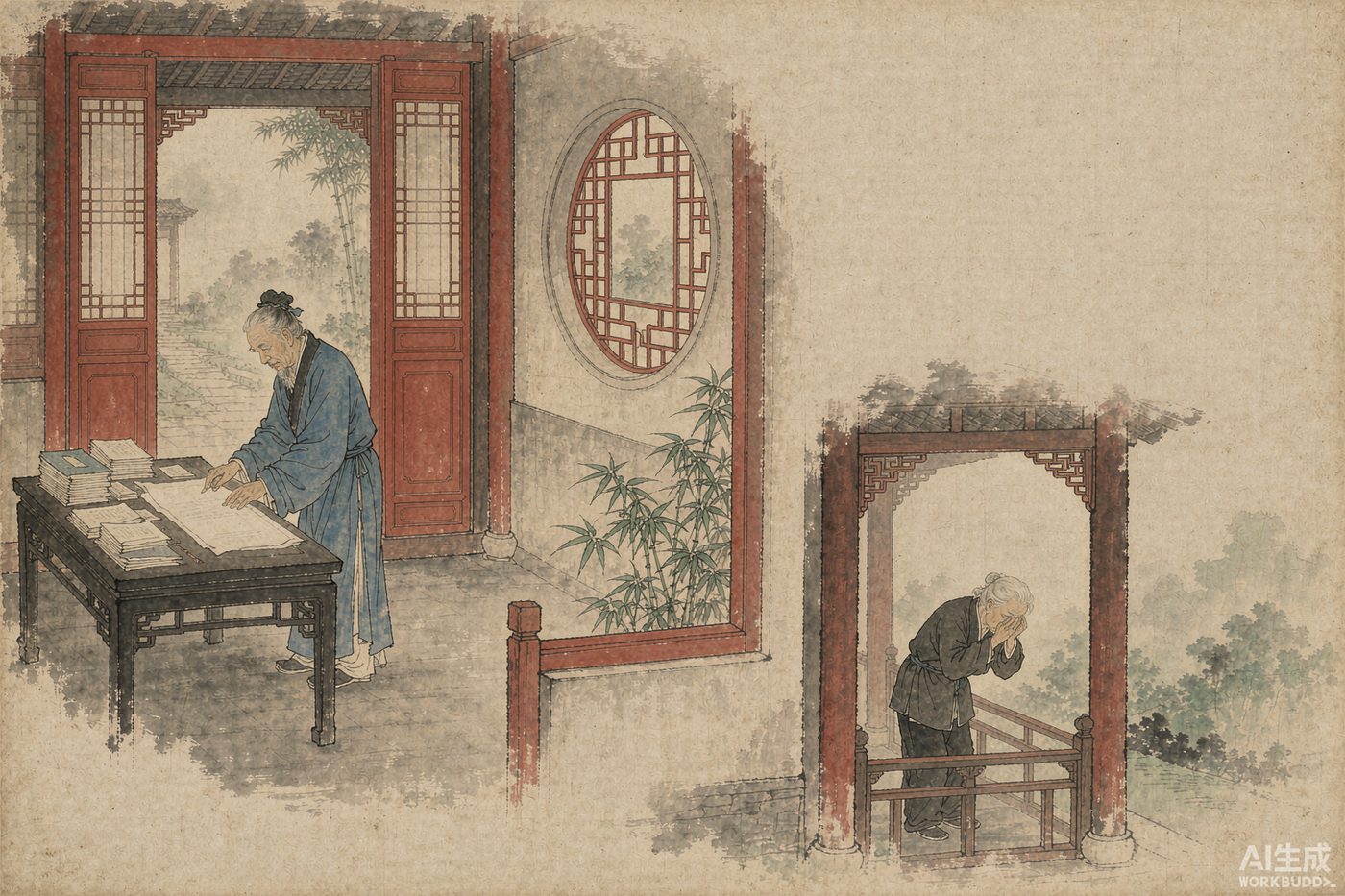
Cao too wept, and said: “In a certain study, south-facing, there are several dozen bamboos; I had a manuscript there that I had not finished. I wonder whether it is still there.”
The family said: “After our master left the world, we were afraid the lady would be hurt by the sight of the study, and so to this day it has been kept locked.”
Cao had it opened. Dust lay several inches thick; the abandoned manuscript and the disordered books were all there exactly as they had been. Only his former wife was now white-haired from end to end, and he could not recognise her.
Cao divided his family property in half and gave it to her, that she might live out her remaining years.
I note: in the Wenyuan Yinghua, Bai Minzhong records the matter of Cui Yanwu, prefect of Huazhou. Cui remembered that in a former life he had been the wife of Du Mingfu; riding straight to the Du house, he found Mingfu now an old man. He then recounted the old affairs, took the gold hairpin they had hidden in the wall, and gave over the house to be a temple, called the Mingfu Temple. It is of the same kind as this.