The hills of Yizhou are steep and dangerous, and so there are many fierce tigers in them; the district magistrate used to order the hunters out after them, and often the hunters were the ones who got eaten.
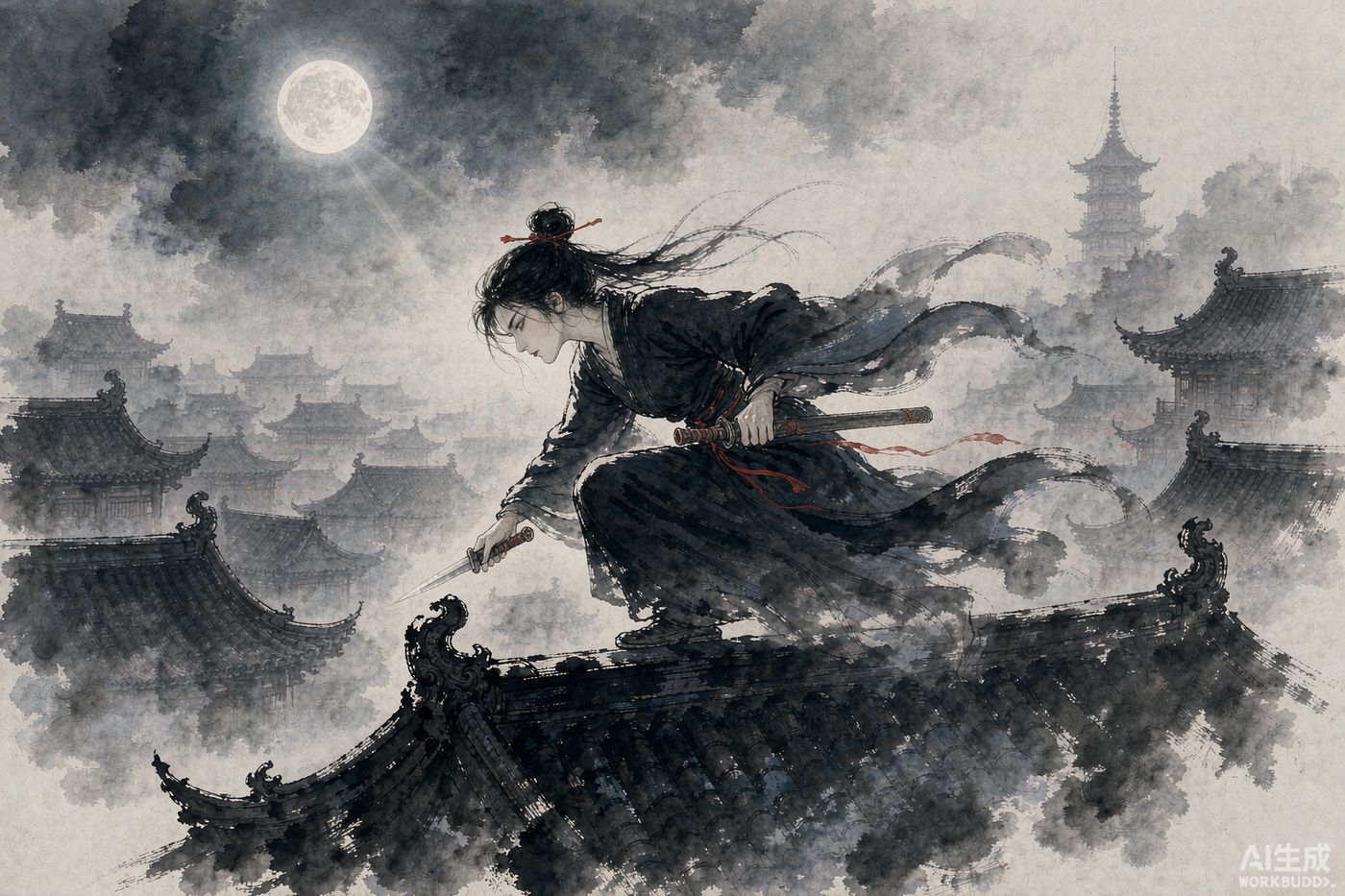
There was a man named Jiao Qi, from Shaanxi, who had come to Yizhou to join a relative, missed him, and settled there as a sojourner. He was prodigiously brave by nature: he could take the stone cauldron in front of the Thousand-Buddha Temple under his arm and leap with it onto the left ridge of the Great Hero Hall, and so people called him Jiao Stone-Cauldron. Learning that the ridges of Yi were full of tigers, he took to going into the hills on foot every day; whenever he met one he killed it with his bare hands and carried it home, and this became his habit.
One day in the hills he met two tigers with a cub between them. Jiao’s temper rose; he killed the two and slung them left and right across his shoulders, and carried the cub home alive. Everyone gave way before him, and Jiao talked and laughed as usual.
A certain rich family, admiring his courage, laid on a feast for him. At table Jiao described his tiger-binding exploits; the listeners all changed colour, and Jiao embroidered the further, with hands and voice, mightily pleased with himself.
All at once a cat jumped onto the table and snatched food, splashing gravy over the whole company. Jiao, supposing it to be his host’s cat, let it bolt its mouthful and go.
“The neighbour’s pestilent brute,” said the host. “How tiresome it is!”
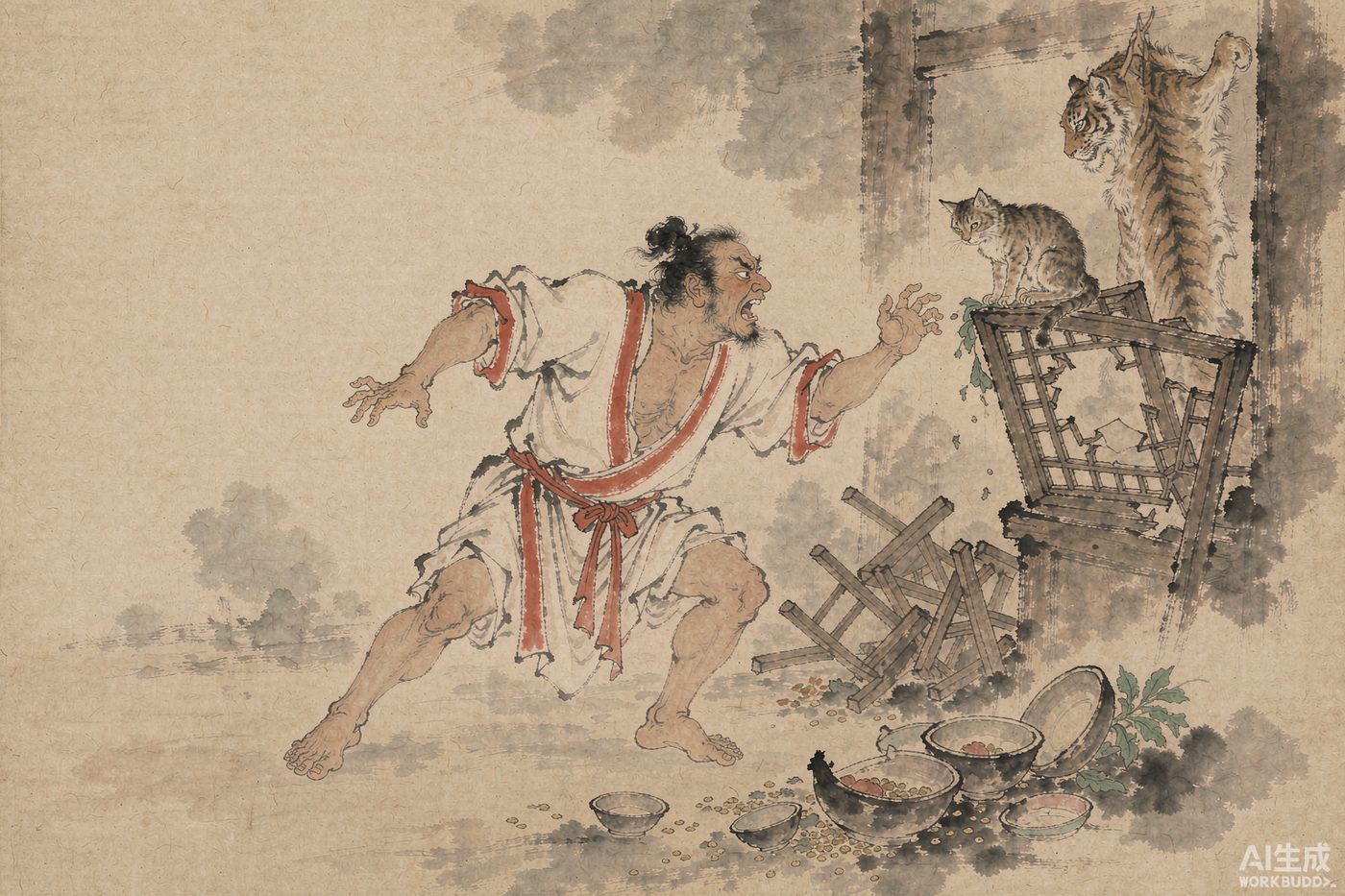
Presently the cat came again. Jiao sprang up and struck at it with his fist: every dish and platter on the table went over and smashed, and the cat had already leapt to a corner by the window. Jiao, furious, chased and struck again: the window lattice was shattered, and the cat sprang up to the roof-ridge and sat glaring down at him. Jiao grew angrier still and spread his arms as if to seize and bind it — and the cat yowled once, dragged its tail, strolled slowly over the neighbour’s wall and was gone.
Jiao had nothing left to try, and stood staring blankly at the wall. His host clapped his hands and laughed, and Jiao withdrew in deep shame.
Now, to be able to bind a tiger and unable to bind a cat — is it really that he is brave before a great enemy and faint before a small one? It is simply that the measures do not correspond. The cauldron that holds an ox cannot be used to cook a small fish; the crossbow of a thousand pounds cannot be used to bring down a field-mouse. Those who carry ability should know this — and those who employ it should know it better still.
The Duo comment: Bing Ji asked about the panting ox, and would not answer about soldiers, punishments, money and grain — not that he would not answer, but that he could not. How do I know it? I know it from young Jiao binding the cat.