It is said that the wood called sinkwood comes from trees that grew before the world was opened up, which sank into sand and water, passed through the catastrophe in which heaven and earth were overturned, and came back into the world; and that is why, once returned to the ground, it will not decay in ten thousand years. It is deep green in colour, and figured like brocade. Lay a single splinter of it on the ground and no fly or gnat will come within a hundred paces.
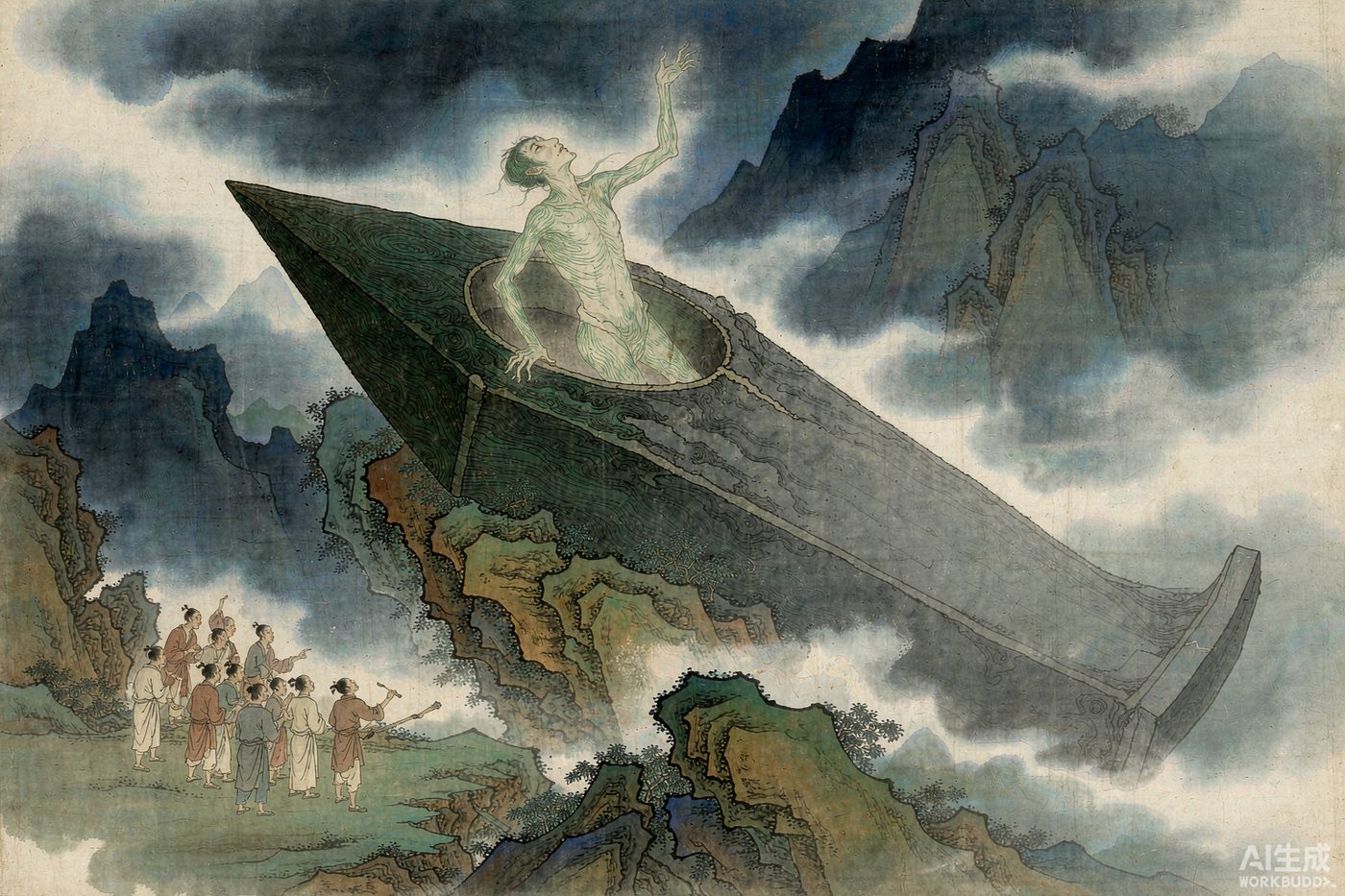
In the thirtieth year of the Kangxi era, Mount Tiantai collapsed, and a coffin was washed up out of the sand. It was of an uncanny shape: pointed at the head, broad at the foot, and more than six feet in height.
A man who knew about such things said: “This is a sinkwood coffin. There will be something in it.”
They forced the front panel. There was a man inside. His brows and eyes, his mouth and nose were the same colour as the wood; his arms and legs had the grain of wood. And he had not decayed at all.
All at once he opened his eyes and looked up into the air.
“What is that blue-green thing?” he said.
“The sky,” they told him.
He was astonished. “In my day,” he said, “the sky was not so high as that.”
When he had said it, his eyes closed again.
Everybody pushed forward to lift him out, and men and women from the whole district came in crowds to see the man from before Pangu. Then a wind got up, and he became a man of stone.
The coffin went to the district magistrate, who passed it on up to the governor-general.
My own view is that this man lived in the remotest past, at the time when heaven and earth were about to fall back into chaos. The Han apocrypha say: after ten thousand years, the sky may be leaned on with a pestle. This man said the sky was not so high as it is now. That bears it out.