Stories/ 夷坚志/ The Land God of Jianju Abbey

The Land God of Jianju Abbey

簡寂觀土地

SourceYijian Zhi (Record of the Listener)
AuthorHong Mai
EraSouthern Song dynasty · 1167, the third year of Qiandao
Writtenc. 1160–1200
Small GodsDeityJusticeFamily
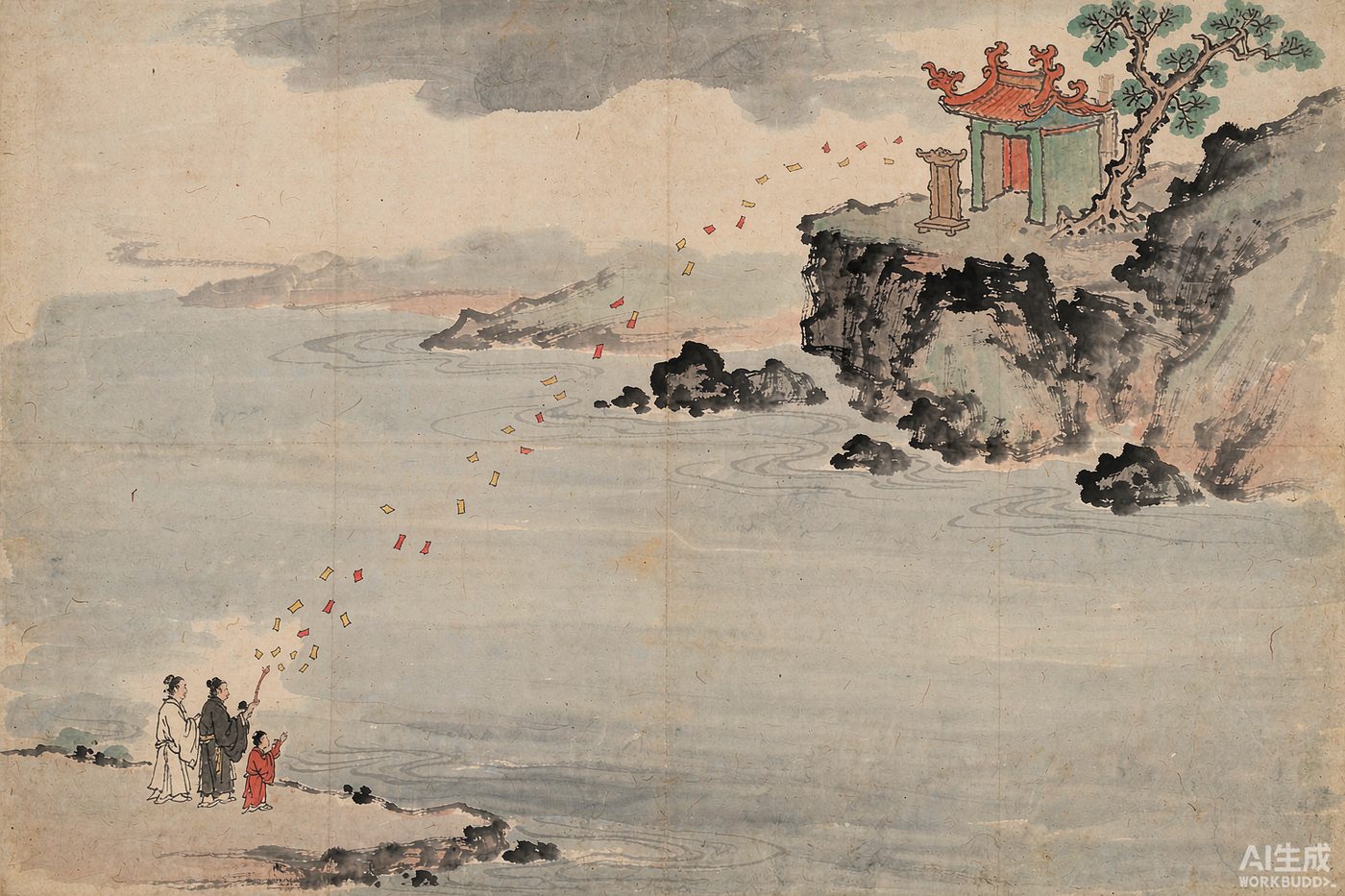
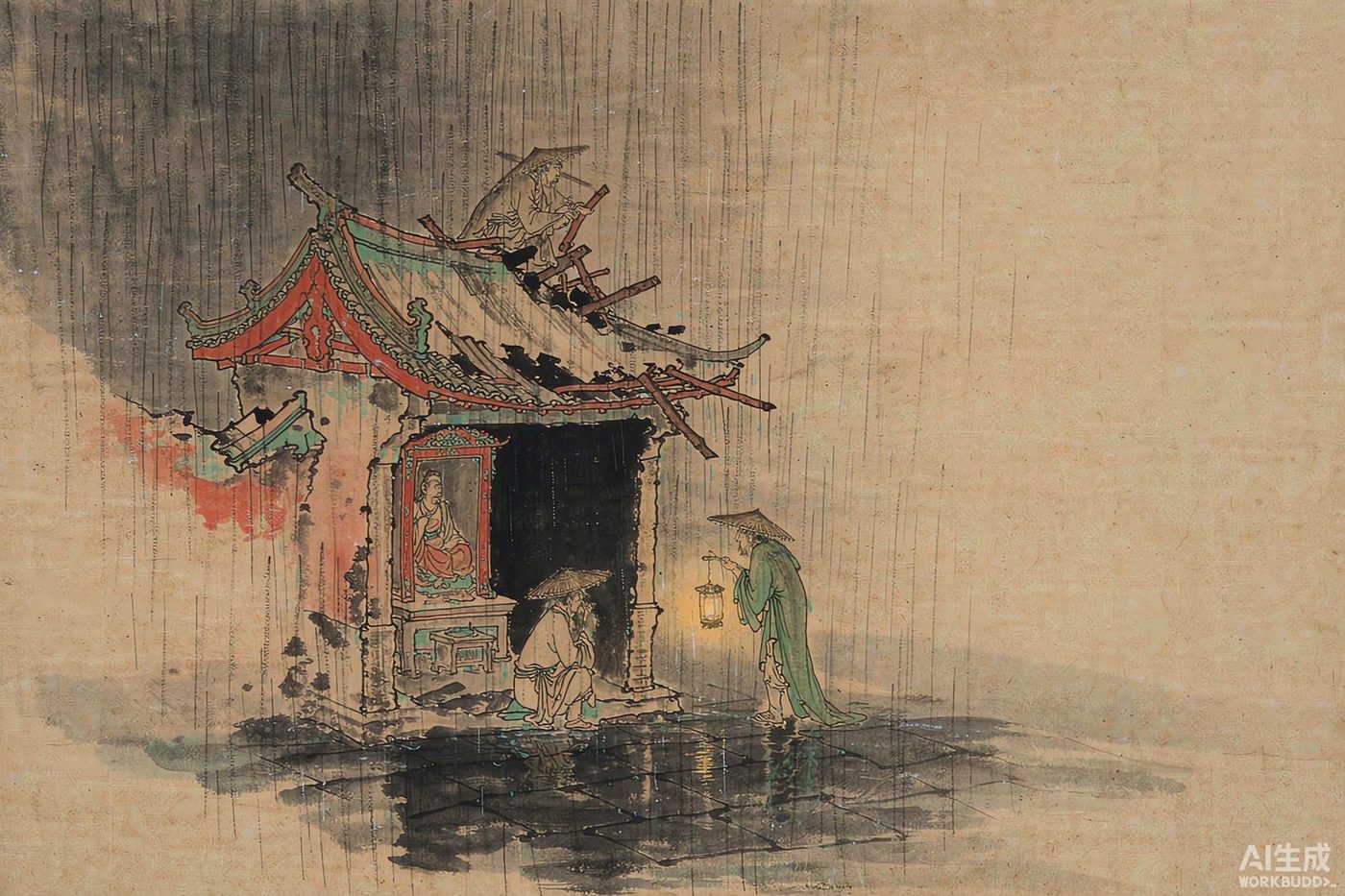
A ruined Taoist abbey shrine in heavy rain, a small clay god soaked at the altar under a leaking roof, and two men in straw raincoats inspecting the eaves with lanterns at dusk, ink-wash painting
Illustration generated by AI, based on the ancient Chinese text.

Chen Yanzhong of Duchang was a man of blunt honesty who loved what was right, careless with his money and free in his manner.

There was once a grandee named Dang who came from Hebei and lodged in the same village of West Chen. He had to travel to the capital for an official appointment and had no funds for the journey. Yanzhong gave him a hundred strings of cash, and boarded his aged parents and little ones in his own house, treating them like his own flesh and bone. This was his way with men in extremity.

In the tenth month of the third year of Qiandao he died of an illness. The night before the end he told his father in a dream: “Yanzhong cannot serve you to the end of your days. I have received appointment as earth god of Jianju Abbey.”

His father did not believe it. Then his son dreamed the same thing.

More than a year passed, and he came again in dream: “I have been earth god of Jianju for a full year now, and the building is ruinous. Whenever it rains my face streams and I can get no rest; there is hardly a whole spot on my body. Please have it repaired for me.”

The next day father and son talked it over together, went to the abbey and looked — and believed. And they rebuilt the shrine entirely new.
Original classical Chinese text · 原文

都昌人陳彦忠伉質好義疎財倜儻嘗有党大夫者自河北來同寓居西陳里將赴調無資財可行彦忠餉以百千且館其老稚於家待之如骨肉其賙人之急類如此乾道三年十月以疾亡臨卒前一夕夢告其父曰彦忠不得終養兹受命為簡寂觀土地矣父未以為信已而其子亦夢如所言踰歲後再見夢曰自為簡寂土地今一年久而室宇摧敝每天雨則面目淋漓不可寧居四體殆無全膚宜為我繕理明日乃父乃子相與語即往彼處視之而信乃為一新之

From 《簡寂觀土地》, Yijian Zhi. Translated in full. 都昌 is Duchang on Poyang Lake in Jiangxi; 伉質好義、疎財倜儻 describes a man of blunt honesty, public-spirited, generous with money and free in manner; 赴調 is to travel to the capital for an official appointment; 百千 is a hundred strings of cash, a very large sum; 簡寂觀 is Jianju Abbey, the great Taoist monastery on Mount Lu founded by Lu Xiujing, the codifier of the Lingbao liturgy; 土地 is the earth god, the lowest and most local rank of deity; 乾道三年 is 1167.

Source. From Yijian Zhi (Record of the Listener) (夷坚志), by Hong Mai , c. 1160–1200. The original text is in the public domain; this English rendering and the accompanying notes are original work.
Where this fits in the universe: The Small Gods · How a God Gets a Post · How a Shrine Gets Built

Keep Reading

Related Stories

Qing dynasty · Qianlong era, c. 1736–1798 · 子不语

The God Nobody Could Name

毁陈友谅庙

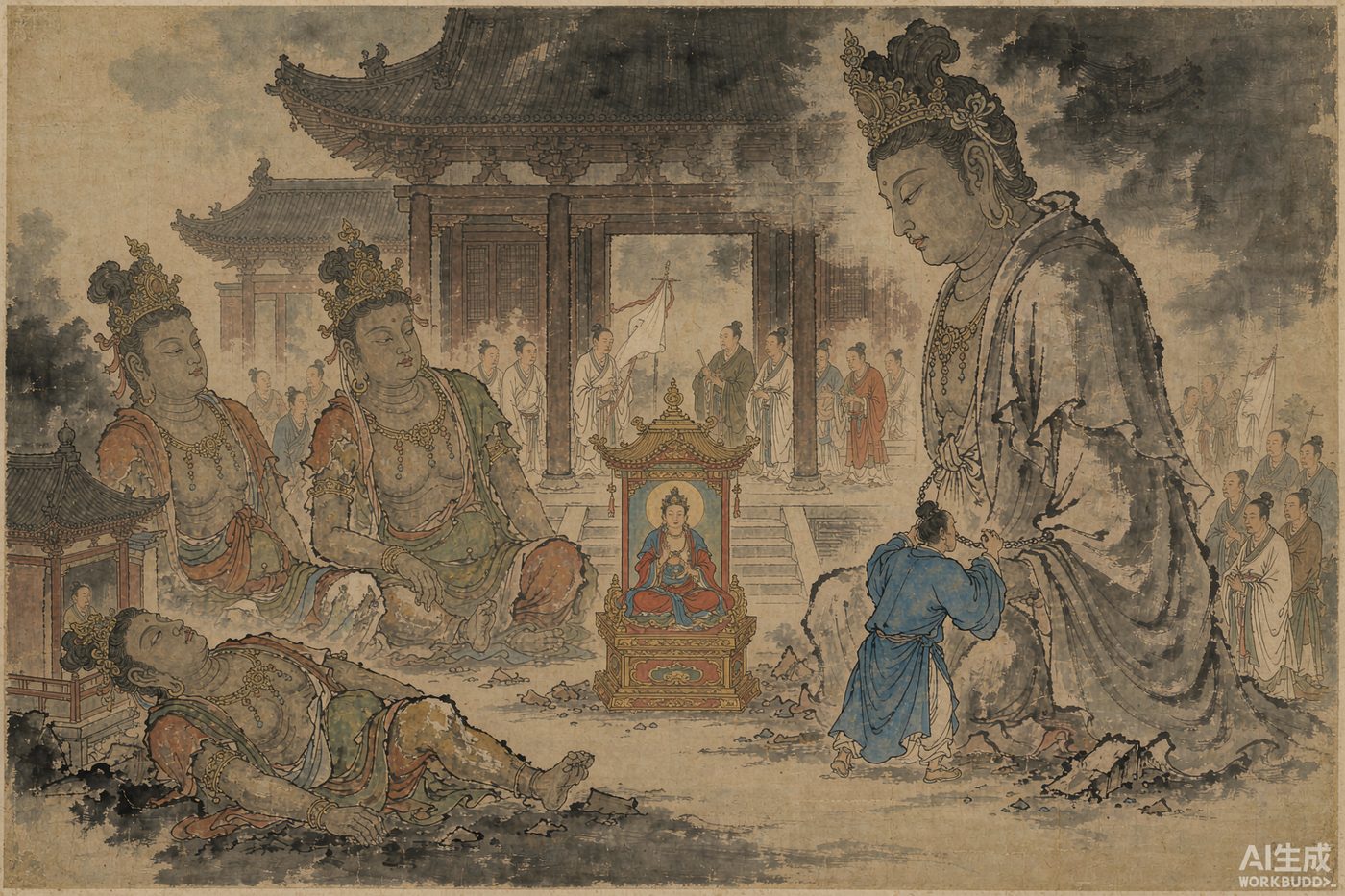
Arriving at a new post, a magistrate is told there is one more temple he must burn incense at. Nobody knows what god is in it. He searches the gazetteer: not listed. So he puts an iron chain round the statue's neck and pulls. Then he writes to the Celestial Masters to ask who it was.

DeitySmall GodsOfficialdom
Qing dynasty · Kangxi era, 1662–1722 · 子不语

The Earth God Who Told

雷击土地

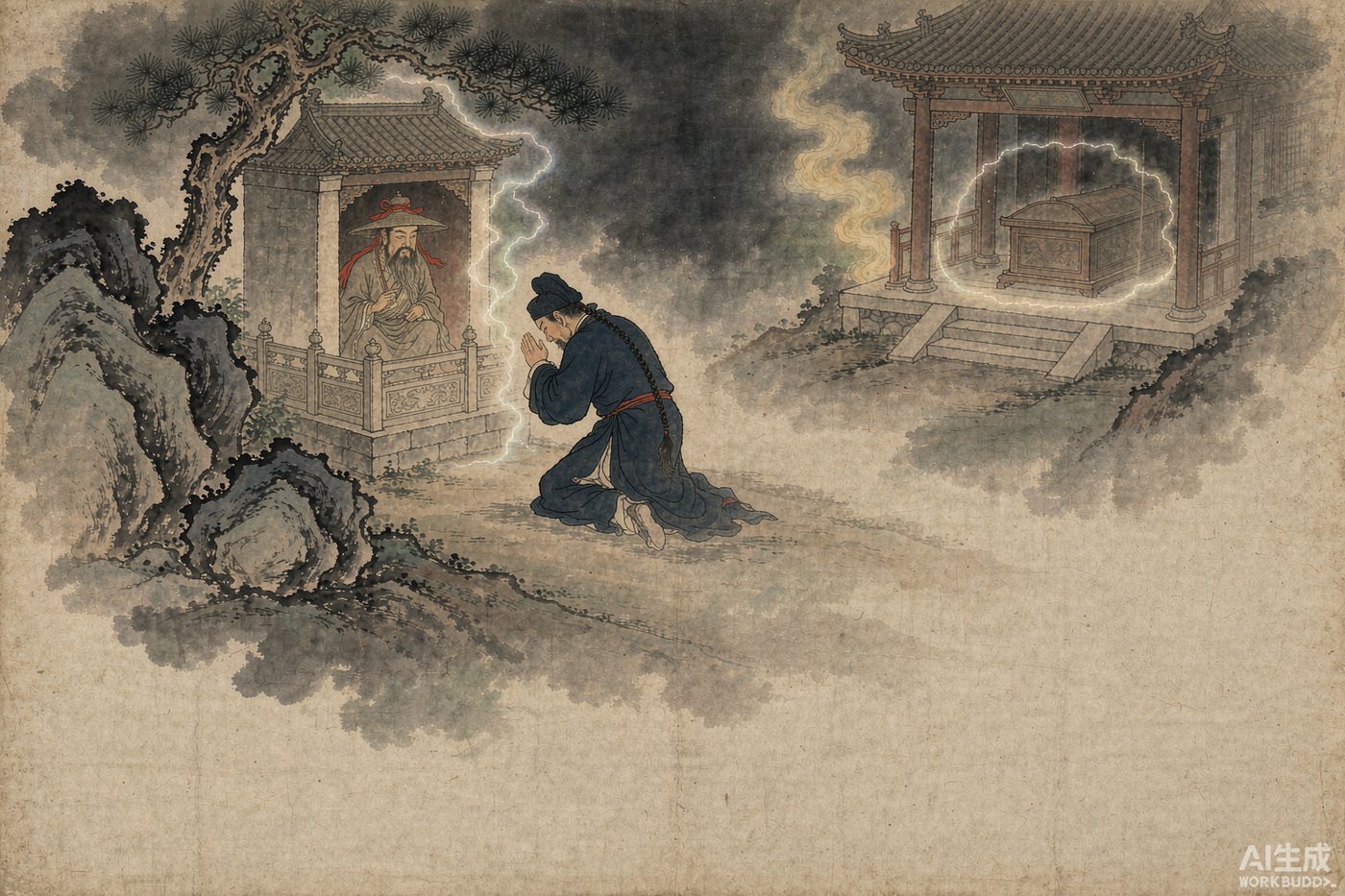
A dead friend has been posted as the local earth god, and he tells the magistrate that his mother is down to be struck by lightning. There is one way out, he says: make her spend out her whole allotment of food and clothing at ten times the rate, so that she dies of it first. The magistrate does it. Then the thunder comes anyway.

Small GodsDeityFate
Qing dynasty · Qianlong era, c. 1750–1795 · 子不语

Lord Qiu Becomes a Water God

裘文达公为水神

A dying minister tells his family he is the river god at Swallow Rock and is going back to his post — and leaves them a way to check. Draw the third lot of the highest grade at the temple of Lord Guan and he keeps the appointment; draw anything else and he has been demoted. They draw it. Yuan Mei, wind-bound at the rock years later, writes a poem on the wall and gets a fair wind.

DeitySmall GodsPoetry