Wang Wugong, a man of the capital, lived in Sock-Twist Lane. His wife was very beautiful.
A mendicant monk who passed the gate saw her and took a liking to her, and plotted in secret how to get at her — but no occasion offered.
Then it happened that Wang was about to go to a post on the Huai, and he and his wife were sitting together behind the blind, when an outside servant came in with a box on his head and set it down before them.
“Master Cong sends his respects to the lady of the house,” he said. “Since you will be parting for a season and he has nothing to show his regard, he ventures to offer these for the road.”
And with that he was gone.
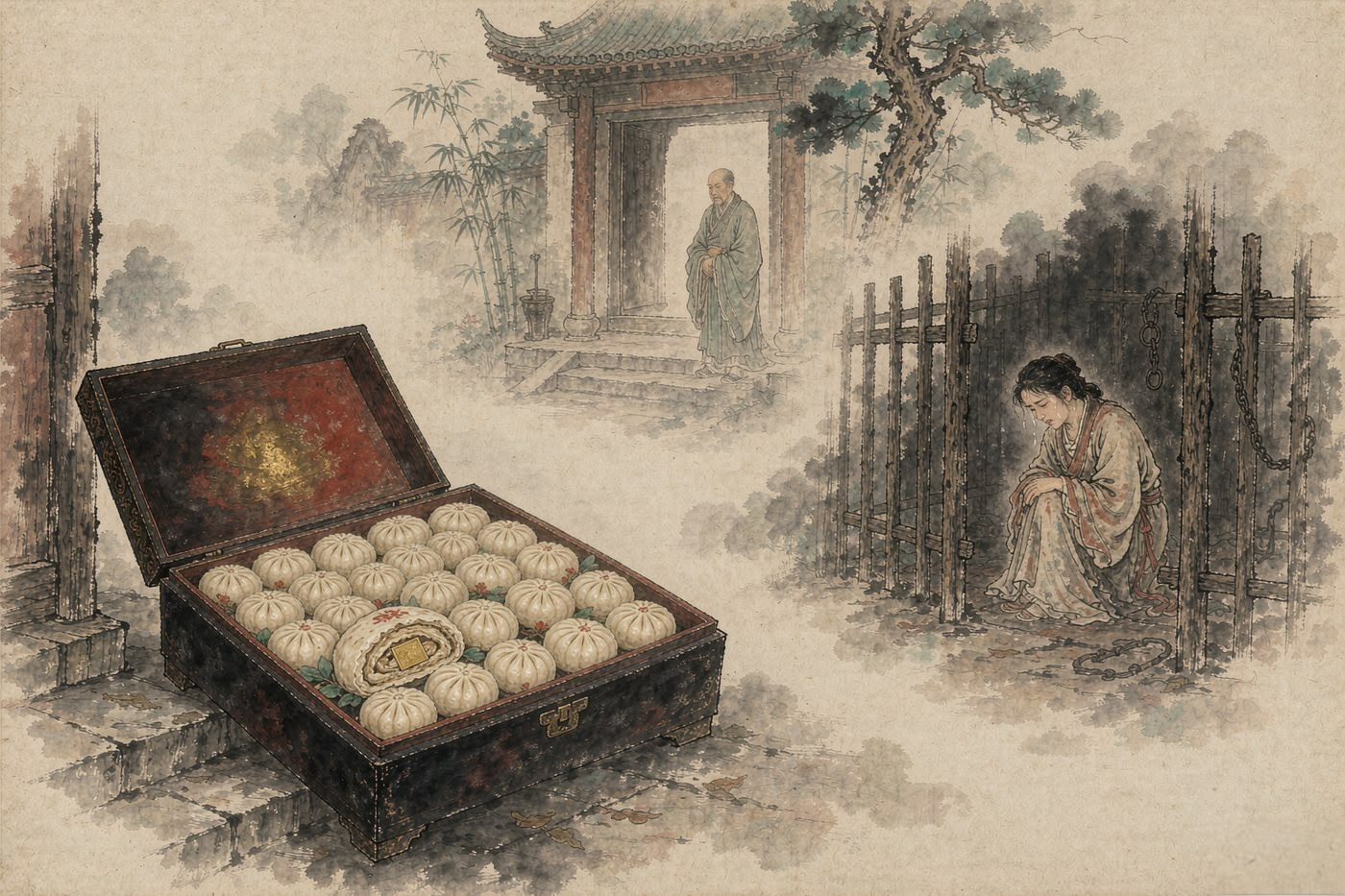
The two of them opened the box at once. It was a hundred meat pies. They cut one open, and inside was a little gold plaque weighing a qian. Thinking it must be a mistake, they cut open the others; and every one was the same.
Wang’s face changed and he rounded on his wife. “I had my suspicions of that shaveling, coming and going at our gate morning and evening, and I was sure there was a reason. Now here it is.”
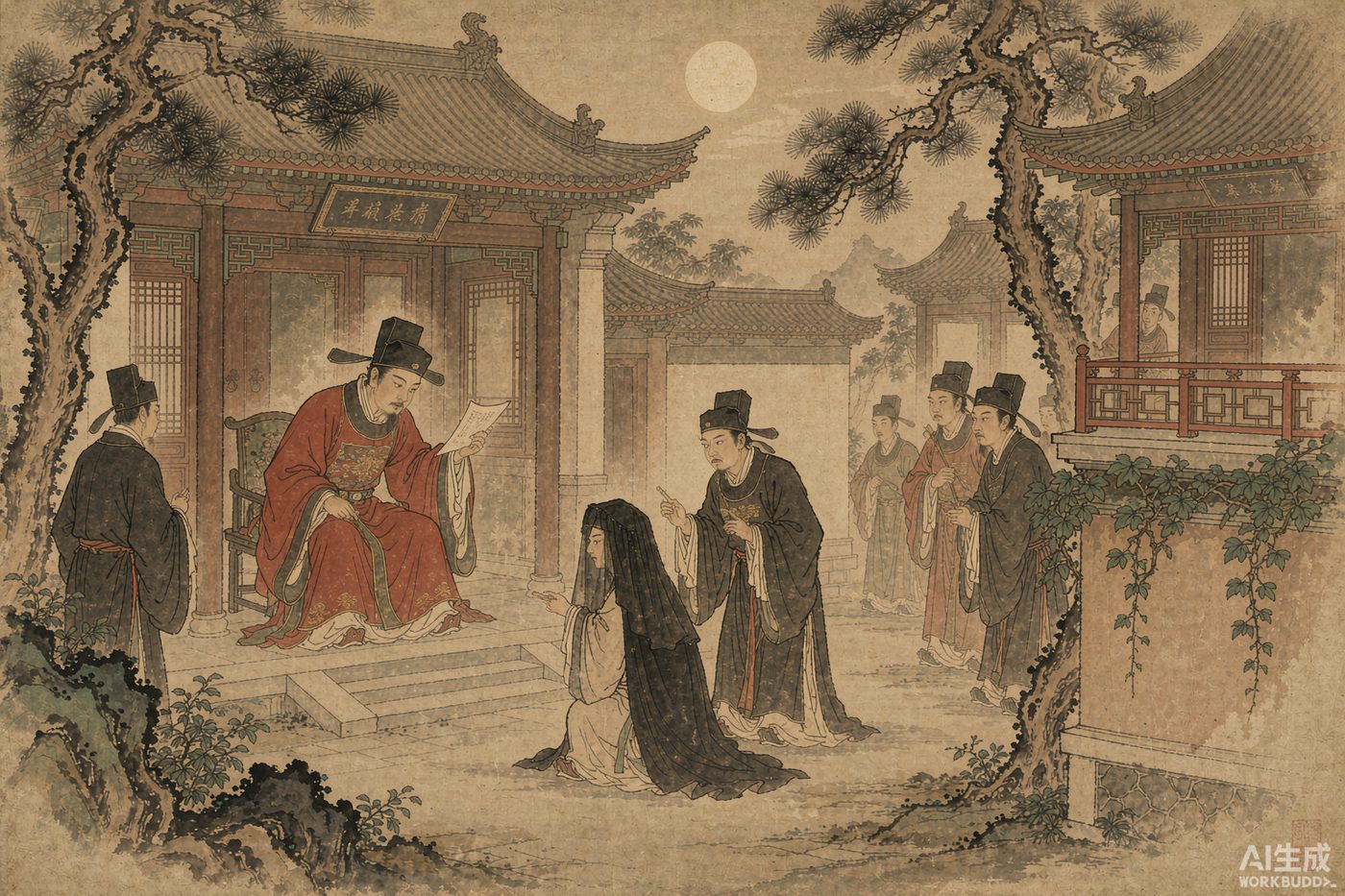
He laid a complaint at once with the prefectural and county authorities. But the monk had no registered name and no place of residence, and had gone to ground where he could not be caught. Only Wang’s wife was left, in prison and under examination. She could only weep and call on heaven; she could not answer a single article of the charge. Wang cast her off and went to his post alone in a single carriage.
She was kept in bonds for months. The prefect found the business murky and impossible to conclude, and ordered her released to lodgings outside; and she was destitute, without food and without clothes.
The monk heard of it and came back secretly, and sent a needle-woman to talk to her.
“What are you going to do now?” she was to say. “You will starve to death. Let me take you to a certain temple, and you can sew for the community and live from day to day, until Wang Wugong comes to a better mind. What do you say?”
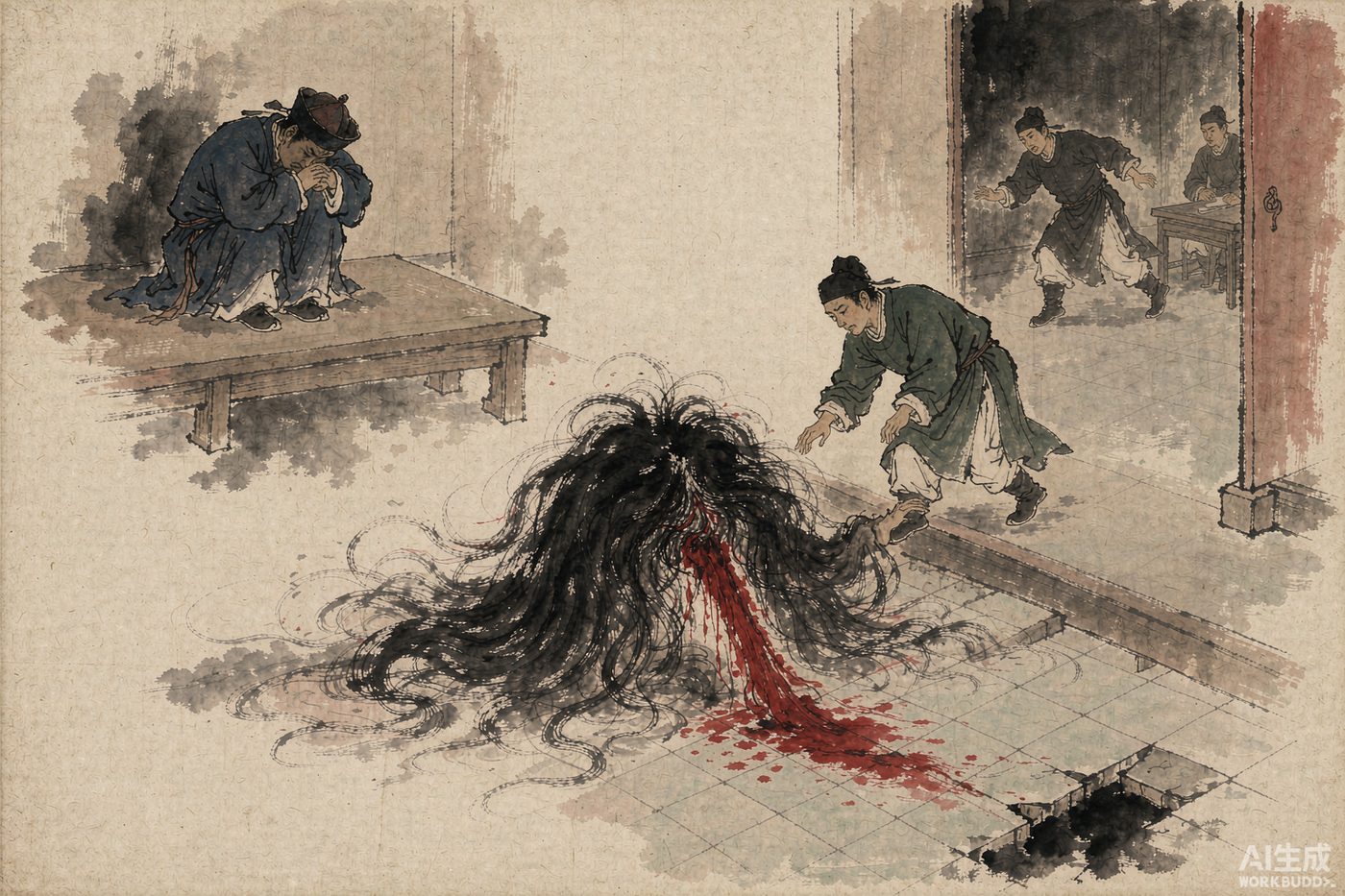
Wang’s wife forced herself to agree. She went — and it was that monk’s room, and there was a pit in the floor, and he did as he pleased with her. After a long while they let her come and go a little; and she watched for her chance, and told the patrol.
The monk was seized and brought into court, and confessed.
And the wife died of chagrin.