In the early years of the Chunxi era the Palace Command was grazing its horses at Pingwang in Wu commandery. On the way back the column lodged at Linping, and the main body had already settled for the night while He Zhong, a deputy commander of the rear army, with four soldiers, was still three li behind them. At Jiangwan they lost the road. They asked an old farmer, who told them to take the great road on the left.
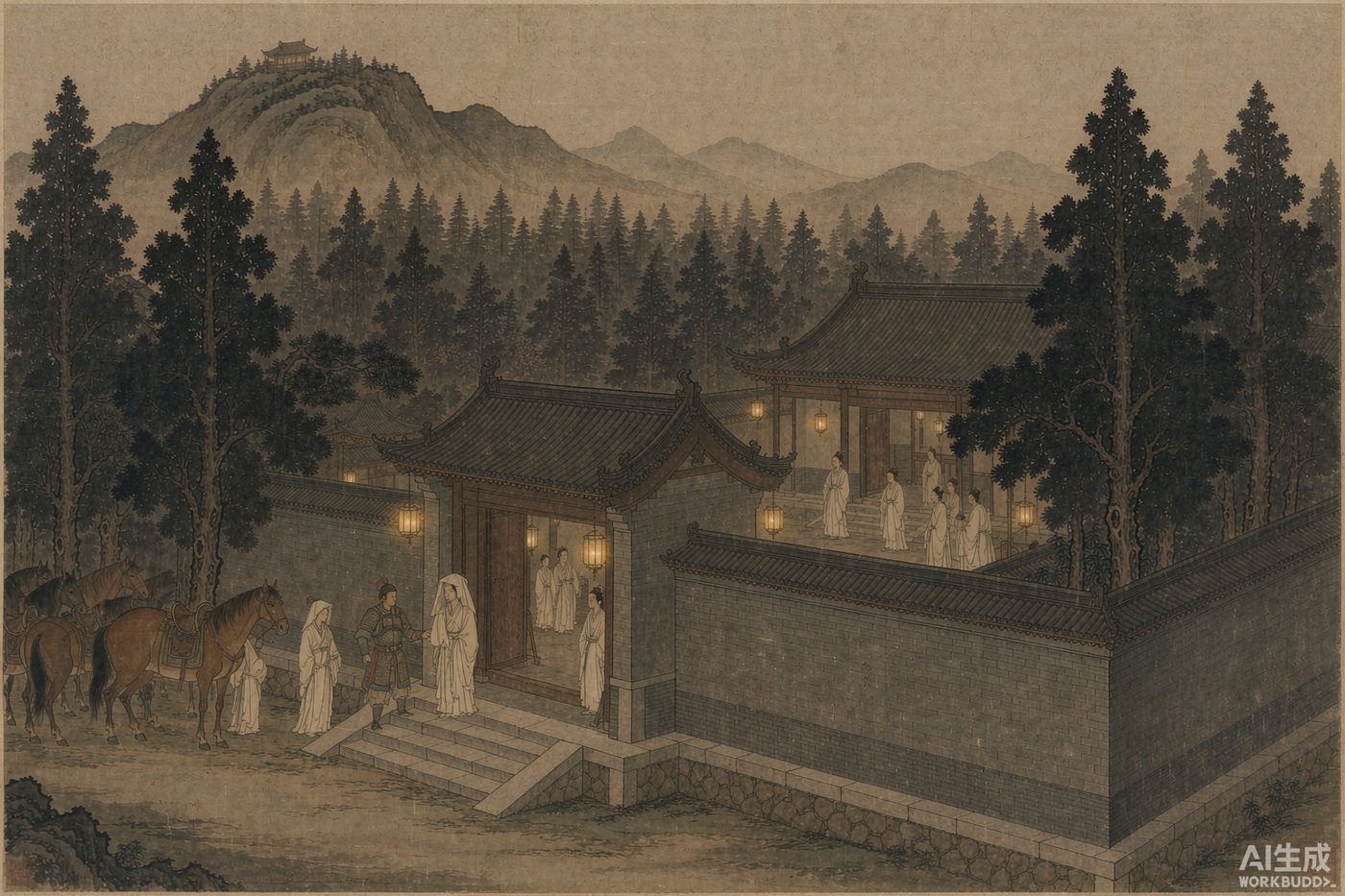
They had gone no more than half a li when they passed a great mansion standing in a cypress wood. Several horses were tethered outside it, all of them tall and spirited and handsome to look at.
He Zhong asked the gatekeeper whose house it was.
“The late Prefect Lü of Yongzhou,” said the man. “He is dead now. Only the lady is here, keeping her widowhood.”
He Zhong asked whether the horses were for sale.
“We are looking for a buyer to hand them over to.”
So he tipped the gatekeeper to go in and announce him. After a long while the lady came out: plain dress, an uncoloured skirt, with a careless, unstudied air about her — the manner of someone who lives among trees. She was close on forty, and a dozen or more maids attended her. She bade them be seated and made tea, then asked what he wanted. He told her: the horses.
She smiled. “A small matter.”
Presently wine was brought, a feast was laid, and singing and dancing followed one upon another. When it was over, she invited him into her room to sleep with her.
He Zhong held himself a rough, unpolished soldier, no fit match for such a woman, and declined.
The lady sighed. “I have kept my widowhood ten years. I have neither son nor younger brother. I have only stayed alive among a troop of maids. That we should meet tonight, with no one expecting it — is that not heaven? You need not trouble yourself about it.”
So he stayed as her guest for three nights before he left. She sent him off with a dappled horse and a hundred taels of fine silver, and each of the four soldiers got ten thousand cash. She told him too that her elder sister lived beside Jingci Temple, and asked him to carry a letter to her. They clasped hands, most tenderly, and parted.
He Zhong reached camp late. He had broken the army’s deadline and was liable for punishment, and in his fright he had no plan at all; so he presented the horse to his commanding officer and pleaded a sudden illness as the reason for his delay. The commander was delighted with the horse. He asked no questions, and he promoted He Zhong to full commander.
Some days later He Zhong took the letter to the lake. Sure enough, west of Jingci Temple, along a path through the pines, he came to the sister’s house. They met as kin by marriage; she asked him to come again the next day, and kept him, and lay with him. Gold and pearls, silk and cloth — he went home loaded with bundles of it. From then on he went every three or four days. His wife, because of the money, asked nothing about any of it.
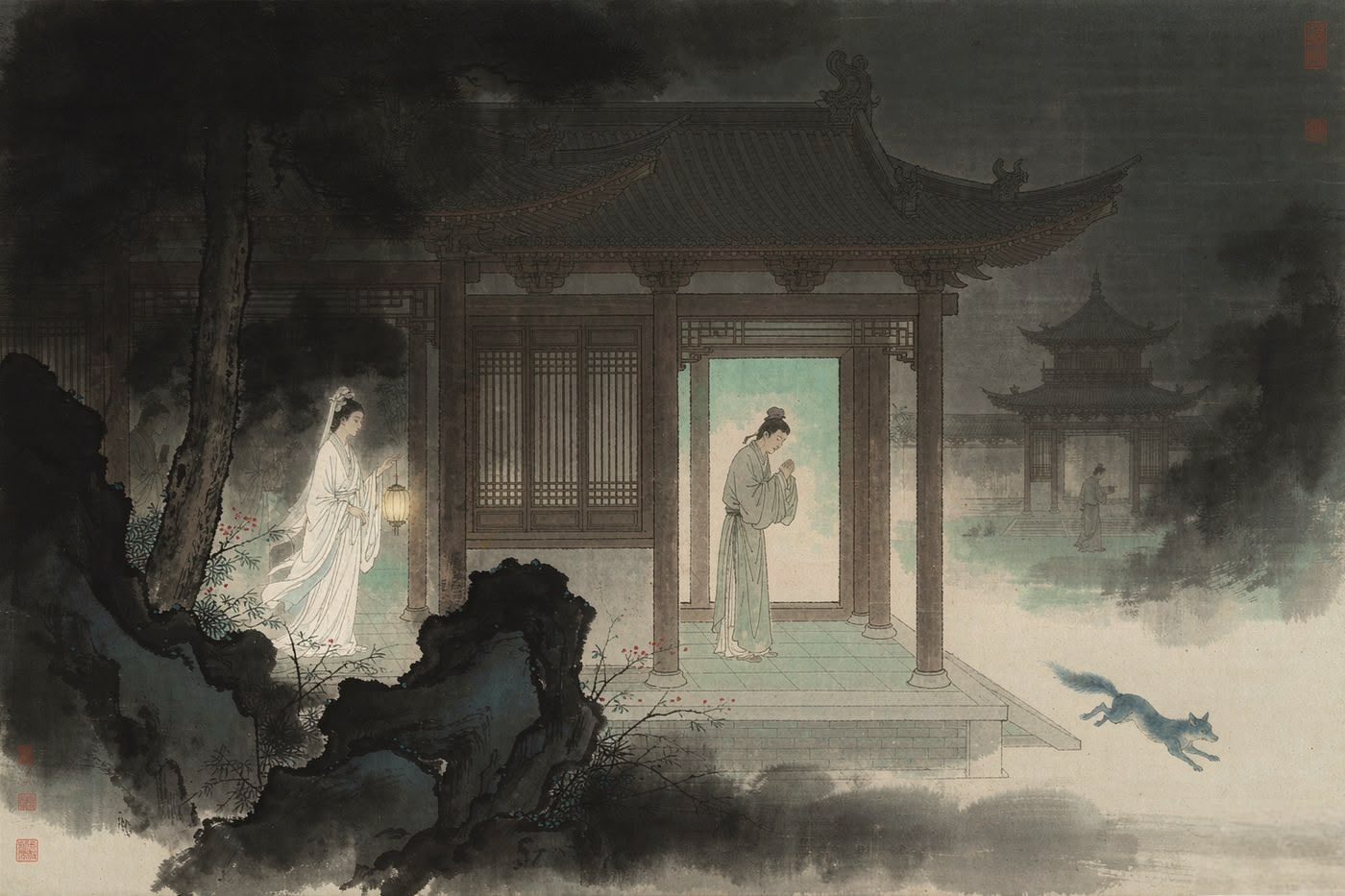
Once, when they were at their ease together and evening was drawing on, word came from outside that a messenger had come from the Lü family. The sister’s colour changed, but there was no way to refuse. The younger sister came in, and the three of them sat facing one another like the legs of a tripod. She sent the messenger to call He Zhong into a small side room, and there gave him a severe scolding. He Zhong bowed, admitted his fault, and begged her pardon piteously; it took three nights before she let him go.
Half a year later He Zhong’s wife died. The entire cost of the burial was met by the Lü women. Then, through go-betweens and with the formal gift, he made the younger sister his wife in proper form.
Three years after that He Zhong died too. He had three sons by his first marriage — one in trade in the town, two in the army. Someone was sent to the prefecture to file a petition; his goods were divided and the sons given their portions, and the widow asked to go and live with the elder sister.
At the Cold Food festival the following year, He Zhong’s sons went to their father’s grave and called on the sister’s house. The sister told them the younger one had gone back to Linping.
They went again the year after that. No one knew of any such dwelling. There were only two old mounds inside the pine wood.
The sons marvelled and grieved. They paid their respects, and went away.