Chen Jingchu of Xiaoshan had been sojourning in Tianjin for years. Then he packed to go home, and on the road passed through the Shandong border.
It was a year of great famine. The poor had died beyond counting. The inns were empty and would take no guests.
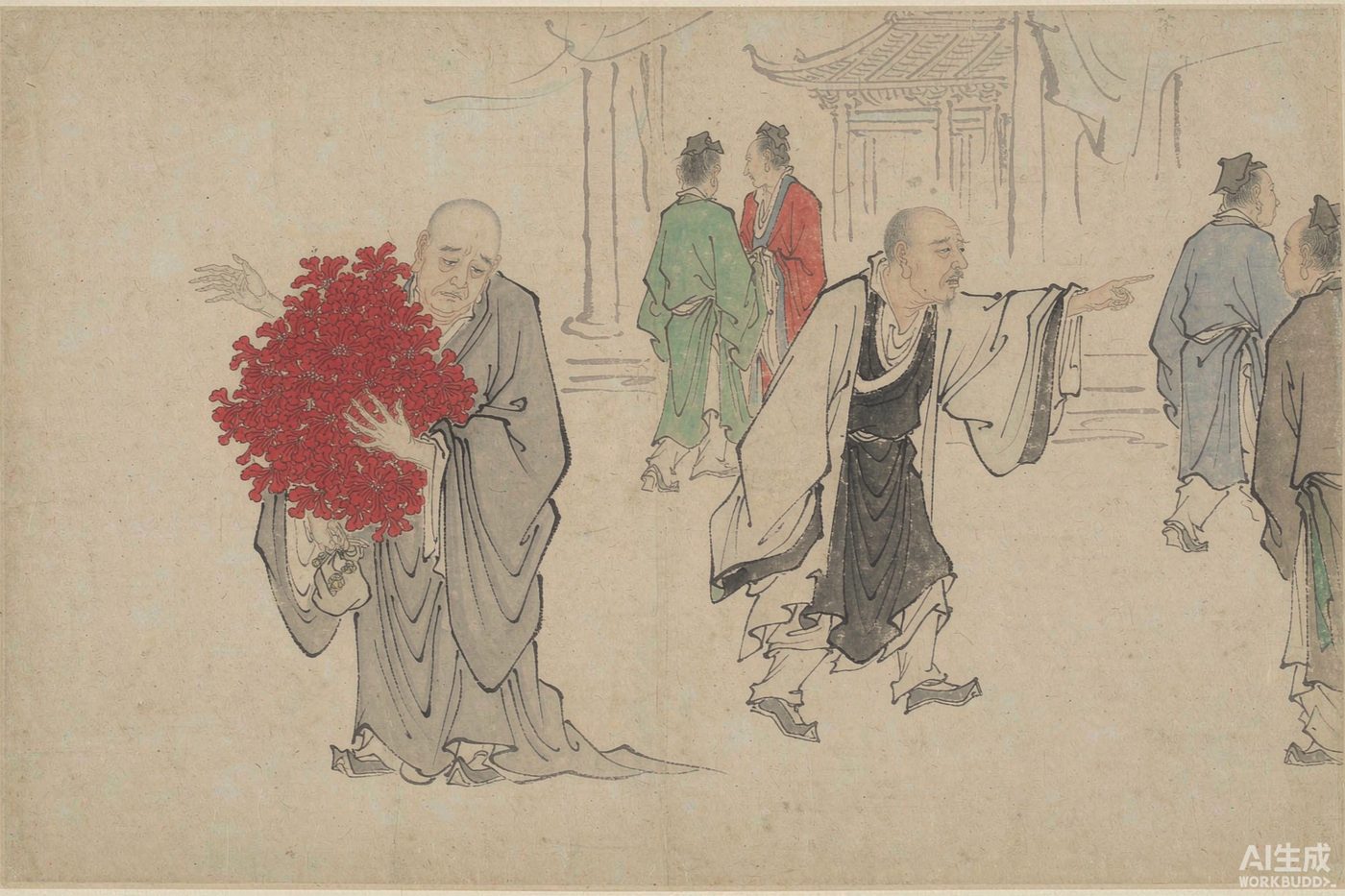
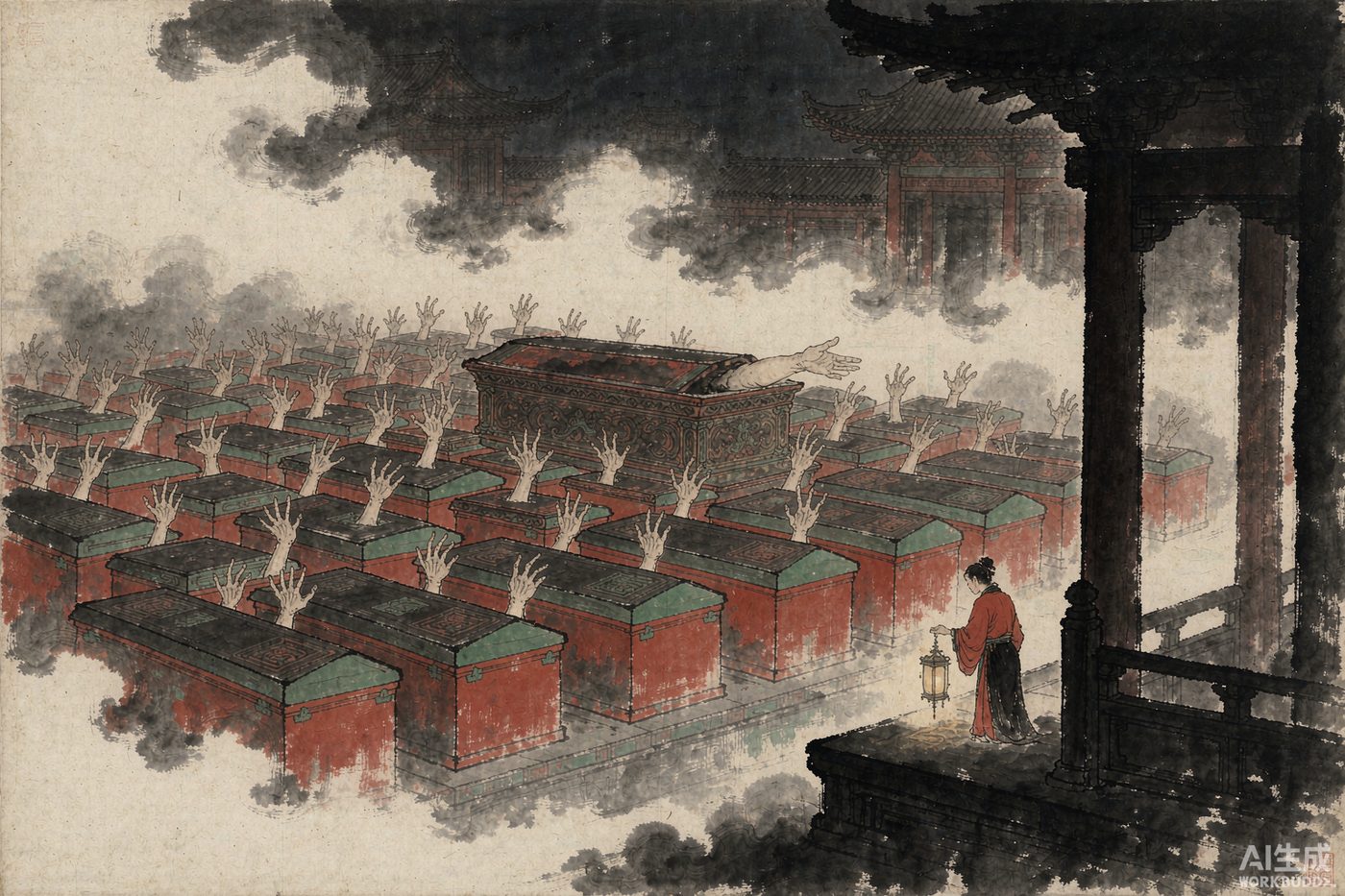
He put up at a temple. In the east wing more than thirty coffins were stacked; in the west wing a single coffin stood alone.
After the third watch a hand came out of every coffin. All of them were withered, thin and yellow — except the one from the west wing, which was somewhat plump and white.
Chen was a man who prided himself on his nerve. He looked from side to side and laughed.
“Poor ghosts. Hard up, are you? All come to me for money?”
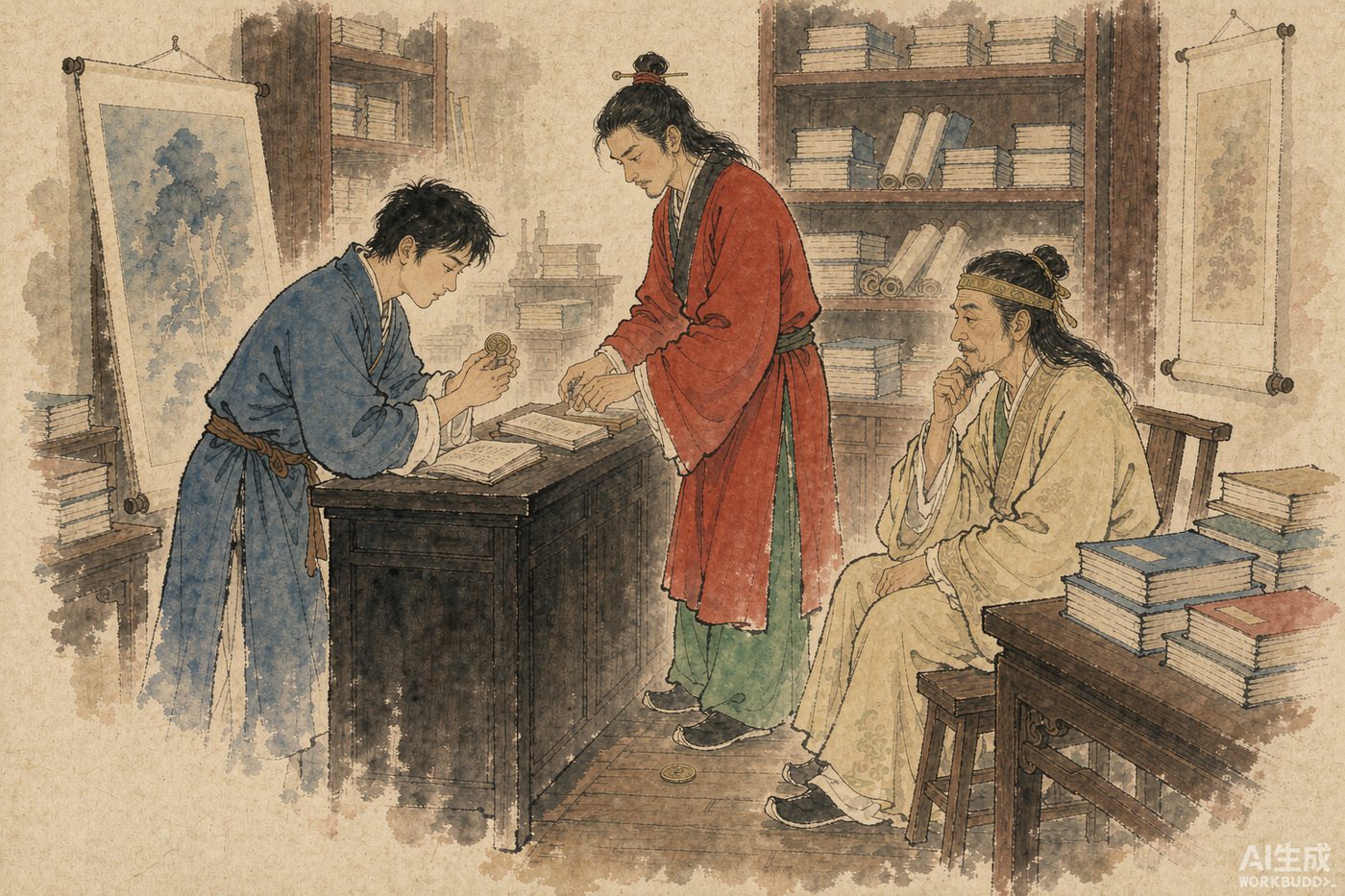
He loosened his blue purse and gave each of them one large coin.
Every hand in the east wing drew back. The hand from the west wing stayed out.
Chen said: “One coin, I fear, does not satisfy you. Let me increase it.”
He went up to a hundred. It did not move.
Chen said angrily: “This ghost puts on great airs. Truly greedy, truly insatiable.”
He picked up two full strings of cash and dumped them into the palm. The hand drew in at once.
Chen was amazed. He moved the lamp and looked about — and saw that the coffins of the east wing were all inscribed famine victim so-and-so, while the single coffin in the west wing read:
The coffin of the Honourable So-and-so, Record-Keeper of such-and-such a county
And he said with a long breath: “The starved have no great ambitions — one coin and their wish is full. But this gentleman was used to receiving book-money, and would not take less than his figure.”
Then there was a sharp snap of cash.
Because the gap in the coffin lid was narrow, the hand inside had to drag the strings through sideways and could not get them in. There was a single straining crack, the cord parted completely, and the coins scattered over the floor.
The hand came out again and groped in all directions. Not one coin came into it.
Chen looked down at it and laughed. “Your greed was too heavy. You are left with a pair of empty hands, and you come off worse than those small-minded ones — they at least kept one coin to watch the purse for them.”
And still the hand went on groping.
Chen clapped his hands and shouted: “In life, for two strings of cash, you sat in the private court and beat the crooked stick, and played dog and horse to the great houses. Where is any of it heaped up now? Why must you play out this ghost’s charade again today?”
Before he had finished, there came a long sigh from the east wing — and the hand drew in.
At dawn Chen mounted his donkey and went on his way, and left the scattered money on the floor for the temple monks as payment for his lodging.
The Duo comment: “The lower the office, the greedier the heart. As for the filthiness of their postures, what can one say? In life already like ghosts, in death still the same men — is there really no statute in the underworld for auditing officials? That long sigh from the east wing: I think his soul was stripped from him long ago.”