Stories/ 夷坚志/ The Goddess Who Bought the Woods

The Goddess Who Bought the Woods

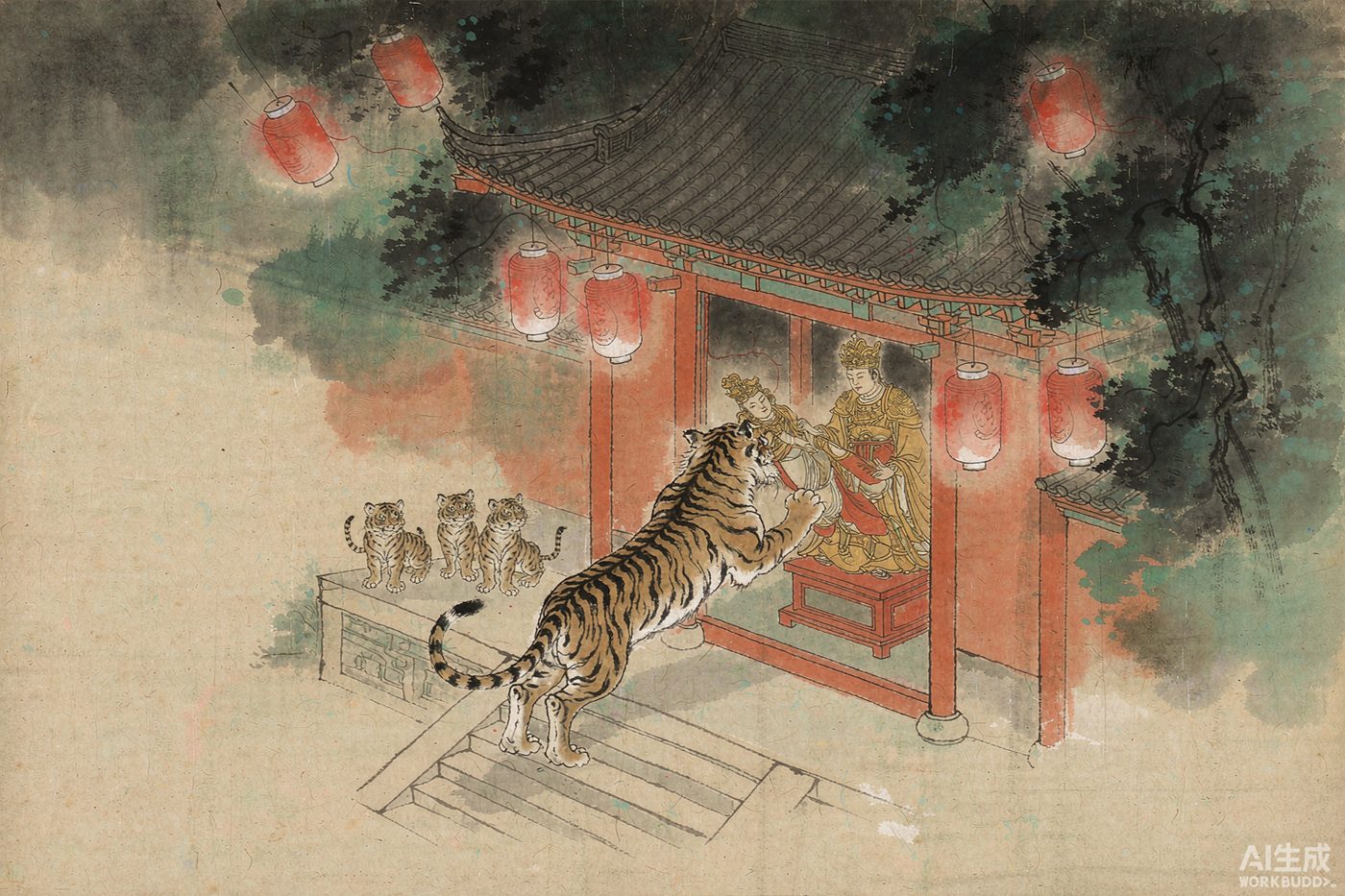
林夫人廟

SourceYijian Zhi (Record of the Listener)
AuthorHong Mai
EraSouthern Song dynasty · 12th century
Writtenc. 1160–1200
Small GodsDeityMoneySeaFujian
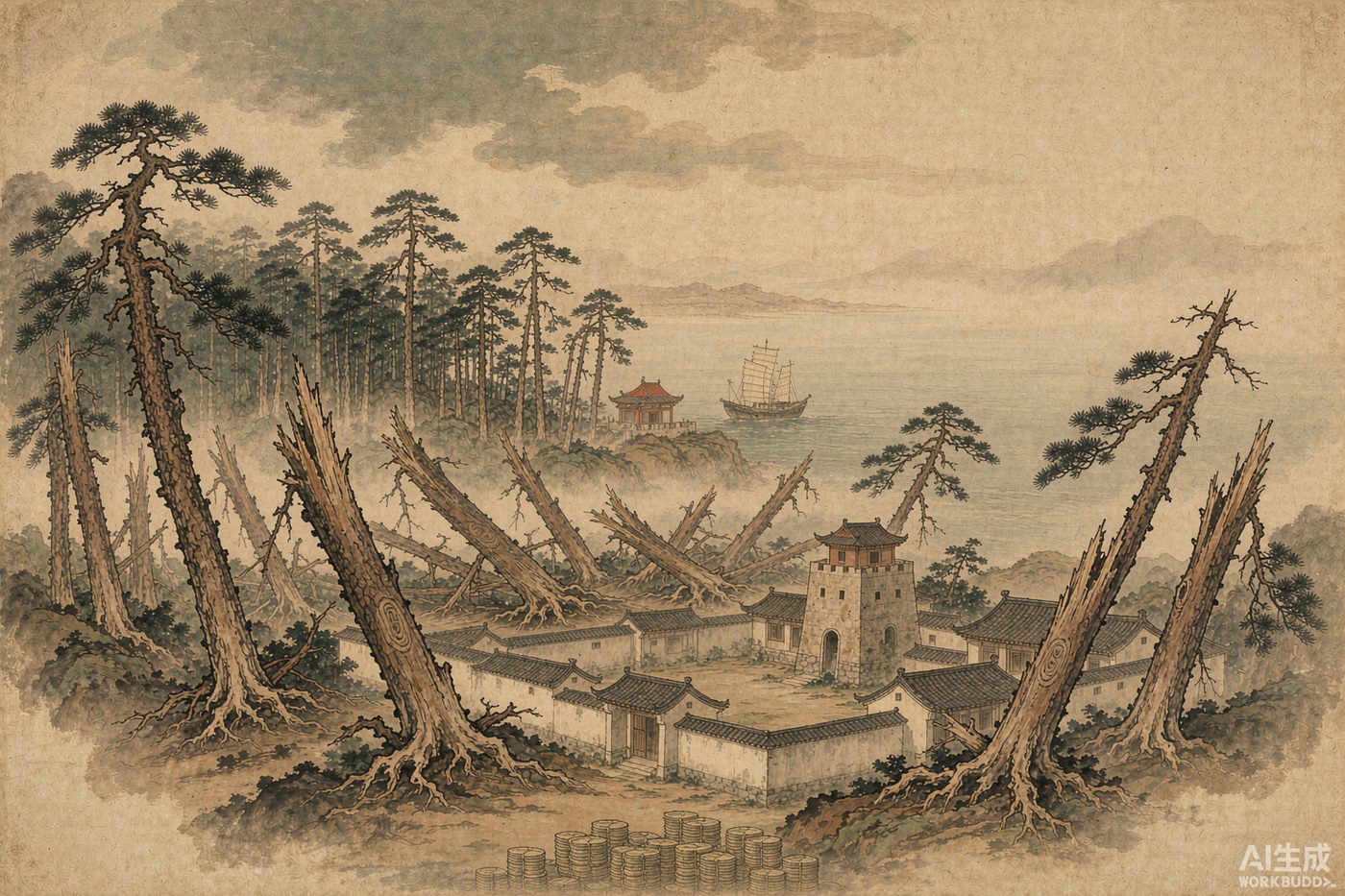
A grove of great pines blown flat by a storm with three characters cut into the bark of a fallen trunk, a stack of coin strings in a courtyard, and a sea-going junk with sails beyond, ink-wash painting
Illustration generated by AI, based on the ancient Chinese text.

At a place called Haikou within the commandery of Xinghua there had stood from old a shrine to the Lady Lin — nobody knew in what year it was raised. The building was not large, but its wonders were long known. Every merchant who put to sea would go to pray beneath it and cast the divination blocks, asking her unseen protection, and only then dare to sail. For there had been men far out in the ocean, caught by a cruel wind, who had bowed a hundred times toward her across the water and seen the goddess appear at the masthead.

Now a certain Wu, the wealthiest man of the village, owned woodland of great richness, deep and thick through the whole valley. A customer came, pointed to a certain stand, and asked to buy. Wu agreed, and asked three thousand strings. The customer offered three hundred.

Wu laughed. “You come to buy timber and offer one part in ten. You are playing with me. There is no way to settle it.” And the customer left.

That night there was a great wind and rain. At dawn the Wu household opened the gate — and three hundred strings of cash lay stacked neatly on the ground.

While they were still wondering, a man came from outside to report that most of the timber the customer had wanted was blown down and broken. They ran to look, and on the bark of every tree still standing were written three characters: Lady Lin.

Only then did they understand whose doing this was. Wu took incense and paper at once and went to the shrine to give thanks. Seeing that the timber had been hauled to the open ground beside the shrine, and understanding that the goddess wanted it, he made over to her every tree on the mountain, and carted the original price back to the shrine’s custodian besides, to help with the cost of building.

Word spread near and far, and people came in crowds. One old man, the richest in the district, was stingy alone, and gave thirty thousand. The others thought it far too little and asked him to increase it; he would not listen. Then he sent his servant out through the gate carrying the money — and it was as though a great weight pressed down on him, and he could not move a step. In his terror the old man repented on the spot and raised his gift to a million.

The new shrine was finished in no time: several hundred bays of building, its halls vast, its towers lofty and splendid. It is the foremost shrine in Fujian to this day.
Original classical Chinese text · 原文

興化軍境内地名海口舊有林夫人廟莫知何年所立室宇不甚廣大而靈異素著凡賈客入海必致禱祠下求杯珓祈隂護乃敢行蓋嘗有至大洋遇惡風而遙望百拜乞憐見神出現於檣竿者里中豪民吳翁育山林甚盛深袤滿谷一客來指某處欲吳許之而需錢三千緍客酬以三百吳笑曰君來求市而十分償一是玩我也無由可諧客即去是夕大風雨至旦吳氏啟戶則三百千錢整疊于地正疑駭次外人來報昨客所擬之木已大半倒折走往視其見存者每皮上皆書林夫人三字始悟神物所為亟攜香楮詣廟瞻謝見羣木皆有運致於廟堧者意神欲之遂舉此山之植悉以獻仍輦元直還主廟人助其營建之費遠近聞者紛然而來一老翁家最富獨慳吝只施三萬衆以為太薄請益之弗聽及遣僕負錢出門如重物壓皆不能移足惶懼悔過立增為百萬新廟不日而成為屋數百間殿堂宏偉樓閣崇麗今甲於閩中云

From 《林夫人廟》, Yijian Zhi. Translated in full. 興化軍 is Xinghua commandery in Fujian, on the coast north of Putian; 海口 is the port of Haikou; 杯珓 are the crescent-shaped divination blocks thrown in pairs; 三千緍 is three thousand strings — a string is nominally a thousand cash; 廟堧 is the open ground beside a shrine; 元直 is the original price; 甲於閩中 means foremost in Fujian. Lin the Lady (林夫人) is the local seafarers' protectress of the Putian coast, later developed into the great cult of Mazu.

Source. From Yijian Zhi (Record of the Listener) (夷坚志), by Hong Mai , c. 1160–1200. The original text is in the public domain; this English rendering and the accompanying notes are original work.
Where this fits in the universe: The Small Gods · How a Shrine Gets Built

Keep Reading

Related Stories

Southern Song dynasty · Shaoxing 26 (1156) · 夷坚志

The Temple That Moved Itself

七娘子灘龍女廟

A village asks a shrine to move out of the way of the floods, and the divining blocks say yes. That night there is a sound like a collapsing mountain, and everyone is certain they have angered the god.

DeityJustice
Southern Song dynasty · Daguan 3 (1109) · 夷坚志

The King Who Wanted a Record

順濟王

A god demands that a disgraced official write the record of his shrine. The man suggests a famous name instead. The god's voice goes harsh: who says this district lacks stone, and who is this high official I do not know?

DeityJustice
Qing dynasty, c. 1750–1780 · 子不语

The Tiger Who Carried Off Wenchang's Head

虎衔文昌头

A bride dies of heat on the road, revives in her coffin, and is murdered a second time — by the novice whose master revived her, so he can keep her. A year later a tiger jumps into the Wenchang shrine and carries off the god's clay head, leaving three tiger cubs behind. That is how the whole village, including the girl's parents, finally finds her.

TigerJusticeMurder