Stories/ 夷坚志/ The God Who Borrowed Two Horses

The God Who Borrowed Two Horses

石城廟神

SourceYijian Zhi (Record of the Listener)
AuthorHong Mai
EraSouthern Song dynasty · 1191, the xinhai year of Shaoxi
Writtenc. 1160–1200
Small GodsDeityMarvels
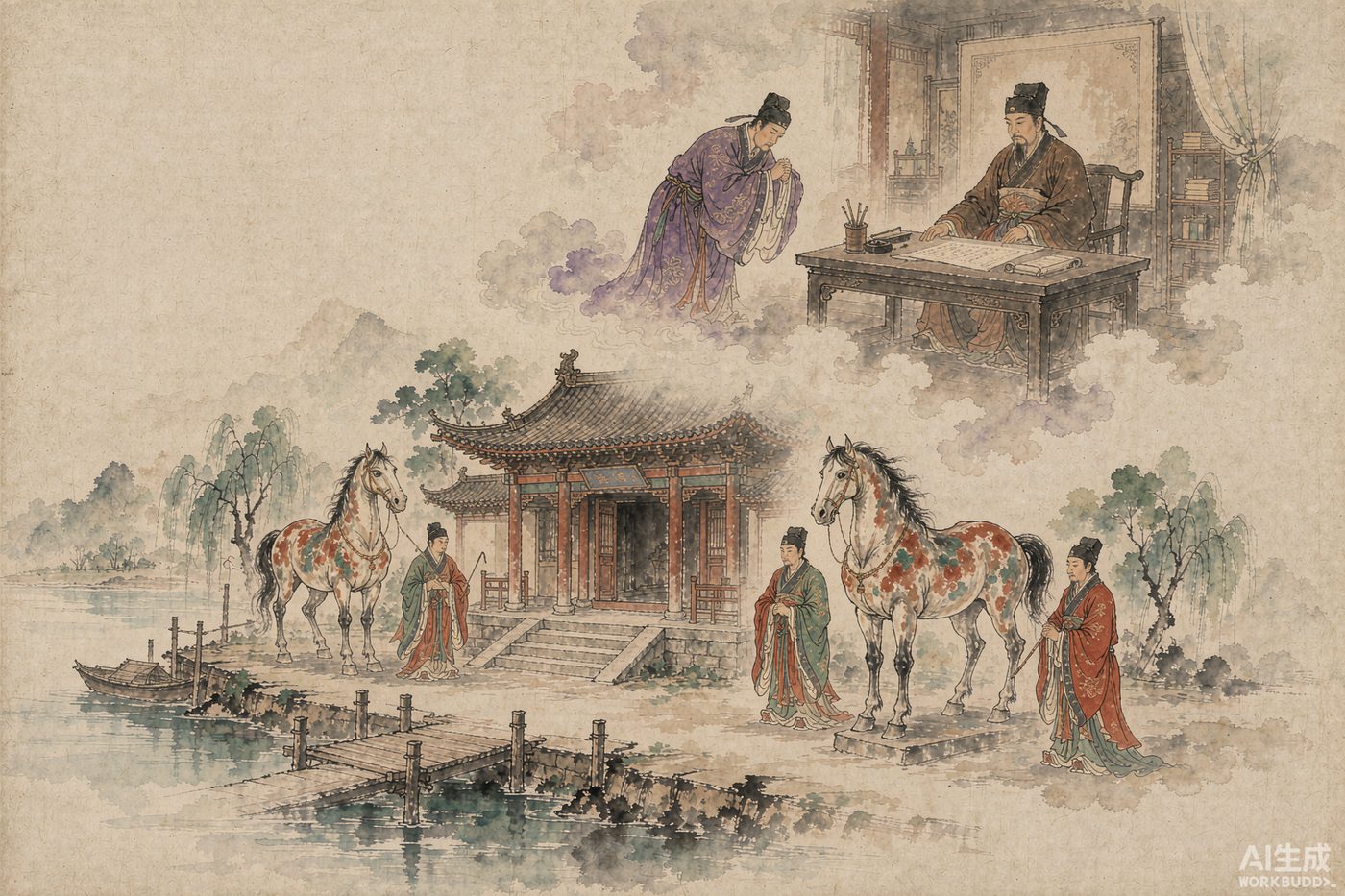
A rebuilt riverside City God shrine with two new painted horse statues flanked by brocade-clad grooms, a magistrate in his study dreaming of a purple-robed clerk bowing, ink-wash painting
Illustration generated by AI, based on the ancient Chinese text.

In Shicheng county of Ganzhou, the City God shrine stood beside the county office; prayers for rain or drought were often answered, and the locals honored it. On the seventeenth day of the fifth month of the xinhai year of Shaoxi, a pouring rain came; the stream swelled and overflowed, flooding the main street more than a zhang deep, and the shrine gate collapsed. The gentry and people joined forces to renew it.

To the left and right of the gate had originally been two sculpted horses, but in the rebuilding they forgot to set them up; over a month later, the magistrate Lü Danian dreamed of a purple-robed clerk standing in his court, bowing and saying: “The Great King now sends word to the magistrate: for going out and coming in I lack a mount, and would like to borrow two fine steeds for a while.”

Lü granted it. Waking, he thought: a mountain county has never kept horses — how could it lend or borrow? Then he realized the meaning, and of his own salary had two horses sculpted and decorated at the east and west, with four stalwart soldiers in brocade reining them.

In the seventh month, a ten-day drought came; he prayed beneath the shrine, and no sooner were the incense and fire put away than dark clouds gathered at noon and rain followed — the year was a great harvest. Some in the county dreamed that the god’s retinue was very grand, and that he was just riding the eastern horse that had been sculpted.
Original classical Chinese text · 原文

贑州石城縣城隍祠在邑治之側水旱祈禱多應土人敬事之紹熙辛亥五月十七日大雨傾注溪流湓涌浸通衢丈餘祠門頹敗士民合力新之門之左右元塑兩馬是時忘設置踰月後知縣呂大年夢紫袍吏立庭下聲喏曰大王今傳語長官出入乏騎乘欲暫假駿駟兩匹呂許之覺而思之山邑元未嘗養馬安能遣借徐悟其事乃自捐俸錢即東西塑飾用錦衣四健卒控馭至七月兼旬不雨致禱祠下香火才收陰雲正晝四合隨得膏澤歲以大稔縣人或夢神道從甚偉正乘所塑東邊馬云

From 《石城廟神》, Yijian Zhi. Translated in full. 紹熙辛亥 is 1191; 城隍祠 is the City God shrine, beside the county office; 邑治 is the county seat; 紫袍吏 is a purple-robed clerk, the god's messenger; 駿駟 are fine steeds. The two horses are the standard pair of guardian mounts flanking a temple gate.

Source. From Yijian Zhi (Record of the Listener) (夷坚志), by Hong Mai , c. 1160–1200. The original text is in the public domain; this English rendering and the accompanying notes are original work.
Where this fits in the universe: The Small Gods · How a Shrine Gets Built · The Canon of Sacrifices: Which Gods Are Licensed

Keep Reading

Related Stories

Southern Song dynasty · 12th century · 夷坚志

The Goddess Who Bought the Woods

林夫人廟

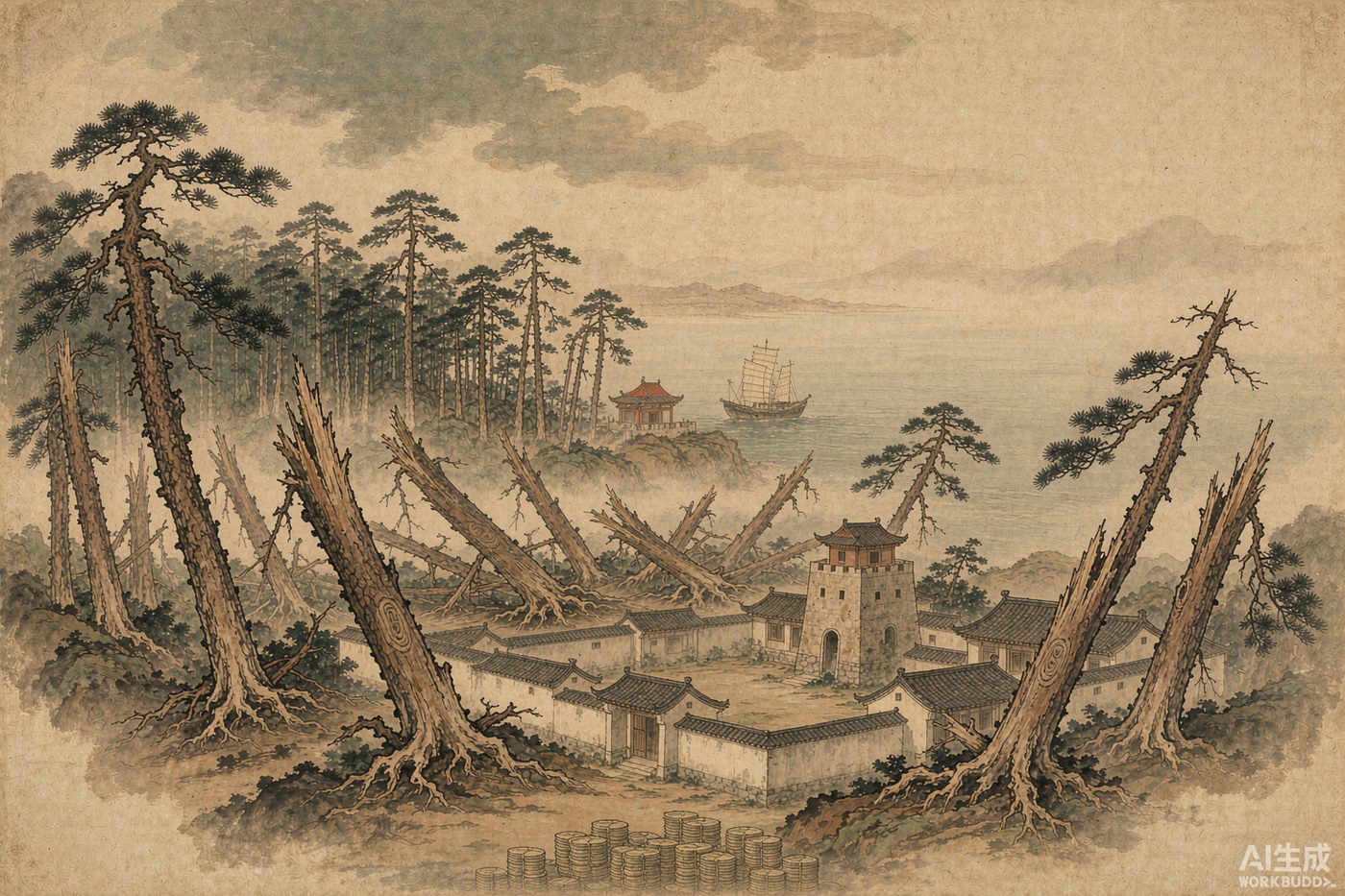
A timber merchant offers a tenth of the asking price for a stand of trees and is laughed out of the yard. That night a storm fells the whole grove, the money is found stacked in the courtyard, and every remaining trunk has three characters cut into the bark. A rich man who gives too little cannot get his cash out of his own gate.

Small GodsDeityMoney
Southern Song dynasty · 1195, the yimao year of Qingyuan · 夷坚志

The Earth God Who Bargained for the Children

孝義坊土地

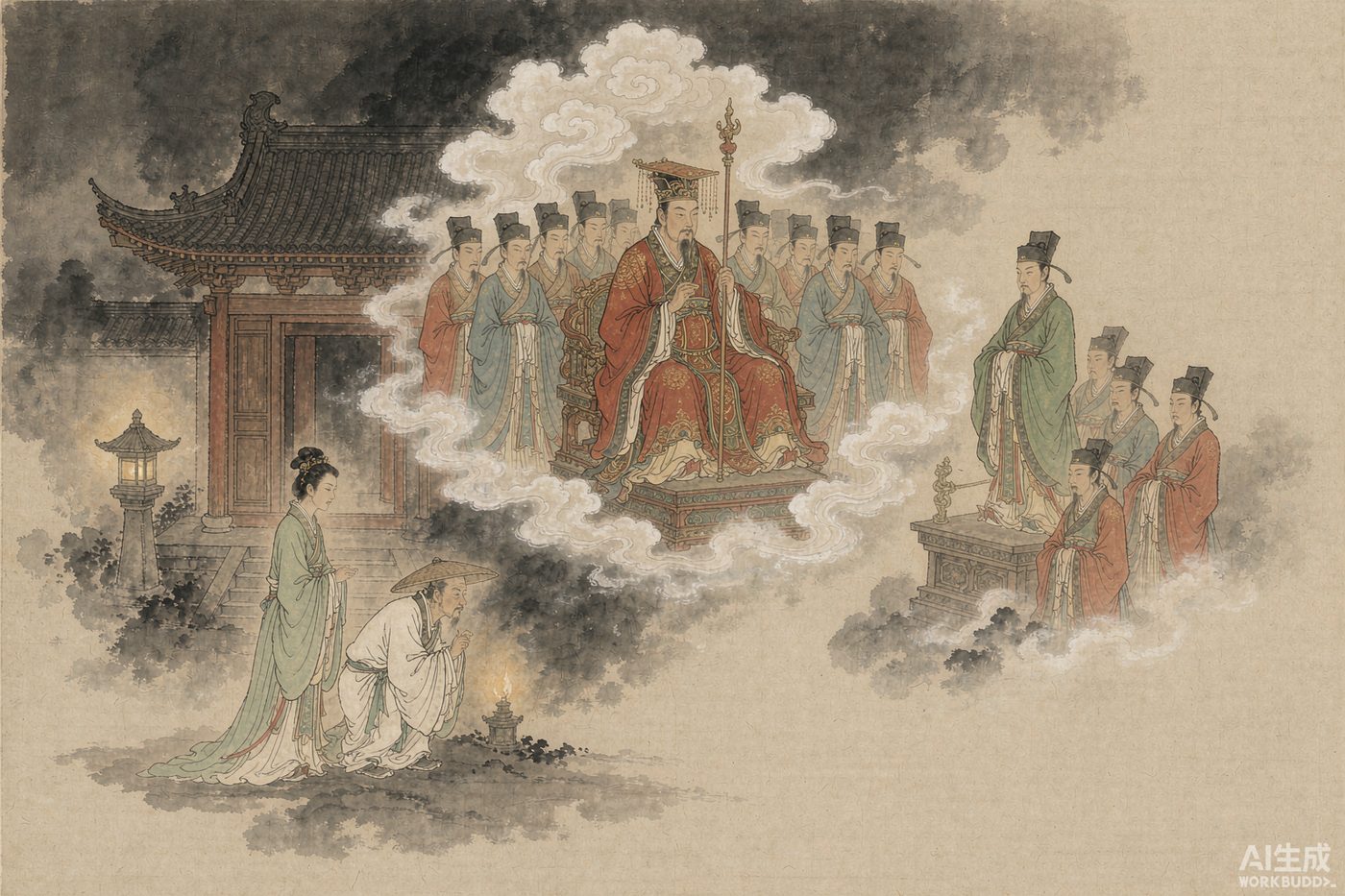
A malaria-stricken old man hides under the City God's seat and overhears a heavenly roll-call: the gods are to loose a plague ward by ward. One Earth God pleads that his ward is full of good people. The City God relents — but only on one condition.

Small GodsPlagueOfficialdom
Southern Song dynasty · 1174, the jiawu year of Chunxi · 夷坚志

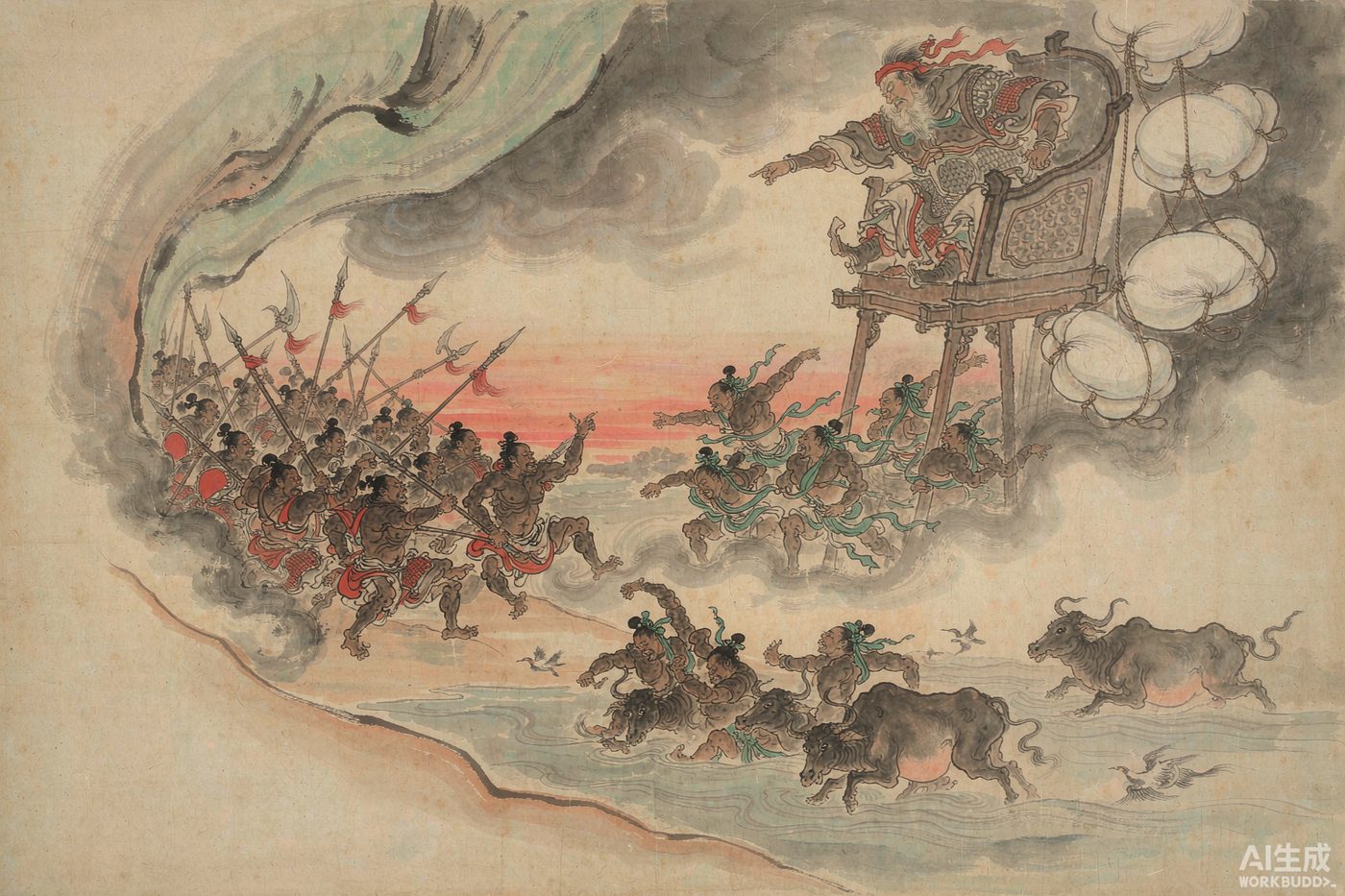
The Ghostly Battle on the Sandbar

景德鎮鬼鬬

A fisherman takes shelter from a sudden cold wind and watches a hundred tattooed warriors divide into two armies on the sandbar and fight. The losers turn into cattle and swim away. That year the plague spares only the village on the winning side.

GhostPlagueSmall Gods