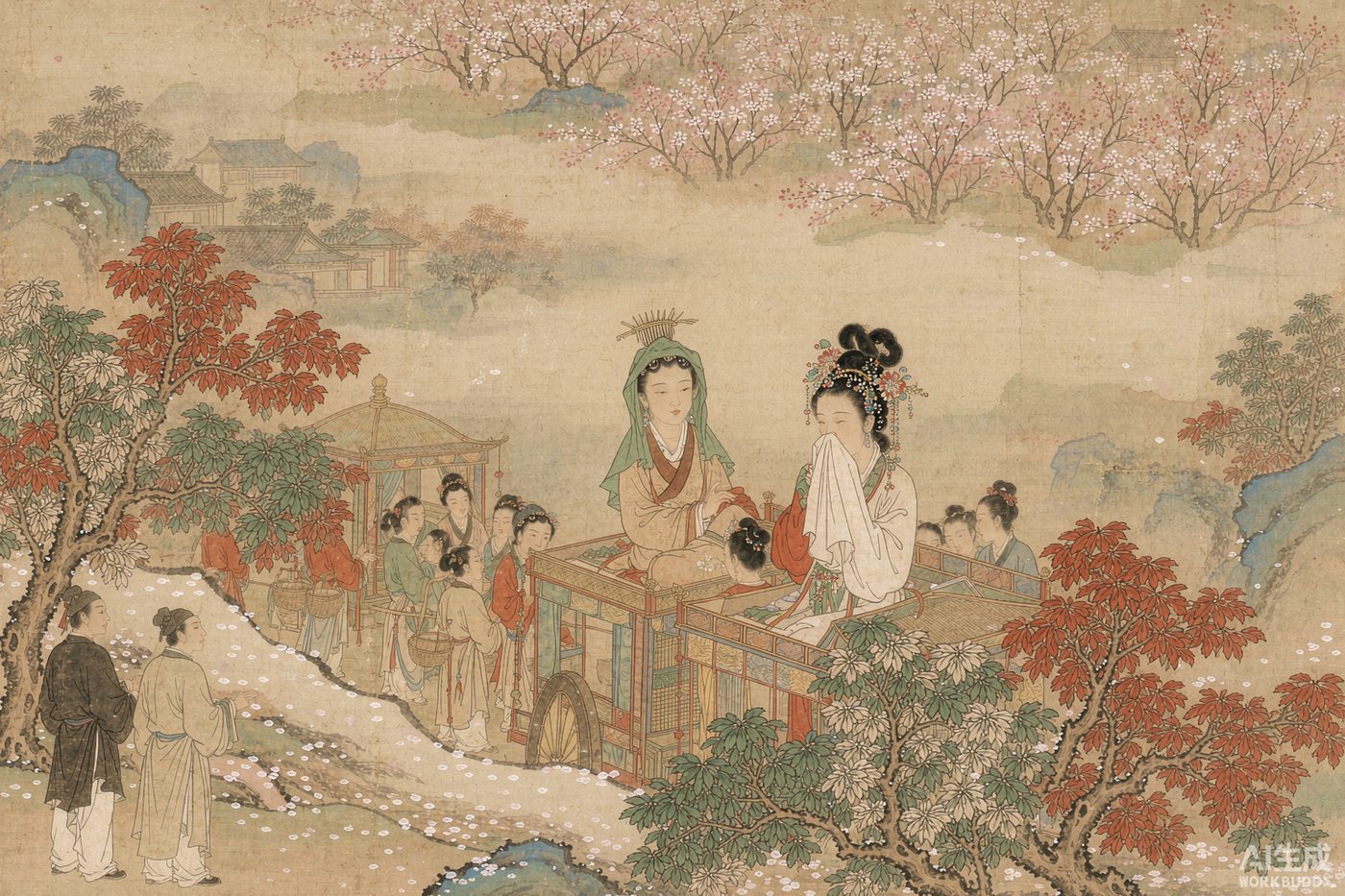
Xianniang was the daughter of a gentry family of Xiayi, skilled in lyric poetry and in the examination essay besides. Each composition she wrote, old teachers and learned men would withdraw their hands: “The lady scholar, were she to change hairpin for comb, would surely reach the jade hall and the golden horse.” At seventeen her parents died one after another, and Xianniang was alone.
Across the court was a certain scholar’s villa, with a magnolia leaning on the east wall. Xianniang rose early and picked its flowers; the scholar saw her and bowed at the wall. She blushed and tried to flee. He said: “I am no Song Yu, daring to climb the wall. Only — studying alone without a teacher, I wish to be a Wang Xizhi, presenting myself at the flower-pinning seat.” He produced a volume of his essays and asked her to correct them. She took it in, read it — talent bright and ample, with one or two small flaws that would tell against him in the hall — and crossed them out plainly. Next day, picking flowers at the corner, she returned it in her sleeve. The scholar was grateful.
In time they grew close. He wrote a mock exam topic, “Climbing the east neighbour’s wall to embrace his maiden,” to tease her; she answered with “The words of the matchmaker.” He laughed: “You took the quick pulse but answered slowly, quite missing the topic’s intent.” She said: “I feared a hasty brush would leave no room to close.” He thought her words open, climbed the wall, seized her arm: “I have served you as teacher daily; why not seat me in your crimson curtain?” She resisted lightly: “Scholars most easily forget the heart. Once you betray your teacher, how do you know you will not be a Feng Meng killing Yi?” He swore by mountains and rivers, pledged by sun and moon. And she joined him — morning wall, evening room, near half a year.
Xianniang pressed him to send the betrothal gifts. He promised with his mouth and delayed. Later he arranged a marriage with another family. On the wedding night Xianniang learned, stood under the wall, hoping he would come to bid farewell — but he had built his phoenix nest and forgotten the wild swans. Xianniang, in fury, shut the door and hanged herself. The scholar heard and only sighed.
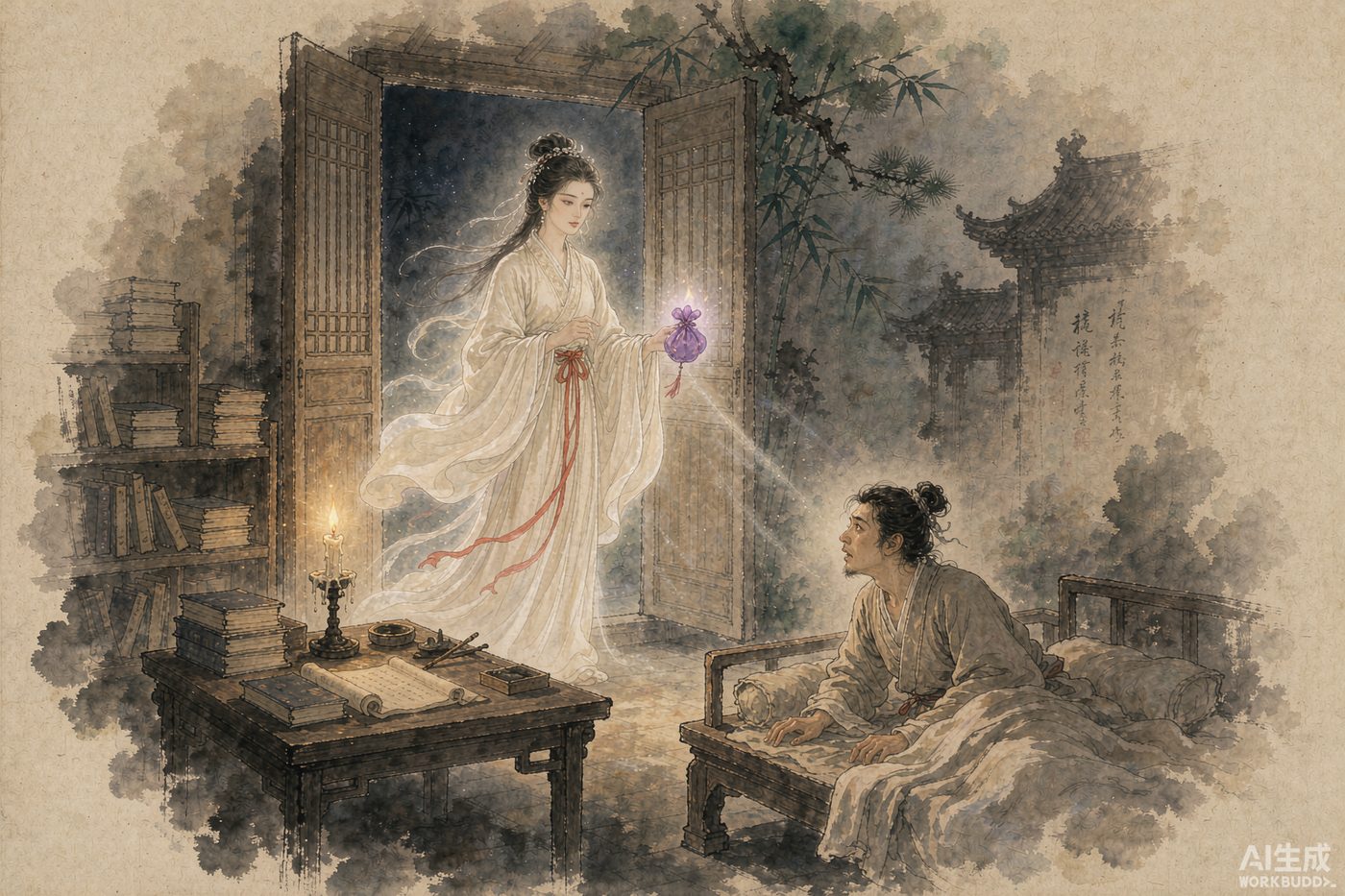
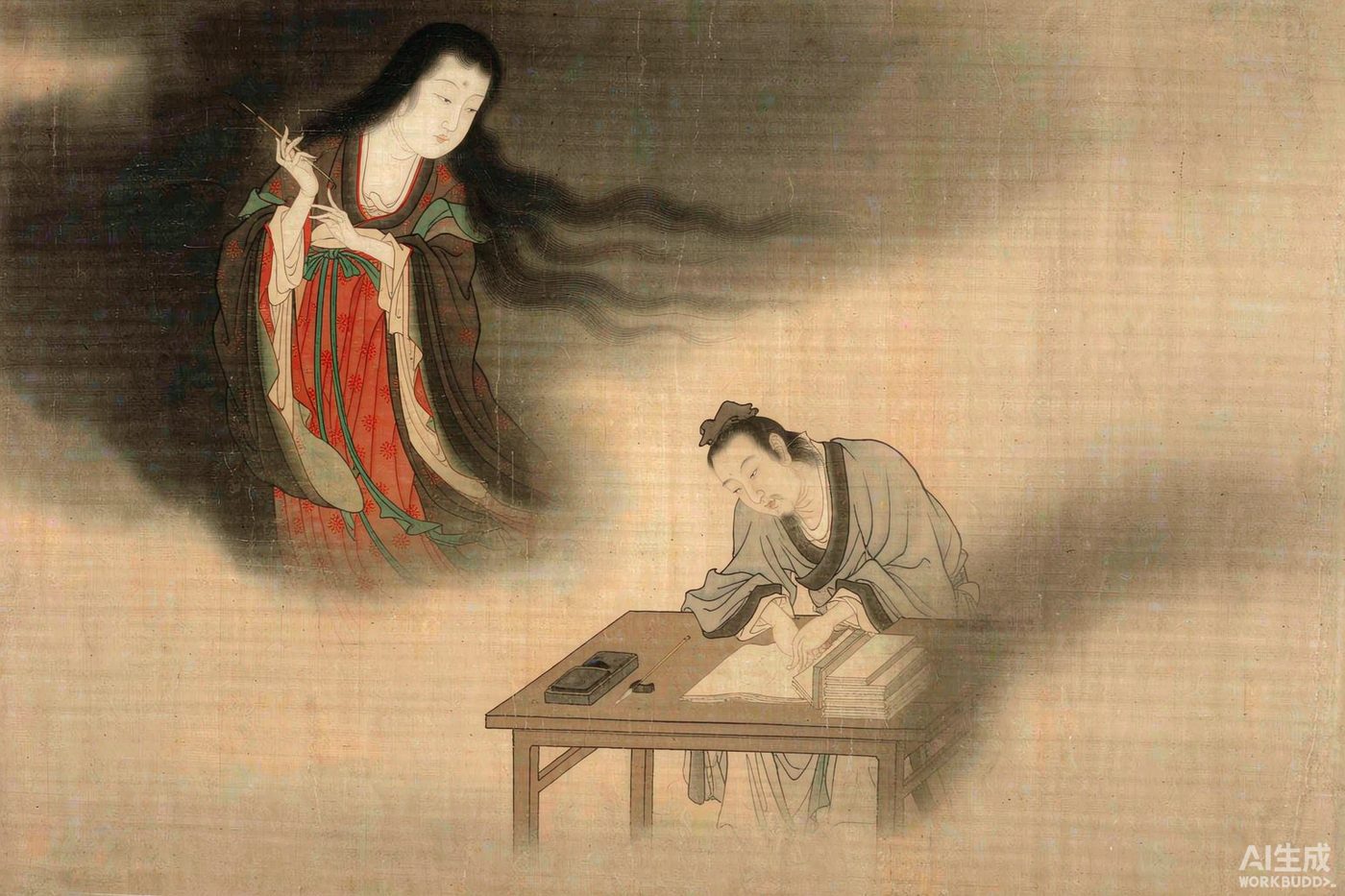
Later he went to the provincial exam; just as he took up the brush, Xianniang floated in. He feared she came for revenge and trembled — but she showed no anger. Instead she smoothed his paper and ground his ink, urged him to apply himself, explained the topic, and left. That year he passed the provincial exam. At the metropolitan exam she came again, smoothing paper and grinding ink as before, and mended the awkward phrases in his paper; that year he passed again.
He placed second class in the palace exam and was posted to the Ministry of Agriculture. Xianniang came: “You hold a capital post and draw a measure of salary — how can that fill an official’s purse? Why not seek an outside post; a two-thousand-bushel rank is soon yours.” He nodded.
Within two years he was promoted to prefect. A poor soul suddenly given a city and five horses, he squeezed the people and privately fattened his bag.
Soon he took bribe-money and released a criminal. The matter broke and was reported up; he was sentenced to public execution. The night before, he seemed to see Xianniang, embroidered scarf and ring-collar, hair loosed, come and say: “Years of wrong and resentment, now at last redressed. The reason I aided your career is that a book-scholar buried at his window — where would he meet great calamity? I had to place you in office, so the state law could be applied openly. The mirror of karma hangs high; the reckoning is near.” She laughed and left.
The Duo comment: One act of broken faith, ten years of frustration. Who knew the mirror beneath the lotus could also be a place for the brow-painting woman to take revenge? So to be struck from the cassia register is still a light punishment for the faithless lad.