Condensed from the original Chinese account in Zibuyu; the nineteen charges and the longer courtroom exchanges are summarised rather than given in full.
A Bao of Zhenjiang, young and handsome, married a woman of the Wang family. Bao’s family trade was commerce, and he often went among the lanes with his fellows. On an autumn day in the gengzi year of Qianlong he went with several friends on a dissolute excursion and returned at dusk. Wang was in the kitchen with an old nurse preparing the evening meal when they heard a knock; the nurse was sent to open the door, and saw a richly dressed young woman enter and go straight to the inner chamber, and would not answer when asked. The nurse took her for a relative and went to tell Wang, who hurried in — and there was Bao. She laughed at the nurse’s dim eyes, mistaking her master for a woman.
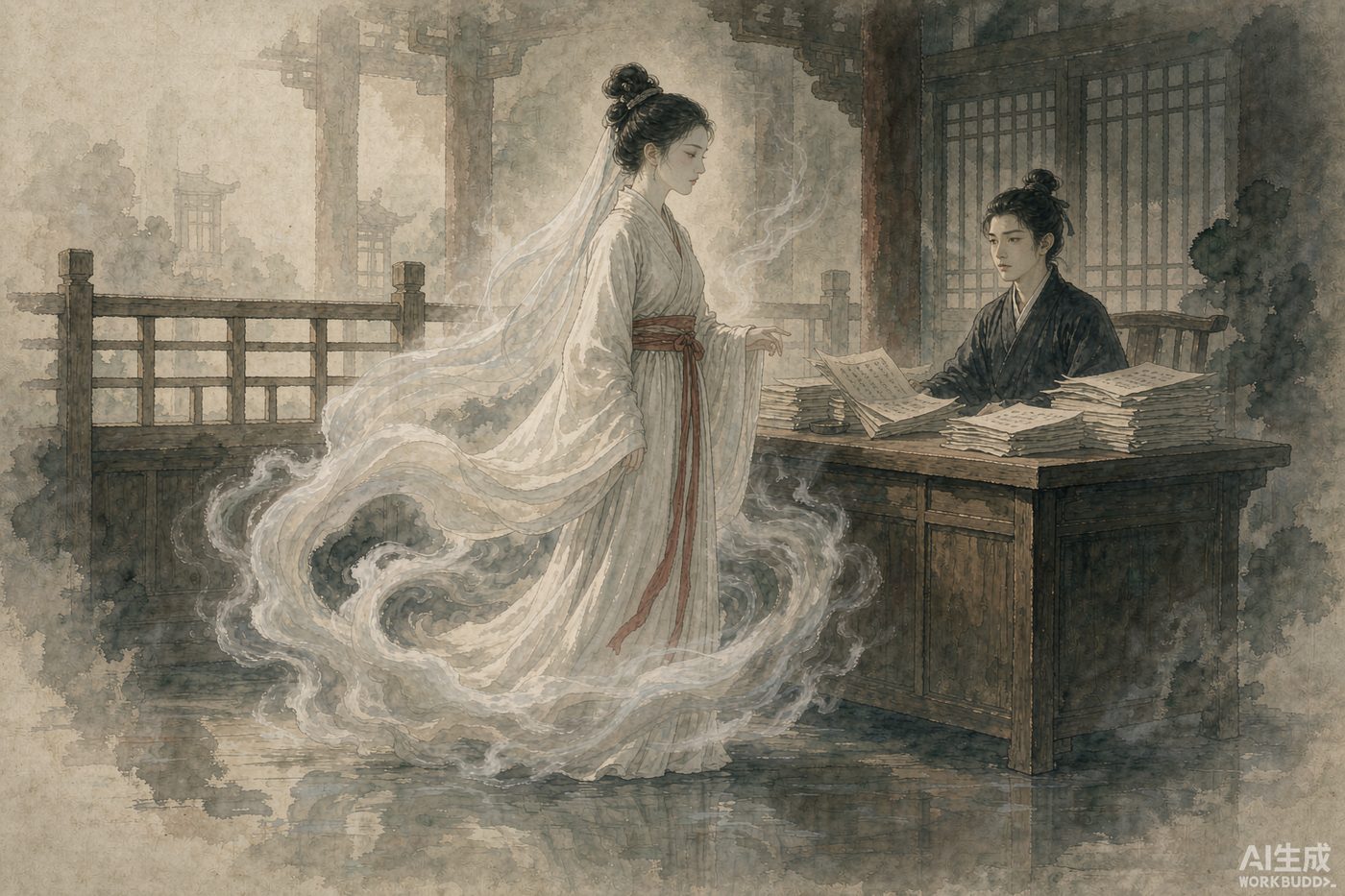
Suddenly Bao assumed a woman’s manner and, with a curtsey, came forward and exchanged greetings with Wang, saying: “While Bao-lang was drinking at a certain brothel, I kept watch behind the door, and only came back with him when he came out.” Wang saw that his voice and bearing were not like Bao’s, feared he was mad, and hastily called servants and neighbouring kin to come see. Bao met them all, courteous and exact in address, every inch a great-family daughter. If any man so much as trifled with her, the ghost would fly into a rage: “I am a chaste girl; whoever comes near me, I will take his life!”
They asked: “What enmity have you with Bao?” The ghost said: “The affection between Bao and me turned to enmity; I have filed suit with the City God — nineteen suits in all, none yet admitted. Now I have appealed to the Emperor of the Eastern Peak, and at last it is approved; in a few days I shall go with Bao.” Asked her name, the ghost said: “I am a good family’s daughter; my name may not be heard.” “What do you charge Bao with?” The ghost then recited the nineteen charges in a rush, too quick to follow, the gist being that Bao broke her heart and left her with no home. Someone asked: “You speak through Bao’s body — where is Bao now?” The ghost smiled: “He is bound in the little house by the City God’s temple.” Wang wept and bowed, begging the release of her husband; the ghost gave no answer.
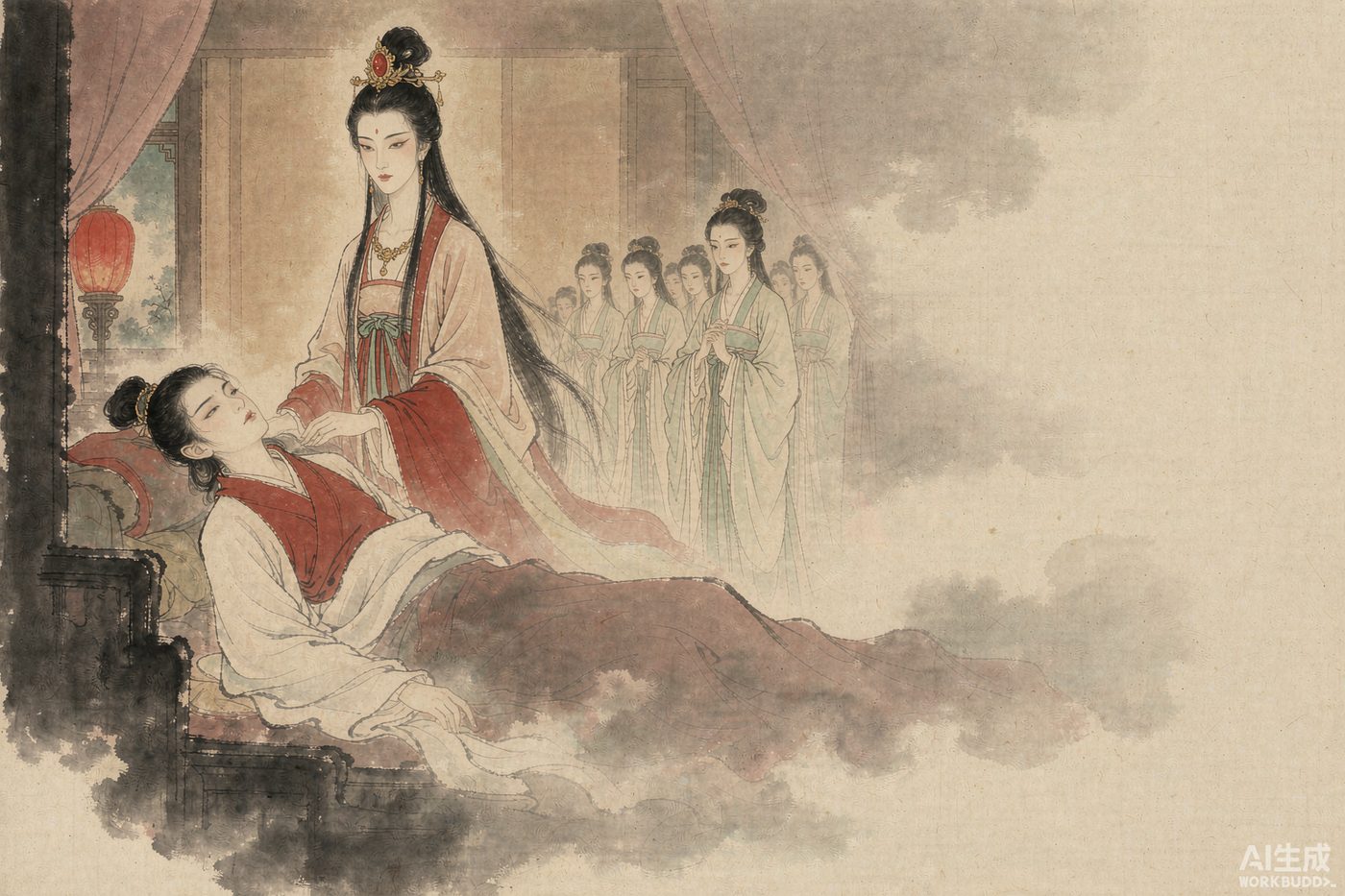
At midnight the kin whispered: “The ghost said the City God would not admit her suit, yet she has bound Bao by the City God’s temple — why not go and plead with the god for justice?” So they gathered incense and paper money as if to go. The ghost suddenly said: “Since you have all come to entreat me, I will release him for now; the Eastern Peak will judge in any case.” With that she fell to the floor.
Soon Bao revived, utterly spent. They asked what he had seen; Bao said: “When I left the brothel I saw this woman follow. At first now left now right; at the drill ground she suddenly seized me and dragged me to the little house left of the City God’s temple, bound my hands and feet in the dark with rope, and laid me on the ground, with someone seemingly standing guard. Then I heard her say, ‘I release you for now,’ and she pushed me out the door; I fell and woke, and found myself home. Tomorrow the Eastern Peak will summon us for trial.” Pressed for more, Bao only slept.
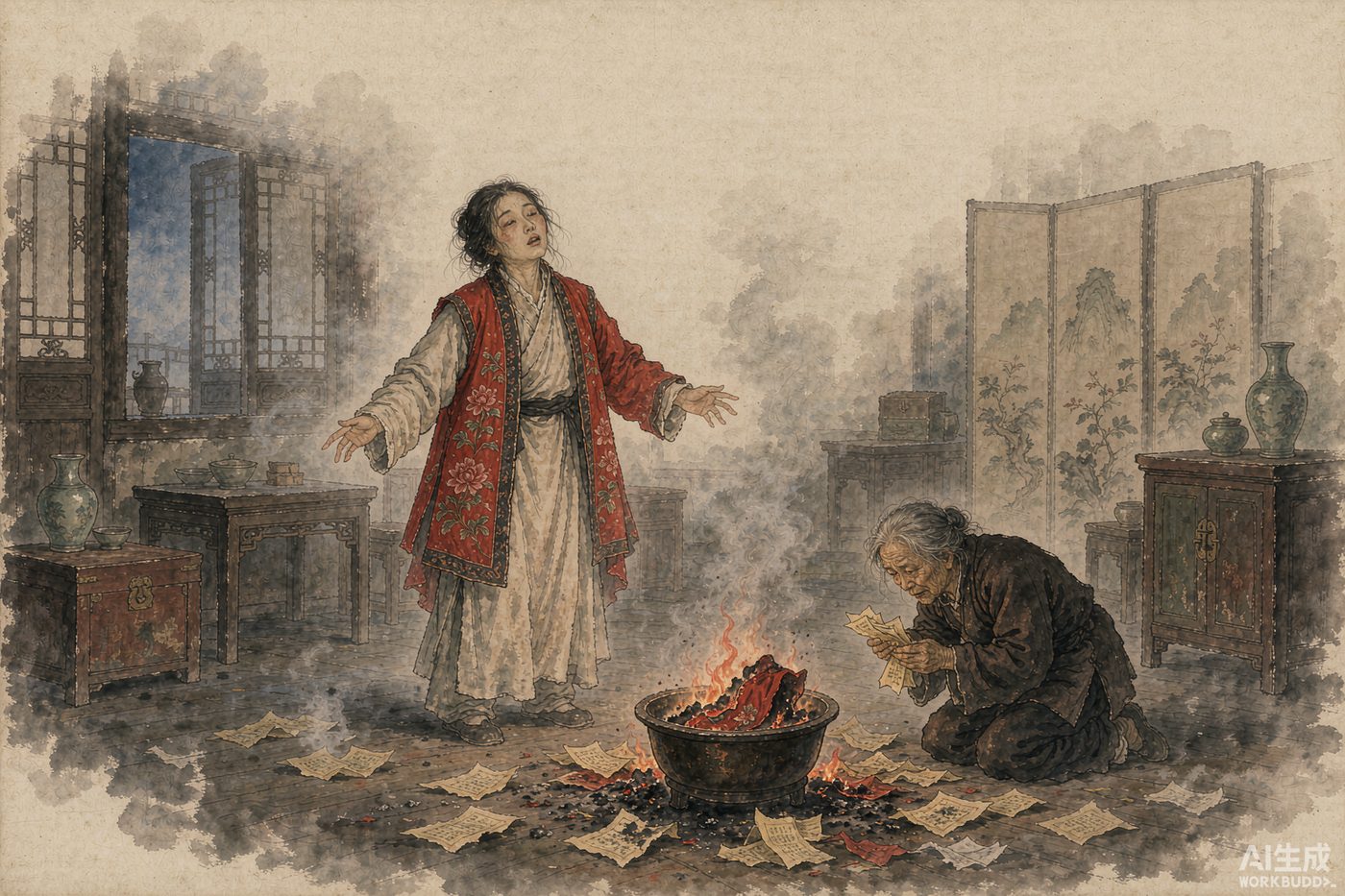
The next afternoon he rose and said: “The bailiffs are come; quickly set out wine and food.” He went to the hall and bowed to an empty seat, much of it unintelligible. The wine set out, he went back to bed and at the second watch died, with only the heart faintly warm. Wang and the others wept at his side; they saw Bao’s face turn now green now red now yellow, changing without pattern. After the third watch, red marks and claw-traces appeared on his chest and throat and cheeks. The next night at the second drum his queue suddenly came loose. At dawn he revived, called for tea and food, a dozen vessels, swallowing swiftly, to the onlookers’ horror. A little settled, he cried “set wine to entertain the bailiffs”; Wang set it out as before; then he called for six thousand paper coins, the broken ones to be removed, and burned four thousand before the hall and two thousand in the lane by the gate. He rose and made a bowing, seeing-off gesture at the great gate, returned and slept two days before he could rise. Then he told all he had seen:
After the girl-ghost released him, the next afternoon two bailiffs came to summon him, one he did not know, the other surnamed Chen, also a merchant’s son, who as a boy had been Bao’s schoolmate. Chen’s family was poor; when he married, Bao had helped with several thousand cash, and he had been dead three years. Chen said to Bao: “This matter has been referred to the Office of Swift Retribution for trial; we were school friends in life and you showed me kindness, so of course I will show favour and need not put on the irons.” They went together; halfway they saw two bailiffs locking the girl-ghost, who flew into a rage and butted Bao with her head and clawed his face — which is why Bao’s body showed the red marks and claw-traces. The girl cursed the two bailiffs for selling the law; they had no choice and put irons on Bao too. The road grew darker the farther they went, a bitter wind, their queues scattered.
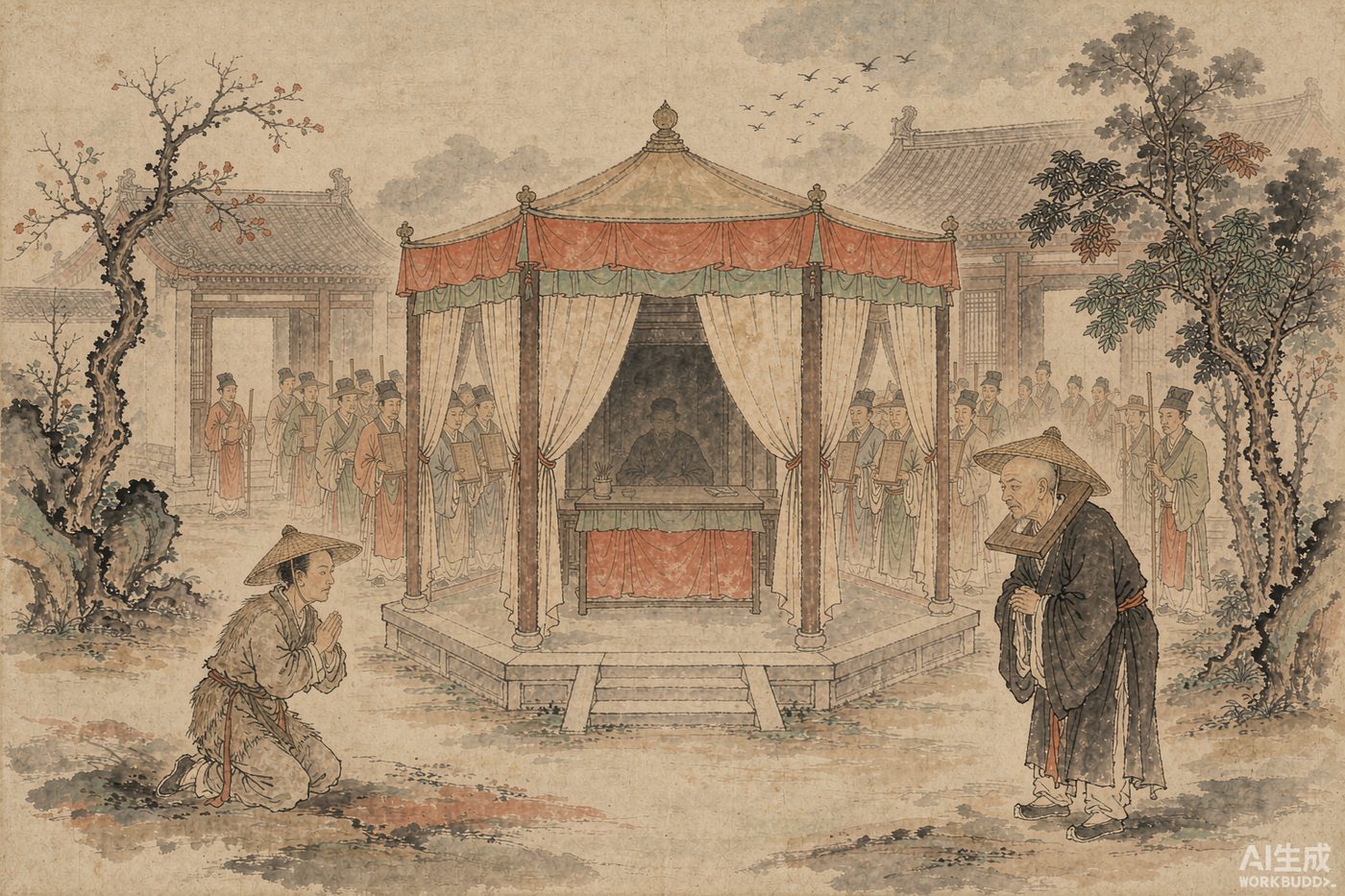
They came to a place that seemed a yamen; the bailiffs bade him sit and wait. Then two red lanterns came out from within; the bailiffs removed Bao’s irons and brought him in, kneeling where the lanterns stopped. There was a bench and documents; an official sat above, in red robe and black gauze cap, stroking his beard, and asked: “Are you Bao so-and-so?” Bao answered yes. The official brought up the girl-ghost and questioned her at length. She and Bao knelt side by side at the foot of the steps, a foot apart, and he heard not a single word of it. He saw the official fly into a rage and order fifteen slaps to the girl’s cheeks, then put her in cangue and irons, and two bailiffs led her away weeping.
At first Bao knelt before the bench feeling mud and mire, the wind cutting his face like knives, shivering. When the girl’s cheeks were slapped, Chen the bailiff whispered from the side: “Elder brother, you have won your suit; let me bind up your queue.” Bao looked up again and the lanterns and the official were gone. The two bailiffs escorted him back, settling the bailiff fee at four thousand cash, of which two thousand was Chen’s private take.
People asked Bao: “Did you ever know this girl?” Bao insisted he did not. The belief is that the girl-ghost, smitten with Bao’s looks, died of love and sought to draw him into a ghostly union, and having falsely accused him was rebuked by the underworld.