In early summer of the first year of Chunxi, a fisherman of Jingdezhen in Fuliang set his net in the Poyang River. The noon sky was clear, the scene calm, the water without a ripple; he was going back and forth laying bait when suddenly a swift wind rose and a cold like deep autumn came on. The fisherman rowed his boat in to shelter at the water’s edge.
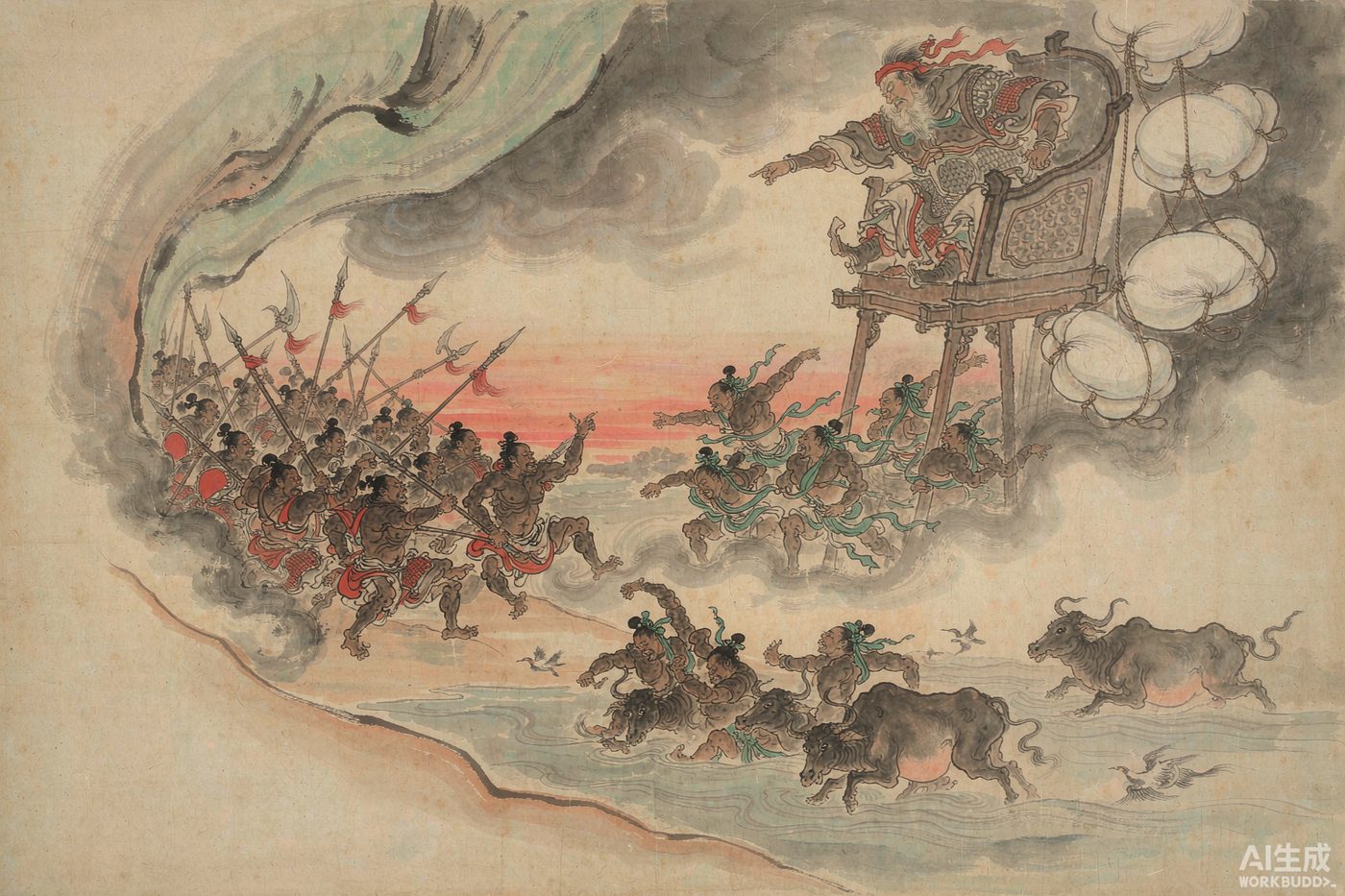
Then he saw more than a hundred stalwart men — all tattooed, with topknots, of imposing bearing — wheeling about on a sandbar. A giant in a green cap, green robe, brown boots and a jade belt, holding a golden mace, sat on a rope bed and directed the crowd, dividing them into an eastern and a western side; each grasped spears, halberds, blades and staves, and charged and struck at one another, fierce as tigers, with a clashing sound.
After a long while the eastern side won and drew back to rest; the western side was defeated and fled, and all turned into cattle and swam across with their noses above water. The eastern band raised a clamor and gave chase, shaking the very sky; once the cattle had crossed, they scattered every which way and vanished.
That year a plague came to the nearby region: west of the county town, house after house fell ill, but the eastern village was untroubled. Only then did they understand what the fisherman had seen: the side that had fought and won was the god of the local shrine, and those who fled in defeat and turned to cattle were the plague-demons.