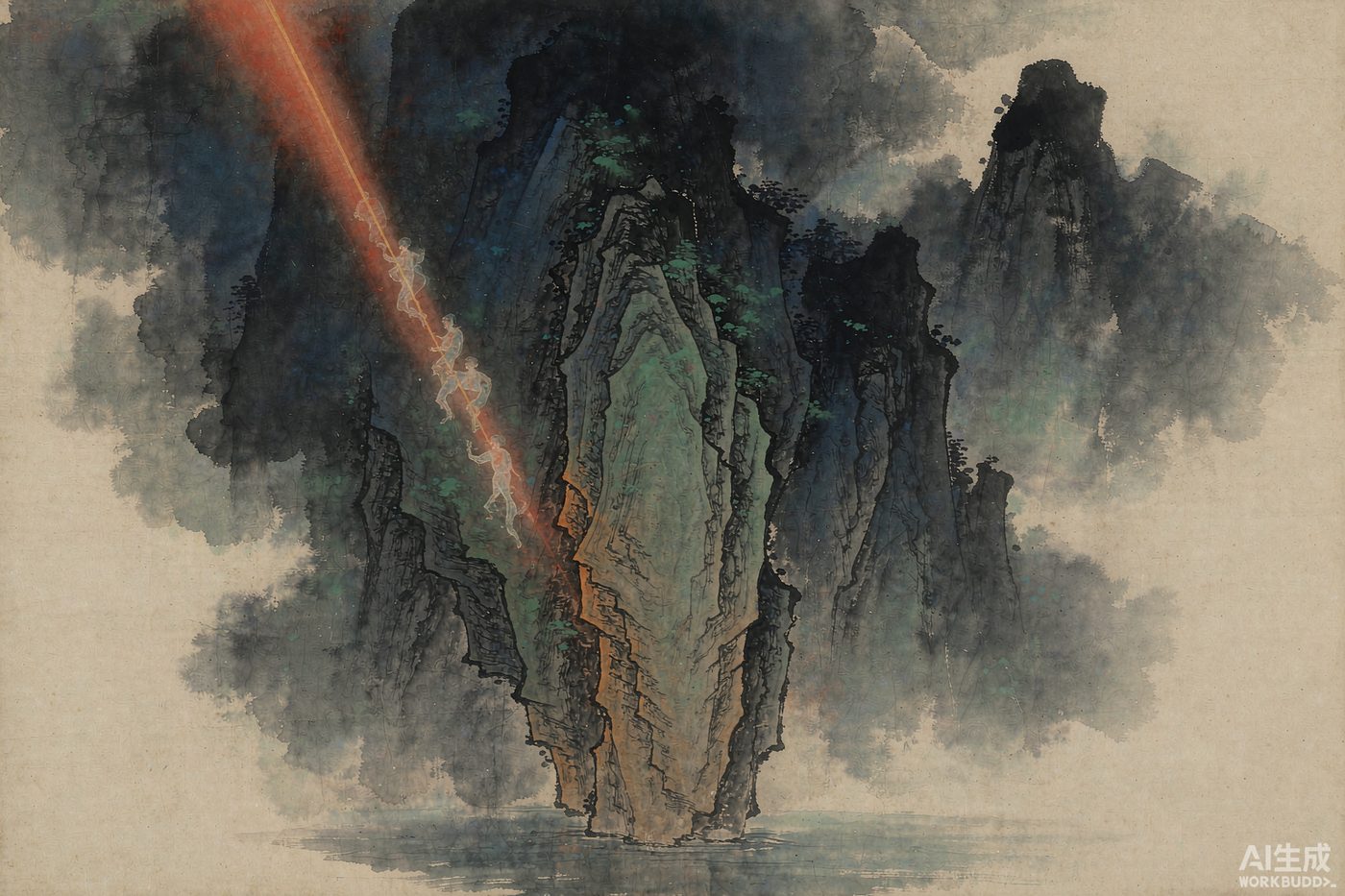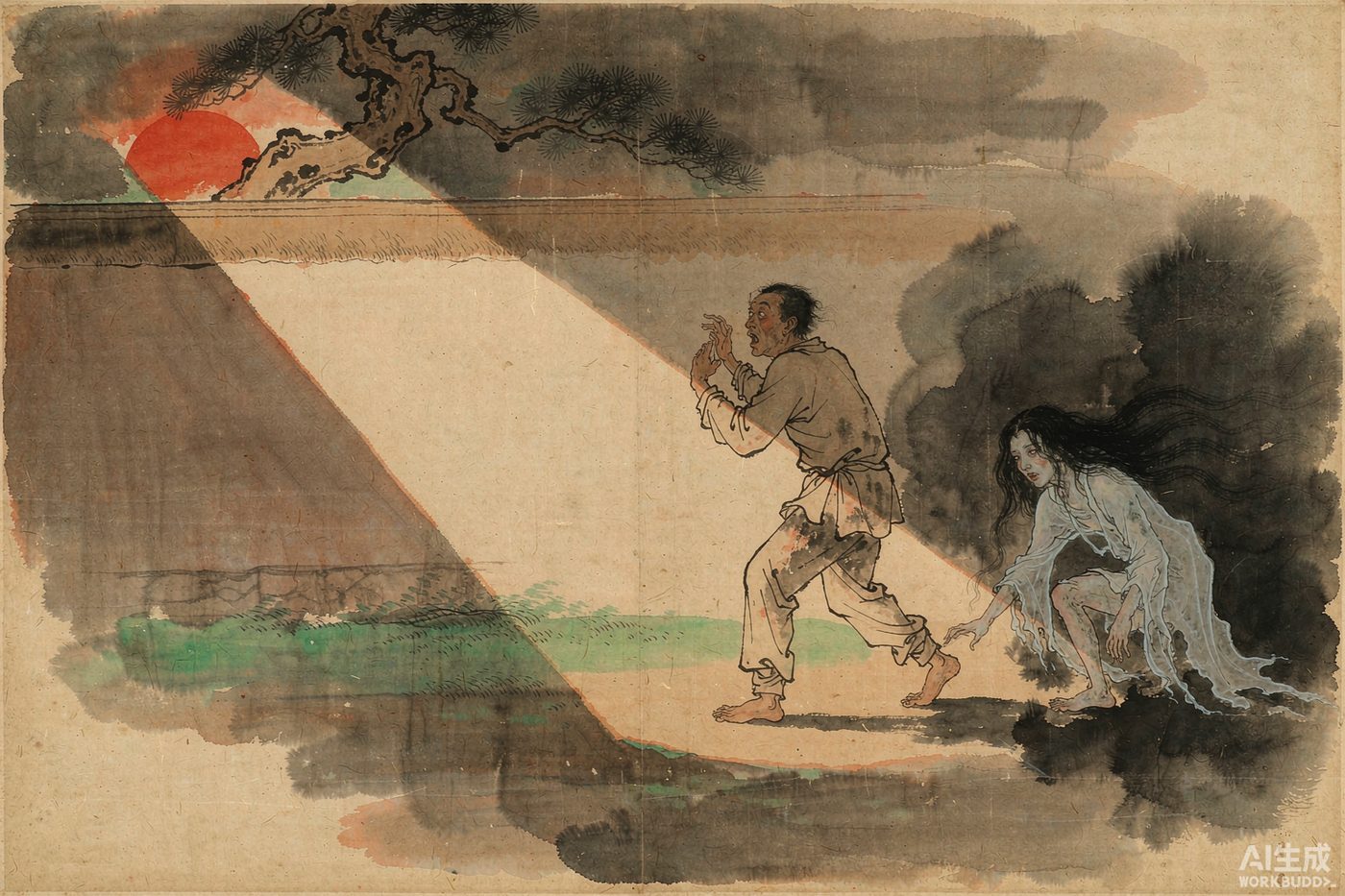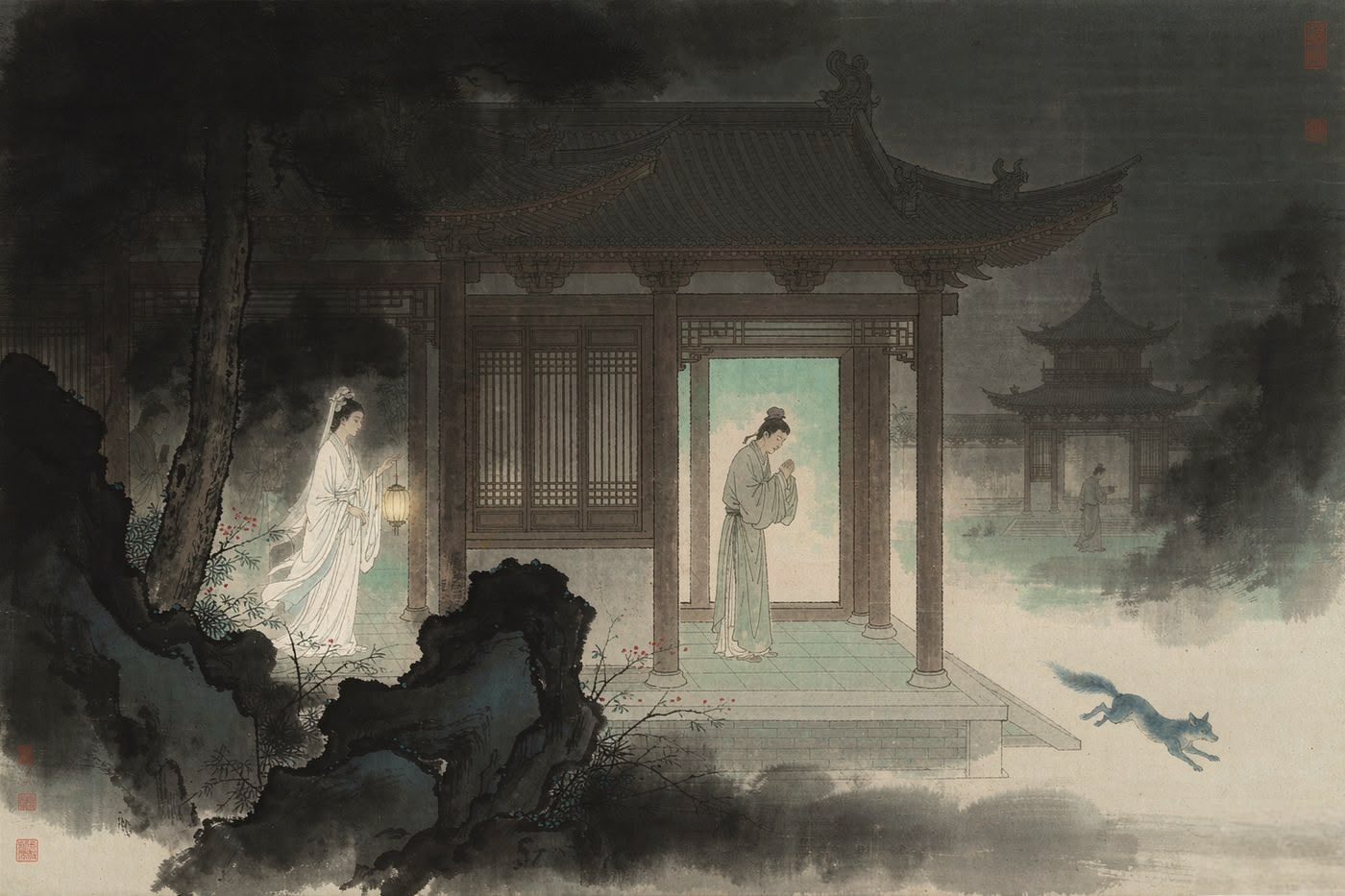
Wu Ran of Yangzhou, ninth among his brothers, was the son of a salt merchant. At twenty he was going to Guangdong, to be married into the household of a provincial treasurer. When the boat reached the Pavilion of Prince Teng, in broad daylight he saw a woman come aboard with a government runner, and she said: “I have been looking for you through three lifetimes, and today I have finally seen your face.”
Wu Ran had no idea where she had come from. His family knew she must be a wronged ghost, and every day they beat the spot where she had been seen with a broom, which did no good at all. From then on Wu Ran’s speech was altogether different from his usual manner. From Jiangxi to Guangdong, neither the woman nor the runner left him.
On the day of the wedding the woman ghost walked straight into the bridal chamber and demanded her seat, contending for precedence with the bride. Only the bride and Wu Ran could hear her.
“I was a widow of Hanyang,” she said. “I was intimate with Wu, and we pledged ourselves to marry. I gave him the ten thousand in silver I had saved, so that he might go to Suzhou and buy a house and open a cloth shop, and we fixed the day he would come back to Hanyang to fetch me. Instead he took the money and went, and for five years there was no word of him. I hanged myself. I went weeping to the Yellow Springs. The City God of Hanyang sent to enquire of the City God of Suzhou, and the reply came back: this man has been reborn in Hunan. I went to Hunan and complained there, and that City God found he had been reborn again, in Yangzhou; and when I reached Yangzhou, Wu had gone on to Guangdong. I followed as far as Jiangxi, and there at last I found him. Today’s marriage I cannot prevent. But I must have my share of the honour and the wealth.”
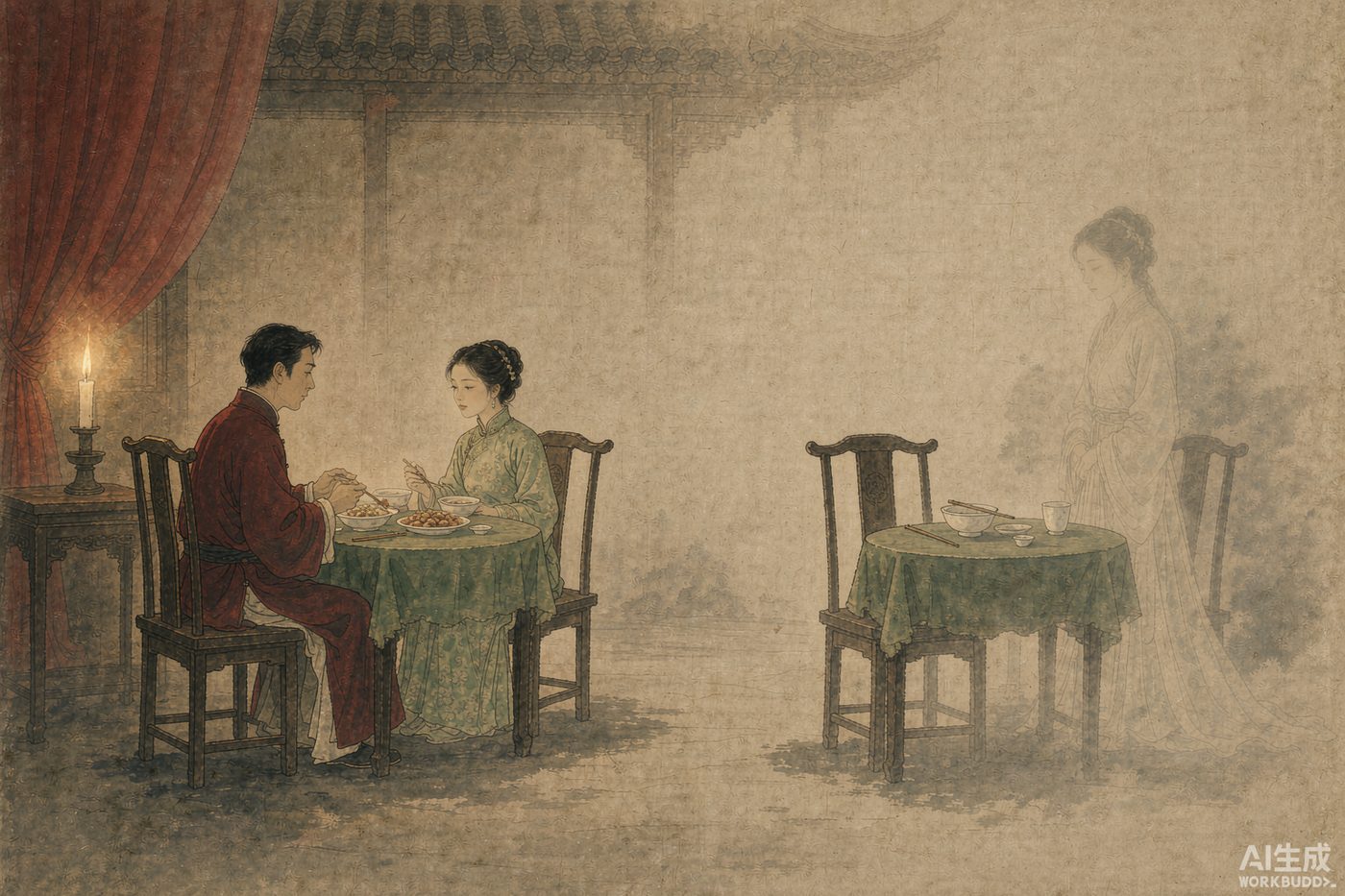
The bride was terrified and told the provincial treasurer. There was nothing for it but to leave a seat empty for the ghost, and only then was there any peace. The ghost’s runner then began to ask for cups and chopsticks and food, and a separate place was laid for him.
After about a month Wu Ran announced that he was going home and bought passage back to Yangzhou. The ghost pressed urgently for a chair of her own, meaning to follow his chair aboard the boat. The gentry of Yangzhou had long since heard the story and did not believe it, and on the day of his return they filled the streets and lanes to watch him come in. They saw four sedan chairs enter the city. The two in front were indeed empty, though the bearers felt as if someone were sitting in them. Someone with time on his hands turned the whole thing into a play called The Bond Renewed.
A fortnight later Wu Ran’s wife and the woman ghost agreed on a seven-day rite, burning paper money in the Qionghua Abbey, to persuade her to go; and the ghost gladly consented. By now the runner had gone. In the abbey they set the woman’s spirit tablet up on the west side of the hall, and every day Wu Ran’s wife laid a place and made the offering with her own hands. On the seventh day it rained hard, and a servant was sent out with the food. He slipped and fell in the road, and served up the offering fouled with mud. The ghost raised a great outcry that would not stop. Wu Ran scolded the servant, and his wife agreed to a second rite of nine days, and brought it to its close.
The woman ghost thanked Wu Ran’s wife, and said to Wu Ran: “Ten years from now I will come for your life. For the present I take my leave.”
Wu Ran was afraid. He gave himself up to serve as a runner for the City God, and when the time came he slept through the daylight hours. To this day everyone in Yangzhou knows Wu the Ninth Whiskers as a living summoner.