Ge Wenlin of Dongting was a commended scholar with a literary name while still at the academy. After his principal mother, née Zhou, died, his father in Jingzhou took a second wife, née Li — who was Wenlin’s own birth mother. Three days after Li entered the house, she was sorting Zhou’s clothes chest and came upon a red padded jacket embroidered with a nine-branched lotus; she loved it and put it on.
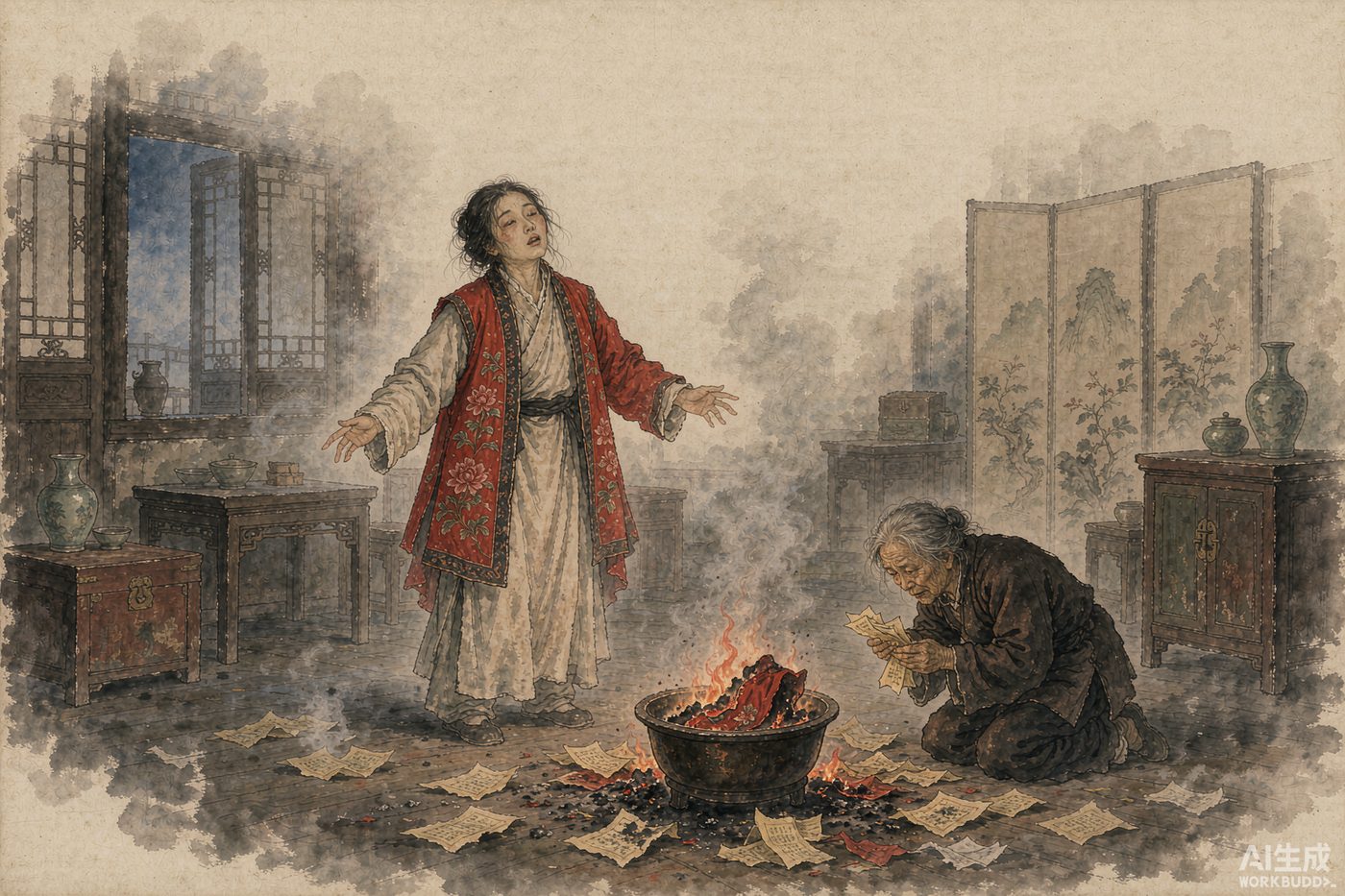
In the middle of the meal she fell into a faint and slapped her own face, saying: “I am Zhou, the former wife. The clothes in that chest I brought with me when I married. All my life I treasured them and could not bear to put them on my own body. Now you, a newcomer, have brazenly put one on — my heart will not be reconciled; I have come to take your life.”
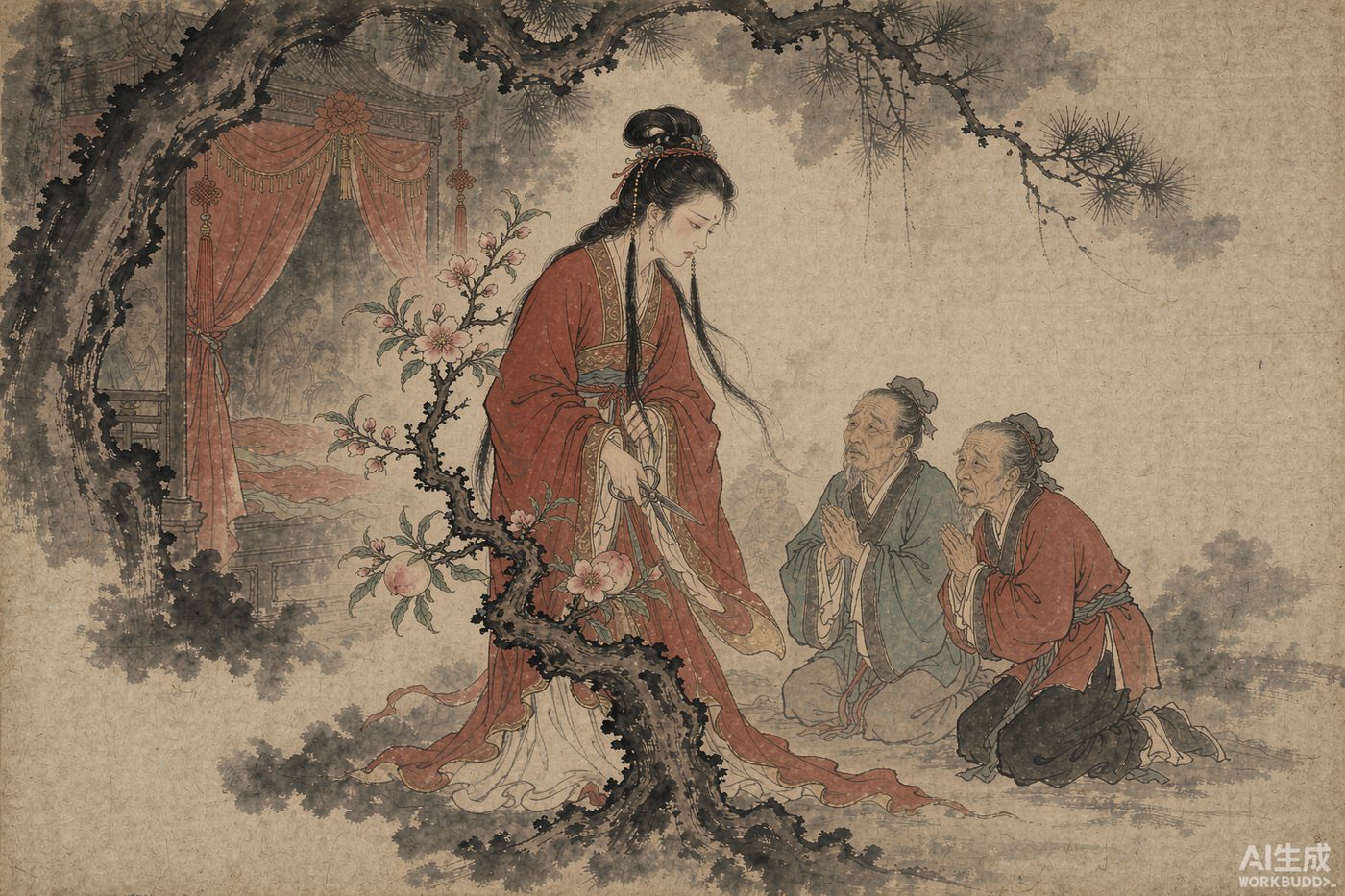
The family knelt all around and pleaded for Li, and said: “Madam, you are already dead; what use to you is this fine garment?” She said: “Burn it quickly and give it to me; I mean to wear it. I know my own disposition is small; of my former dowry, not a thread may go to Li — burn it all and give it to me, and only then will I leave.” The family had no choice and did as she said, burning it all. The ghost clapped her hands and laughed: “Now I may go.” Li instantly recovered, to the family’s great joy.
The next day, as Li was at her morning toilet, she suddenly gave a yawn, and the ghost possessed her again, saying: “Send for the master.” Her husband came running; the ghost took his hand and said: “The bride is young and cannot manage the household; every morning I will come and see to it for her.” After that, each forenoon the ghost would lodge in Li’s body, checking on fuel and rice, scolding the servants, orderly in every way. So it went for half a year, and the family grew used to it and was no longer surprised.
Then one day she said to her husband: “I must go. My coffin rests here, and you walk about beside it and shake the spirit-bed; in my coffin every joint of my bones aches — hurry and bury me, to settle my soul.” Her husband said: “We have no burial plot; what can we do?” She said: “The firecracker-seller Zhang next door has land on such-and-such a hill; I went to look yesterday — pines and bamboo, much to my liking. He asks sixty taels aloud, but in his heart he wants thirty-six — that you may buy.” Ge went to look, and sure enough there was land and an owner, exactly as described, and he struck the deed then and there.
The ghost asked for a burial date. Ge said: “The land we have, but when we announce the date to kin and friends, there is as yet no filial son to sign the notice — a real lacking of ceremony.” The ghost said: “Well said. Your bride is with child now; the sex is not yet known; give me three thousand paper coins and I will buy you a son.” With that she left. When the time came, Li indeed bore Wenlin.
Three days later the ghost possessed the wife as usual. Her mother-in-law, née Chen, scolded her: “Li has just given birth and is weak; here you come to pester again — have you no pity?” She said: “Not so. This child I bought, to succeed to my blood-offerings; I cannot be unmoved. The bride is young and sleeps heavily — what if he rolls over and crushes it? I have one word for you, mother: once the child has drunk its fill, you must take it to sleep with you, and only then am I at ease.” The mother-in-law nodded; Li gave a yawn and the ghost departed again.
They chose a day to carry out the funeral. Ge, pitying the infant not yet a month old, felt it could not bear coarse hemp and changed it for fine. The ghost came and scolded: “This is the qi-cui mourning — the garb of a grandson for a grandfather. I was the principal mother; nothing less than zhan-cui will do.” Reluctantly they changed it and saw her off. At the burial the ghost possessed the wife and wept aloud: “My body and soul are at peace; from this day I shall never come again.” And after that, indeed, she was gone.
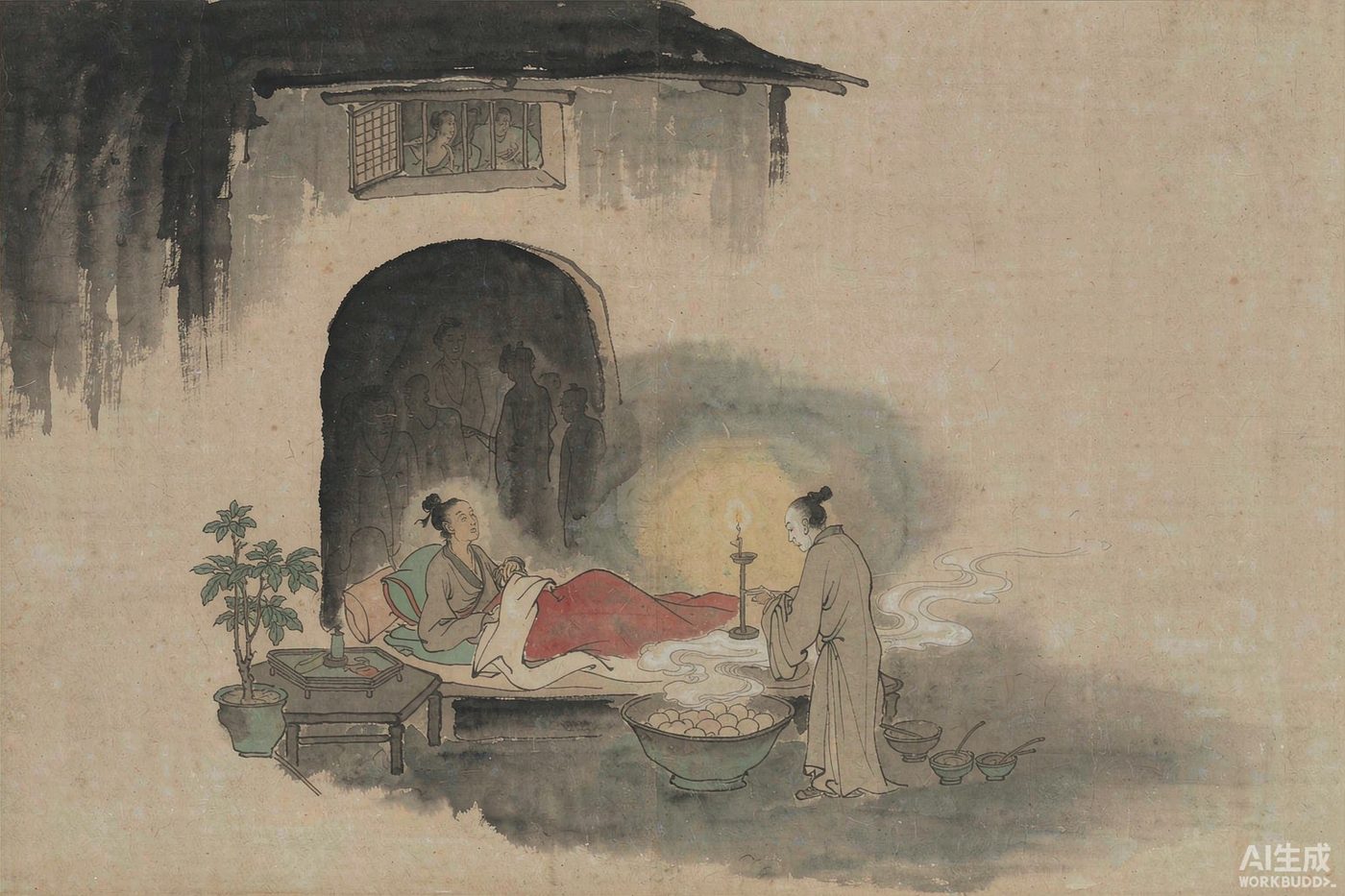
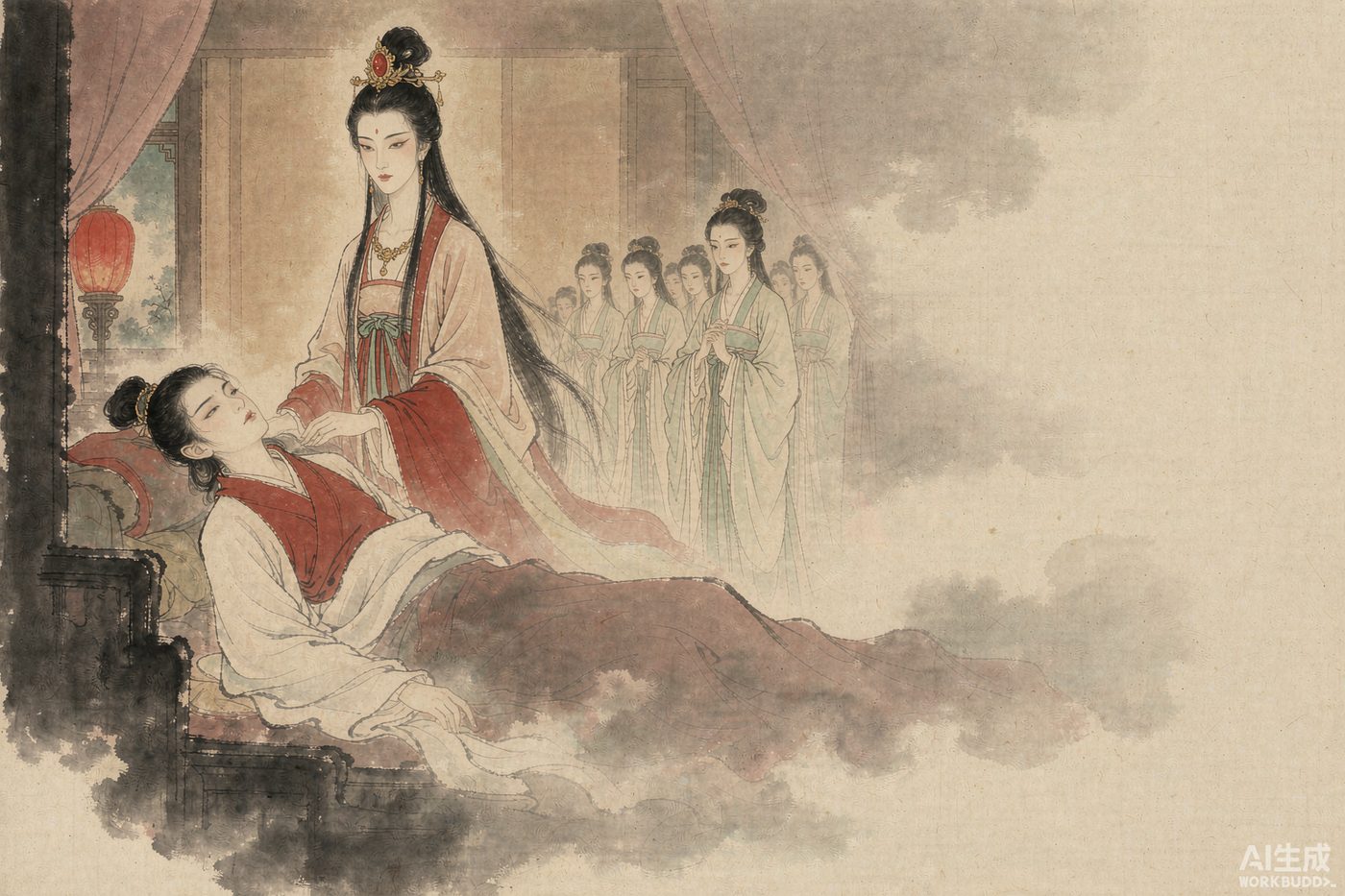
Earlier, before Zhou had married, she had sworn sisterhood with two neighbouring girls, vowing to live and die together; the two younger sisters had died first. When Zhou was ill she said: “My two sisters have come; they are calling me from behind the bed.” Ge was angry and drew his sword and struck — at the air. Zhou stamped her foot: “You did not soften your plea but struck and wounded her arm; the harder to win back.” With that she died, just twenty-three years old.