A rich man of Dingtao, whose family had borne the name of good men for three generations, had a son of fourteen and wished to engage a teacher of examination composition. He was too exacting in his choice and delayed the decision.
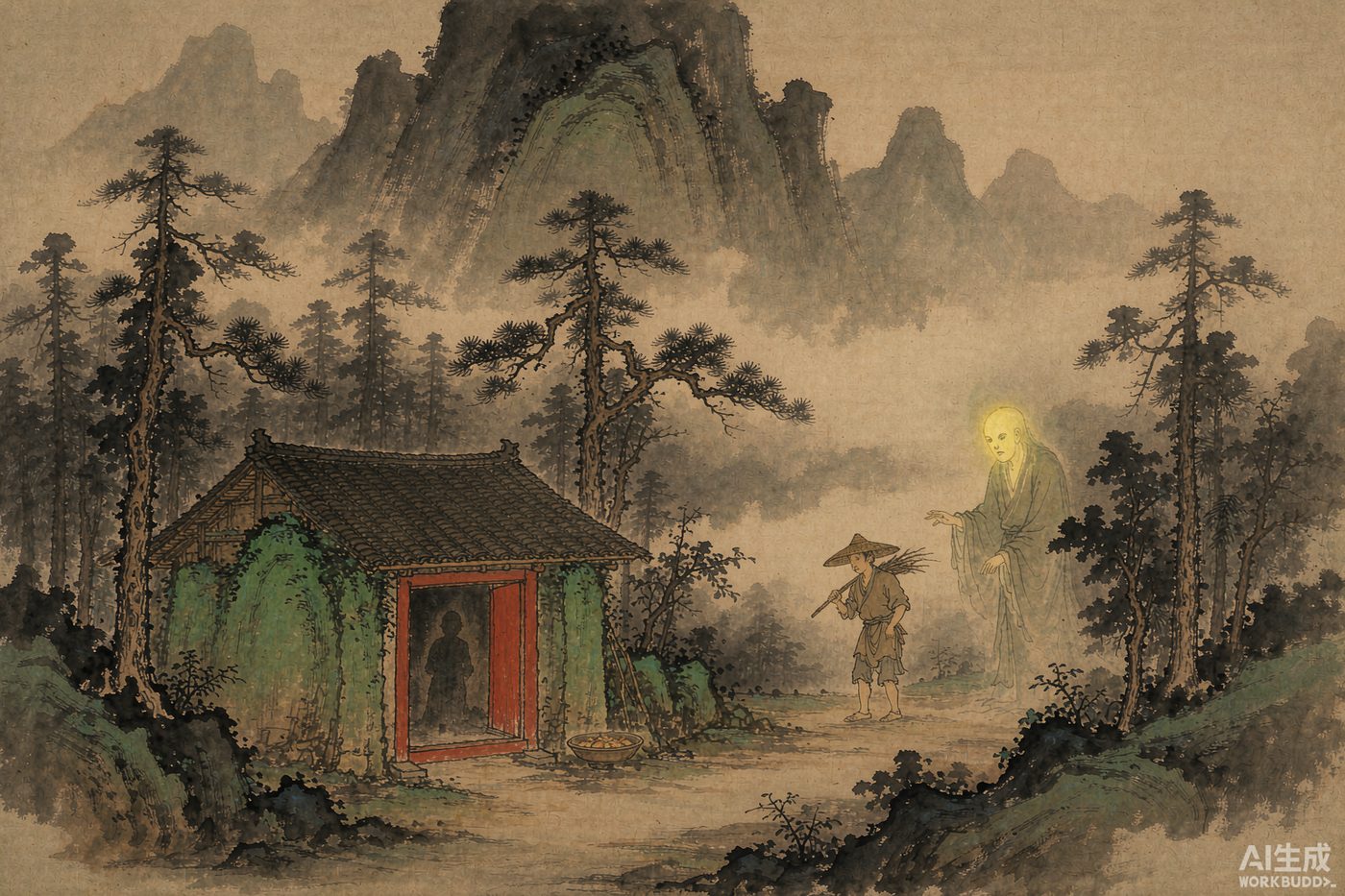
One night he dreamed a man told him: “If you want a teacher, there is no one but a certain licentiate of Broom Village in Wu commandery.” He woke, thought it strange, packed and travelled to Suzhou, and asked the way to Broom Village — a remote corner west of the city. Arriving, he found open wilderness, few people, and no one to ask.
Then an old man came along with a staff, and he hurried forward to inquire. The old man smiled: “The licentiate you speak of is this old useless fellow.” So he stated his purpose in full, and offered to accompany him home. The old man said, “My snail-shell of a house cannot hold an honoured guest. Since you have kindly sent for me, let us simply go together.” The rich man was delighted, took him home, and set his son to study under him.
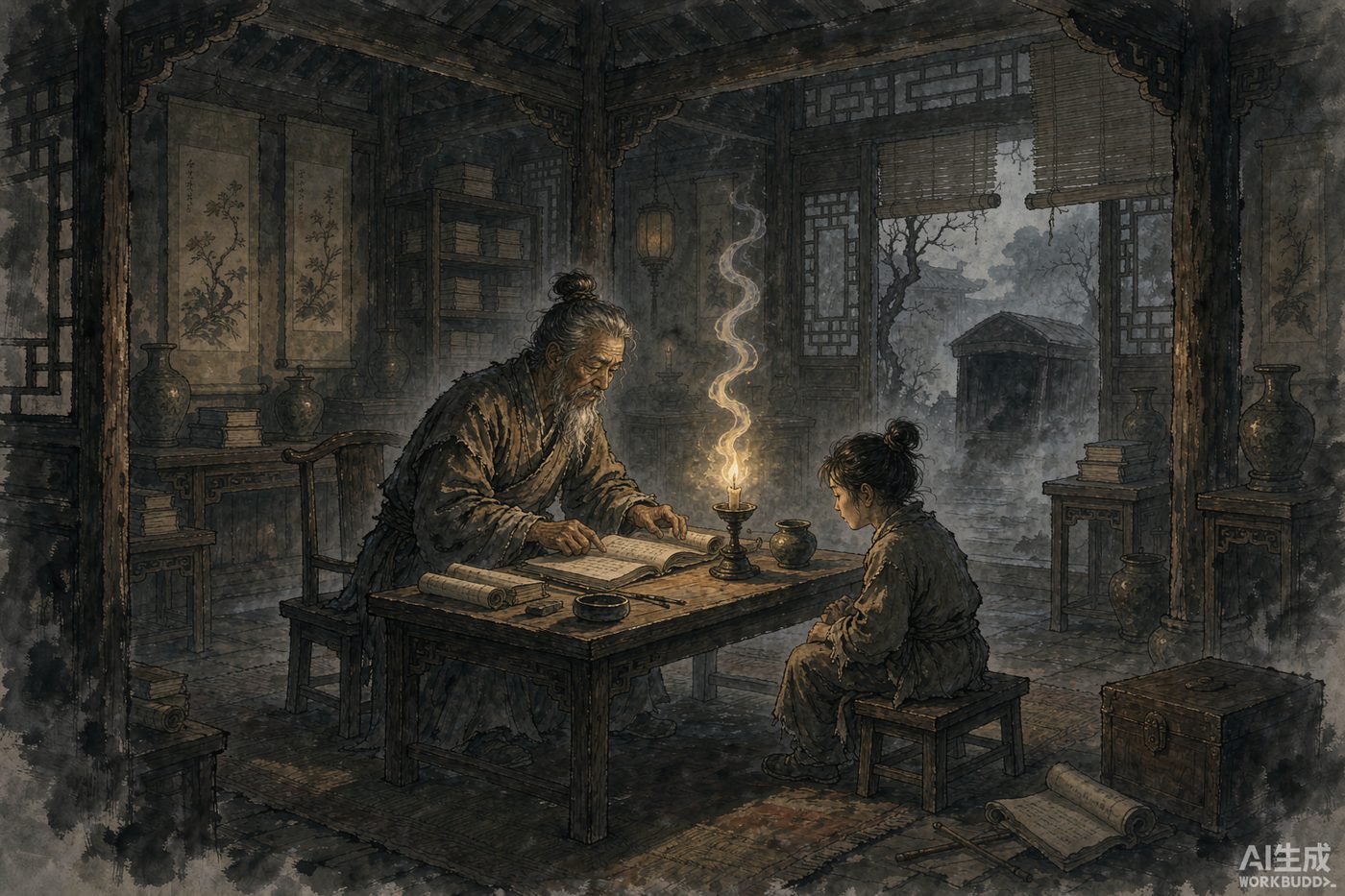
The old man supervised the work strictly, night and day, without a break for cold or heat. Beyond the model essays of the Chenghua and Hongzhi reigns, what the boy read was the old man’s own exercises and his papers from the annual and provincial tests. When the pupil wrote badly, the master composed a piece himself and had him recite and imitate it; that year the boy entered the county school. He also copied out the papers that had failed in former sessions for him to read, and made him imitate for profit everything currently praised as pure and correct. In the spring and autumn examinations the boy passed in succession.
The rich man was delighted and gave a feast for his master’s birthday. “If you would produce even a fraction of your ability,” he said, “my worthless son could be made a scholar. Why keep yourself hidden away, ending your days in a student’s robe at your window?”
The old man sighed for a long while. Pressed for the reason, he said: “Do not think it strange, but I am not a living man — I am a ghost. In youth I was careless in small conduct and shamed the teaching of the sages, so that I was stuck in the examination halls for more than fifty years without taking a single degree. My wife was frivolous and said my writing did not suit the times, which was why I kept failing; she called me the dull licentiate to my face every day, and I died of stifled resentment. Now, knowing your family has accumulated merit, I borrow that virtue to give my writing its say, so that men may know a lifetime of failure was not a failure of argument — and so that the world may understand that those who take high degrees and climb to high office succeed for this reason and not that.”
With that he struck his breast, cried out once, fell, and was gone.
The rich man sat stunned a long while. Grateful for the old man’s teaching, he went back to the village, and found a single old house with a coffin set at its left side, and an old woman cooking at the stove. He asked about it. “That is my late husband,” she said. “He died three years ago. In life he was angry at being called the dull licentiate. On his deathbed he told me: ‘I lack the merit to reach the clouds and win you a title, but I shall bequeath you fortune through my writing. Remember these words, and hold out your remaining years.’”
Hearing it, the rich man was more grief-stricken still, gave a thousand taels to relieve the family, and did all he could to see the man properly buried. Later he was appointed a magistrate, and brought the old woman to his home to be supported to the end of her days.