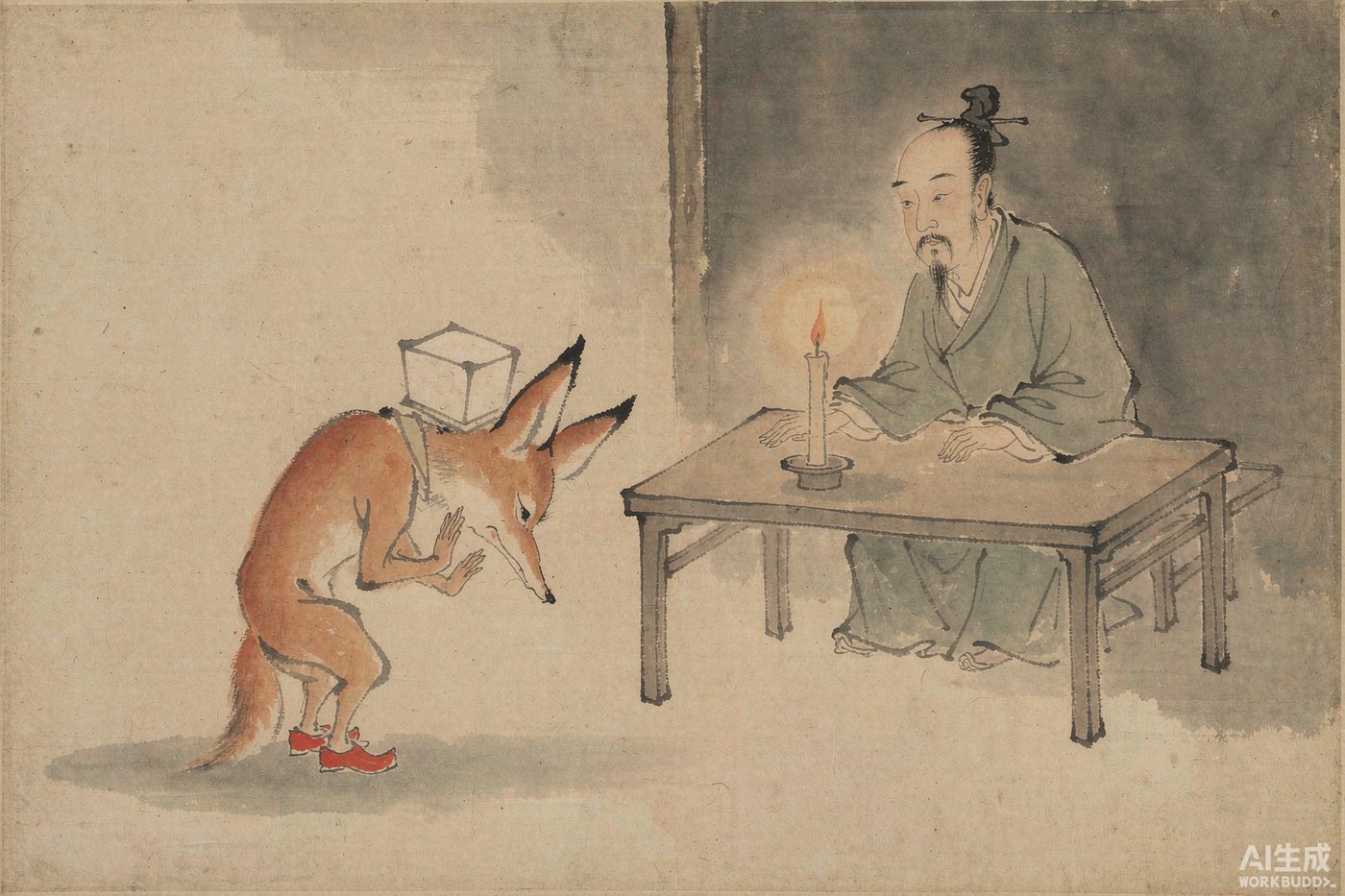
In Wujin county of Changzhou there was a man named Lü whose wife was possessed by a fox. It took the form of a handsome young man wearing a Tang-style cap, and told people’s fortunes — sometimes right, sometimes wrong.
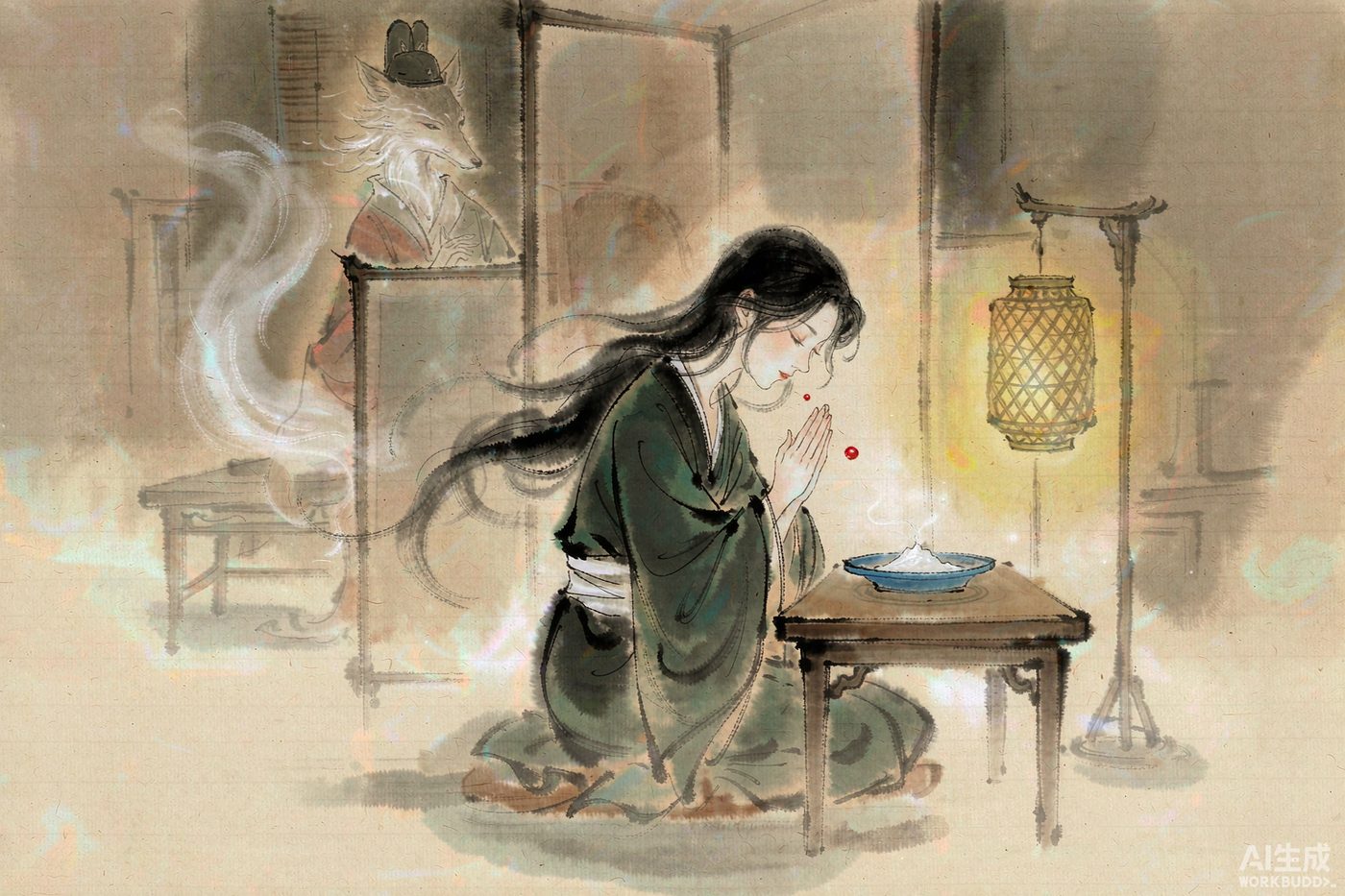
When someone came to ask a divination and the fox happened to be out, the petitioner was told to write the question on a slip and burn it, keeping the ashes in the altar bowl. When the fox came home it would spit out an object — red, like a little mirror, no more than an inch across — and hold it over the ashes in the bowl, and then it could recite aloud the burned words without a single error. When the reading was done it swallowed the thing back into its belly. Someone said: this is the fox’s elixir-pearl.
When the fox had a reply to deliver, it made the woman speak the words; and fearing she would forget them, it would pinch the middle joint of her finger with its hand — and then she could remember. Even long compositions in rhyme she could recite straight through; though once it was done, she was as unable to read as ever.
There was a certain licentiate, a cousin of the wife, who wanted to exchange poems with the fox and asked her to convey his request.
“I have a couplet,” said the fox. “If the scholar can match it, we may exchange verses:
Red-and-white peach blossoms shine on the paper window — the blossoms have no two colors.”
The wife told him. The licentiate could not match it, and withdrew in shame.
The fox is still living in that household to this day. The magistrate Qian Zhuchu told me of it.