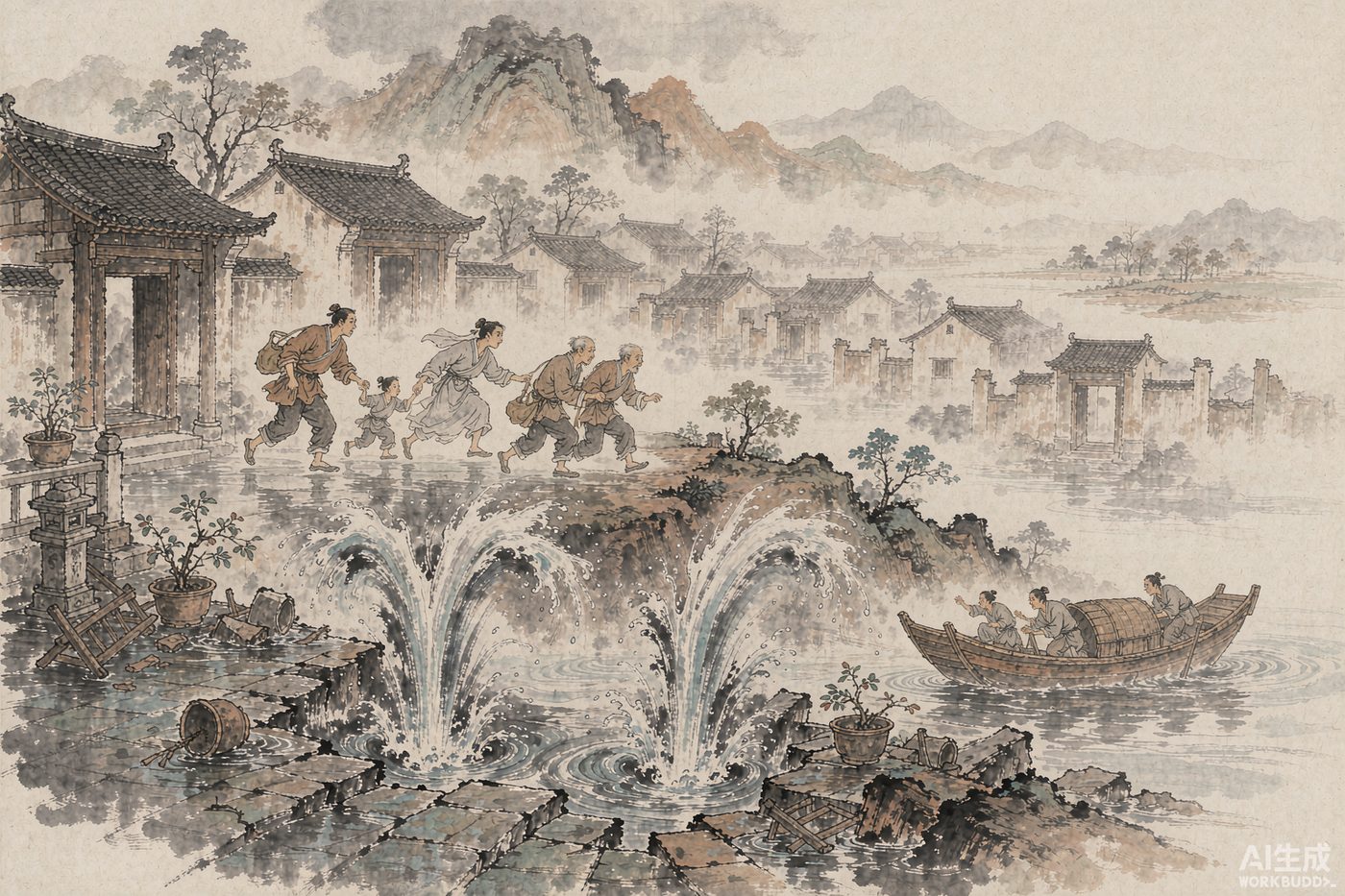
South of the Yellow River, at the Yangwu dike-section northwest of Bianjing, the works were many times broken by torrents; each repair took hundreds of thousands of corvée laborers. In the Huangtong era of Jin it once burst and flooded, and troops were sent to seal it, but what was built in the morning collapsed by evening.
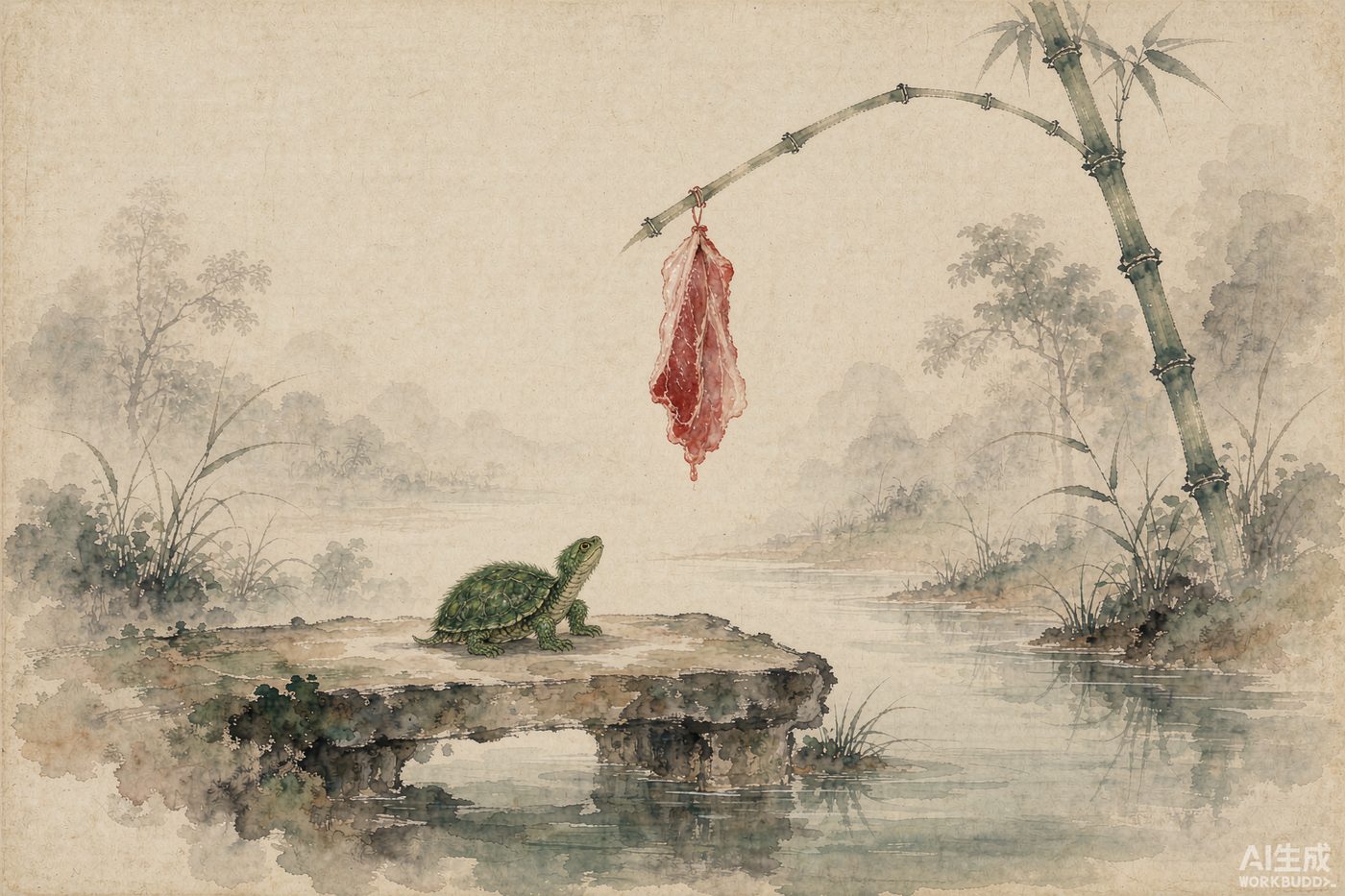
The prefect of Bianjing recruited a strong swimmer to probe the riverbed. An old fisherman said he could stay submerged a full day and night. He was ordered to prepare meat and liquor and first sacrifice to the River God, then was sent down. He came up after half a day and said: “Below lurks a long jiao causing the harm, and that is why the dike will not hold. It must be killed; but I need a treasured sword to manage it. The jiao is fast asleep in a hundred-fathom deep; to behead it will be easy.”
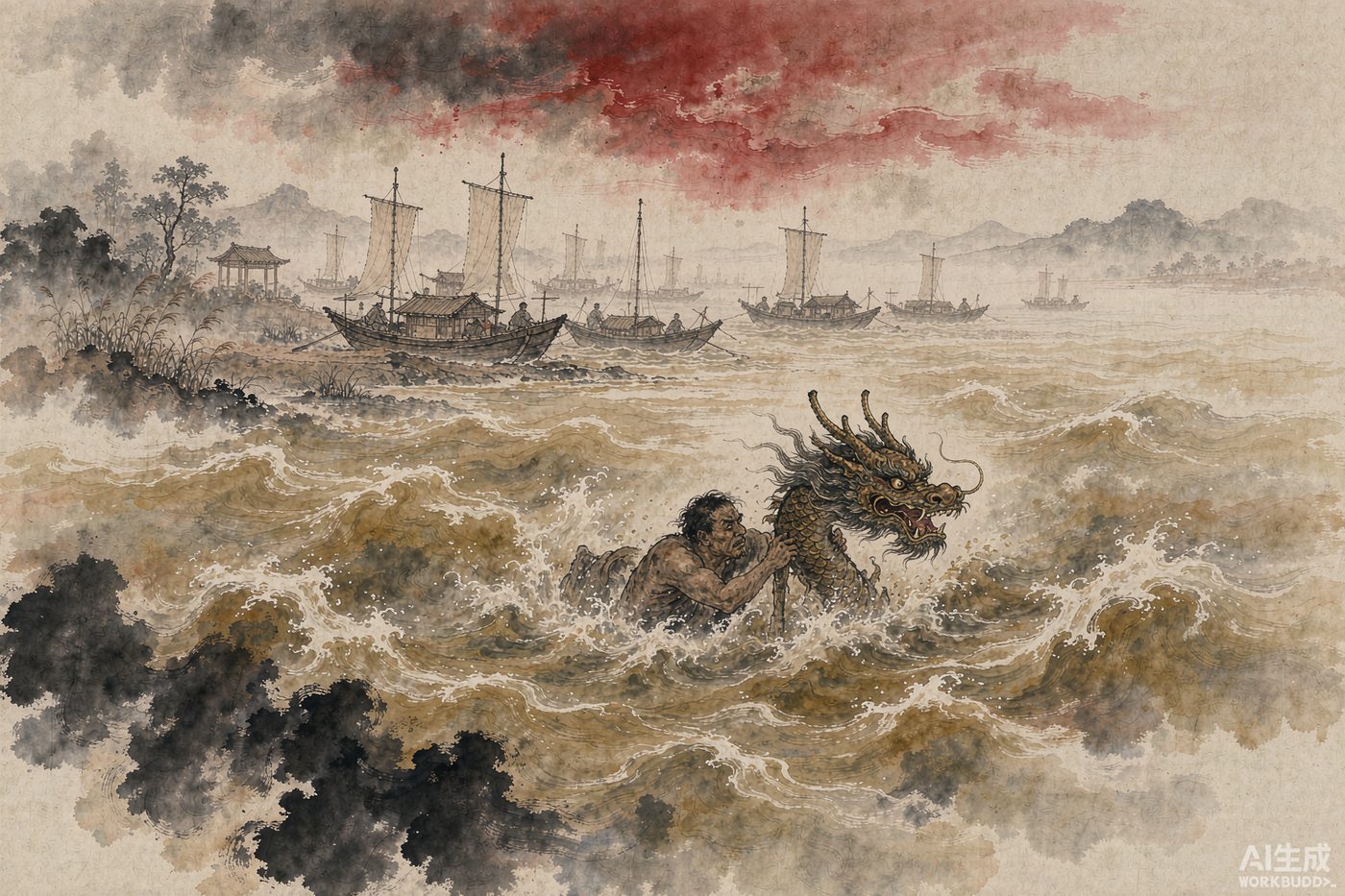
The prefect took an ancient sword from the armory and gave it to him. As he was about to enter, the old man said again: “I wish you would gather the boats along the bank to wait for me; at noon, when the water turns red, order them out to midstream.” At the appointed time the water turned red, and the fisherman rose from the water clutching the jiao’s head and sprang into a boat. The great flood abruptly fell, and the dike was at peace.
The prefect wanted to petition for a military title for him; he declined and would not accept it. Offered much gold and silk, he also declined. Then, in the twinkling of an eye, he died.
The prefect built a shrine for him on the spot and petitioned the court to enfeoff him as the Four Generals, with a statue of the Dragon Girl, the son of Third Lady, set beside him. The responses to prayer were most marked. When they sought the fisherman’s family, no one knew of him, nor had anyone ever asked his surname. Those who understood suspected he was a god.