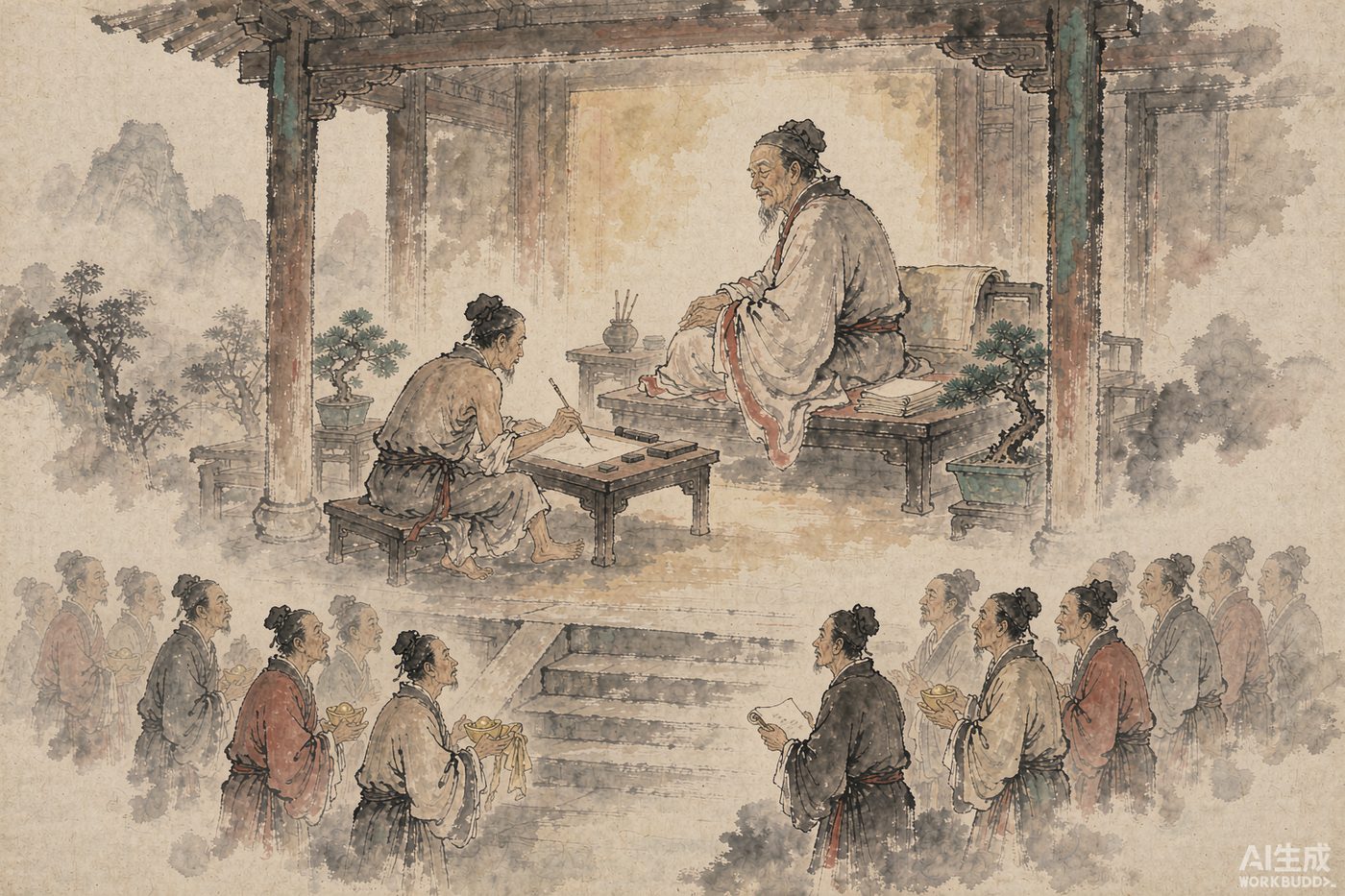
Mr Lu Tixia of Hangzhou was a man of pure conduct who never in his life took a second woman. If actors or singing girls were brought in to press wine on him, he showed neither pleasure nor annoyance and dealt with them as they came. When men who had committed small offences asked him to put in a word for them, he said yes. Those in authority thought highly of him, and there was nothing he asked that they would not grant.
Some people blamed him for cheapening his own character.
He laughed. “When I see a grain of rice on the floor I am not easy in my mind until I have picked it up and set it on the table. Why should I have to be the one to eat it? Whenever a man sets his mind on establishing a reputation for backbone, that is already a private motive. I had this from Governor Tang Qian’an. When he was governor at Suzhou, and Suzhou was full of brothels, he did nothing but exhort and warn, and never once made arrests.
“‘There are players and prostitutes in the world,’ he told his subordinates, ‘exactly as there are monks and nuns. Monks and nuns deceive people in order to eat; players and prostitutes please people in order to eat. Neither belongs to the law of the ancient kings. But since Ouyang Xiu’s treatise on the subject cannot be put into practice, where are the cold and the hungry and the unmarried to be put? To persecute players and prostitutes today is like the Northern Wei suppressing the clergy and smashing the images: it does nothing but make money for the clerks. I will not weigh the branches without weighing the root.’”
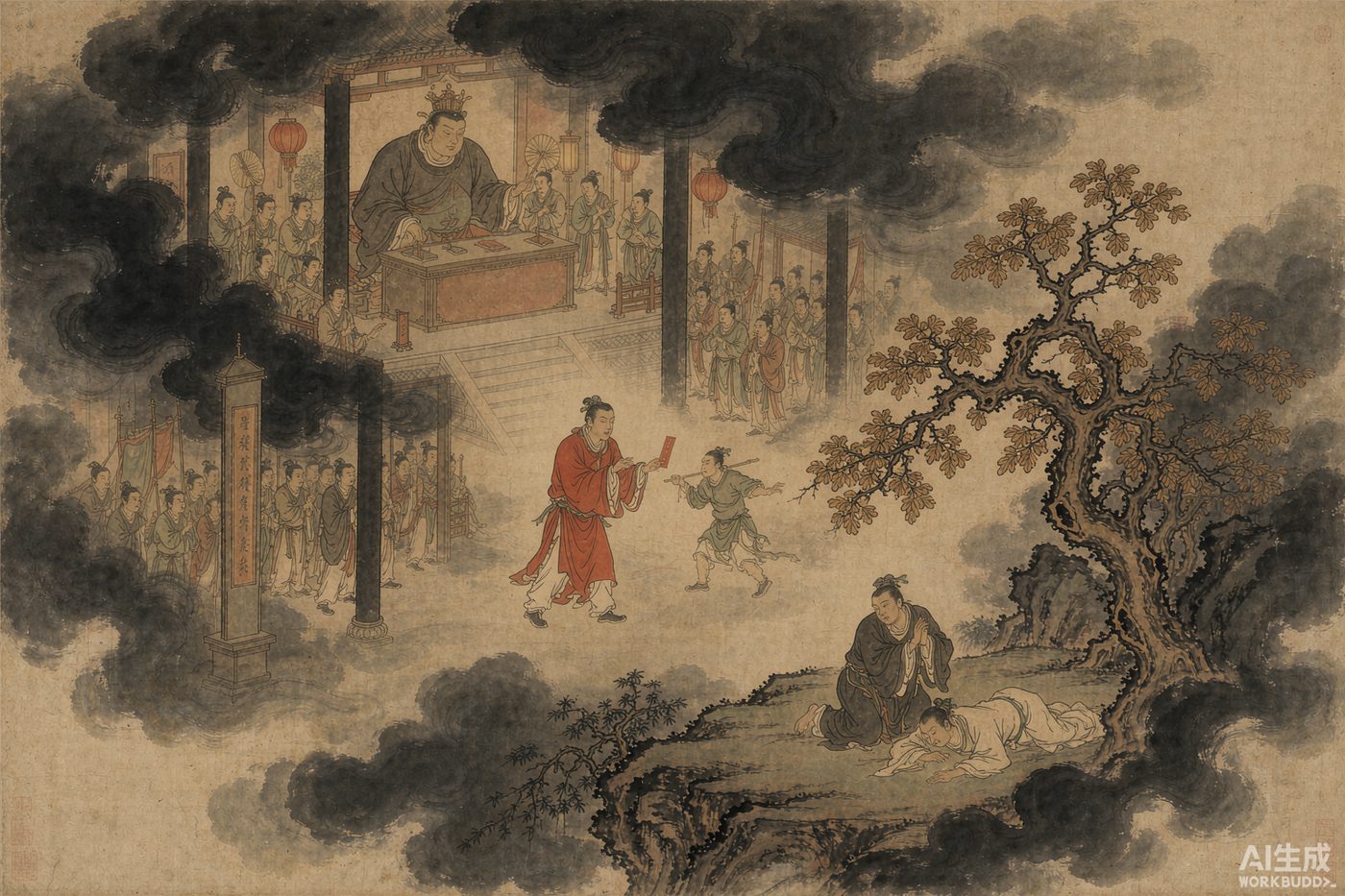
One day Mr Lu dreamt that a runner came with a card inviting him, and on the card was written: Your kinsman and brother of the same year, Yang Jisheng, bows.
“I was just wishing I could meet Lord Jiaoshan,” said Lu, laughing, and went.
He came to a place of towering halls, and Lord Jiaoshan in black gauze cap and red robe came down the steps to meet him.
“I have had the Jade Emperor’s decree. My term is complete and I am to be promoted. This seat needs you.”
“In the world of men,” said Lu, “I disdained to hold office among the living, and lived retired. How should I now be an official among the dead?”
“You are a lofty man indeed,” said Jiaoshan, laughing, “to think so little of a City God’s post that you will not take it.”
Before he had finished, a judge whispered in his ear.
“This case is hard to decide,” said Jiaoshan. “It will have to go up to the Jade Emperor.”
“What case?”
“The case of the bound feet, against the last emperor of the Southern Tang. In his previous life he was the monk Jingming of Mount Song, and he turned about and was born sovereign of the South. Taking his pleasure in the palace, he bound the feet of his consort Yao Niang with silk into the shape of a new moon. It was only a passing whim.
“Who could have foreseen that it would become a custom, that the world would compete in arched slippers and tiny feet, and wrench and gouge the body a parent gave them — so that feet are measured large and small, a mother-in-law is angry with her daughter-in-law, a husband loathes his wife, and men and women hand the thing back and forth in a riot of lewdness? Not only do small girls suffer beyond measure, there are women who have hanged themselves over it and drunk lye.
“God abhorred him for starting it. So he was made to take Emperor Taizong’s bow-string poison in his lifetime: the feet straining forward, the head straining backward, more agonising than any woman’s binding, and he could not die until the agony was finished. It is now nearly seven hundred years; his repentance is complete; he was to go back to Mount Song to cultivate the Way.
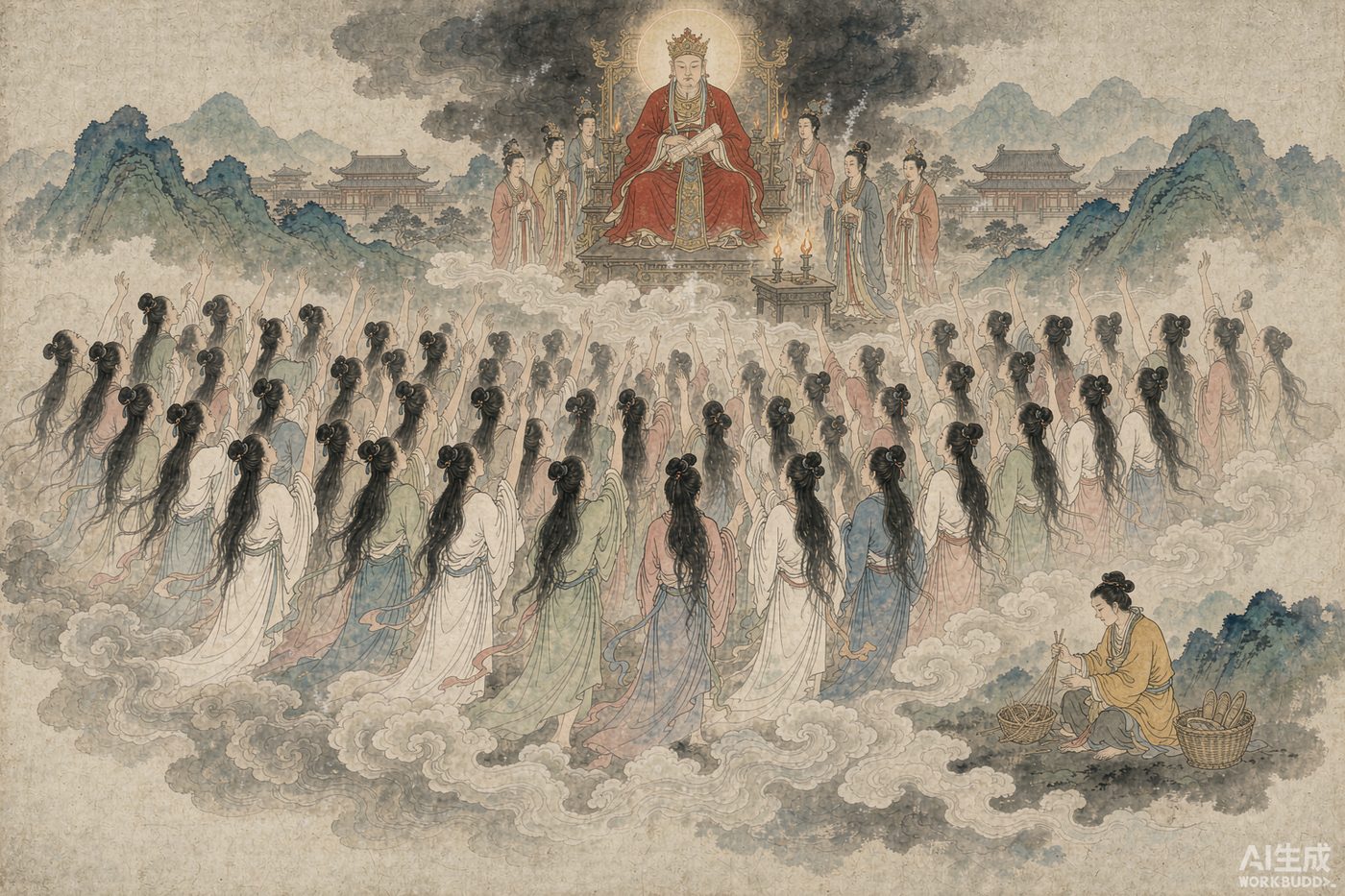
“And then several hundred thousand women without feet came running to the Gate of Heaven crying out their grievance. When Zhang Xianzhong broke Sichuan, he cut off our feet and piled them into a mountain, with the very smallest feet at the peak. That we were fated to die in that calamity we accept. But why should we have been made so hideous a public spectacle? Is this not the crime of Prince Li, who began the binding of feet? We beg God to punish Prince Li severely; then, and only then, will our eyes close.
“God was moved, and sent word to the City Gods of the four seas to consider the sentence. The paper has come to me. My ruling is: the evil was Zhang Xianzhong’s; the last emperor of Tang could not have foreseen it; the heavy statute cannot be applied. I propose that Prince Li be sentenced to weave a million pairs of straw sandals in the dark world, in recompense to the footless women, and not be allowed back to Mount Song until the number is complete.
“The draft is settled, but it has not yet gone round to the other City Gods for countersignature. What do you think of it?”
“Custom is past curing,” said Mr Lu. “Among the ignorant there are those who burn a parent’s body and call it filial piety, and those who make a girl’s feet hurt and call it a mother’s love. It is the same case exactly.”
Lord Jiaoshan roared with laughter. Mr Lu took his leave and came out, and woke to find everything perfectly ordinary.
After that, Lord Jiaoshan did not come again. Lu lived past eighty and died.
He used to say to his wife, laughing: “Do not bind our daughter’s feet. I am afraid it will cost the last emperor of Tang another pair of sandals down in the dark world.”