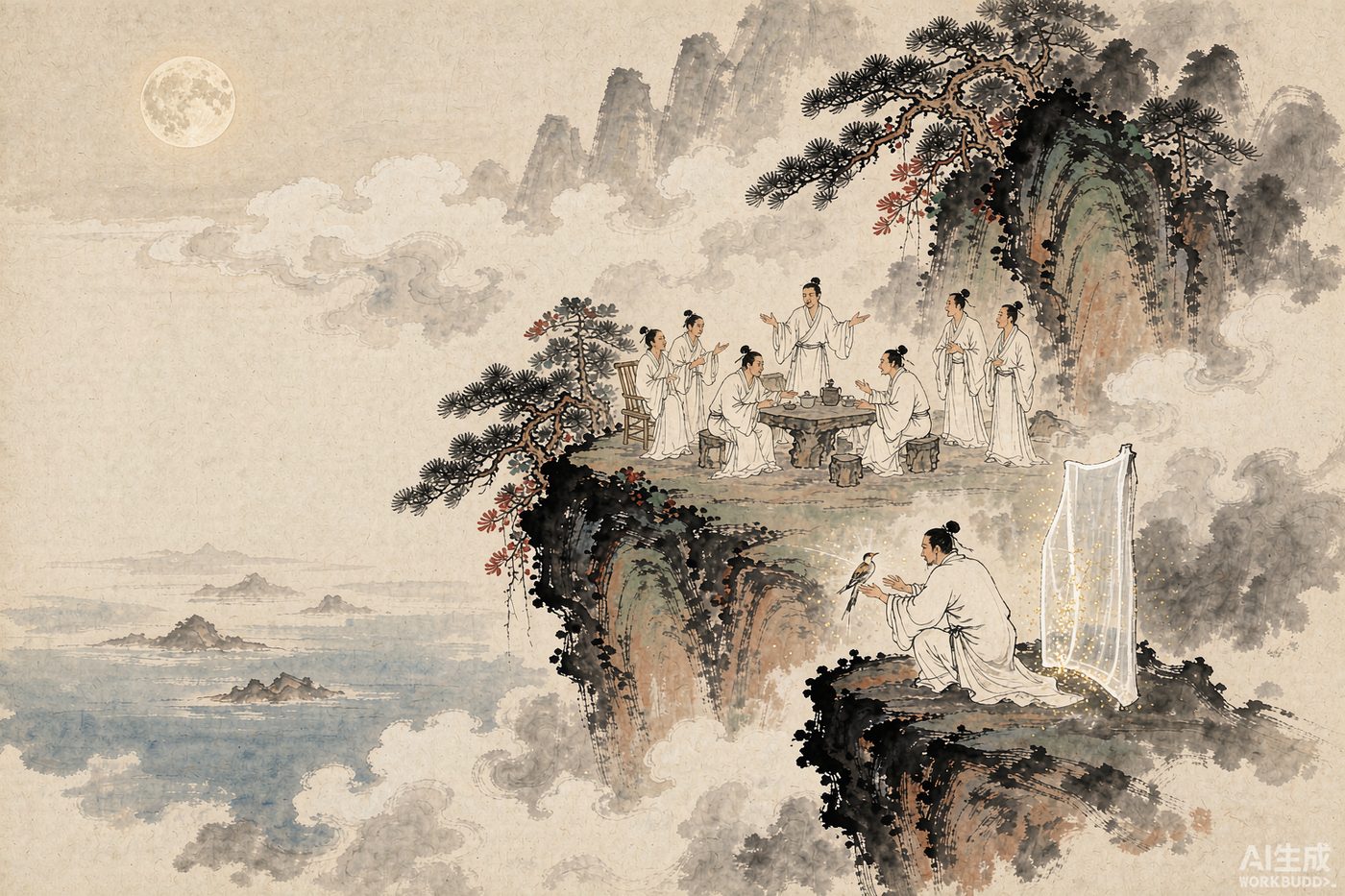
At the Hu Pass there was a man named Chen Yiyuan who abandoned his household to study the Way. He bought a fine quiet house and sat alone in it, locking himself in with key and bolt. At first he gave up rice and gruel, then he gave up fruits and vegetables, and drank nothing but the water of Stone Lake. He told his son to bring him a jug of water each month. When the son went to look the next month, the jug was still set outside the door and the water was gone, so he filled it again and put it in.
A licentiate named Sun Jingzhai heard of this and admired him greatly, and wrote a slip of paper which he pasted on the lid of the jug, asking whether he might be allowed to see him and requesting that a date be granted. His heart was in his throat for fear he would be refused. The next month he went to look, and on the tail of the paper on the jug there was written: “On the seventh day of the second month you may come and see me.”
Sun was delighted. On the day itself he went with the son, and saw that Yiyuan was only about forty, while his son had already grown old.
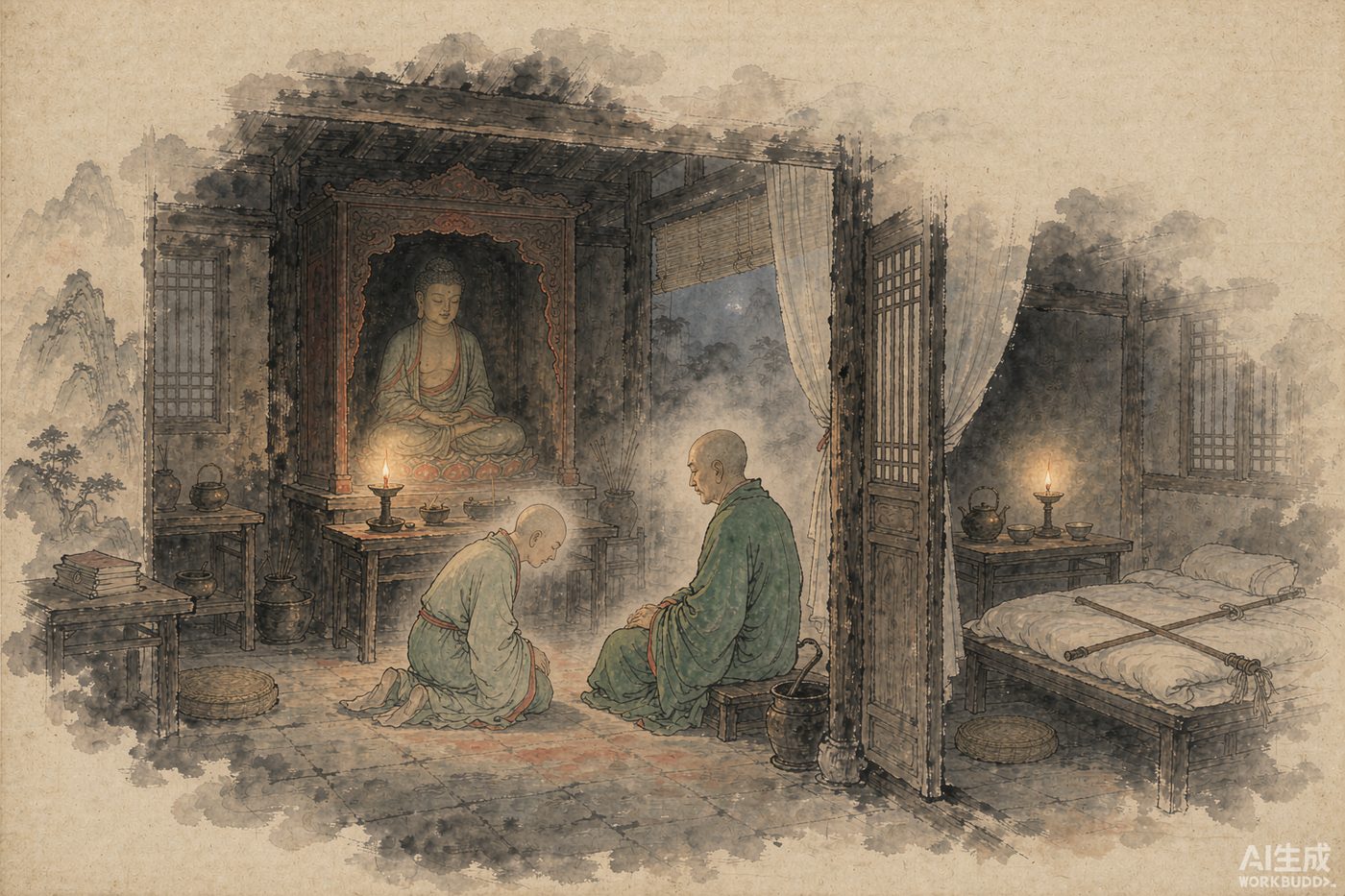
Sun asked: “In practising the Way, where does one begin?”
He said: “Sit quietly a little while and count for yourself the places your mind goes.”
Sun sat a long time, and Yiyuan asked: “How many thoughts have come up in you?”
“Seventy-two thoughts have come up,” he said.
Yiyuan laughed. “When the mind has nothing to rest on, seeking stillness only stirs it, and that is the ordinary rule of things. Seventy-two thoughts in one double-hour is not to be called many. Your root and breath are good enough to learn the Way.”
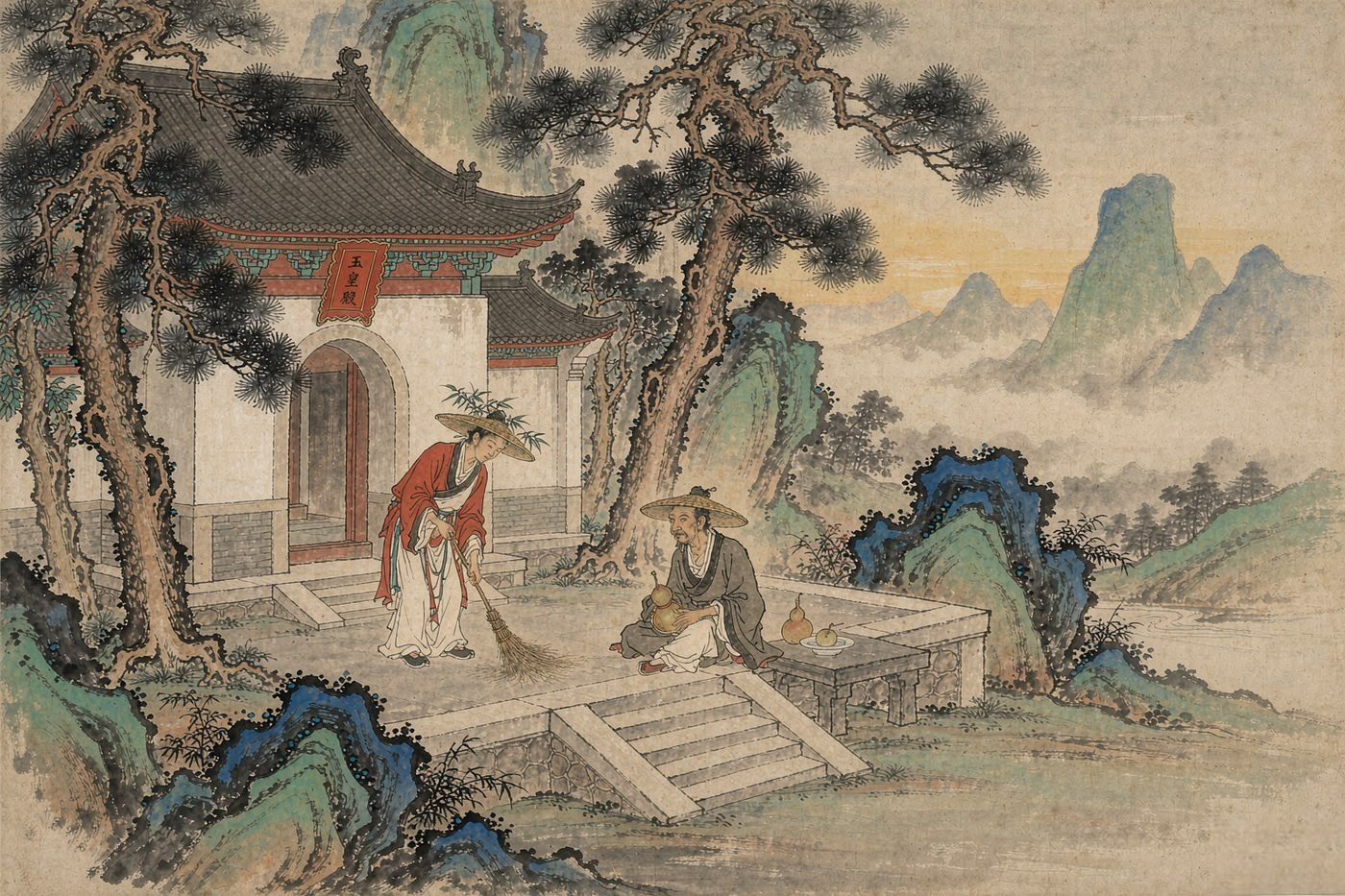
And he taught him the method of drinking water.
“Man is originally come out of the void. Because he eats too much, his body turns heavy and solid, worms of filth swarm in his belly, and it breeds phlegm and stoppage. The student of the Way first clears his mouth, then clears his intestines. Let the worms starve and be washed out of him. Water is the first true vapour of the prior heaven. When heaven and earth opened, before the five phases there was water; and therefore the drinking of water is the essential secret of cultivating immortality. But the water of towns is muddy and burdens the spirit-house, so you must draw water of the utmost clarity from the mountains and swallow it slowly, until there is a clacking in your throat, and only then does the sweet flavour come out. One spoonful of water will carry a man through a day and a night. So for a hundred and twenty years, and the body gradually grows light and clear, and even water may be given up, and then one rides the wind on the breath.”
Sun asked Yiyuan: “Who was your teacher?”
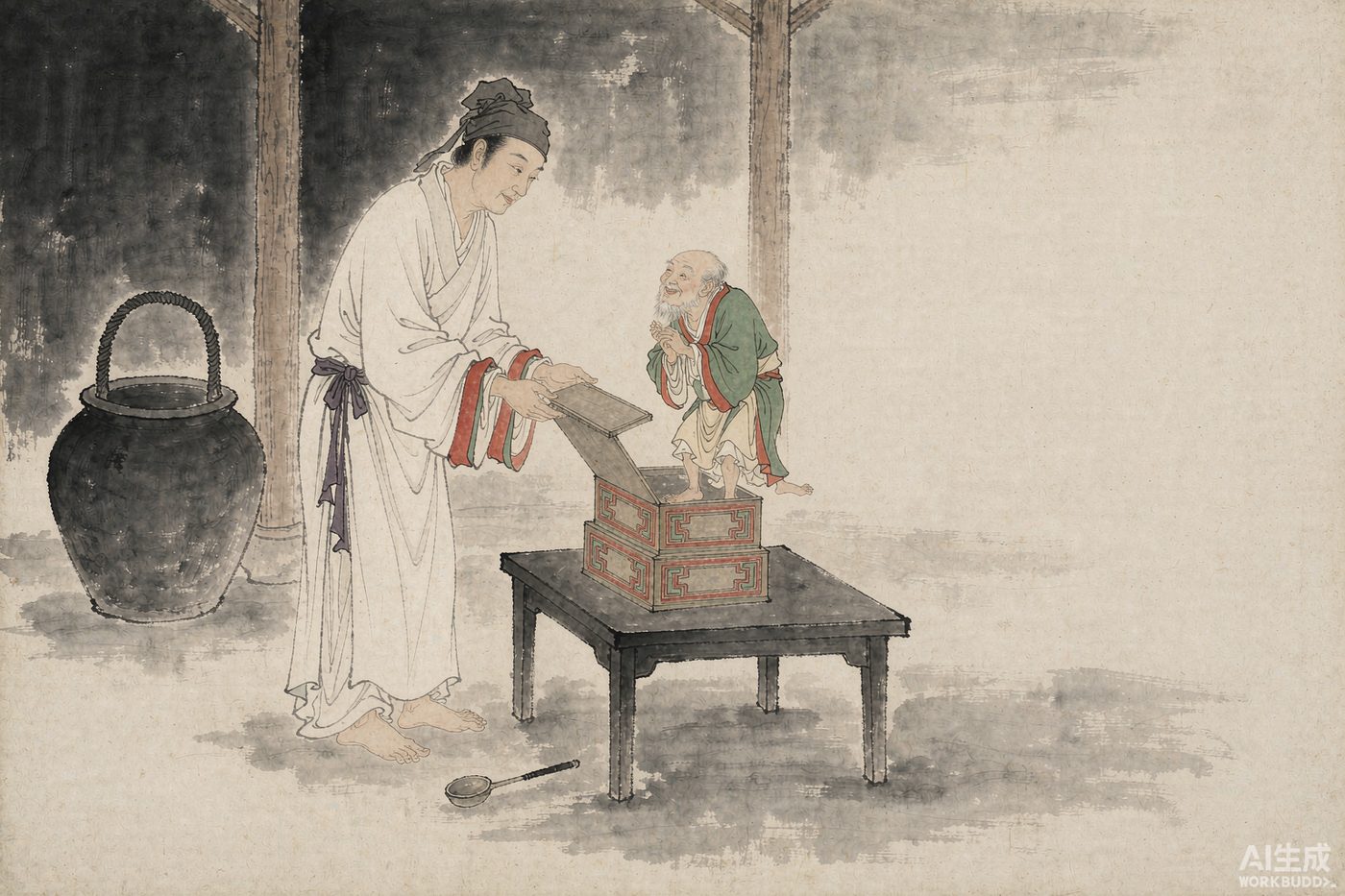
“Thirty years ago I went to Mount Tai to burn incense,” he said, “and met a young man, handsome and extraordinarily quick, who could foretell whether the day would be clear or cloudy, so we travelled the road together. The young man carried an embroidered box on his back, and at every inn he would whisper to the box for a while before going to sleep. I was astonished and suspicious, and bored a hole in the wall to watch him. I saw the young man set the box on a table, adjust his cap, and bow to it twice, and an old man came up out of the box sitting and laughing, bright-eyed, his white beard floating. The two talked together in low voices, and I could not make it out; I heard only eight words: there are those who steal the Way, and there is the Way that steals. At the third watch the young man asked, Will the master be pleased to sleep? The old man nodded, and he folded him up like a figure cut from paper and silk, and put him into the box. The next day the young man knew that I had seen, and told me his story, and allowed me to be his disciple, and passed the Way on to me.”
Sun embraced Yiyuan to test him, and with the chair he sat in it came to no more than thirty catties. But Sun had two daughters not yet married, so he begged leave to go home, meaning to return when his leave was up.
I saw Yiyuan in the office of the magistrate Zhang at Zhenze, and he told me all of this himself. It was the tenth day of the second month of the wushen year.