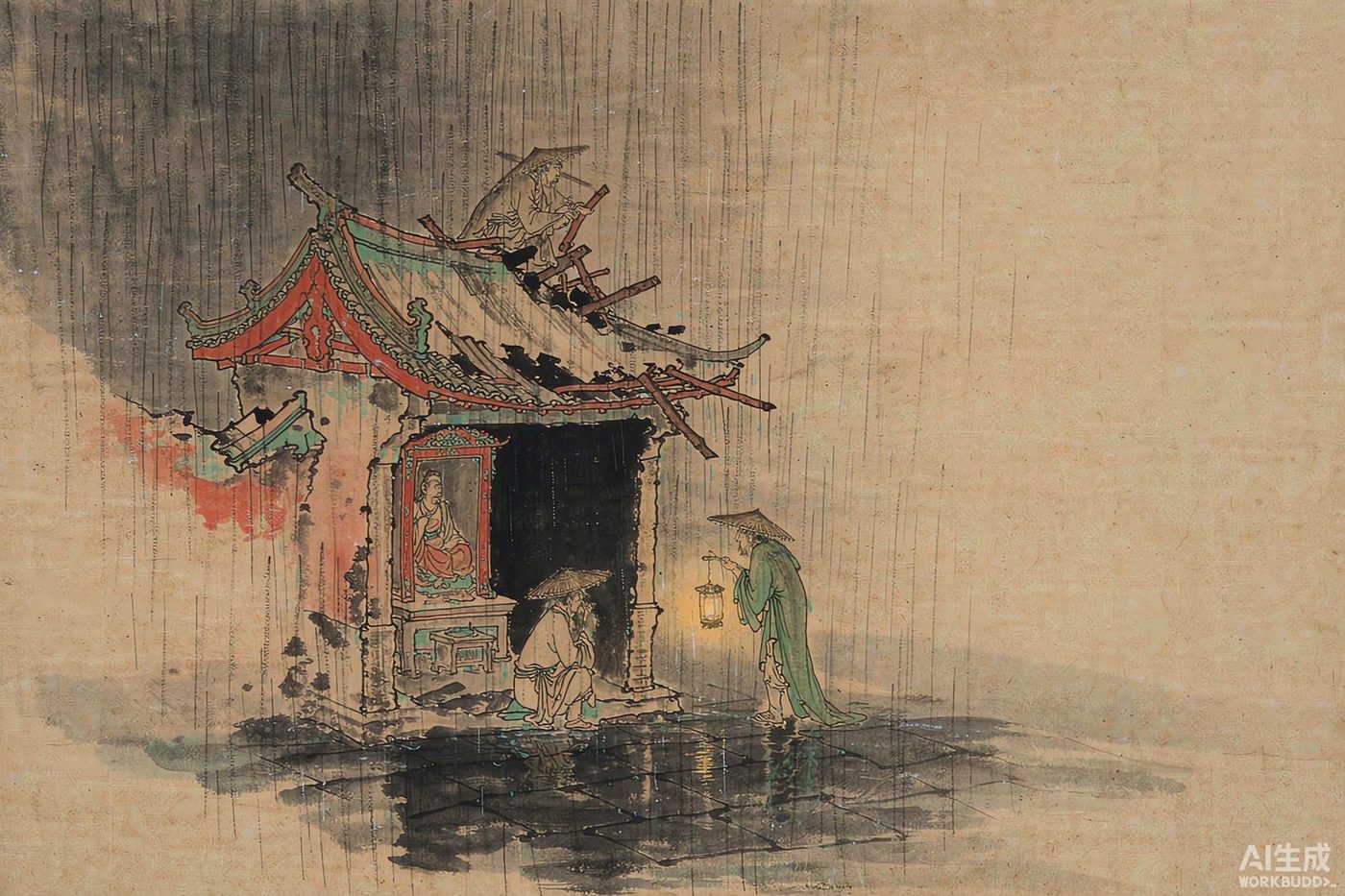
In the first month of the first year of Qingyuan, an old man named Zhou in the city of Pingjiang could not shake off his malaria. He had heard it said that the fever is a ghost, and that one can slip away from it by sleeping somewhere else, so at dusk he crept into the City God’s temple and lay hidden beneath the god’s seat. The temple attendants did not know he was there.
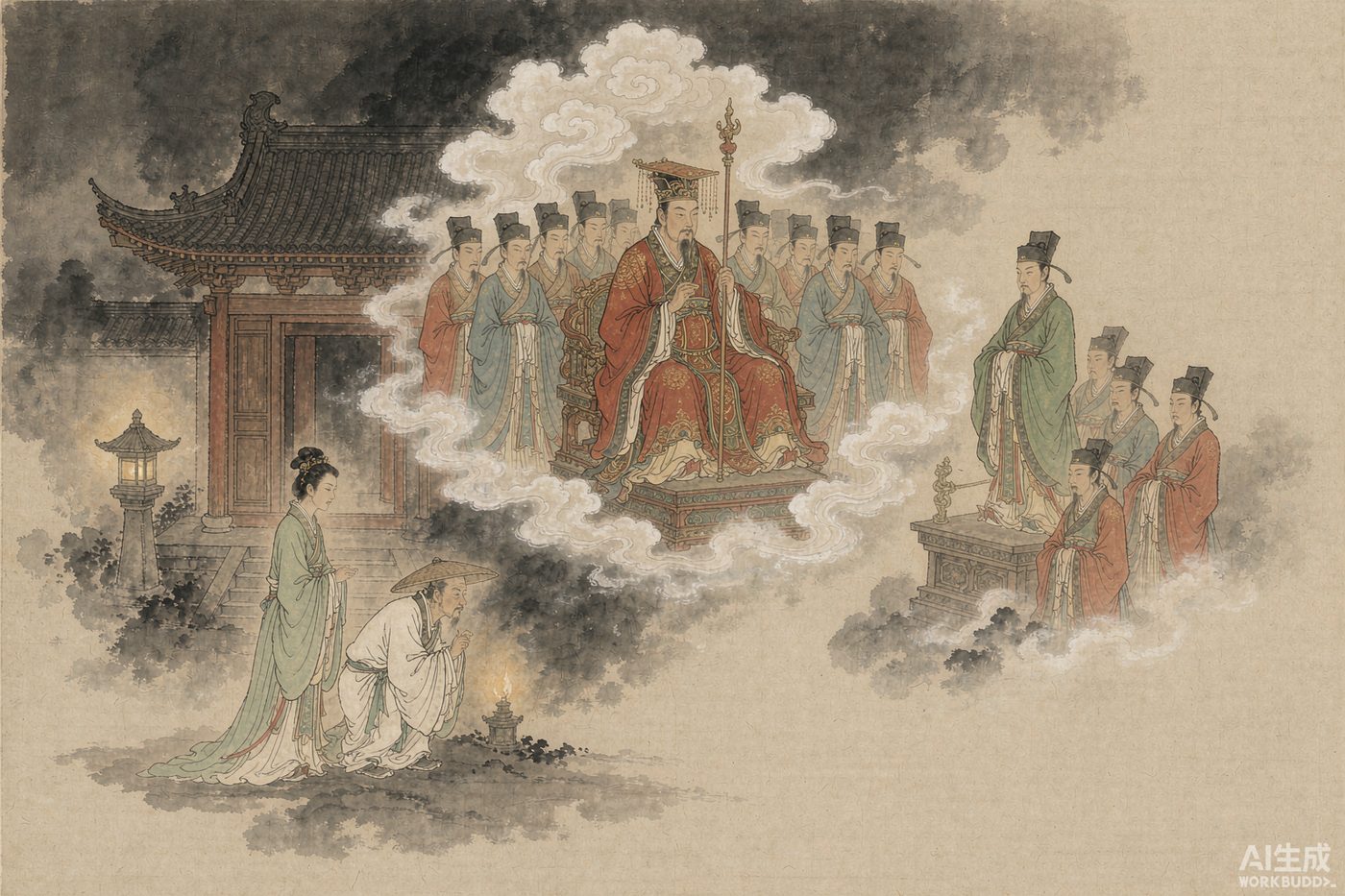
Toward midnight he saw lamps and candles set out, and guards in formation attending. The King of the City Gods sat at the head of the hall. A yellow-clad soldier led seven or eight figures in from outside, who stood below the dais in court caps, bowing.
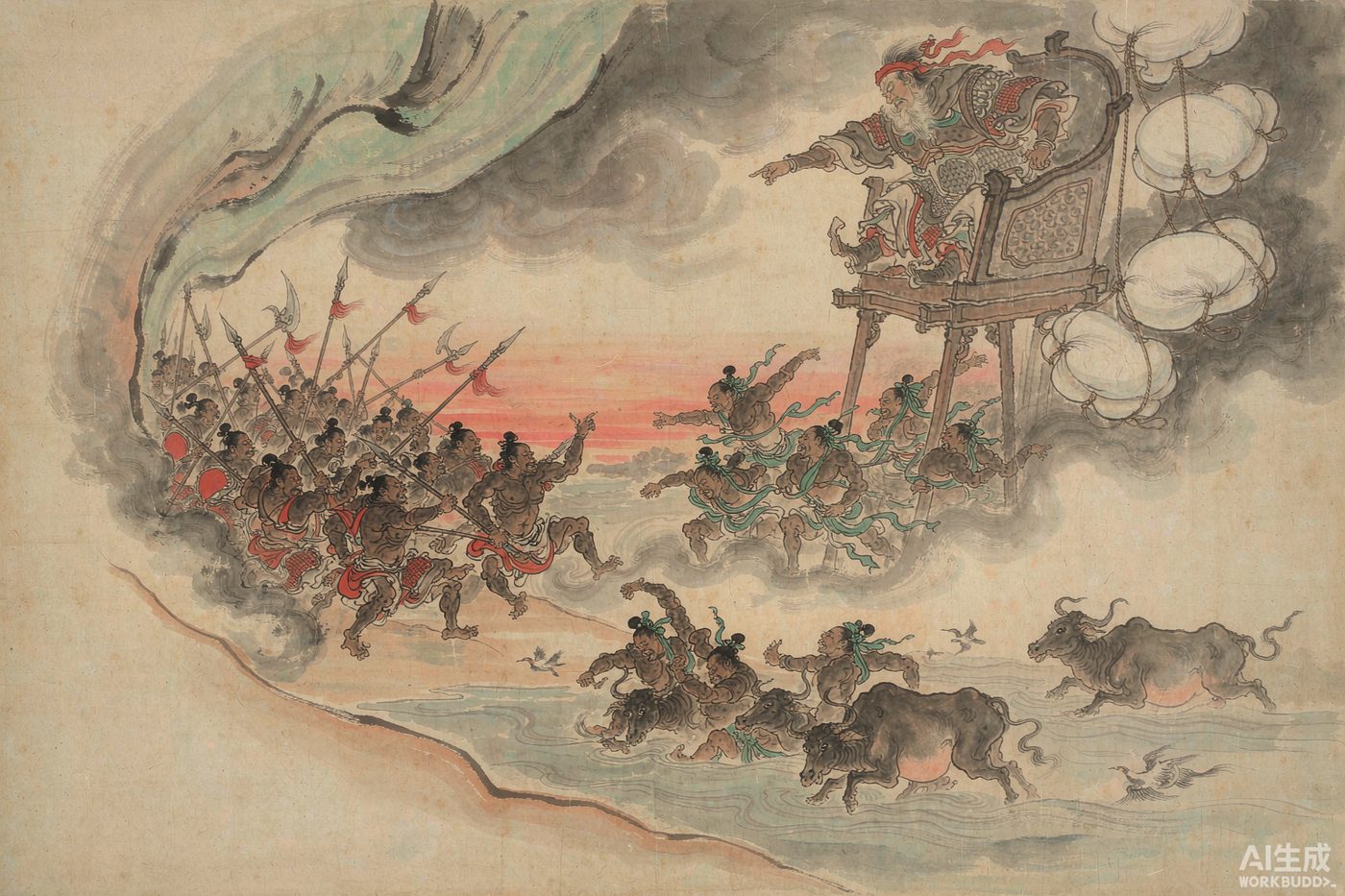
The King said: “I have been commanded by the Supreme Lord to loose a plague in this place. You are each the Earth God of a ward — why this delay?”
They bowed their heads and pledged obedience. But one god alone spoke up: “I govern the ward of Xiaoyi. Truly I see that in my ward the households are all good people, with no faults or evil. I fear it is hard to afflict them with sickness and distress.”
The King was angry: “This is a decree from Heaven. You hold a petty office and should simply carry it out.”
The god said again: “Since it cannot be avoided, might I fill the quota with children instead?”
The King pondered long, then said: “If that is so, it spares the rest.” And so they all assented and withdrew.
The next morning old Zhou went home and told everyone, but they laughed at him as a raving madman, and none believed.
When the second month came, plague broke out across the city — but in the single ward of Xiaoyi, only the children fell ill. Only then was Zhou’s word proved true. When the sick had recovered, the people of the ward pooled money and built a great temple to repay the virtue of their Earth God.