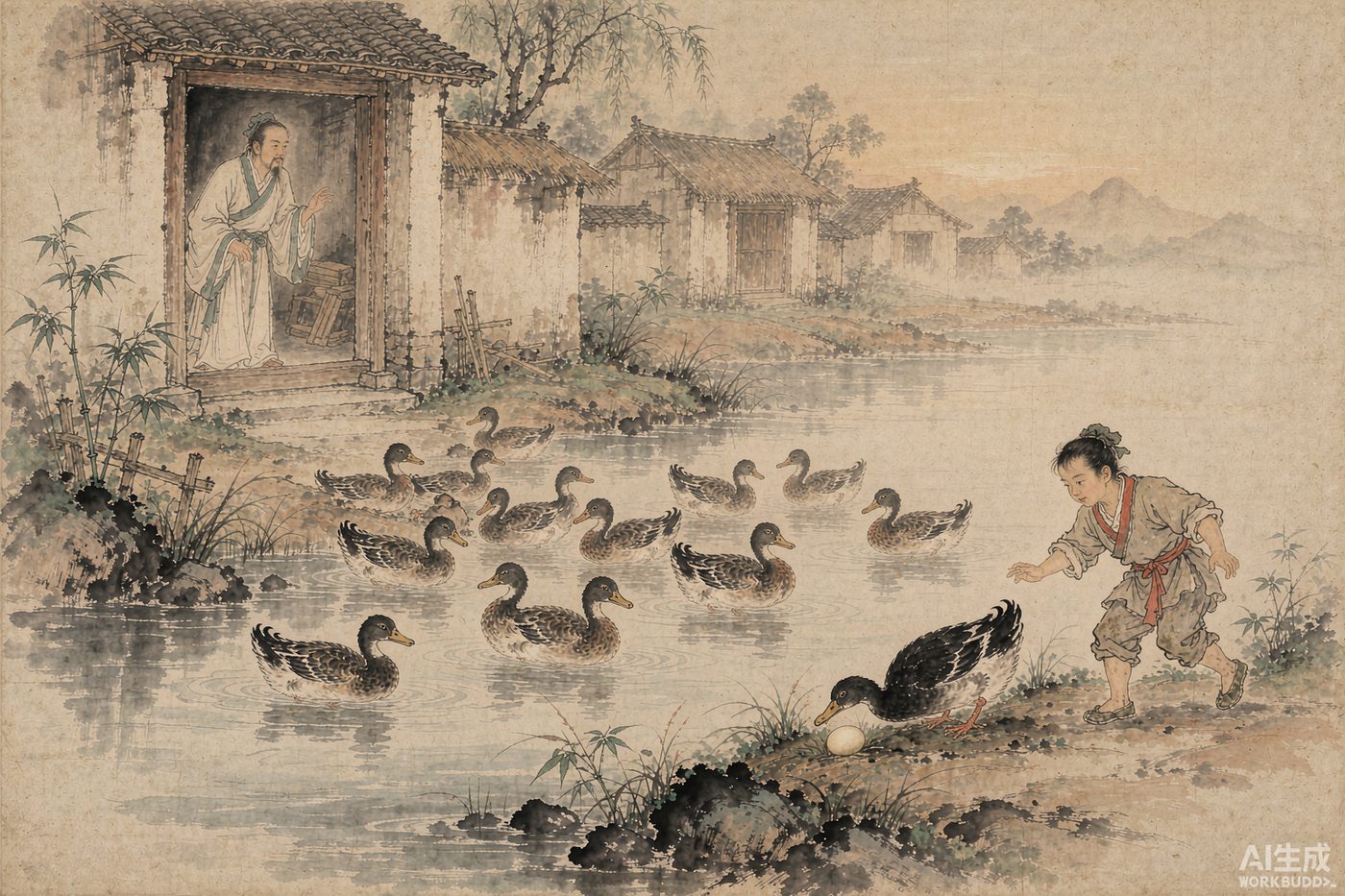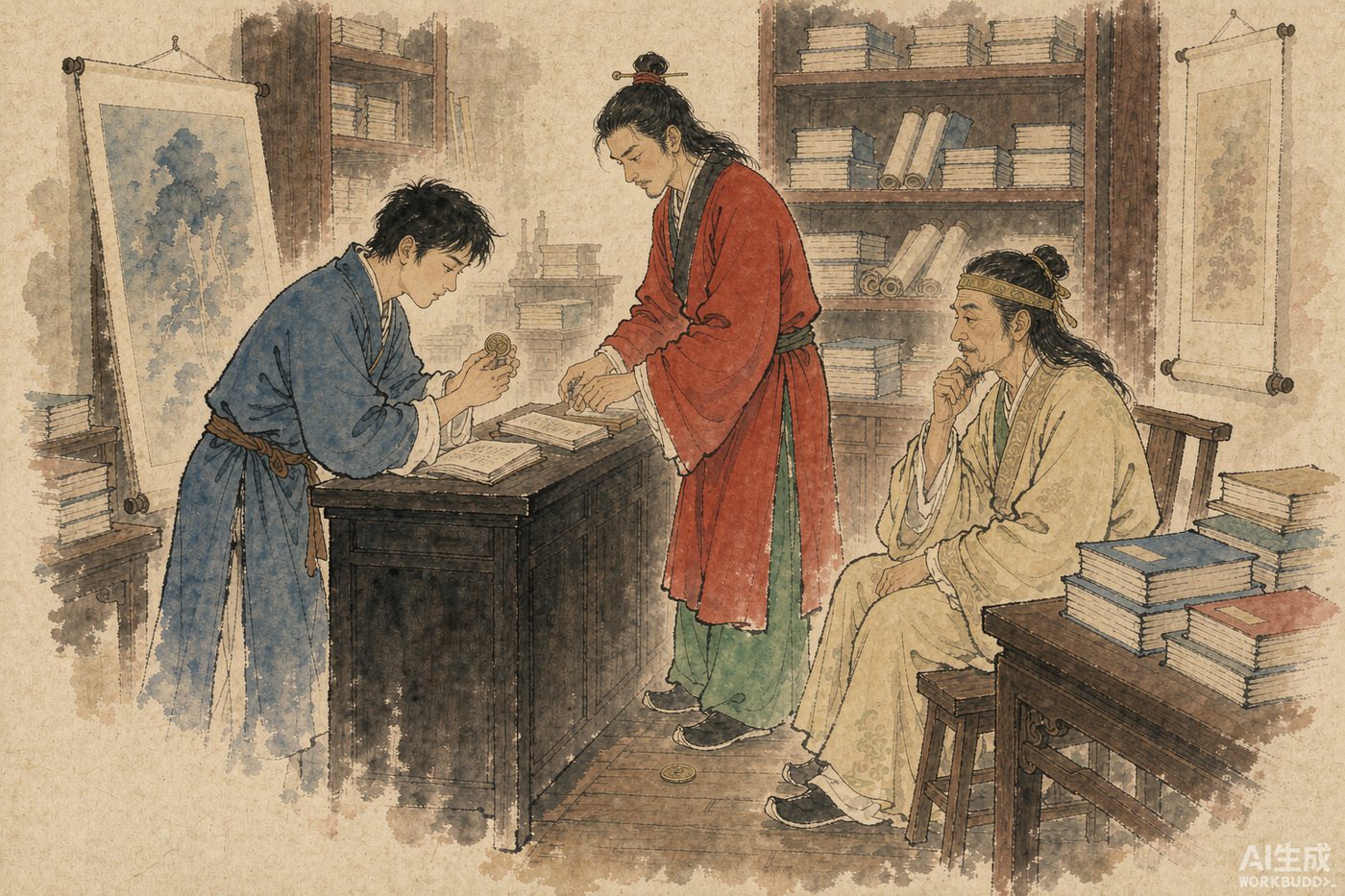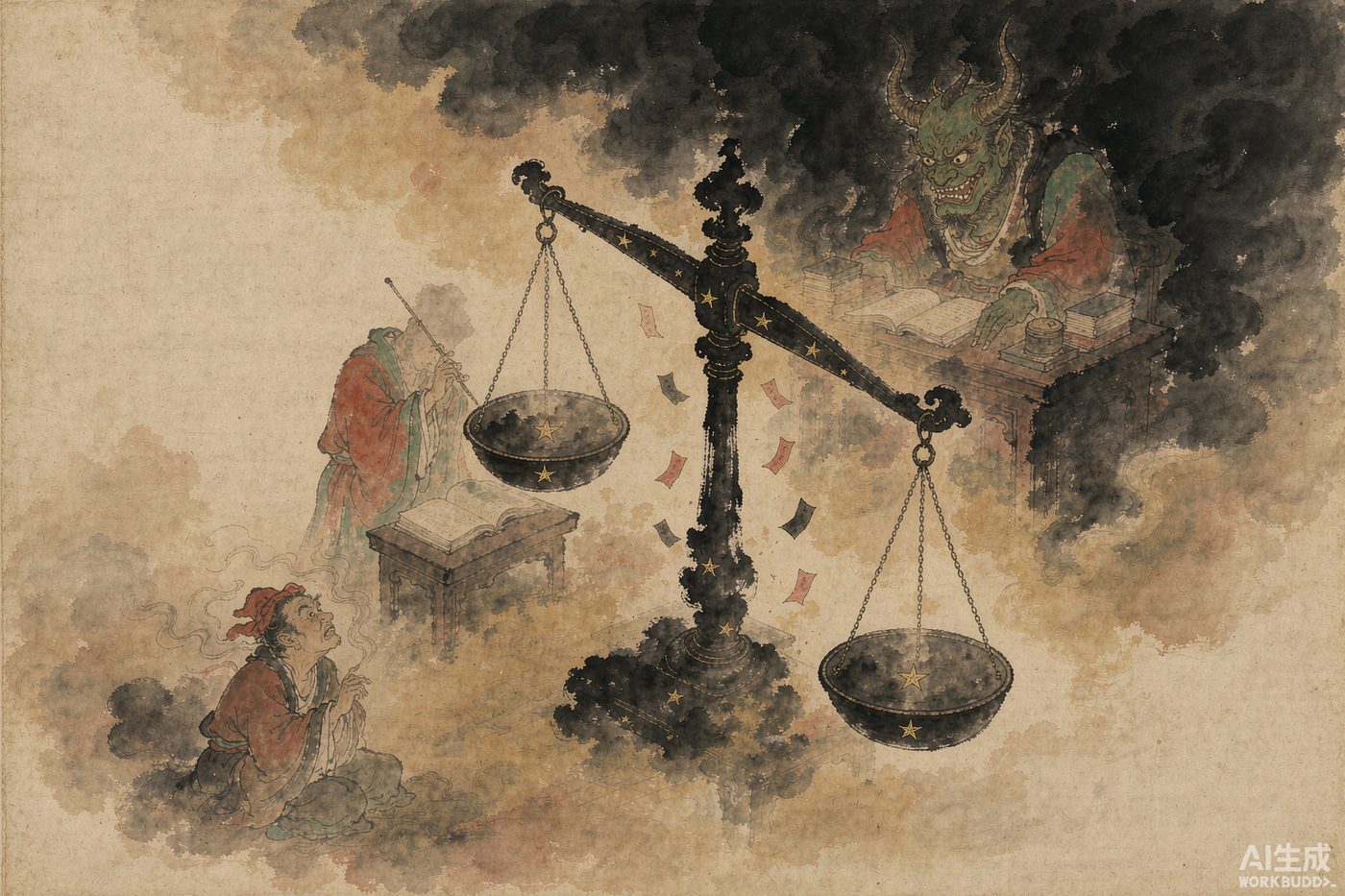
Fan Xun, a clerk in the prefectural office at Jianchang, borrowed ten strings of cash from the abbot of Zisheng monastery to take a wife for his son. Twenty years went by; the monk died; Xun too came home from his posting, and in the drift of things the debt was never repaid.
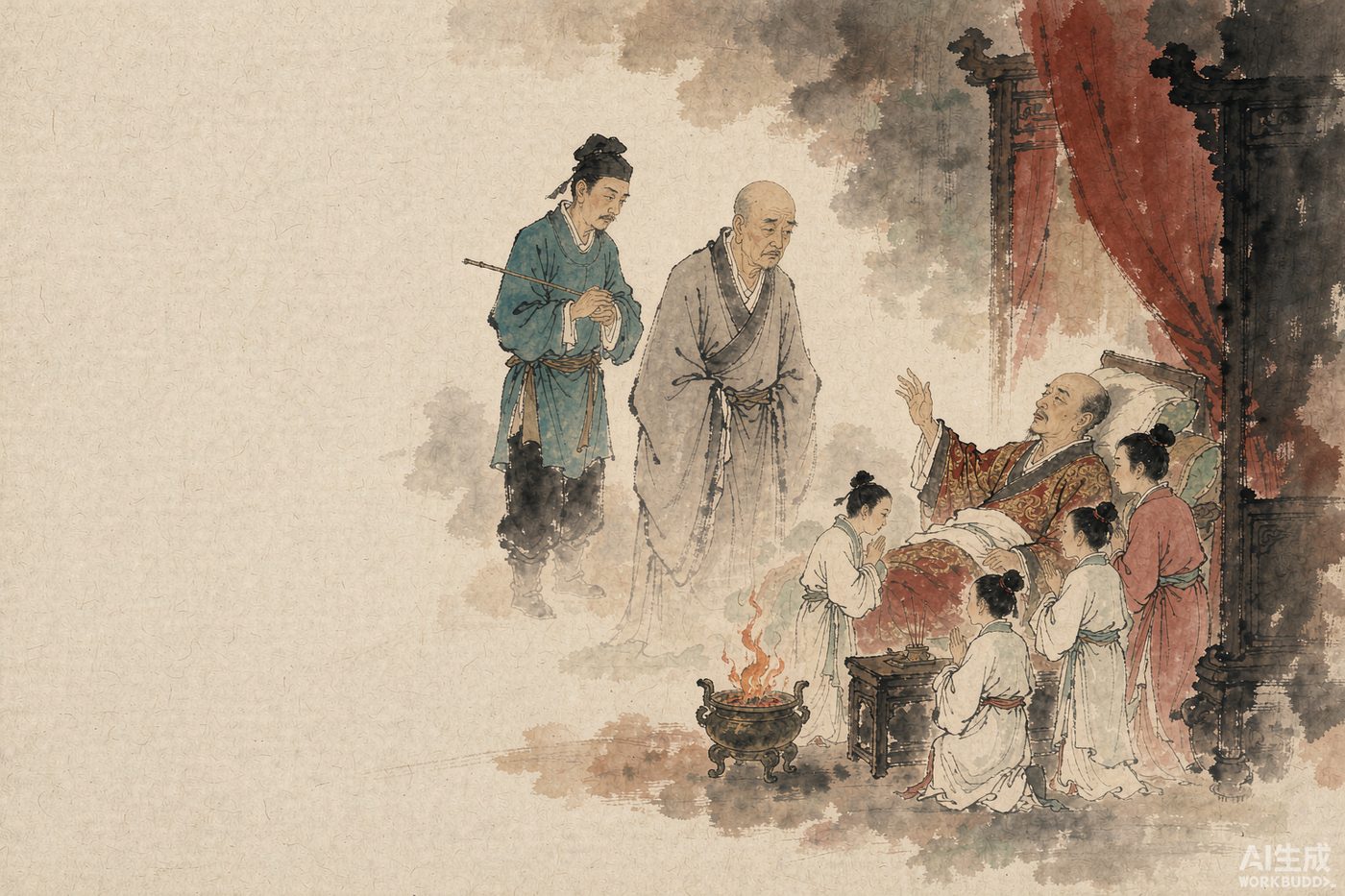
Later Xun fell ill, and his illness grew grave. He called his son Guanguang to him.
“Do you remember,” he said, “that when you married, I borrowed money from Zisheng monastery? Now the sangharama god of that place has sent men escorting the abbot here to demand it. Buy paper money at once and burn it for them.”
And he pointed to the household: “The earth god’s messenger and the abbot are standing here with folded hands. Can none of you see them?”
When the paper money had been burned, he said: “The two have gone. They are on their way to find Academician Xu in front of Bao’en monastery, to settle a matter there.”
That night Fan Xun died.
The gentleman Xu, whose name was Yining, was a man of Laizhou who had just come home on rotation from supervising the army wine depot at Jizhou. Not long after, he too was dead. It was the seventh year of Chunxi.
His father, a grand master of the fifth rank, had lodged at that monastery; the monastery’s people had used its communal property in his name to turn a profit, and so the grand master had come to appropriate a good share of it — and Yining had known of it. That was why it came to this.
The monk Zuojue told the story.