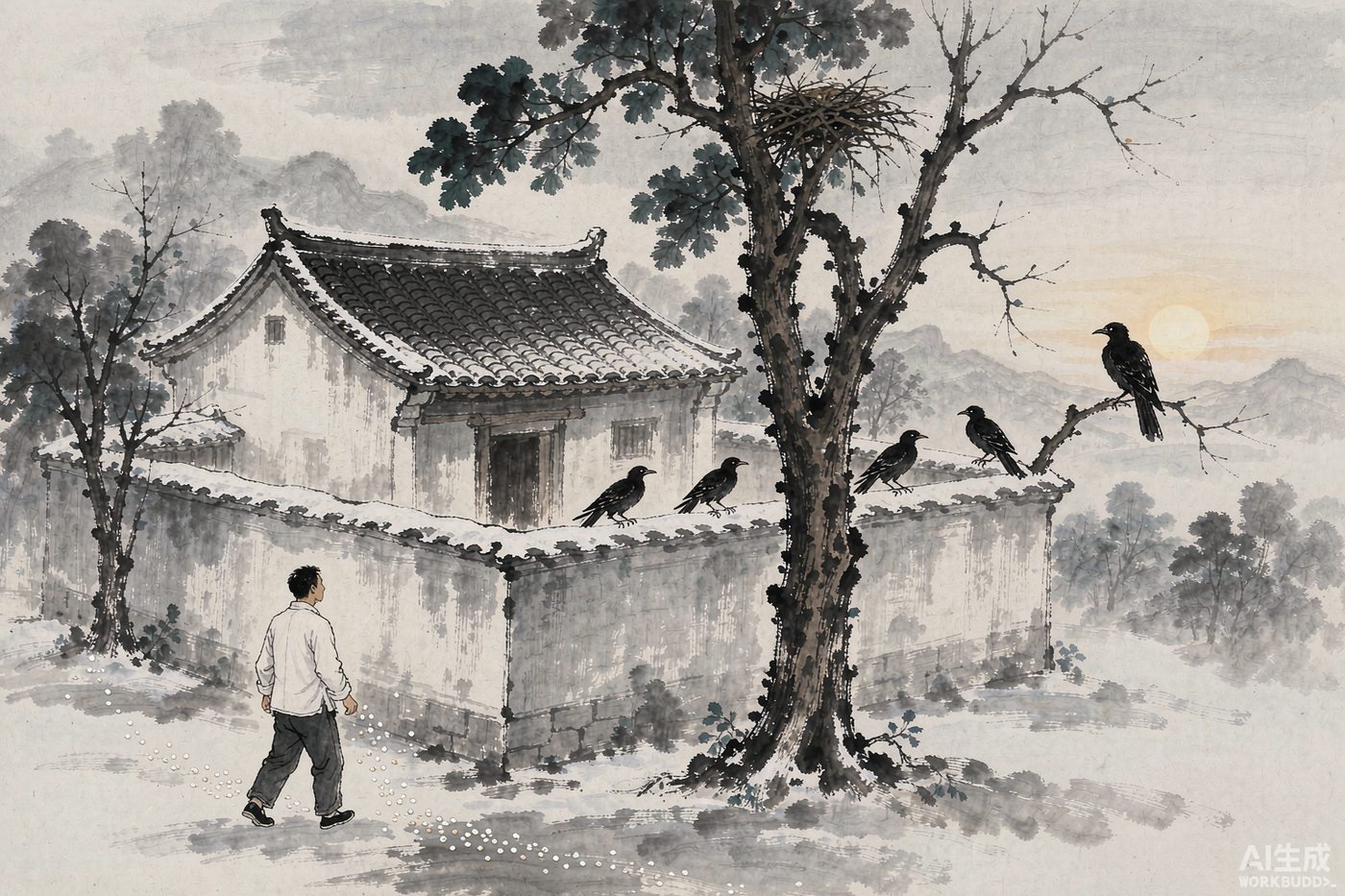
Popular belief holds that magpies report good news and crows bad, so men hearing a magpie show pleasure and hearing a crow drive it away in disgust. I alone prefer crows and dislike magpies. In my courtyard stood an old locust tree with a crow’s nest in its top. On rainy mornings and snowy evenings, when the crows could find nothing to eat, I always set out rice in the yard and fed them. Every morning at first light they stood facing the sun, preening their necks and smoothing their feathers, tails raised, eyes sidel, exhausting every attitude — but they were simply no good at singing. I would clap and shout to draw them out, and the crows stayed remarkably silent.
On New Year’s Day of the wuzi year they flew into the room and would not leave for three days and nights; that autumn I was reported successful.
When I sat the metropolitan examination, my family waited for the vermilion-gold notice, rising at dawn to stand in attendance under the tree, hoping for one good note — and the crow turned its head away and ignored them. I too failed and came home.
In the spring of the guimao year the crows called loudly, and that year my younger brother Zhisheng took first place on the list of provincial candidates. So I set out food in the yard, called the crows and told them: “I have been recommended five times without passing, and no longer dream of the capital. From now on you need take no further trouble. When my brother succeeds at the southern palace, save your strength and do your best to sing like a phoenix.” The crow nodded twice. That winter a great gale destroyed the nest, broke its left wing, and it died.
By the dingwei year my brother had returned a presented scholar, and hundreds upon thousands of magpies and crows filled the gate with noise. Remembering that crow, I sighed for days on end. Magpies only know how to complete what a man has already achieved; crows genuinely recognise a man before his rise. I record this for those who hate crows and love magpies.