Li Jia of Qiantang was a man of courage. One evening he went to a friend’s banquet, and when the wine was well in the guests one of them said: “Half a li from here there is a house for sale, very cheap. It is said to harbour a malevolent ghost, and that is why it has never found a buyer.”
Li said: “A pity I have no money; talking about it is useless.”
The guest said: “If you have the nerve to spend one night drinking alone in it, I will buy the place and give it to you.”
The other guests said: “We will stand surety,” and the wager was fixed for the following evening.
The next afternoon they went over in a body, laid out wine and dishes, and Li went up into the hall with his sword. The others shut the door, locked it behind him, and went to the neighbour’s house to sit and talk and wait.
Li looked round the hall and the rooms; beside it another small door opened. He turned and went in: a narrow passage, overgrown with rank grass, and at the end a moon-gate, half shut and half open. Li calculated to himself: there is no need for me to go in; I shall wait outside and see what it does. So he lit the candles and drank.
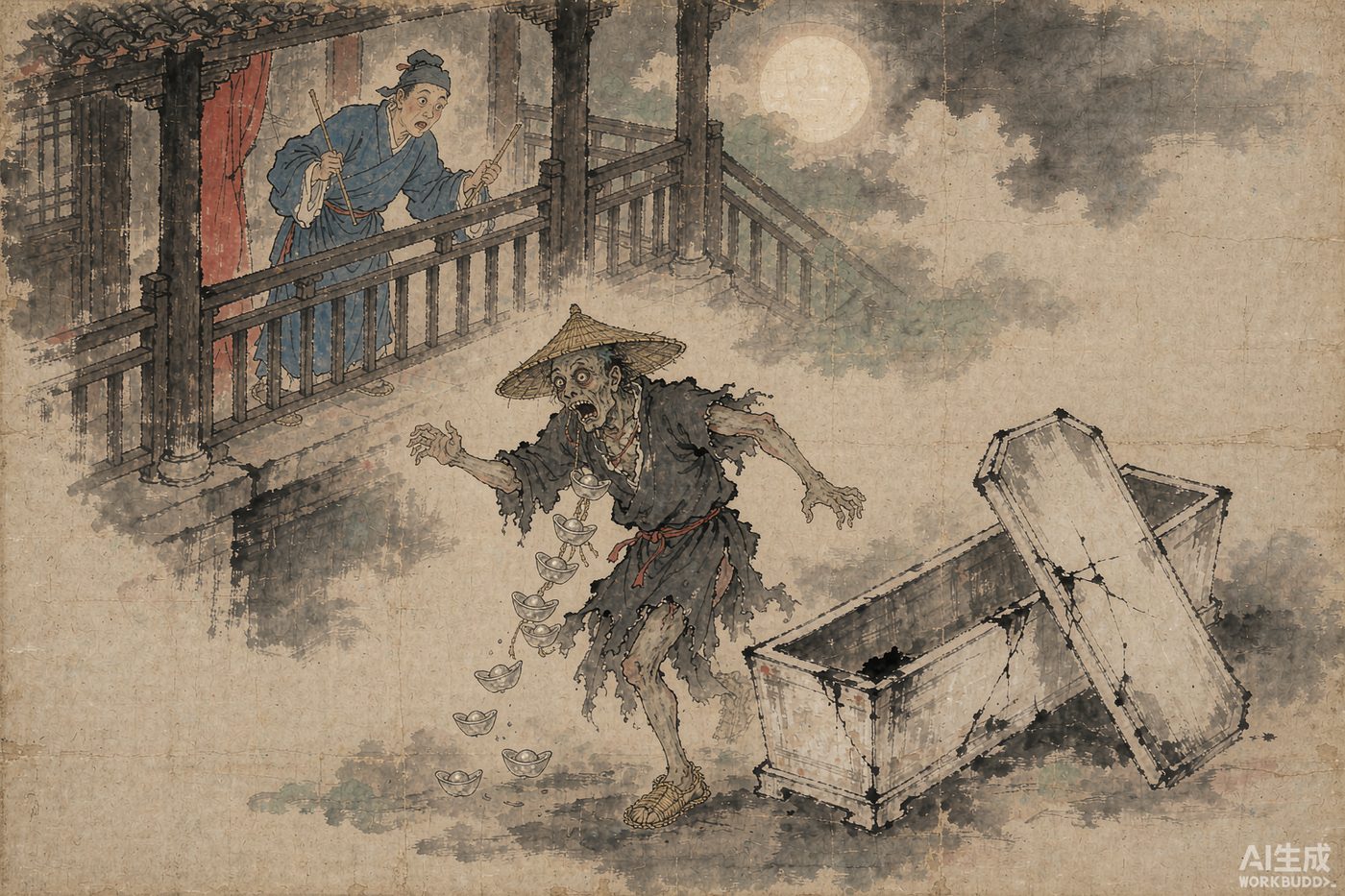
At the third watch he heard footsteps, and saw a ghost a foot or so high, its face white as ash, its two eyes pitch black, its hair hanging loose, come out from the small door and make straight for the banquet table. Li rose angrily with his sword levelled, and the ghost turned and went back into the passage. Li chased it as far as the moon-gate.
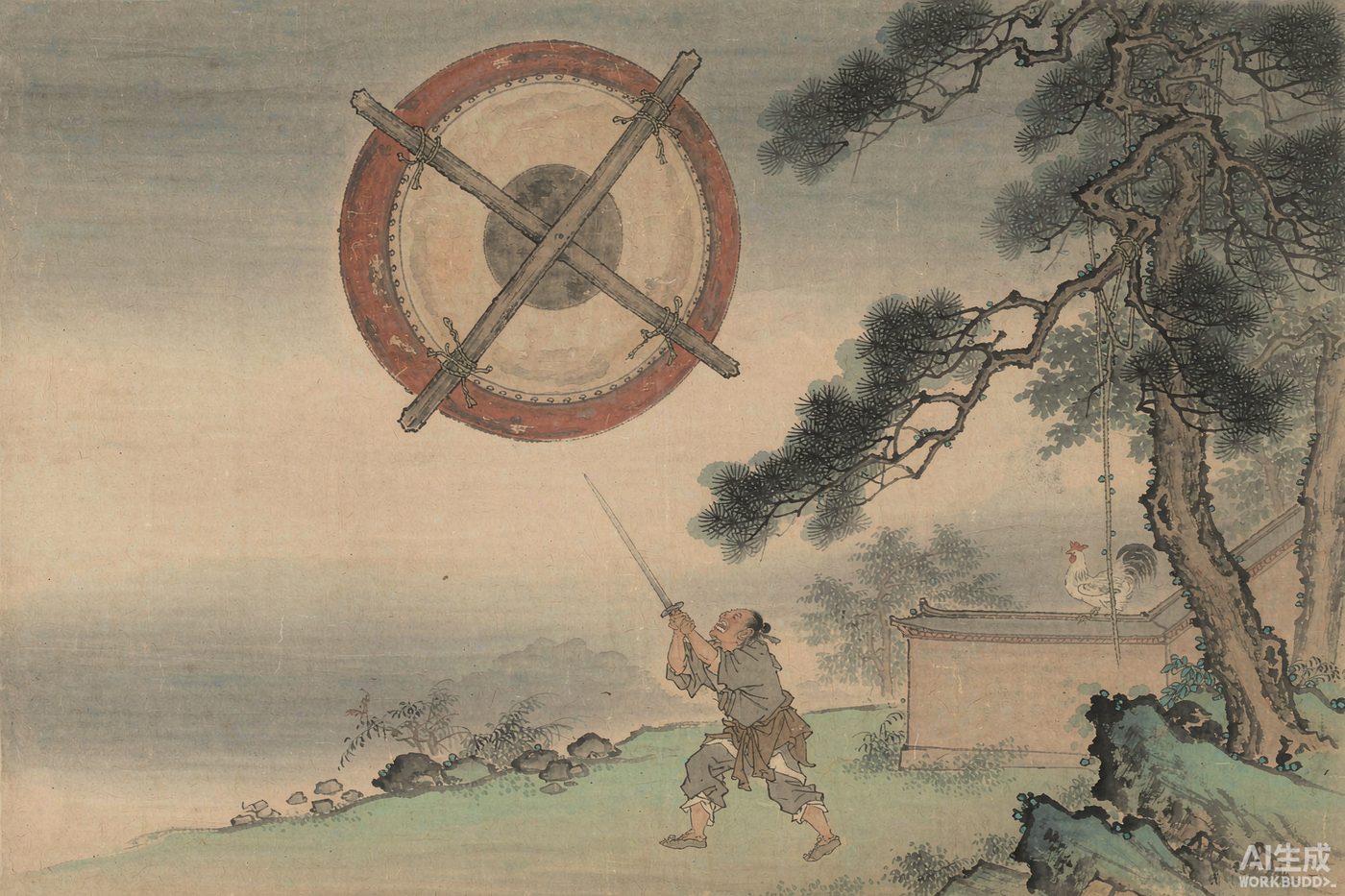
In an instant a great wind got up, and out of the empty air a coffin lid came flying like a windmill, wheeling around above his head. Li struck at it wildly with the sword, but it only grew heavier on his head and his body shrank down, until he was in the peril of Mount Tai pressing an egg, and he had no choice but to shout.
His friends at the neighbour’s house heard him and came running in. Seeing he was about to be crushed by the lid, they hauled him out by main force and carried him on their backs and ran. The lid came after them, and the louder Li shouted the closer it came — until the cockerel crowed once, and the lid vanished.
They brought Li back to his senses and carried him home that night.
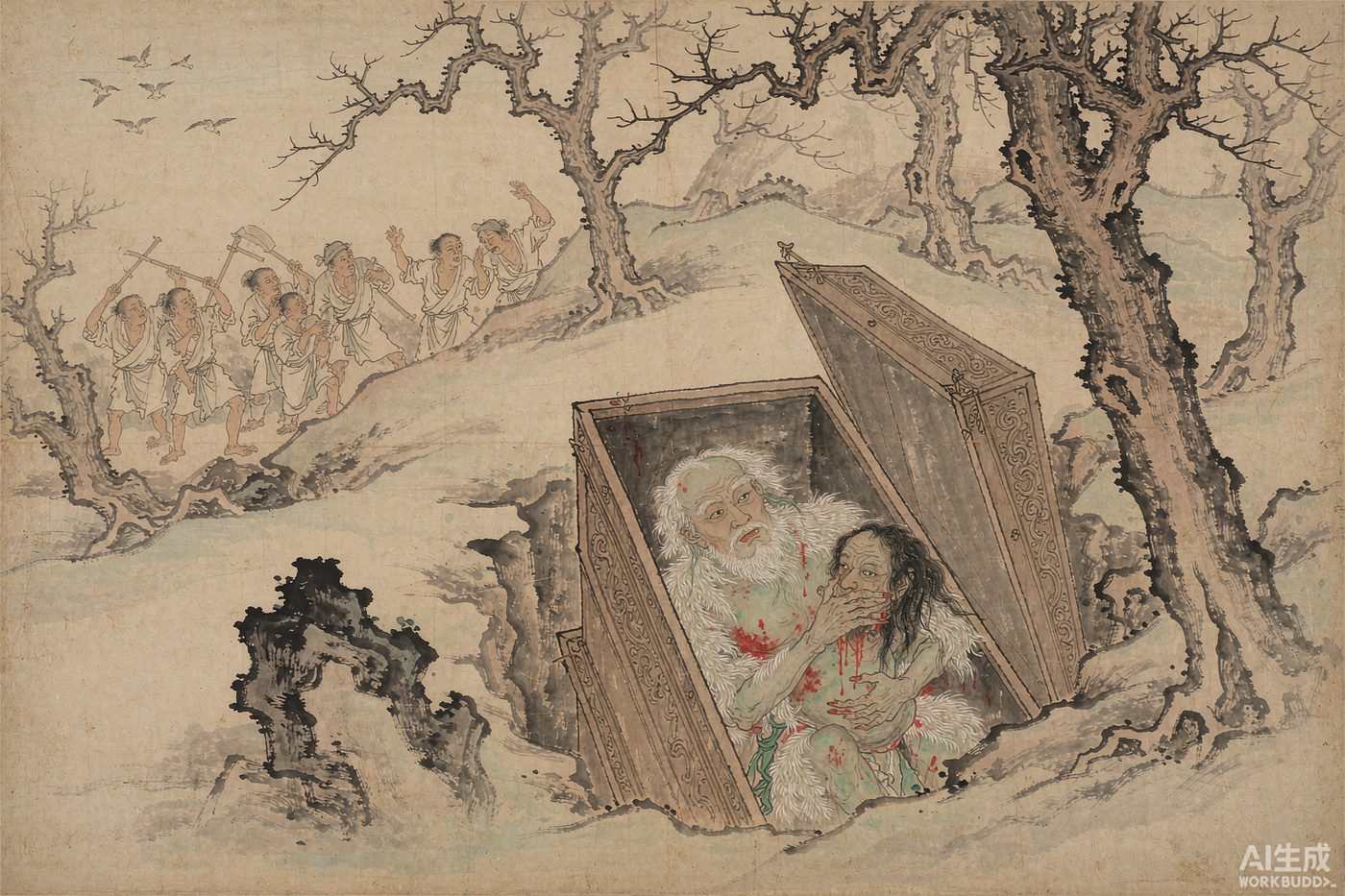
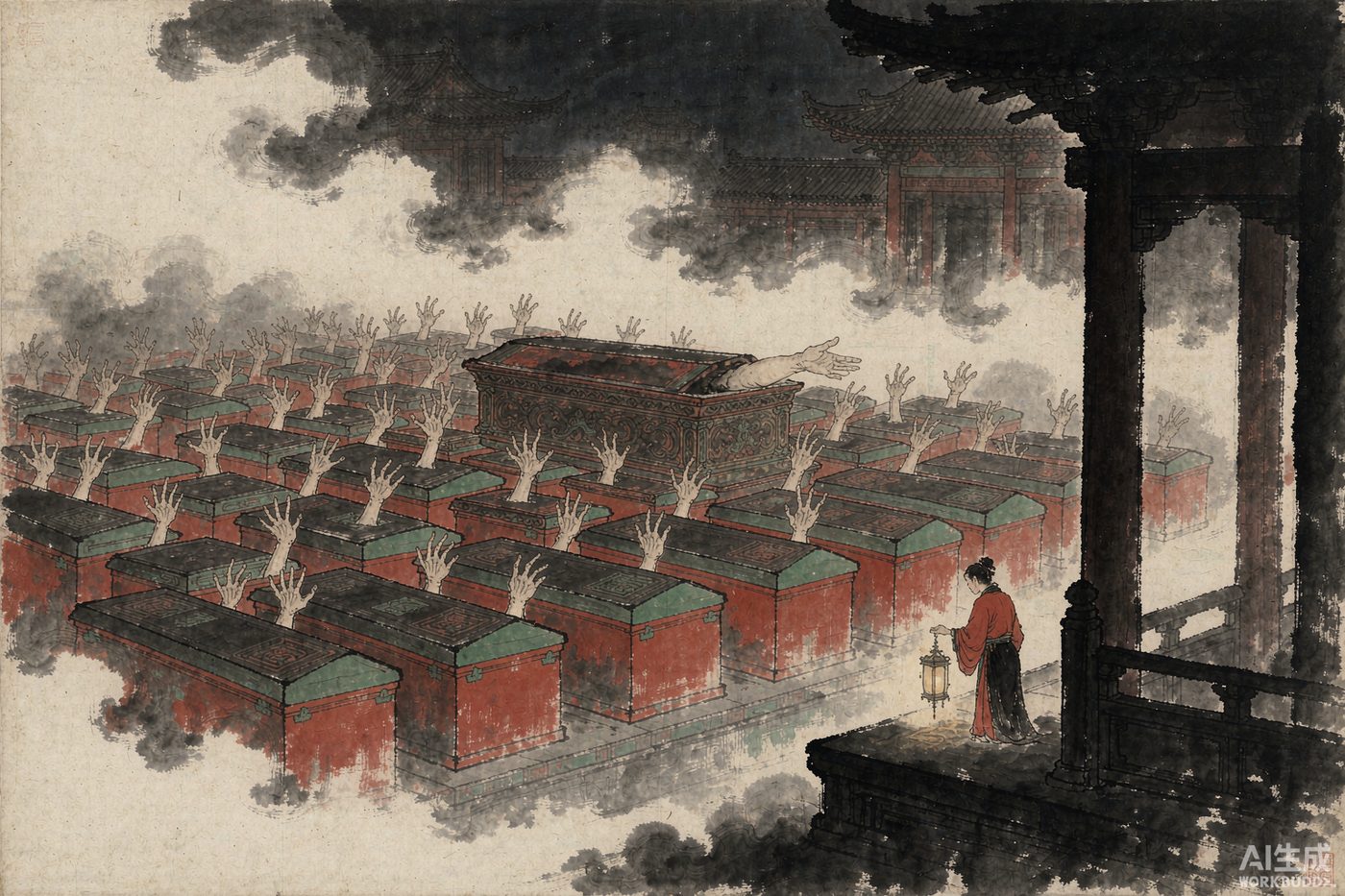
The next day they questioned the owner of the house, and learned that a coffin had long stood in the low room in the back garden, that it was always making trouble and flying its lid at people, and that a great many had died of it. So the matter was reported to the magistrate, and the coffin was burned with a great fire, and the haunting stopped. Li was ill for more than a month before he recovered.
He often told people: “A man’s voice is not worth a rooster’s. So are ghosts not afraid of people, but afraid of chickens?”