Zhang Yuangong of Shaoxing kept a cloth shop at Changmen. He engaged as his manager a certain Sun, a man of Shaanxi, honest and careful and hardworking, and every reckoning he made turned a threefold profit. Master and man got on well together.
Within three or five years he had made Zhang a fortune of a hundred thousand. Time and again Sun begged leave to go home, and Zhang held him back and would not allow it. Sun said angrily: “And if I were dead, would you still not let me go?” Zhang laughed: “If you really died, I would see you home myself. Three or four thousand li — I would not grudge the journey.”
Another year passed, and Sun fell gravely ill. Zhang came to his bedside to ask about his affairs. He said: “My home is in Chang’an county in Shaanxi, beside the bell tower. I have two sons at home. If you remember what I have been to you, send my coffin back and give it to them.” And then he died.
Zhang wept bitterly, reproaching himself deeply for the cruelty of having kept him so long. Then he thought: the hundred thousand came out of this man’s help; how can I go back on my word and not send him? So he provided a funeral gift of a thousand ounces and himself escorted the coffin to Chang’an.
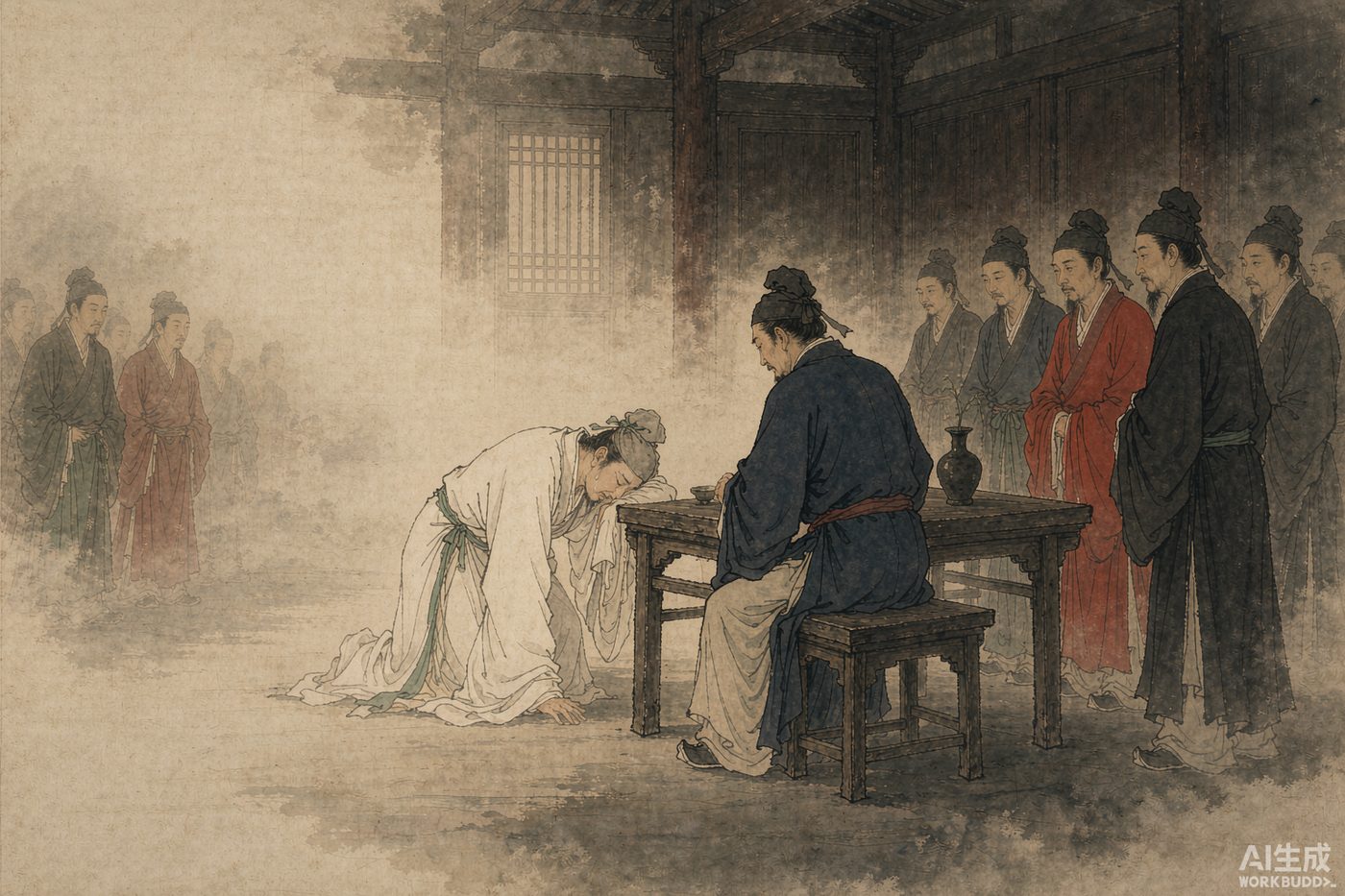
He knocked at the door and the elder son came out. Zhang told him the whole matter of his father’s illness and death, and wept as he told it; the son was unmoved, and merely called to the servants: “Now that my father’s coffin is back, put it beside the hall.” No grief on his face, and he did not change into mourning. Zhang was dumbstruck.
Presently the second son came out, thanked Zhang in a few words, and was likewise perfectly at ease. Zhang thought: these two cannot be human. How could such a good man as Sun have fathered two beasts?
While he was marvelling, he heard the mother call from within: “Our master from the shop has come so far — is he not hungry? The wine and food are ready, but there is no one to sit with him. What shall we do?”
The two sons said: “Master Zhang is our father’s friend, a senior. We juniors dare not sit at table with him.”
The mother said: “Then it will have to be your dead father.”
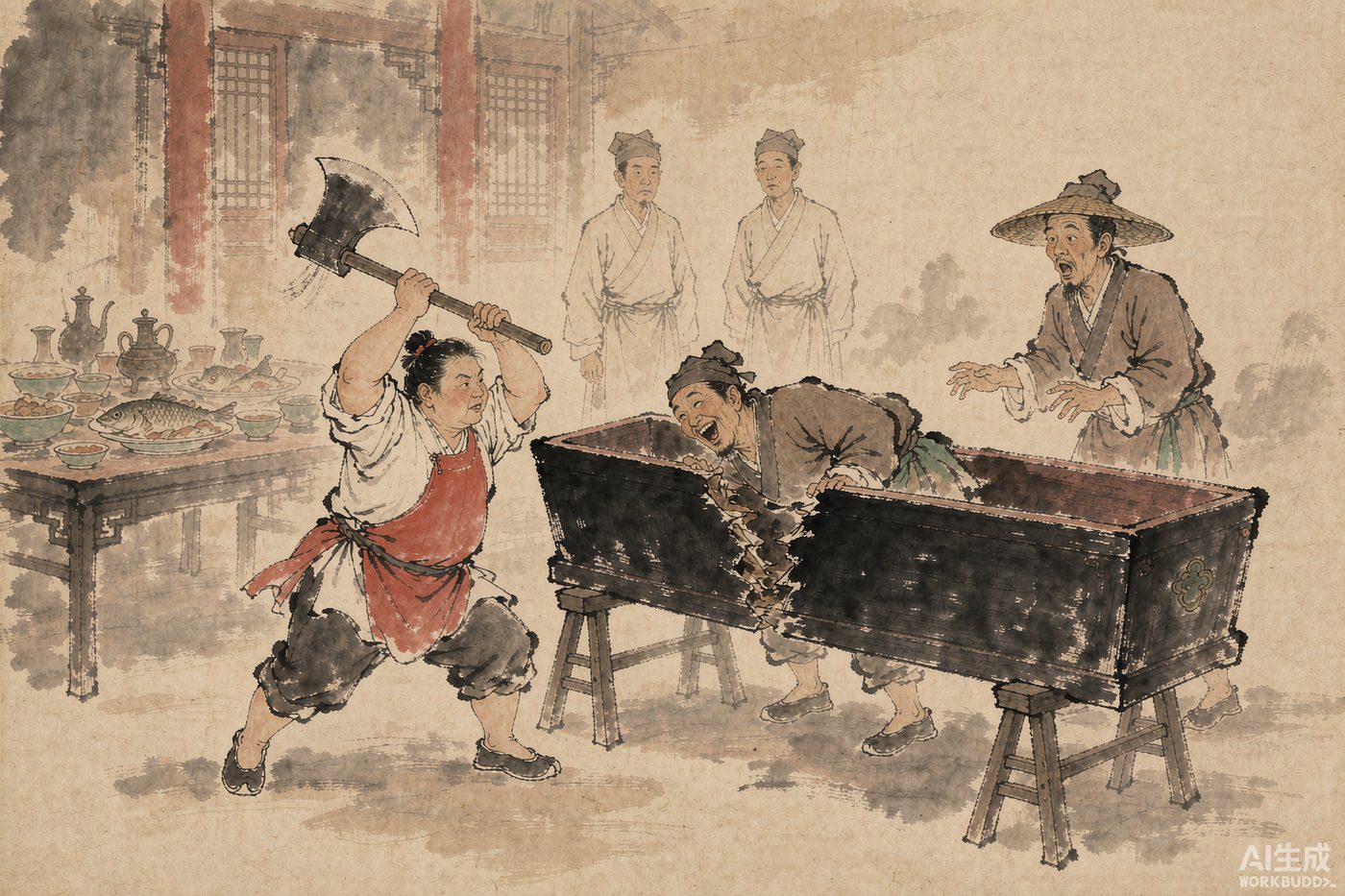
She told the two sons to spread the mats and lay the table, and herself came out with a great axe, split the coffin, and cursed him: “You are home now — what call is there to play the idiot and put on airs?”
The dead man roared with laughter, threw up the lid and got out, bowed his thanks to Zhang, and said: “You are truly a man of the ancients. You brought me home; you did not go back on your word even in death.”
Zhang asked: “Why did you play such a trick?”
He said: “If I had not died, would you have let me go? And besides, jolting along in a cart or on horseback is far less comfortable than lying in a coffin.”
Zhang said: “Your illness is over. Why not come back to Suzhou with me?”
He said: “Your fate allows you a fortune of a hundred thousand and no more. Even if I came back, I could not add to it.”
He kept Zhang for three days and nights and then took leave of him. To the end Zhang never knew what manner of man Sun was.