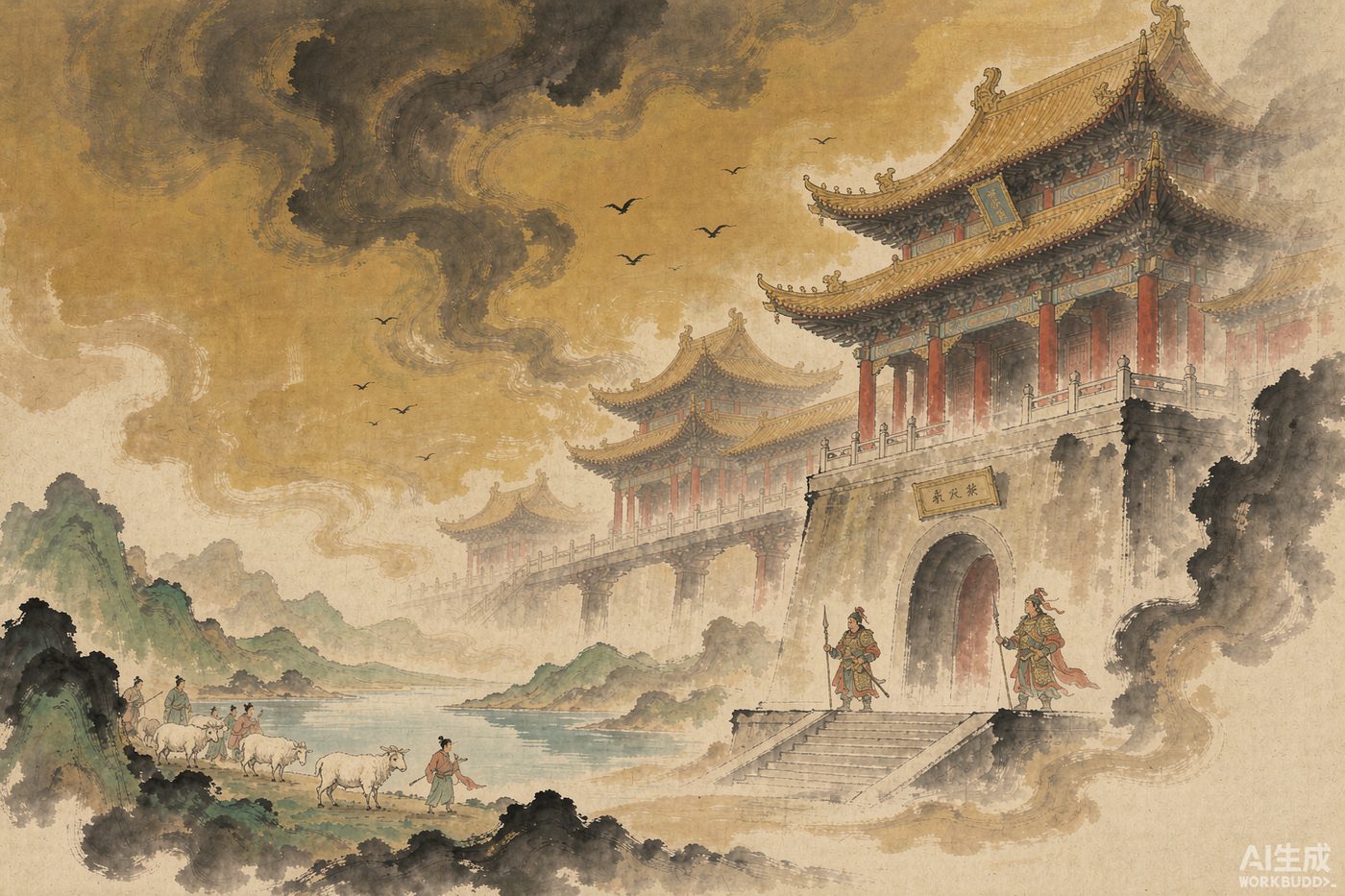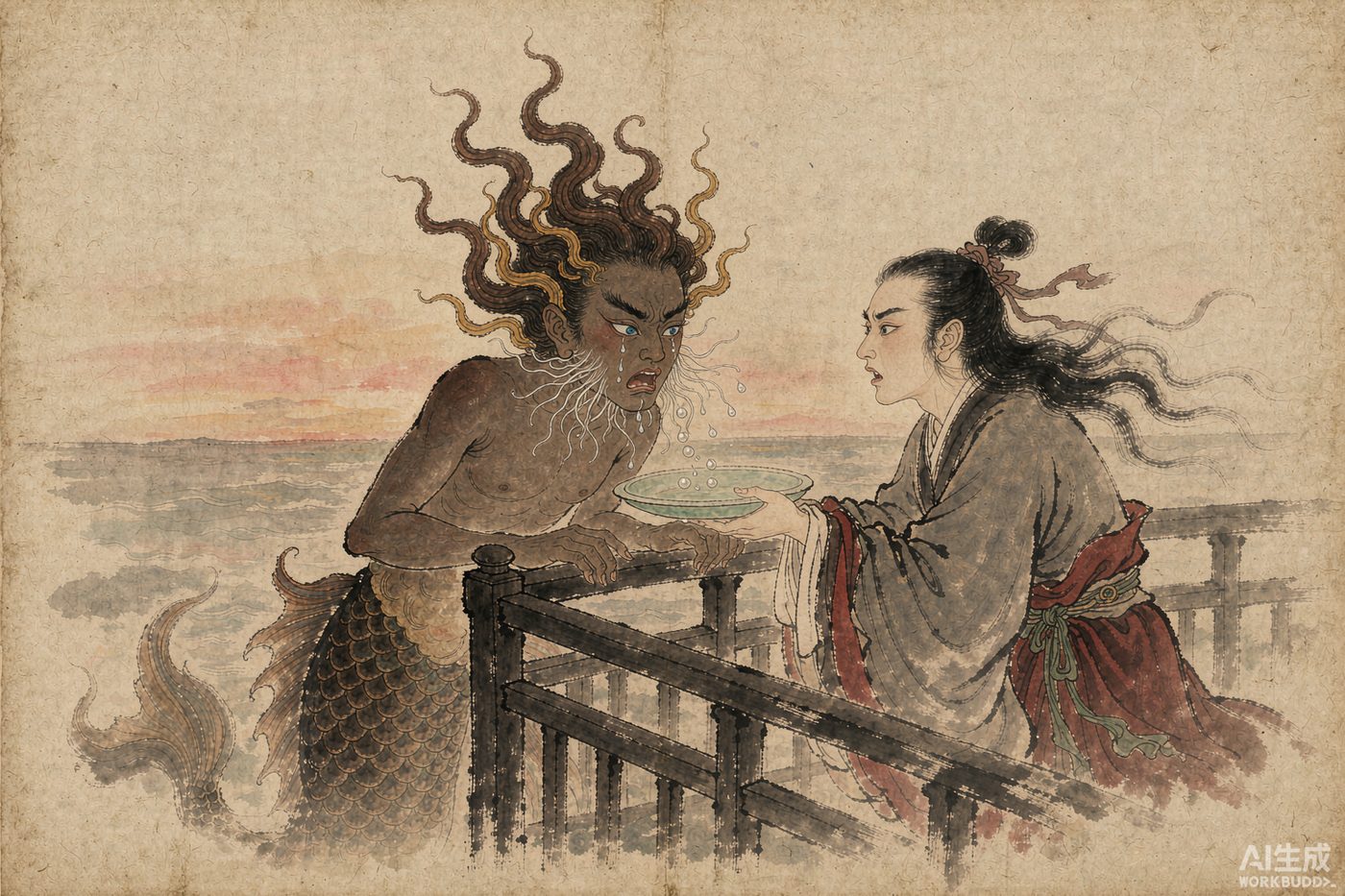
A merchant Yang of Fujian, whose family had traded overseas for generations, told how his grandfather went to sea with partners in the Kangxi reign and was caught by a whirlwind that blew the ship into a sea inlet.
The water stood high on four sides; only the harbor in the middle lay low — lower than the sea itself. Yang’s ship spiraled down the whirlpool, and men and ship alike came to no harm.
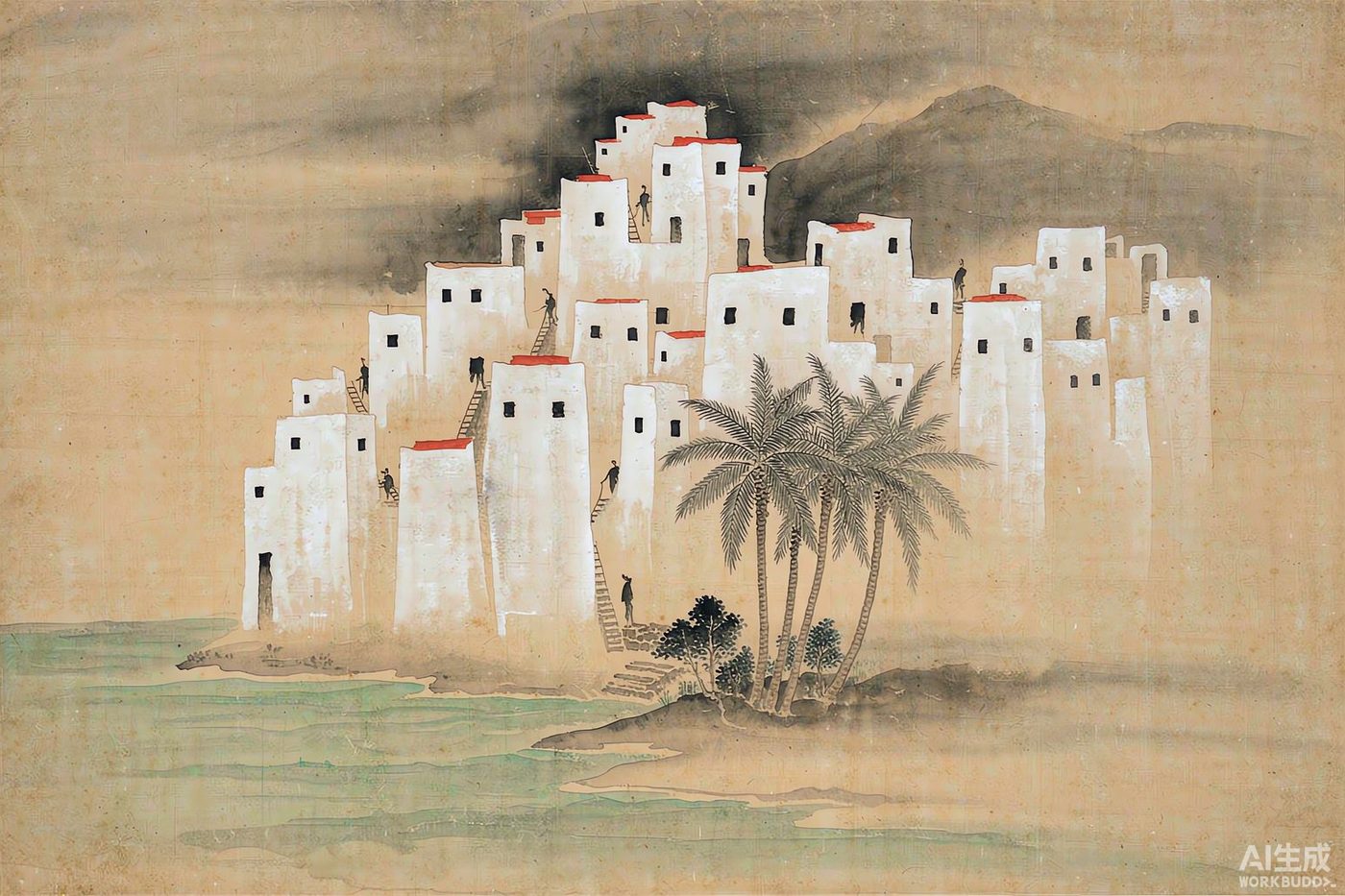
At the bottom of the harbor they found mountains and rivers, grass and trees, fields and gardens of grain and vegetables, all just as in the world of men — only there were no houses. Along the shore a ship lay moored, and in it were several dozen men, also come from the Central Lands, who rejoiced at the sight of Yang’s company as if they were meeting their own flesh and blood.
“This water,” the castaways explained, “only on one day in a leap year, in the leap month, rises level with the sea, and then a ship may go home. But it lasts only the space of a meal — be a little late and you cannot get up.” When these men had first been blown there by the typhoon, there had been others living in the harbor before them, who had caught the leap flood and gone home. They themselves had been too slow, and had stayed six years, missing the moment at leap year after leap year.
Yang’s ship carried forty passengers, with seeds of grain and vegetables, and all divided the land and farmed it. The soil was fertile and yielded double, and needed no irrigation. All day long they went back and forth in fellowship with the earlier crew, and almost forgot they were outside the world. The only pity was that with no almanac they could not reckon the days; so after every meal they would all climb aboard the ship and wait for the water to rise.
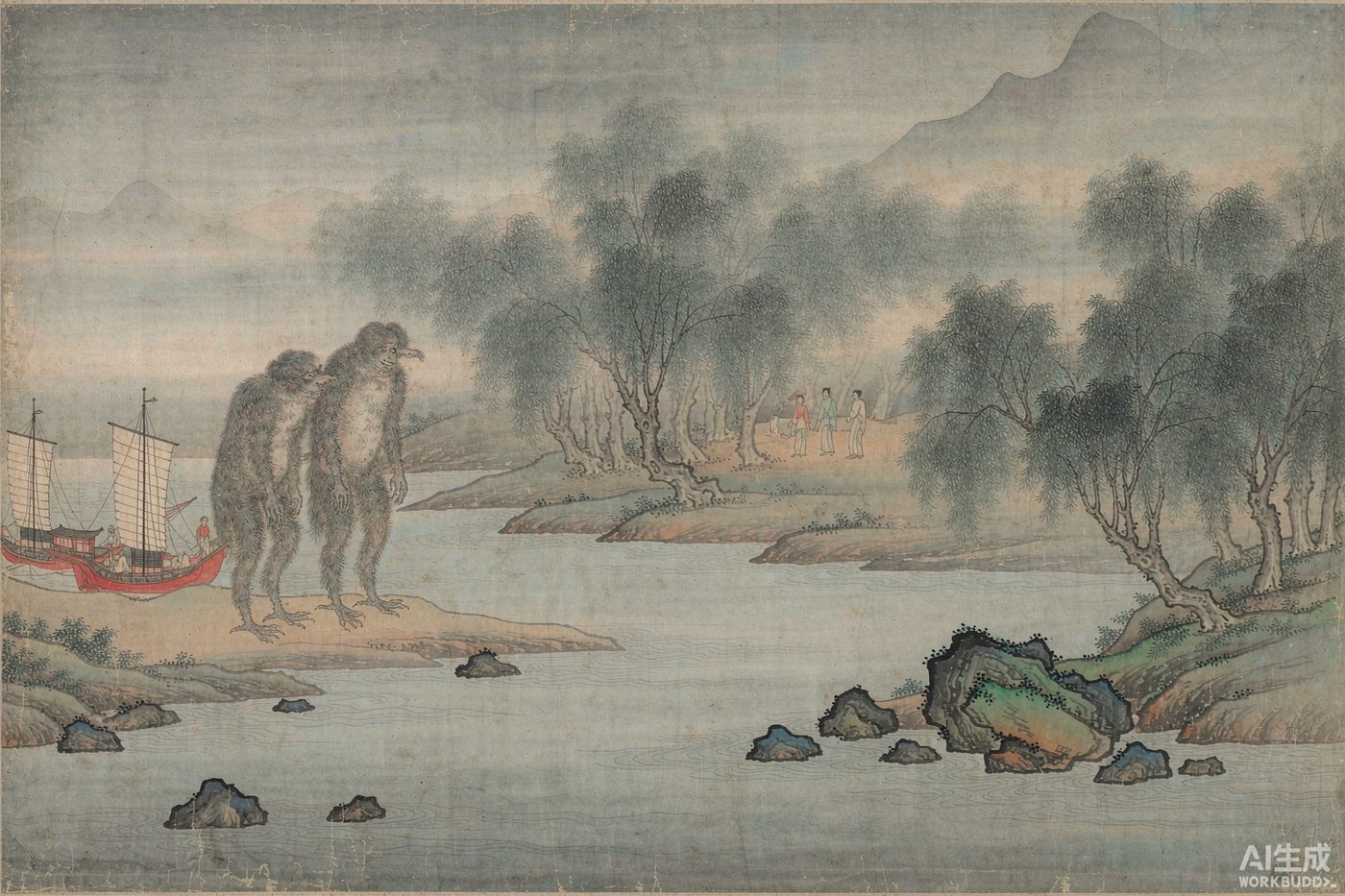
One day Yang and a companion were strolling in the wilds when they saw, across a creek, figures walking near the creek’s mouth — all over ten feet tall, unclothed, their bodies hairy, their feet like chicken claws and their shanks like the knees of cattle. Seeing Yang, they chirped and twittered as though speaking to one another, but the sounds could not be understood. He went back and told the older crew, who said they too had seen them at the creek’s mouth when they first arrived — but the creek was full then and could not be crossed. “If they were to come over here,” the men said, “would any of us be left alive?”
Six years later, in the eighth month, they caught the wind and the flood together, and came home with the earlier crew.
The Yang family has an old servant who went along on that voyage; he is over eighty now, still alive, and can tell the whole story in detail.
Note: in Taiwan there are “chicken-claw aborigines” who habitually roost in trees. Are these giants perhaps their descendants?