The elder sister of the county graduate Xie of Qichang was widowed young, and swore the chastity of the cypress boat. She gave up meat and ate plain food, and every day did reverence before the image of the Great Being.
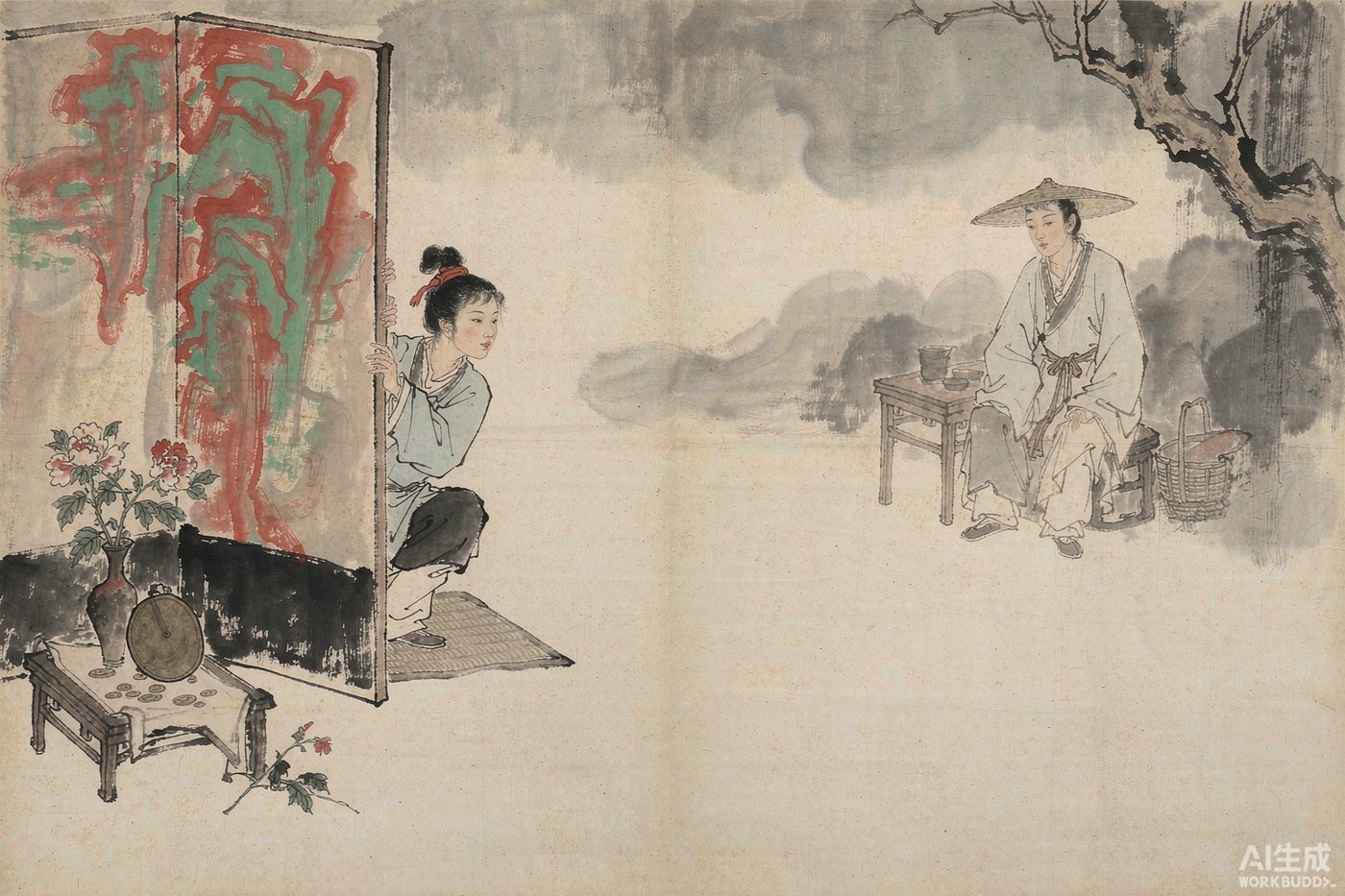
A fisherwoman came in at the door, sat and talked with her a while, then hurried away and left her fish basket behind.
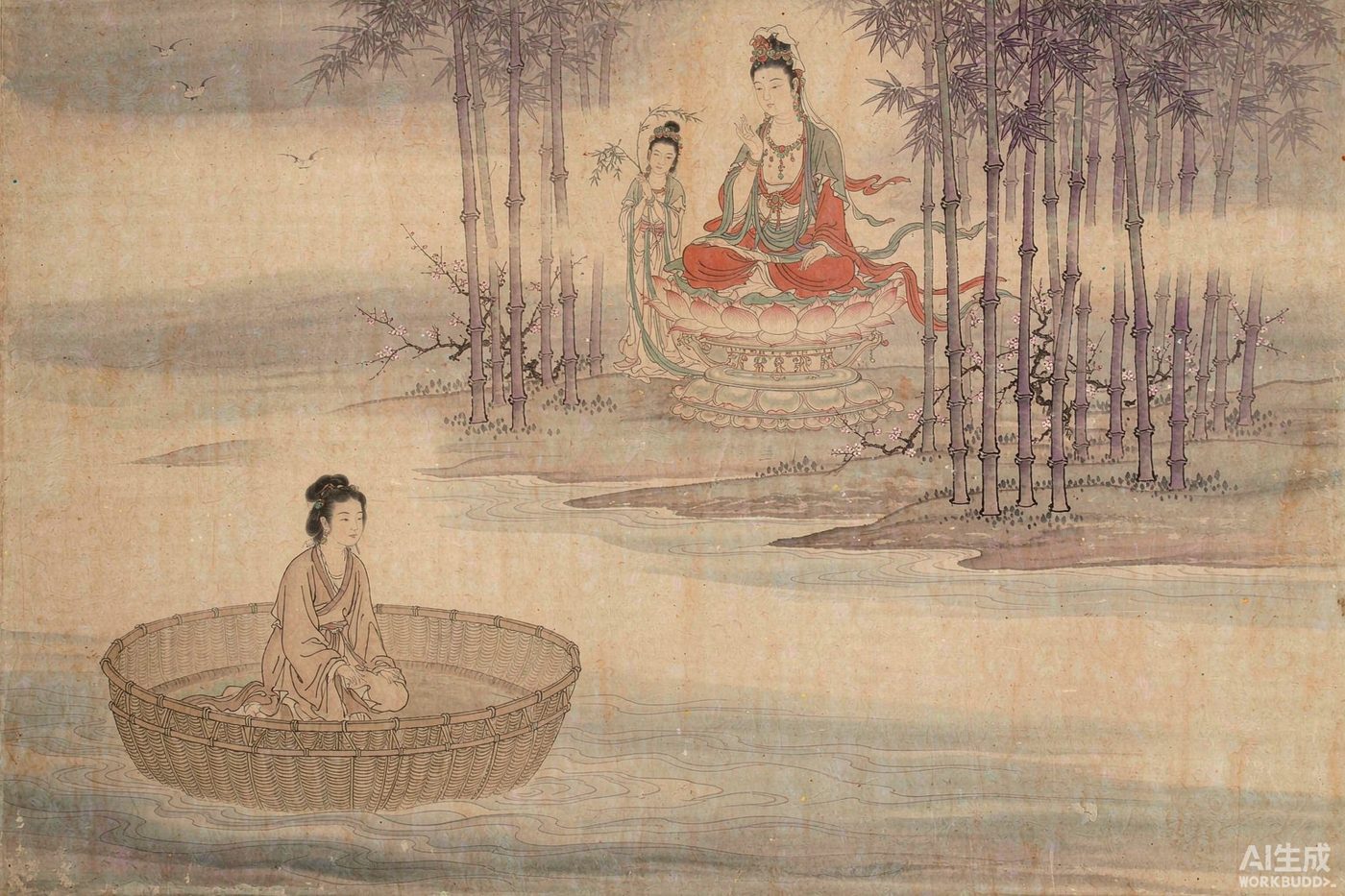
On the seventh day of the fifth month of the wushen year a jiao-flood burst out and ten thousand households were overturned. The woman judged there was no way for her to live — and then saw the fish basket swell to thirty arm-spans around. She climbed on it quickly. Drifting with the waves, she came at last to a place where purple bamboo ringed the woods and fragrant flowers strewed the path.
She climbed ashore with all her strength, looked back, and the basket had shrunk to its old size; so she carried it in with her.
She saw the Great Being, strings of pearls hanging at her breast, seated cross-legged on the lotus throne, who said: “You have come. Because of your youth and your bitter resolve, and fearing you would meet the great calamity, I have ferried you over in the boat of mercy.”
The woman bowed to the ground and thanked her. Then she ordered the Dragon Girl to wash her body with willow-branch water, and taking red petals and green leaves from beneath the throne, cut them into a skirt and garments and gave them to her.
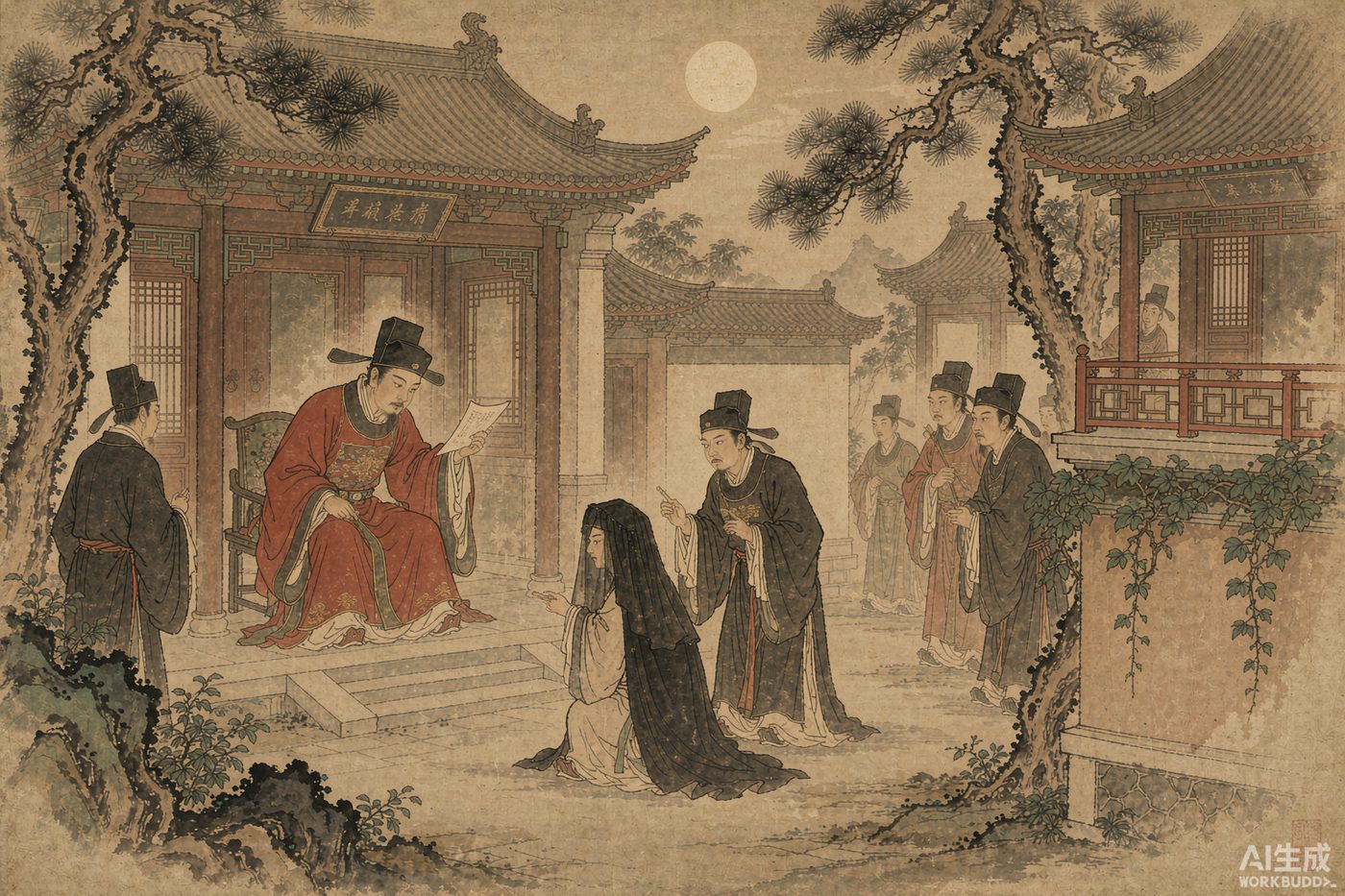
She was led to a hall with two courts on either side. The east was called Chastity and Filial Piety; the west, Worth and Talent.
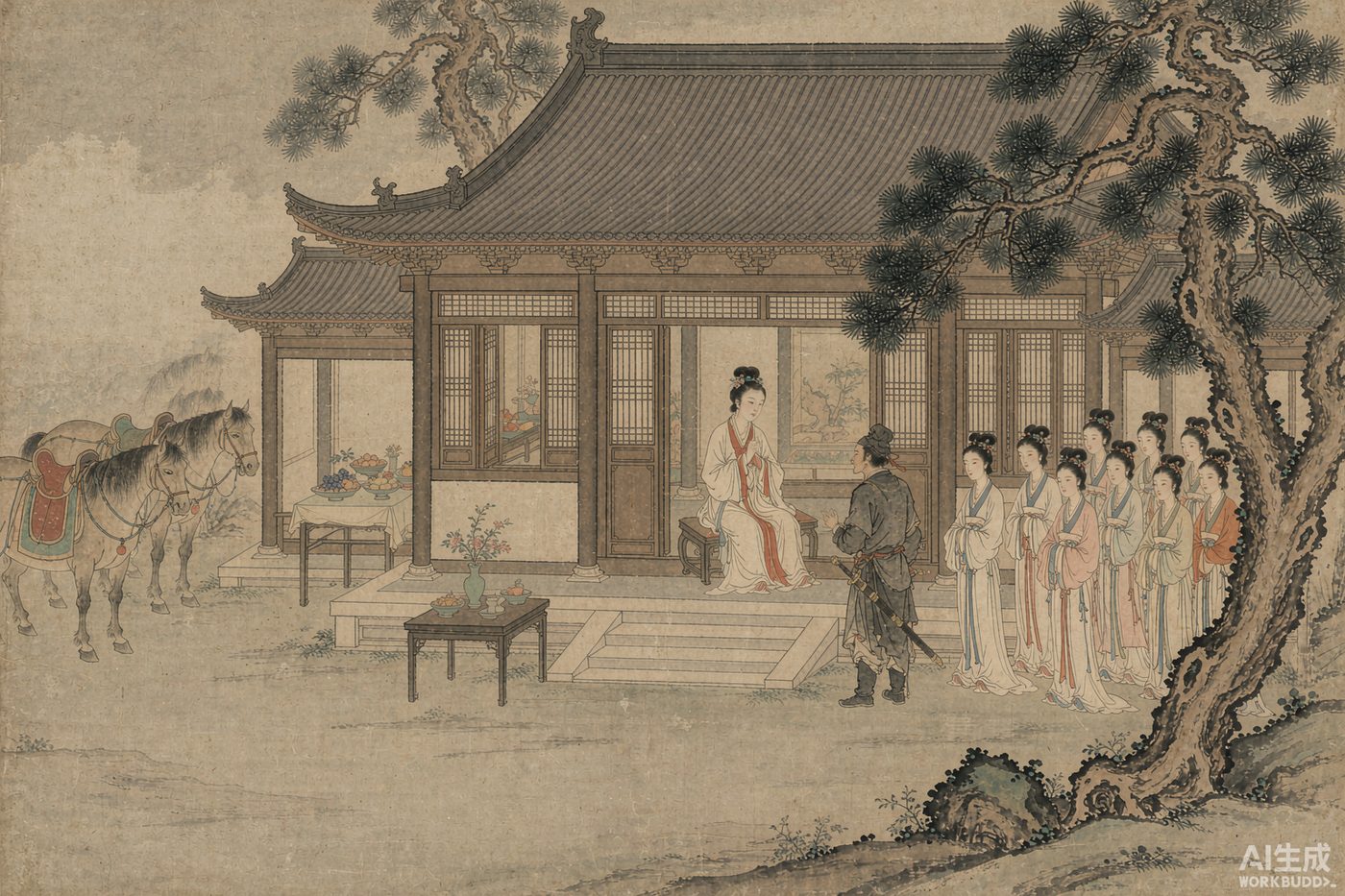
She went first into the court of Worth and Talent, and saw one with her hair in a mallet-bun, whose name was Meng Guang; one surrounded by books, Ban Zhao; one carrying a food hamper, the wife of Ji Que; and one in a plain cloth skirt with a water jar, the wife of Bao Xuan, née Huan. There was a woman ceaselessly chanting poems; seeing her come, she closed her scroll and welcomed her with a smile, and they talked over their families, and she was Xie Daoyun.
Then she went into the court of Chastity and Filial Piety: one holding a tally, Zhen Jiang; one who had cut off her own nose, the chaste wife of the house of Liang; one who had sung out her refusal to remarry, Tao Ying; one who had destroyed her own face, the widow Ba of Huaiqing; and there were girls with their hair still hanging loose, Ti Ying and Cao E and their like.
While she was sighing in admiration, the Dragon Girl said: “The Bodhisattva manifests a woman’s body to preach the law. She puts chastity and filial piety first and worth and talent second, and day by day ferries people over the sea of bitterness on the precious raft of mercy. That you have come here means the court of Chastity and Filial Piety has gained another seat.”
She was led back before the lotus throne. The Great Being wrote her name in the precious register, and made her keeper of the fish basket, ranked below the Dragon Girl.
By that time the flood was going down. Master Xie sought his sister’s body and did not find it; he summoned her soul into a coffin and buried it north of the Ganlu Nunnery.
One night he saw his sister come in a skirt of cloud and pendants of rose-coloured jade, carrying the fish basket, and she said: “I have been rescued by the Great Being and entered the precious register. Because you are thinking of me, I have come home once.”
He asked whether she had any charge for him.
She said: “I have no other charge. A scholar keeping himself is like a woman keeping her chastity. If the will is not firm, one slip, and you fall into the ink pool, and the water of the Western River cannot wash it out. Be careful. Be careful.”
And having said this she drifted away.
— The author’s comment (condensed): the man of cultivation reads the books of the sages, girds himself like a jade tablet, and comes at last to aching bones, a hungry belly and a death bent over by a window — is his hardship so different from hers who ate gall and chewed bark? If only the Bodhisattva would show her face and ferry him across too.