Stories/ 夷坚志/ Stabbing the Spring

Stabbing the Spring

周狗師

SourceYijian Zhi (Record of the Listener)
AuthorHong Mai
EraSouthern Song dynasty · 12th century
Writtenc. 1160–1200
MagicSmall GodsMoneySatireDeity
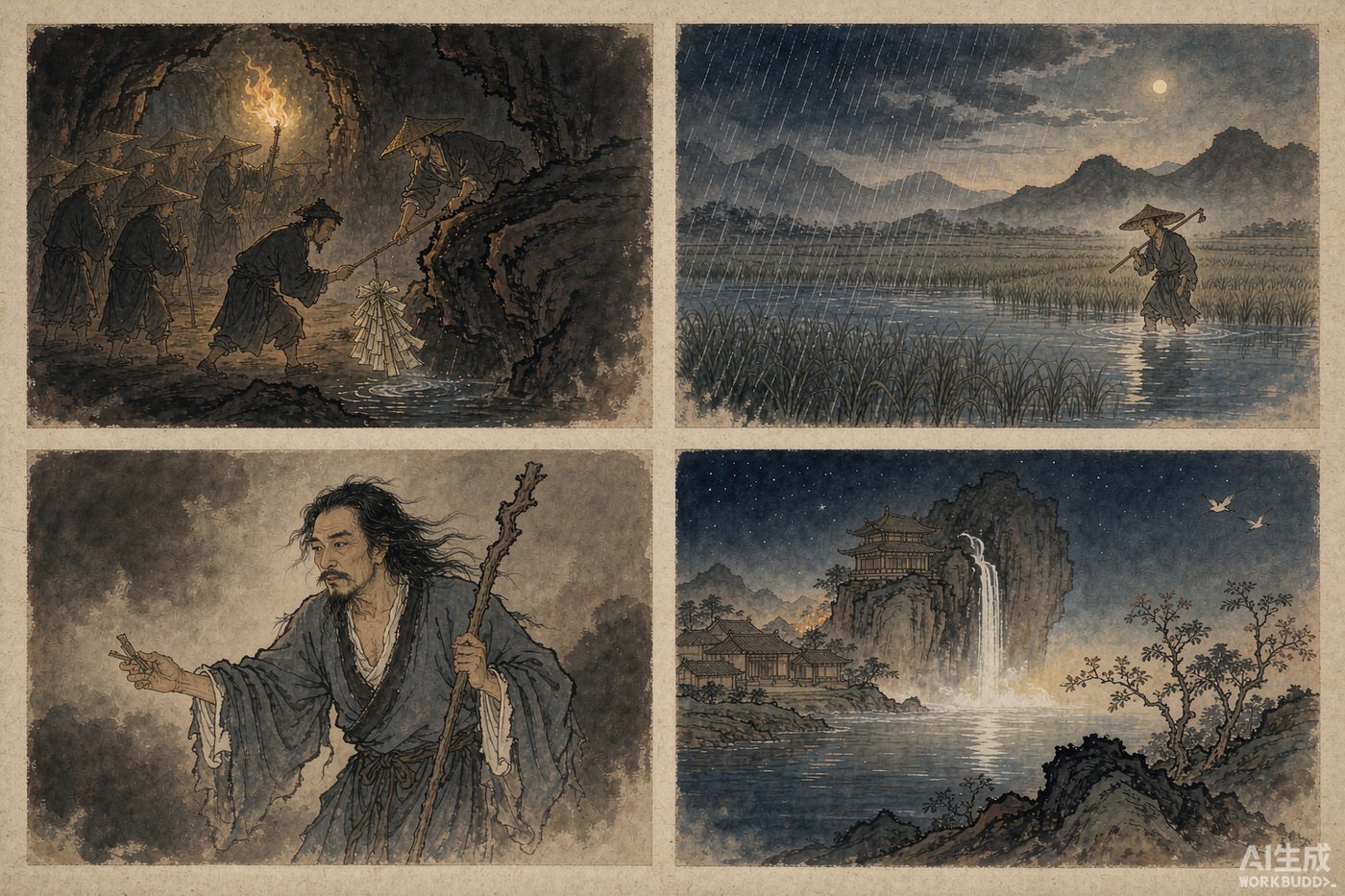
A village rain-maker at night thrusting bundles of paper money on bamboo poles into a pool below a cave spring, farmers with torches watching, rain falling over one rice field while the next ridge stays dry under clear stars
Illustration generated by AI, based on the ancient Chinese text.

Zhou Goushi was a village shaman of Chongyang county in Yuezhou. He could work small arts of prohibition and prayer, and he was very fond of eating dog meat, which is how he came by his name. What he was best at was bringing rain.

His method was this: a dozen or so bundles of paper money, with offerings of a pig’s head, a chicken and a duck; and then at nightfall he would go to some pool or cavern where there was a source of water, and drive the paper money down into the water on the end of a great bamboo. This is called stabbing the spring.

Whenever men came to him on account of a drought, he had them set out their surnames and their fields — in mu and in paces — complete within the petition. Before the day was out, rain would certainly fall. But it rained only on those whose names stood in the petition. A field on the other side of one raised bank, or across one ditch, stayed yellow with drought as before — even the very place where the spring rose.

When the villagers first made their request they brought cash and grain as an offering. Those who could not put it together would bring an ox as a pledge, and when the answer came they would bring the money and redeem it. What Zhou took in was not little. But he spent all of it on wine and meat to eat and drink, and where he lived was one thatched hut and nothing more.

The spring-hollows he stabbed, or the water at the source, would dry up then and there; and fearing he would be set upon by the people of those parts, he always went by night.

The county magistrate was often tormented by drought. He had made the round of every shrine and got no answer at all, so he sent for Zhou and had him pray.

Zhou said: “I must ask that you, sir, and all your deputy officers, come out to the place. And you should carry rain gear with you. I am afraid you may be drenched in an instant, with nothing to shelter under.”

The magistrate forced himself to agree. The rite was no sooner finished than the great rain arrived.

Zheng Zongshuo, the eye-doctor of Linchuan, once travelled as far as Yue and knew the man, and afterwards regretted that he had not emptied his purse to have the art handed on to him.

The method of stabbing the spring is recorded in no book, and is to be found nowhere else.
Original classical Chinese text · 原文

岳州崇陽縣村巫周狗師者能行禁禱小術而嗜食狗肉以是得名最工於致雨其法以紙錢十數束猪頭雞鴨之供乘昏夜詣湫洞有水源處而用大竹揷紙錢入水謂之刺泉凡以旱來請者命之列姓及田疇畝步具于疏内不移日雨必降唯名在禱疏者得雨它或隔一塍越一塹雖本出泉處黄旱自若村民方有求時先持錢粟為餉未能辦者至牽牛為質及應感則齎錢贖取之周所獲不鮮然但以買酒肉飲啖所居則茅屋一區而已其所刺泉穴或源水即時乾竭懼為彼民所抑故必夜往邑宰常苦旱並走羣祠了不嚮荅呼周使禱周曰請知縣與佐官皆詣某所須携雨具以行恐蒼卒沾濡無以自蔽宰勉從之施法甫畢大雨至臨川眼醫鄭宗說嘗游行到岳識其人悔不捐橐裝傳其術也刺泉之法方策不載他處亦未之有

From 《周狗師》, Yijian Zhi, 乙志卷三. Translated in full. 刺泉 means stabbing the spring.

Source. From Yijian Zhi (Record of the Listener) (夷坚志), by Hong Mai , c. 1160–1200. The original text is in the public domain; this English rendering and the accompanying notes are original work.
Where this fits in the universe: How a God Gets a Post · Filing With Heaven: How to Send a Document to a God

Keep Reading

Related Stories

Southern Song dynasty · 12th century · 夷坚志

The Crab With the Dipper on Its Back

龍溪巨蟹

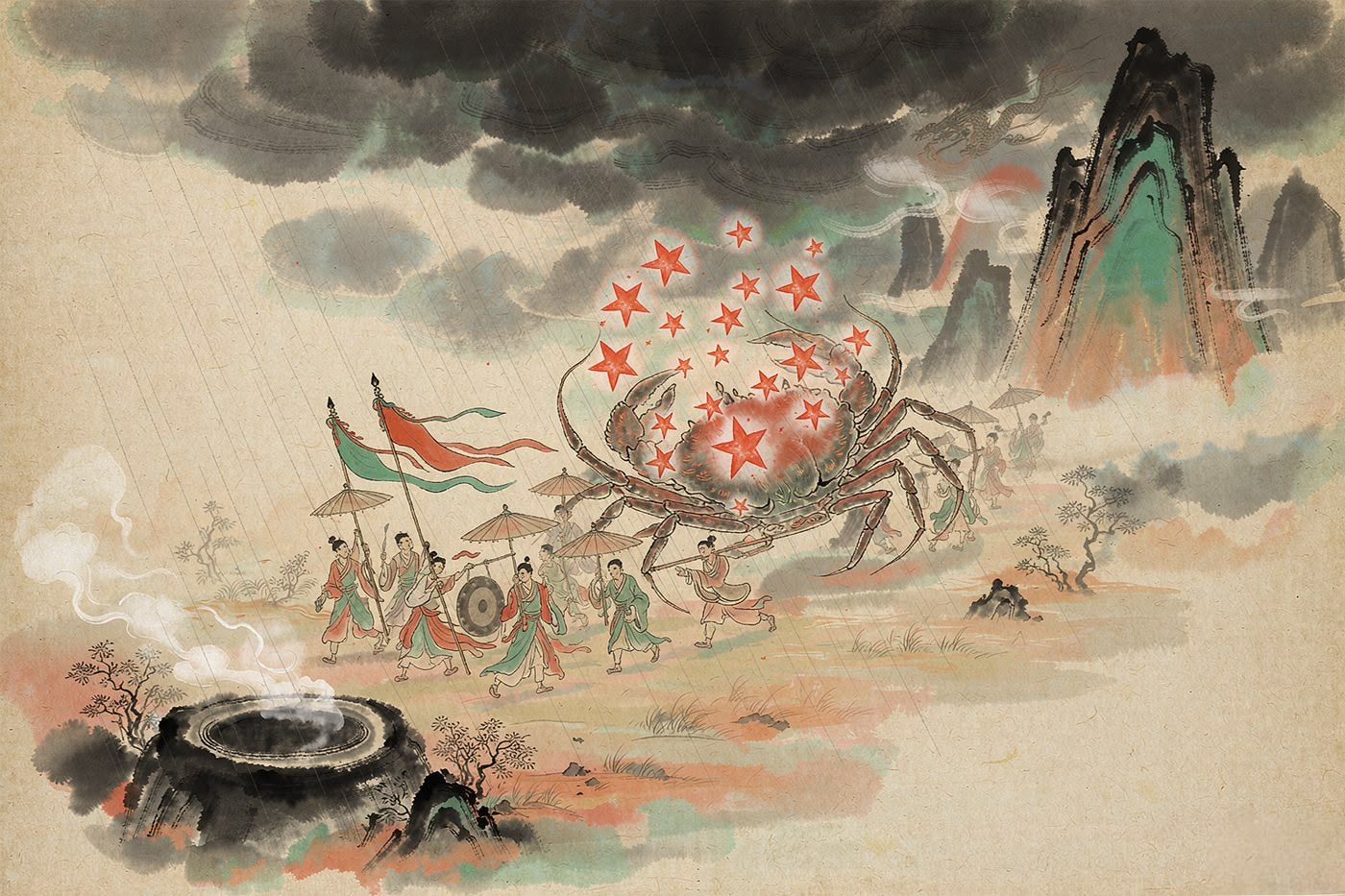
Fifty days without rain. Three hundred villagers walk out at first cockcrow with banners, gongs and a written petition, and file it with a well. Something comes up: a crab with claws like shears, eyes like bullets, and seven stars on its shell arranged like the Dipper.

DeityMonsterAnimal
Southern Song dynasty · 12th century · 夷坚志

The Nine Young Dragons

九龍廟

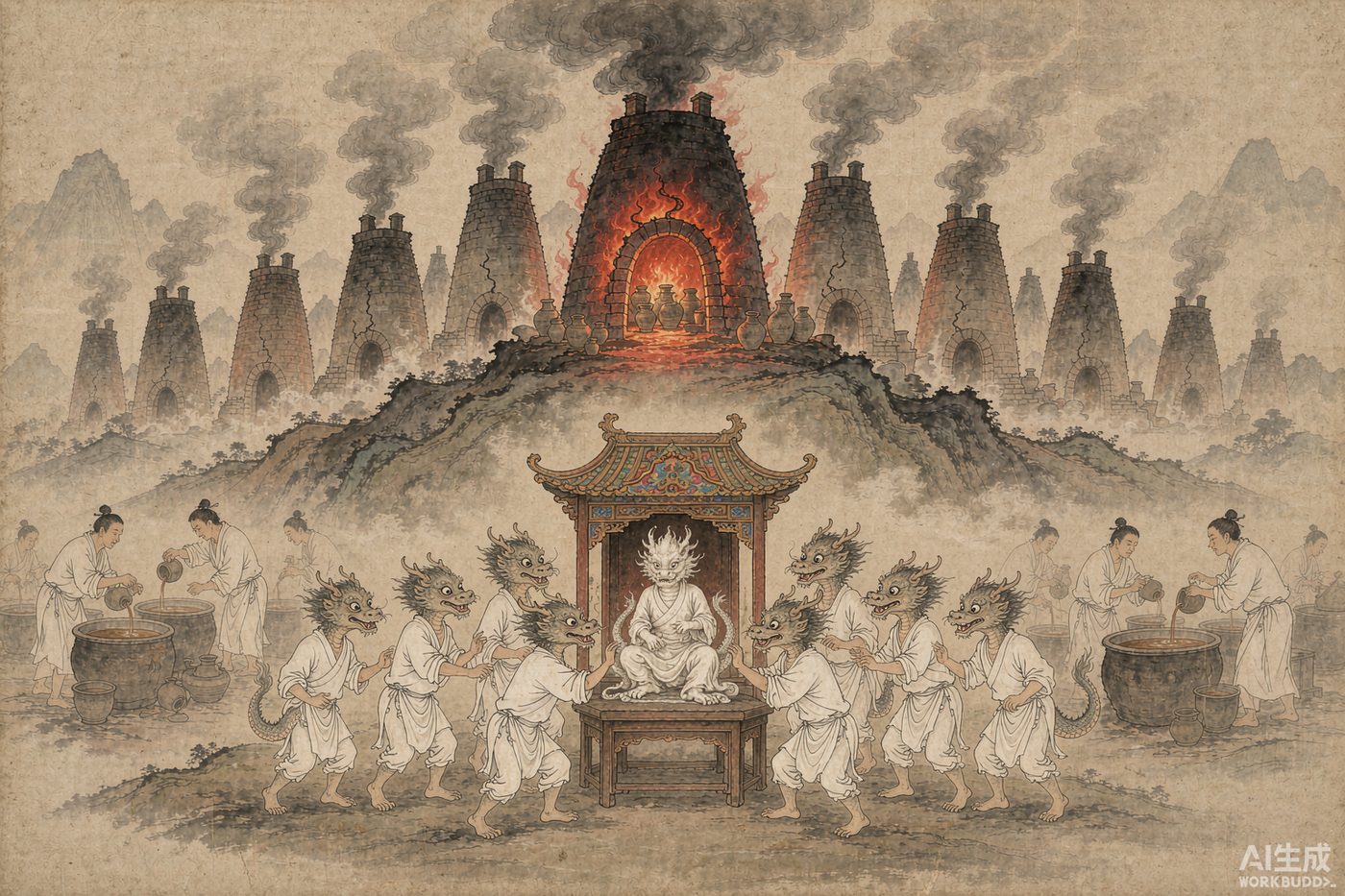
A pottery family runs ten kilns. One makes perfect ware. The other nine turn out nothing but warped, crooked rubbish — which sells faster than anything else in the market. The potter asks the dragon in his dream what kind of help that is, and gets an answer that explains a great deal about Chinese gods.

DeityMoneySatire
Text of the Warring States period · c. 4th–3rd century BCE · 山海经·北山经

Jingwei Fills the Sea

精卫填海

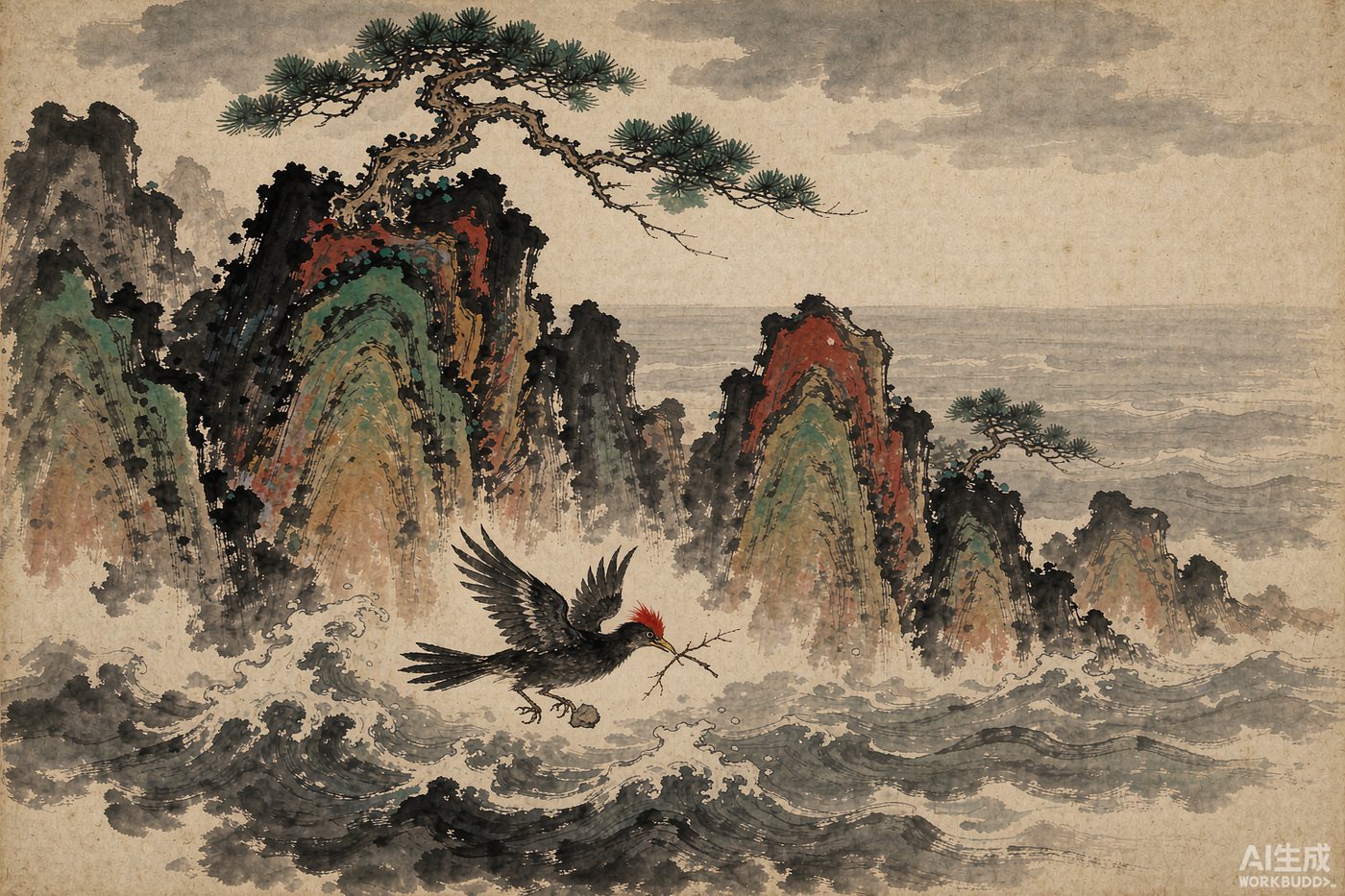
The youngest daughter of the Flame Emperor drowns in the Eastern Sea. She returns as a small bird, and begins — twig by twig, pebble by pebble, forever — to fill the sea that killed her.

DeityMonsterTransformation