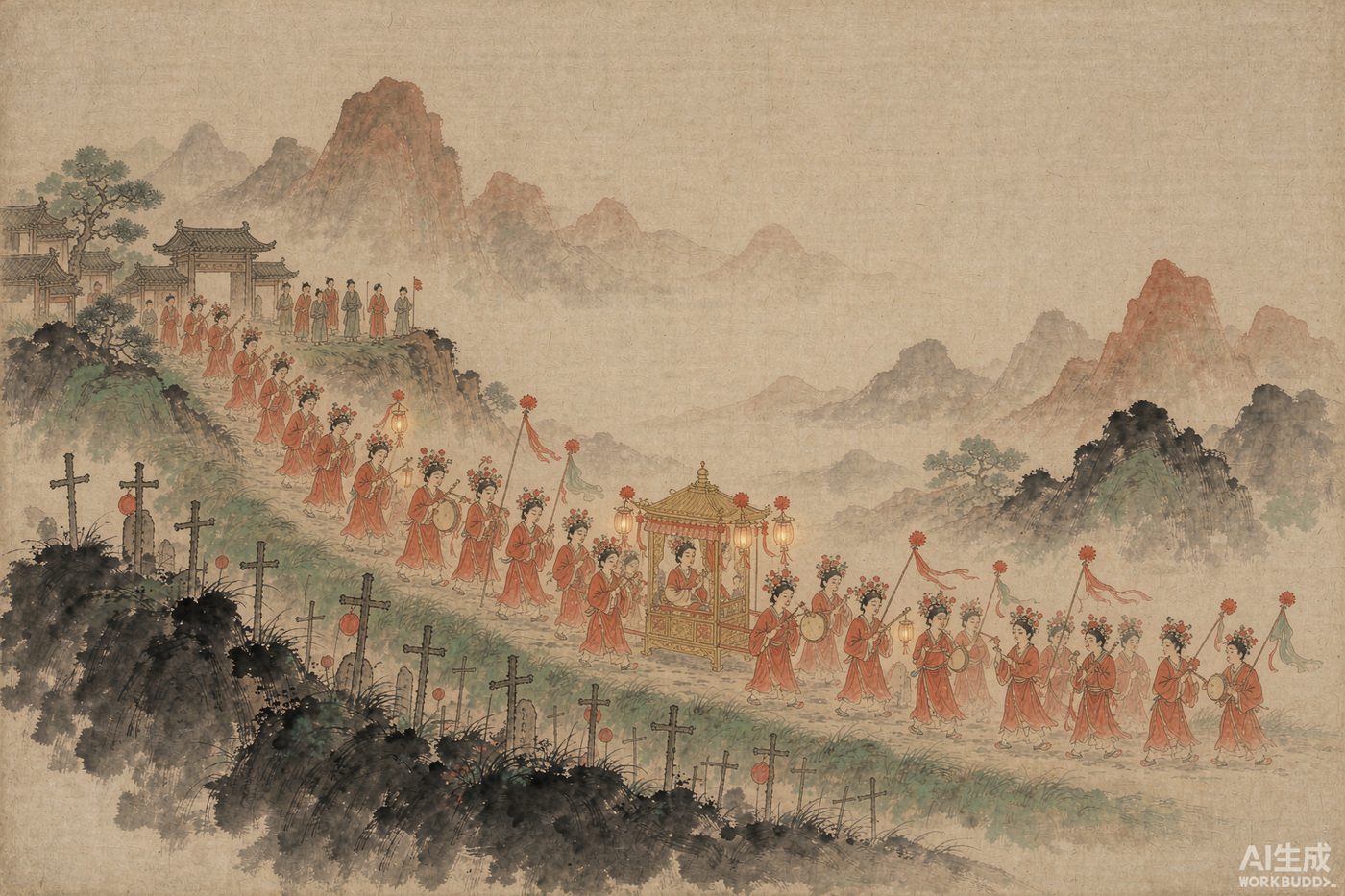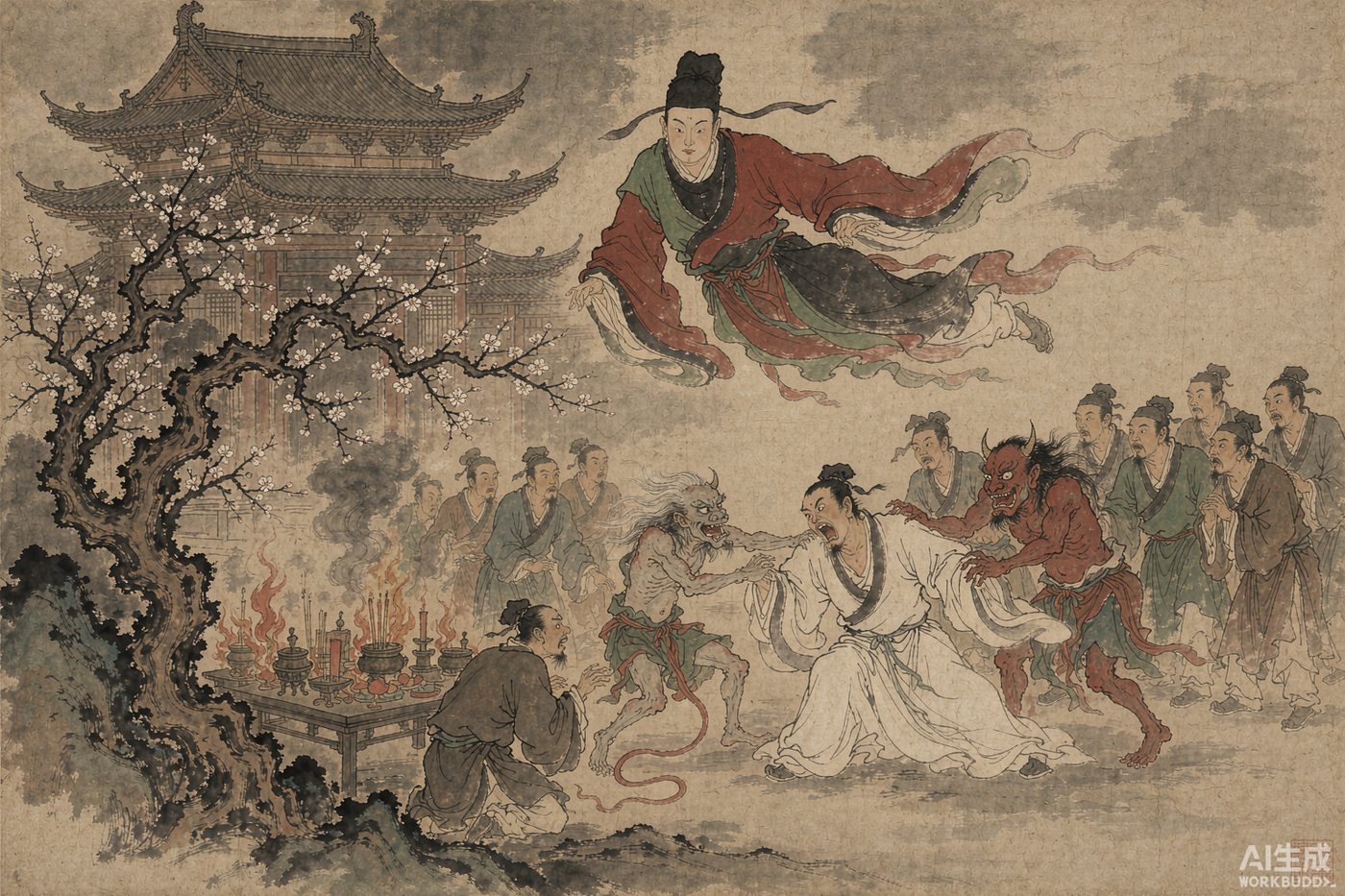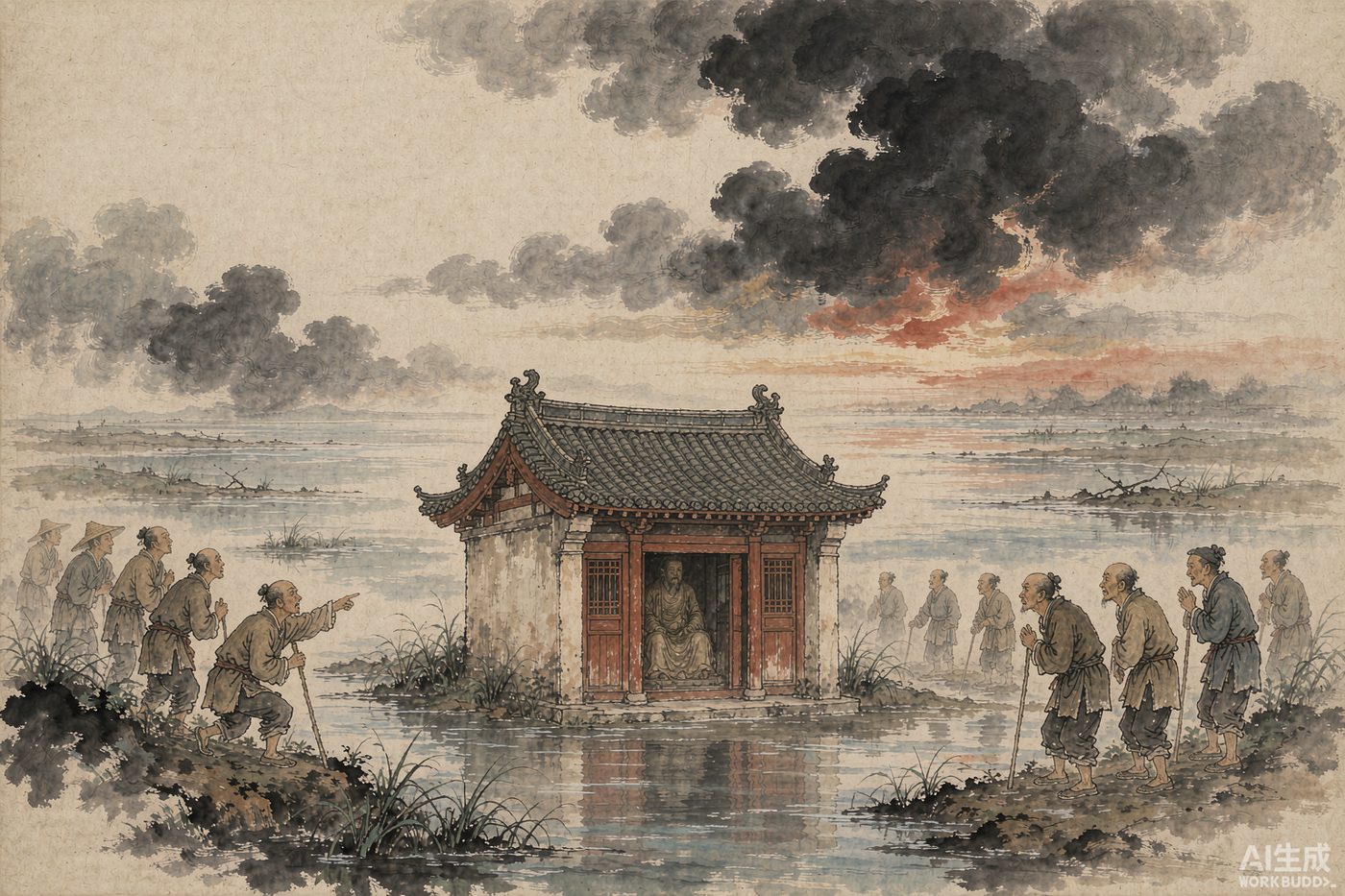
In the autumn of the third year of the Daguan era, Lu Duanyun of Changle, Vice Minister of the Court of Imperial Sacrifices, was demoted for objecting to the ancestral temple and made magistrate of Ruijin in Qianzhou. His brother Duanao, who was in the capital bureau, was also dismissed and given the Chongyou Abbey on Mount Wuyi, and followed him to his post.
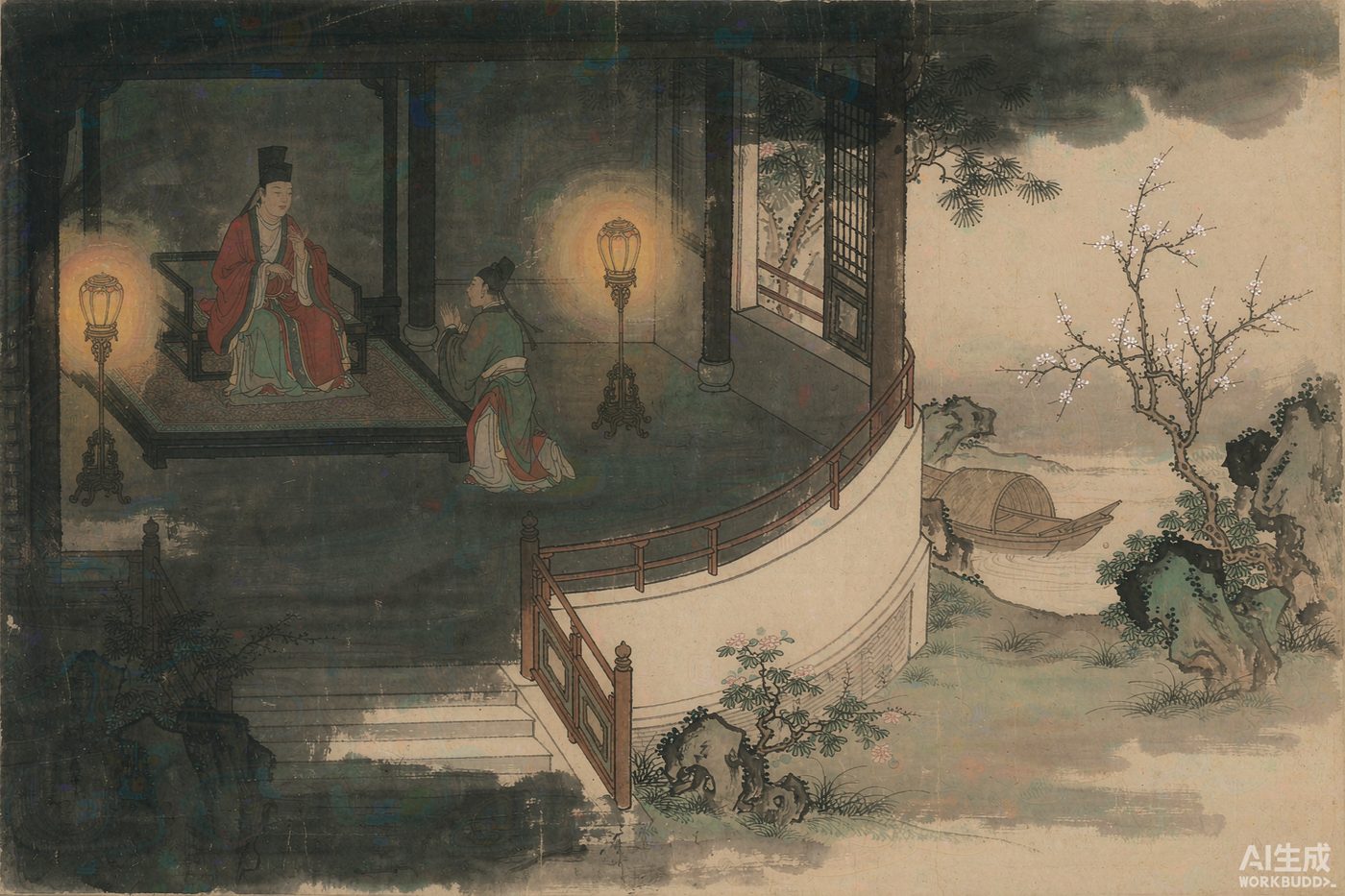
That year, on the night of the ninth month, he dreamed he moored his boat on the river bank, went up the north shore, and saw a hall deep and lofty, one zhang high, with a figure of beautiful cap and robes at the front, who bowed and said: “I am the King of Shunji. Why have you come here? My shrine — you shall write a record of it, and write it out.”
Duanao declined: “To write a record one must carve it in stone, and there is no stone here. To write it out, my brushwork is poor and my name is obscure, and not enough to give it weight.” And he named a certain high official of the court, and suggested the King appoint him.
The King’s colour was severe and his voice harsh: “Who says Nankang lacks stone? Who is this high official? I do not know him. Only write the record and write it out. Do not refuse.”
Duanao clasped his hands and said: “How dare I not obey your command?”
The King’s colour settled, and he led him in through winding corridors and railed galleries, flowers and trees half hiding the view, like a painting. After a while he said: “I am now making my rounds. You may go home too, and I will send you a following wind.”