Stories/ 夷坚志/ Qiuding in the Underworld

Qiuding in the Underworld

丘鼎入冥

SourceYijian Zhi (Record of the Listener)
AuthorHong Mai
EraSouthern Song dynasty · 12th century
Writtenc. 1160–1200
UnderworldJusticeKarmaSatire
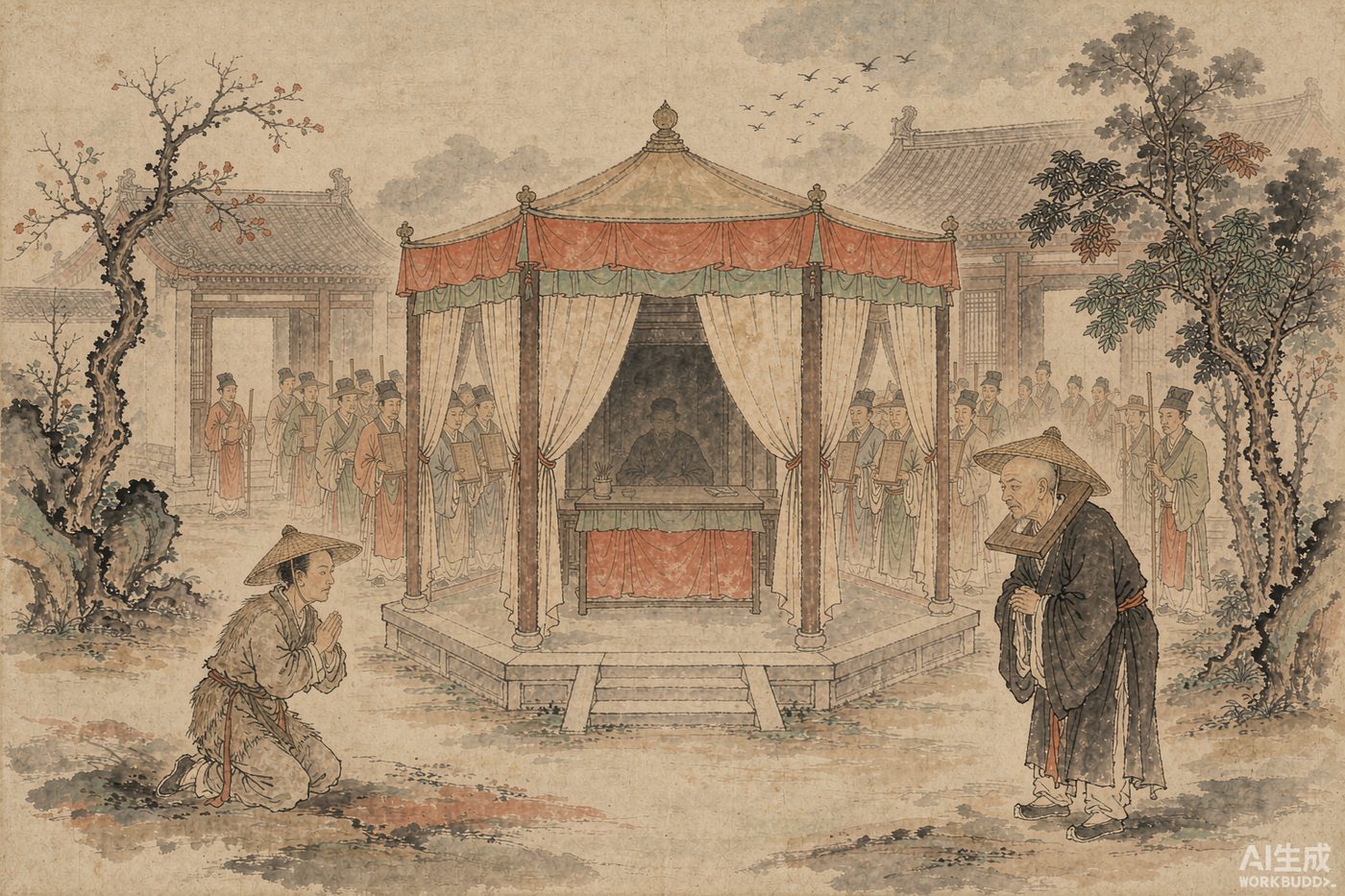
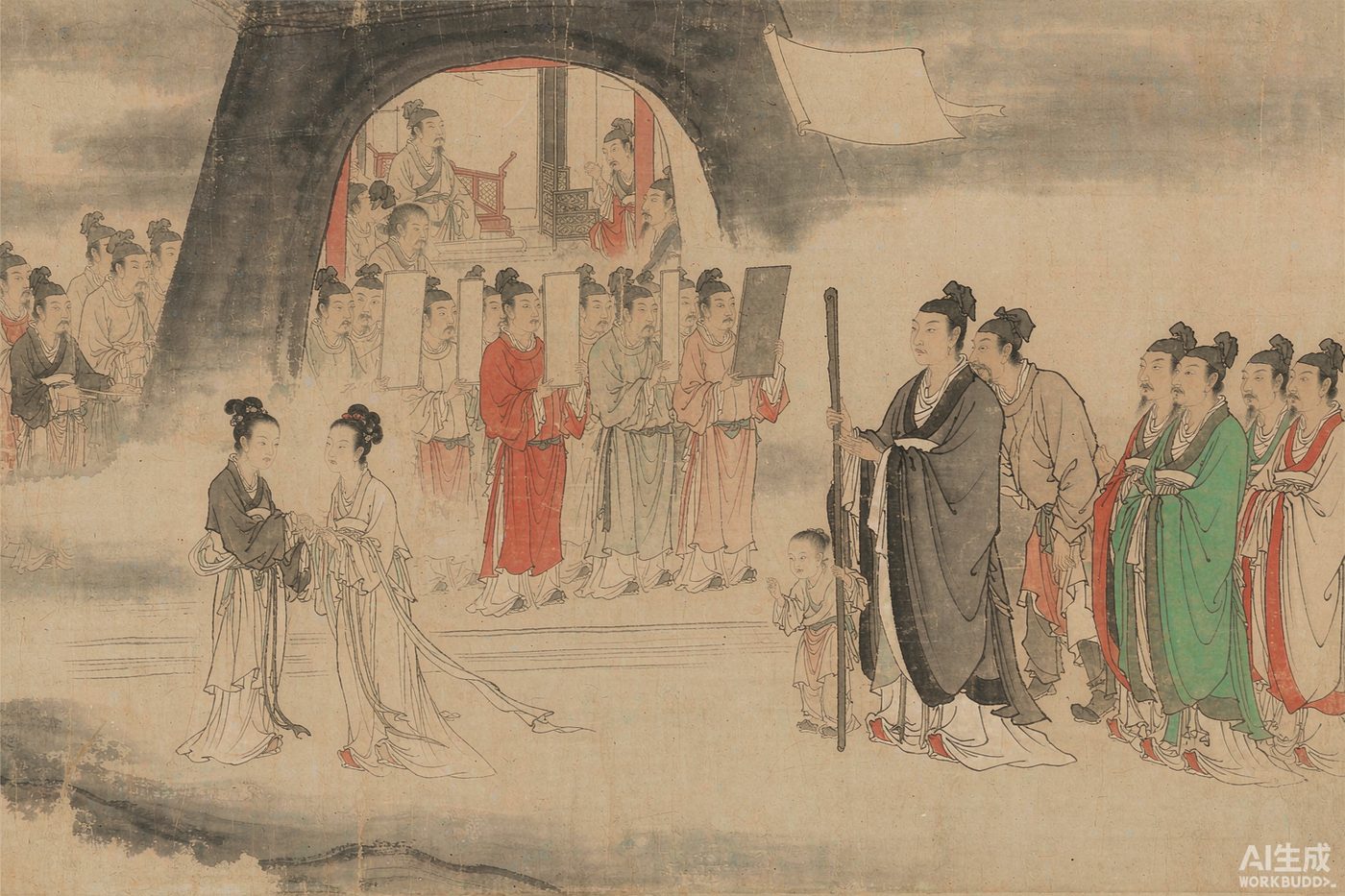
A scholar standing in an underworld court before rows of clerks with document boards and a placard at the gate, a woman in a thin gown and long sash being led away, and a guard leaning close to whisper in his ear, ink-wash painting
Illustration generated by AI, based on the ancient Chinese text.

Qiu Ding of Yihuang, lying desperately ill, was arrested by two clerks holding tallies and taken to a government office. A crowd of clerks stood ranked in the court below, waiting for the presiding officer to come out and sit; then he was led forward.

Presently they called a woman, carrying a thin gown under her arm and trailing a long silk sash, as though she had something to give evidence about with Qiu.

Qiu’s mouth had not reached a word when there was a muttering at his shoulder, debating with the woman — and the woman’s plea failed. The clerk ordered her away, tearing her sash and pulling at her gown.

Qiu understood in silence. In his youth he had lived in the same house as this woman, going to and fro morning and evening, and had lain with her. Afterwards she married the son of a rich family, and gave much of her wealth in alms to Taoists and Buddhists, and within a few years she died. The underworld had audited her merit and found that she should receive a male body. But there remained the old matter of her fornication with Qiu, and it had to be settled straight before the reward could be granted — and so Qiu had been arrested to give evidence.

Qiu said nothing, and the muttering at his shoulder laid the whole case out and won it. For in that old business the private intent had come from her; and it was on that account that she would not attain the male body.

Then they waved Qiu away. As he was taking his leave he saw a clerk presenting a document, and he craned his neck to look: it was altogether like a county summons in the world above, with the names of the parties listed at the head. The rest he could not read; he made out only the two characters Guo. The clerk covered it at once.

The soldier who was guiding him out brought him to the great gate. A placard had already been posted there — so-and-so, so-and-so — and his brother was on it, and under the name was written seventeenth day. The title signed at the end was that of an officer of the village lately dead, and the style of the office was quite unlike the world’s.

Halfway along the road the soldier said, in a low voice: “Other men who come here all bring a gratuity. How is it you have none?”

“I am a poor scholar,” said Qiu, “and when I came I did not bring a single cash. What can I give you in thanks?”

“When you get home,” said the soldier, “have a Taoist recite the Scripture of Salvation a hundred times. That will be enough.”

Qiu promised. And in a daze he woke.

He had been dead a full day. His family stood about him weeping; the coffin and the shroud were ready; the monastery was striking the death-bell, and its sound was still clear in his ears. He told the story to his mother and his wife, who were glad of his return to life. But his mother and his wife were both of the Guo family, and he grew troubled and unhappy.

A few days later they both fell ill together and did not rise. And his brother died on the seventeenth day.
Original classical Chinese text · 原文

宜黄人丘鼎病困中為二吏持符逮去至官府諸吏駢列廷下候主者出坐引而前旋呼一女子手挾凉衫脚曳長帛若與丘有所證口未及言而肩傍自有咄咄與女辯者女詞屈吏命之去其帛扯其衫丘默悟乃少年日與此女雜居朝夕往來因與之合後嫁富家某氏子多以其貲佈施道釋未數年而死司課其功宜受男身但有舊與丘淫通事須得直乃可故逮丘以證丘未言而傍咄者曲折已白蓋向時私意實出於女女坐是不得轉男身繼麾丘去方辭行見吏呈文書探首窺之全如世間州縣追引列人姓名于首餘不能識僅見兩郭氏字吏遽掩之顧卒導丘出抵大門則已掲示一牓曰某人曰某人其弟在焉名下注十七日字末後繫銜乃里中新逝官員置押官稱殊與世異届中塗導卒私禱曰他人到此必有賄贈君那得無丘曰吾固貧士且來時不持一錢何以為謝卒曰候還家請道士轉度人經百遍足矣丘許之恍然而寤則已死一日家人環泣具棺衾僧寺擊無常鐘聲歷歷在耳為母妻言之喜其復生而母妻皆郭氏也愀然不樂越數日同時臨病不起弟果以十七日亡

From 《丘鼎入冥》, Yijian Zhi. Translated in full. 宜黃 is Yihuang in Jiangxi; 持符 is to hold the arrest tallies; 凉衫 is a thin summer gown; 帛 is a silk sash; 冥司 is the underworld administration; 課其功 is to audit her merit; 受男身 is to be reborn in a male body, the standard reward for a woman's earned merit in this literature; 追引 is a summons document; 榜 is the posted notice; 無常鐘 is the bell struck at a death; 《度人經》 is the Scripture of Salvation, the central Lingbao text.

Source. From Yijian Zhi (Record of the Listener) (夷坚志), by Hong Mai , c. 1160–1200. The original text is in the public domain; this English rendering and the accompanying notes are original work.
Where this fits in the universe: Ghosts · The Courts of the Dead

Keep Reading

Related Stories

Southern Song dynasty · 12th century · 夷坚志

The Clerk Who Died Twice

臨安吏高生

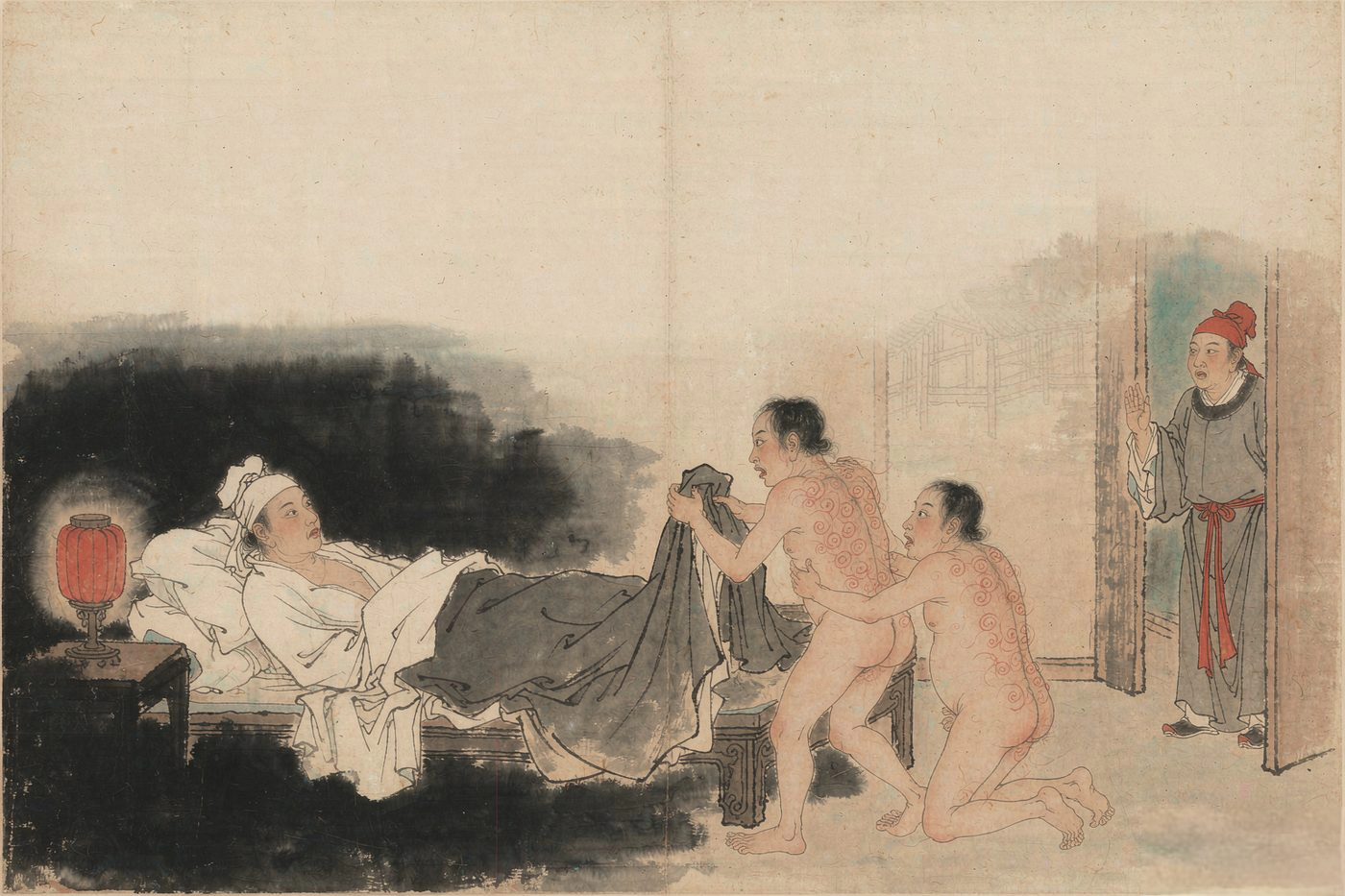
Two petty embezzlers are beaten in the county jail. The deputy takes pity, breaks them out, and reports them dead. The magistrate is relieved — until two naked figures appear at his bedside and demand that he come down below and give evidence. The cure is a piece of information. And then Hong Mai adds what other people said.

GhostOfficialdomJustice
Qing dynasty · Qianlong era, c. 1750–1795 · 子不语

The Ghost Who Followed Him Through Three Lives

吴髯

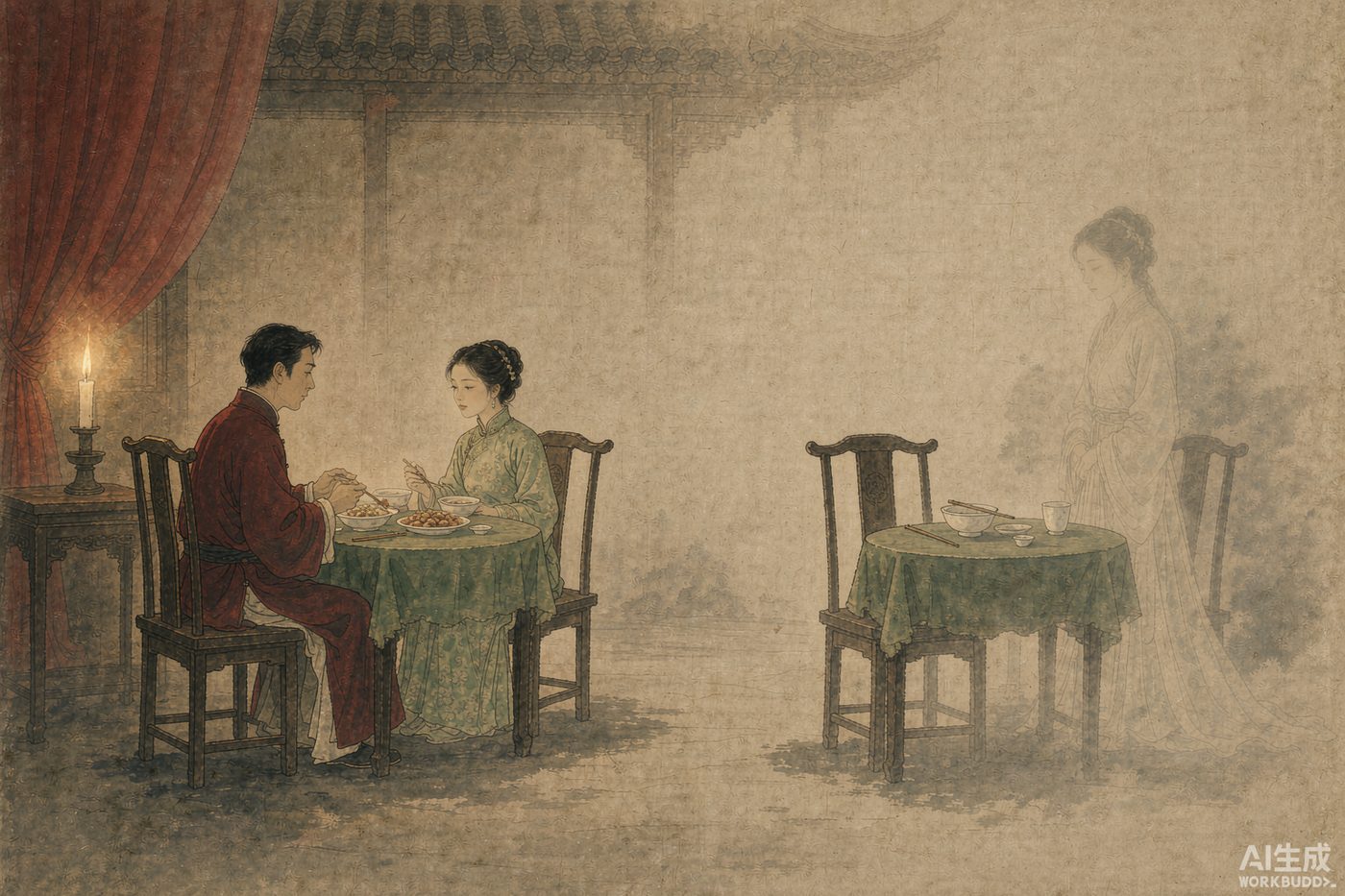
A salt merchant's son on his way to be married into a magistrate's family is met on the river by a woman who has been looking for him for three lifetimes. She takes a seat at his wedding and a place at his table. Ten years later she means to have his life — so he hires himself out to the City God.

GhostJusticeLove
Southern Song dynasty · 1165, the first year of Qiandao · 夷坚志

Axu in the Underworld

阿徐入冥

A farmer's wife dies and is summoned to the underworld court to answer a charge of seizing her nephew's inheritance. Nobody in the room expects much from an illiterate old woman who has kept vegetarian and chanted Buddha for thirty years — least of all the bailiffs, who had to drag her there. She wins the case on the facts, and is still flogged on the way out.

UnderworldJusticeWomen