Jiang of Taicang could write well before he was twenty. He went to sea with a merchant and was blown to a place where the hills stood ranged like a screen and the streams were clear as a painting. There was no walled city anywhere, only some tens of thousands of peach trees ringed about it like a county seat.
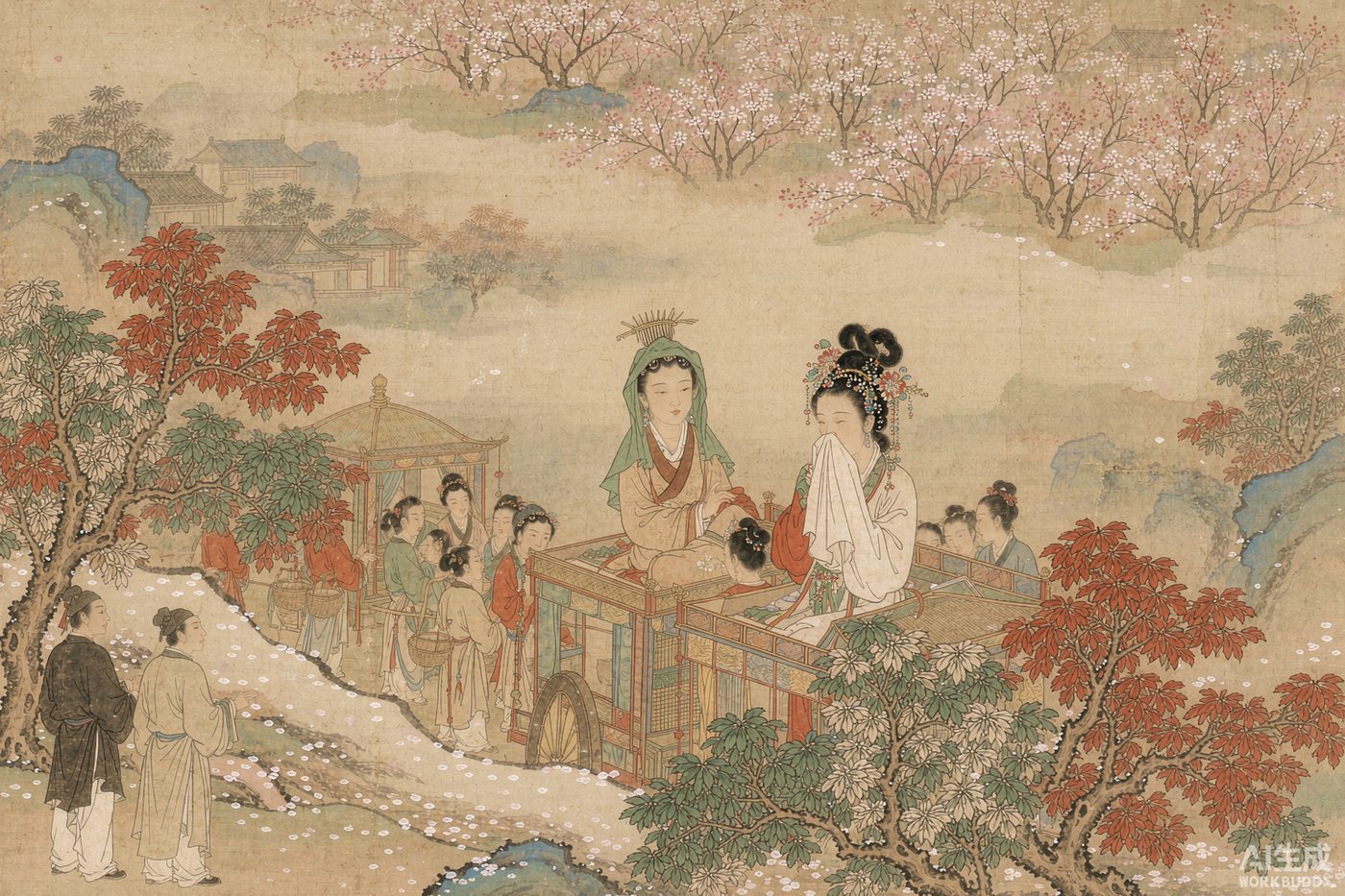
It was mid-spring. A scent blew on the wind; tens of thousands of trees held bud or showed flower; it was as if brocade screens and embroidered tents had been set out left and right. Jiang was delighted, and strolled in beside the flowers with the merchant, whose name was Ma.
Then some dozens of small curtained carriages came swarming past. Coarse pins and fine powder, ugly and lovely all mixed together.
In one of them sat a girl with a sunken face, contracted ears, jutting teeth and gaps between them — but hung about with pearls and kingfisher feathers, plainly from a wealthy house, holding a cloth to her face and forcing herself into an alluring pose. Jiang and Ma both laughed out loud.
In the last carriage sat a girl of marriageable age, a thorn hairpin pressed into her hair, her body dressed in plain cotton — and a natural beauty that no jade-stamen or qiong-blossom could match. Jiang was struck by her and followed behind her carriage, with Ma at his heels.
The axles thundered; they went like wind and lightning, and came to a public office where everyone got down and went in. Jiang could not make it out and asked a man of the place.
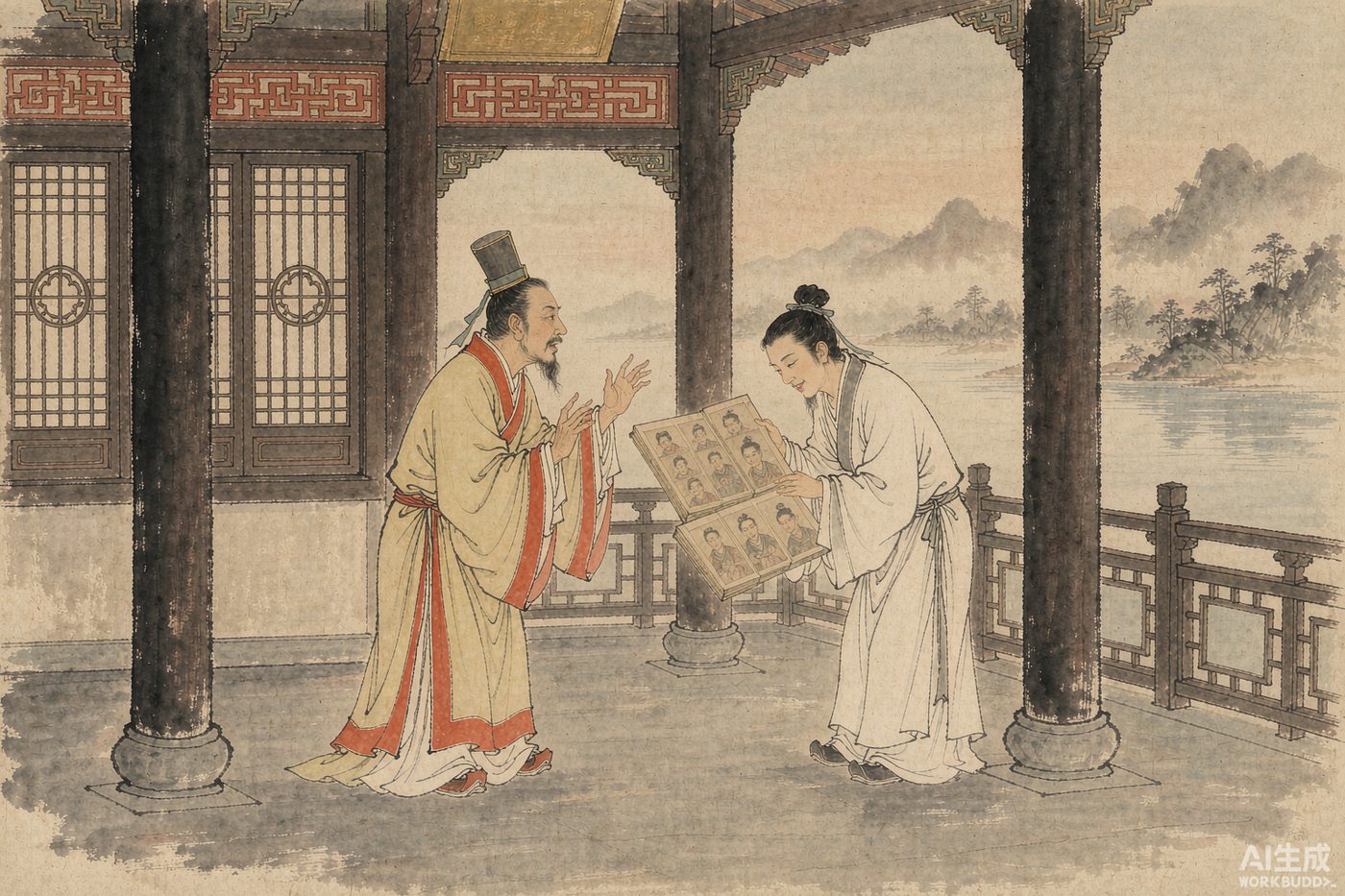
“This is called Peach Blossom Village. Every mid-spring, at the season when men and women marry, the officer of this place first enrols the girls of the people and ranks them high or low by their faces; then he enrols the young men and examines the quality of their writing and fixes their order. Then he joins the two lists, first to first, second to second — so beauty in the girl answers talent in the man, and each is matched. Today is the girls’ examination ground; tomorrow is the men’s. If you are not married, sir, why not take part?”
Jiang agreed, and he and Ma rented rooms and settled in.
He thought: the girl in the carriage should stand first in face. And his own writing — he was outstanding; how could he come second? If heaven had anything in store for him, this would be worth crossing four seas to find a phoenix.
Ma also had his eye on the girl and wanted to sit the examination. He discussed it with Jiang, who laughed.
“You have never been any good at this. Why stick a sign on yourself and gamble your money away?”
Ma insisted. Jiang could not stop him.
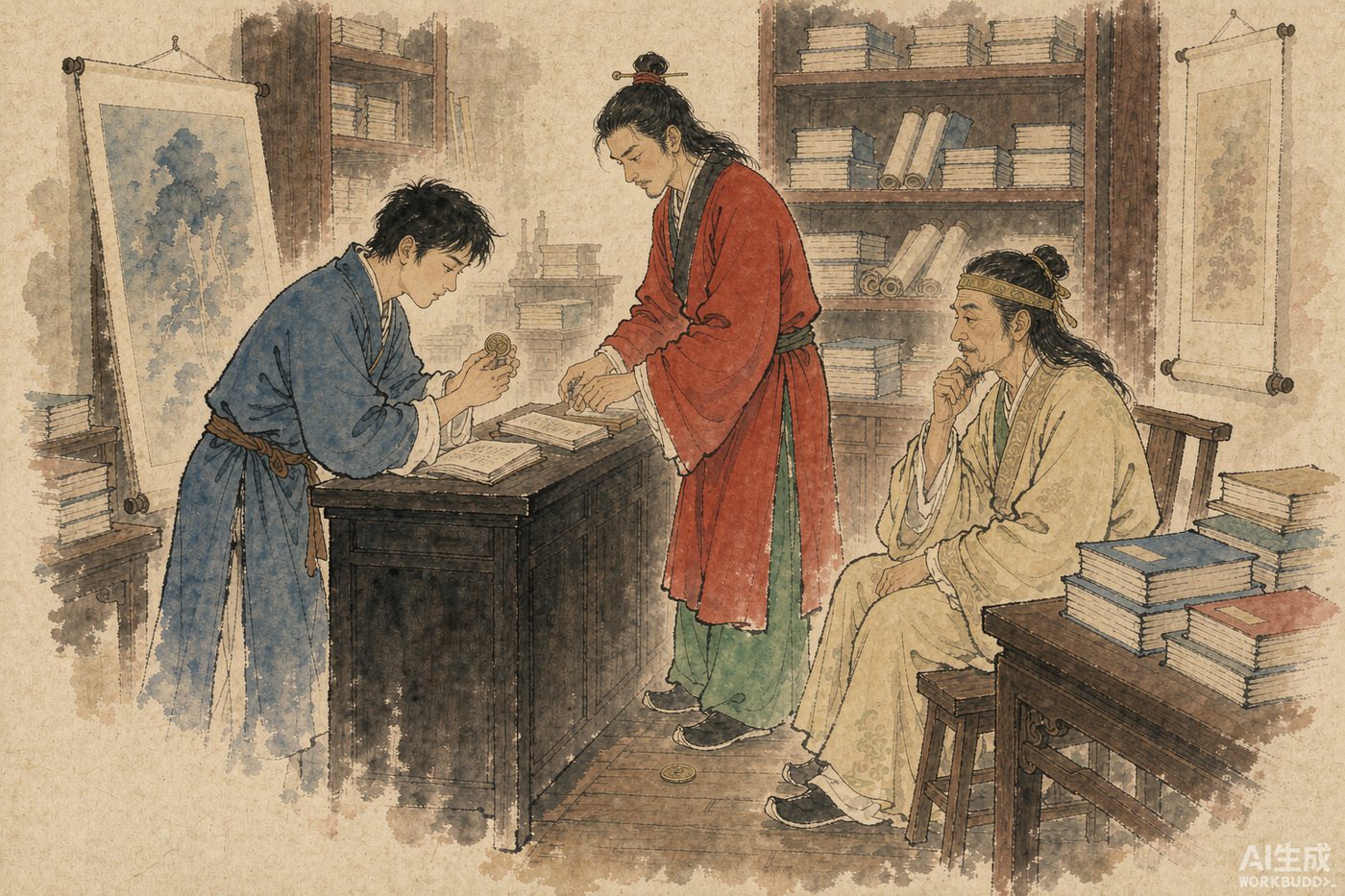
The next day they went in and were shut in to write. Jiang’s essay went down without a correction, finished in a moment. Ma scrawled something hasty and left it at that.
Back at the lodgings, a man came with the chief examiner’s demand: three hundred strings of cash, and first place promised.
Jiang said angrily: “Setting aside that a traveller’s purse is too thin to fill a gluttonous reputation — even if the house were full of gold, would I borrow the pull of the Money God and leave my essay short of breath?”
The man went off ashamed. Ma crept after him and gave him the gold out of his bag.
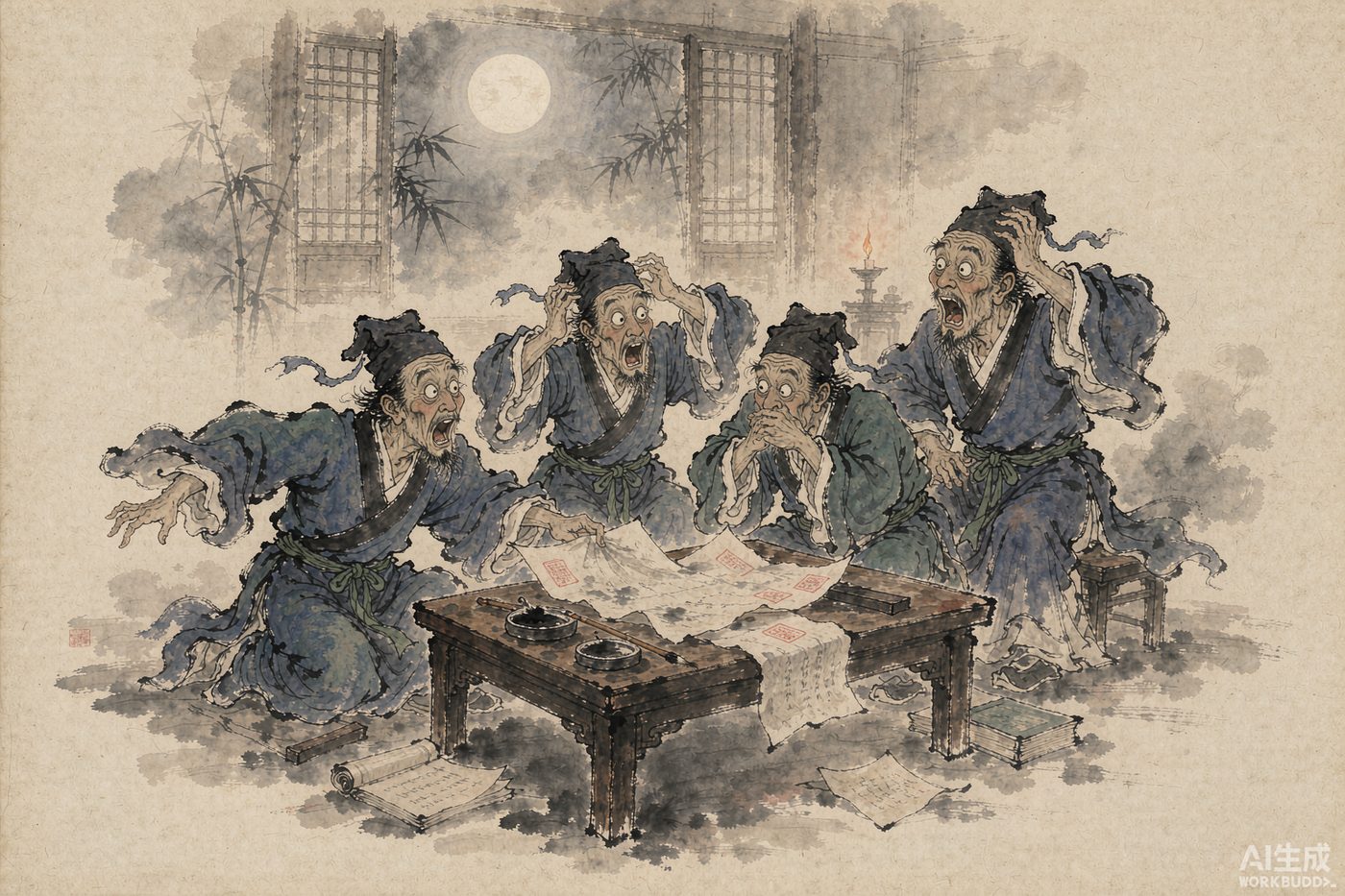
When the list came out, Ma was first, and Jiang was humbly last.
Jiang said with a sigh: “That writing carries no weight is nothing to regret. But to lose the beauty and be given the ugly one — what is to be done?”
Before long the examiner married them off in order, and the girl at the bottom of the list was sent to Jiang’s house. Jiang was certain it would be the one with the sunken face, the contracted ears, the jutting and gap-toothed mouth.
He lifted the veil.
Dark brows, gathered scent; a face that shone. It was the girl of marriageable age in the carriage.
He questioned her closely, and she said: “My family is poor. I sell pearls to mend the roof and there is not a day to spare. The examiner demanded a large bribe from me and promised to put me at the head of the list. I drove him out. So he bore a grudge and hung my name at the tail.”
Jiang laughed. “The old man at the frontier lost his horse — who knows if it is not good fortune? If I had paid three hundred strings and been ranked high, how would I be sitting opposite a jade person tonight?”
She laughed too. “Right and wrong stand on their heads; that is how the world always is. Only the one who keeps to what he is will in the end be invited to good fortune.”
Jiang sighed with admiration.
The next day he went to congratulate Ma. Ma’s face and spirit were fallen, and he would not say a word. For the first-place girl he had married was the one in the carriage who had held the cloth to her face and forced herself into an alluring pose.
Jiang asked, laughing, how it had come about. This girl had presented a thousand in gold to the examiner and been placed first; and Ma had pulled himself to the head of the list by the same road. So the two of them found each other.
Jiang said: “To win a great name and lose the solid prize — you brought that on yourself. Who is to blame?”
Ma was despondent. He stayed half a year and then went home by sea. Jiang, deeply attached to his wife, settled overseas and never came back.
The Duo comment: “The God of Money plays with men, and right and wrong stand on their heads. Who would have thought that the Creator plays with men too, and holds the handle that turns the Money God upside down? And yet this girl, who gave a thousand in gold for her dowry without grudging it, has a spirit that is not ordinary — you may call her a fine match after all.”