The licentiate Li Haizhong, going to the capital for the autumn examinations, hired a duck-billed boat at Suzhou. As they reached the Huai, a Wang came to the bow and asked to share the passage; he was an old neighbour, so they travelled together.
In the evening Wang asked with a smile: “Are you a bold man?” The licentiate was taken aback and answered vaguely: “Bold enough.” Wang said: “I feared you might take fright, which is why I asked about your courage. Since you are bold, I must tell you the truth. I am not a man but a ghost. I parted from you six years ago; the year before last, in a bad harvest, pressed by cold and hunger, I dug up a grave and stole its wealth, was arrested and convicted, and have already been beheaded. As a ghost I am still cold and hungry, and so I go to the capital to collect a debt, relying on you to beg a passage.”
Li asked: “Whose debt do you go to collect?” He said: “A certain Wang. He was a clerk in the Ministry of Justice and promised that when the death sentence reached the ministry he would remand it for a lesser penalty, for which he was given five hundred taels. Little did he expect he would give no help at all, and in the end could not save my life — so I go to haunt him.” This Wang was a kinsman of Li’s.
Li was greatly alarmed and reasoned with him: “Your crime deserved death; the ministry’s deliberation was not unjust. Cousin Wang should not have cheated you of your money; I will take you there, explain the whole, and get him to return it, to dissolve this enmity. But you are dead — what use is silver to you?” Wang said: “Though I have no use, I still have a wife and children at home, who live next to you. Once I have collected, you may pay it to them on my behalf.” Li assented.
A few days on, near the capital, Wang asked to go ahead: “I will go first to your kinsman’s house and haunt him, so that when he has no way to seek relief, you may go and speak for him, and only then will he listen. Otherwise, being a greedy man, he will not heed you though you speak.” With that he vanished.
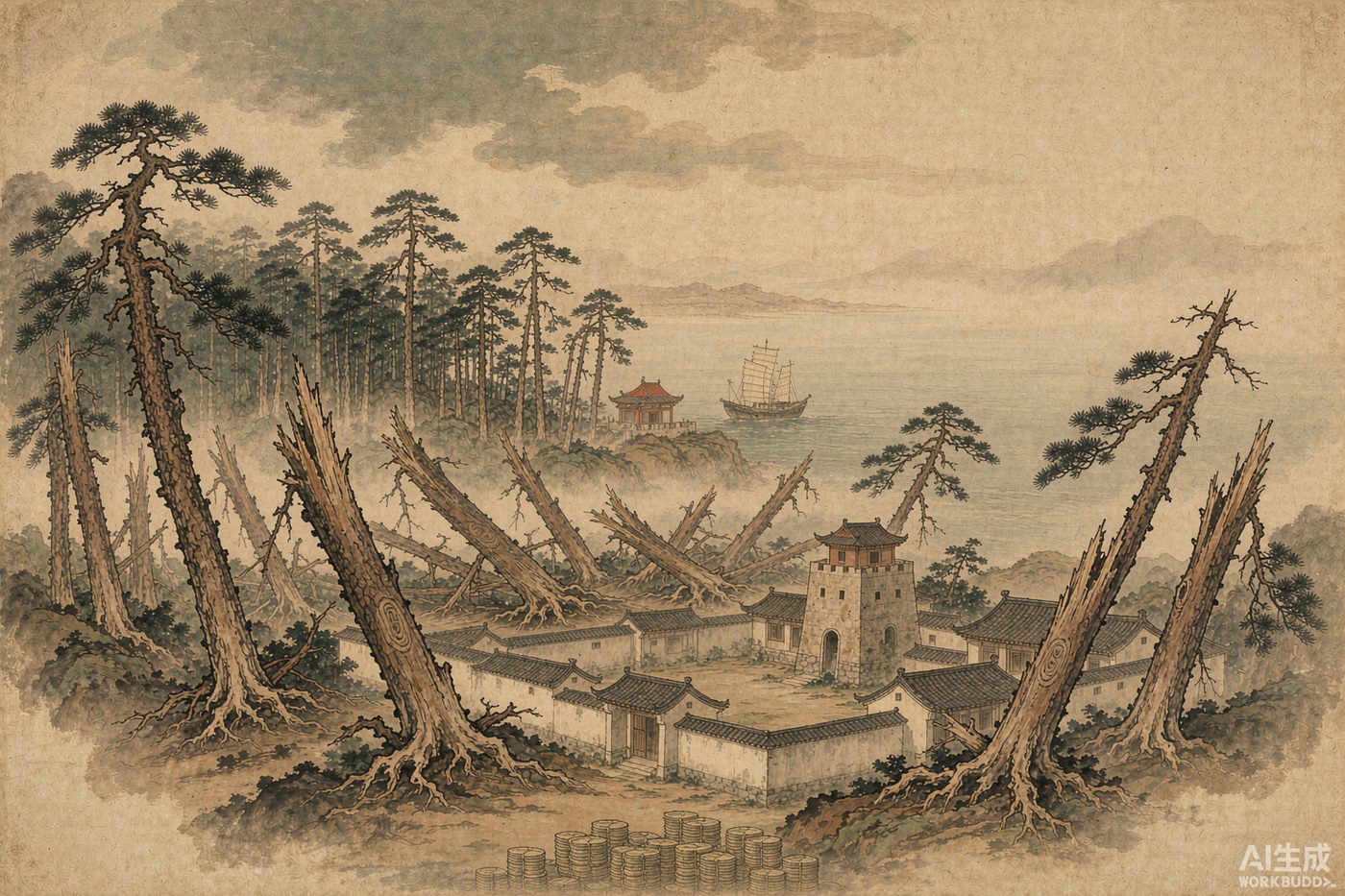
Li found lodgings in the city; three days later he went to the Wang house, and sure enough Wang had fallen into a frenzy, and the whole family sought gods and divination to no effect. As Li reached the gate the sick man said in a waking voice: “Your family’s salvation is come!” The family hurried to welcome and ask Li, and Li told them the whole. Wang’s wife first meant to burn tens of thousands of paper coins in payment, but the sick man laughed loudly: “To repay real coin with false coin — there is no such bargain under heaven! Quickly count out five hundred taels and hand them to Master Li, and I will spare you.” The family did so, and Wang’s sickness indeed lifted.
A few days later the ghost came to Li’s to urge their return together; Li refused, saying: “I have not yet sat the examination.” The ghost said: “You will not pass; there is no need to sit it.” Li would not listen. After the three sessions the ghost urged return again. Li said: “I wait for the list.” The ghost said: “You will not pass; there is no need to wait for the list.” The list came out and his name was not on it; the ghost came and laughed: “May you return now?” Li, ashamed and dispirited, set out that very day.
The ghost travelled with him in the boat; all food and drink he only sniffed and did not swallow, and what he sniffed, though hot, turned cold at once.
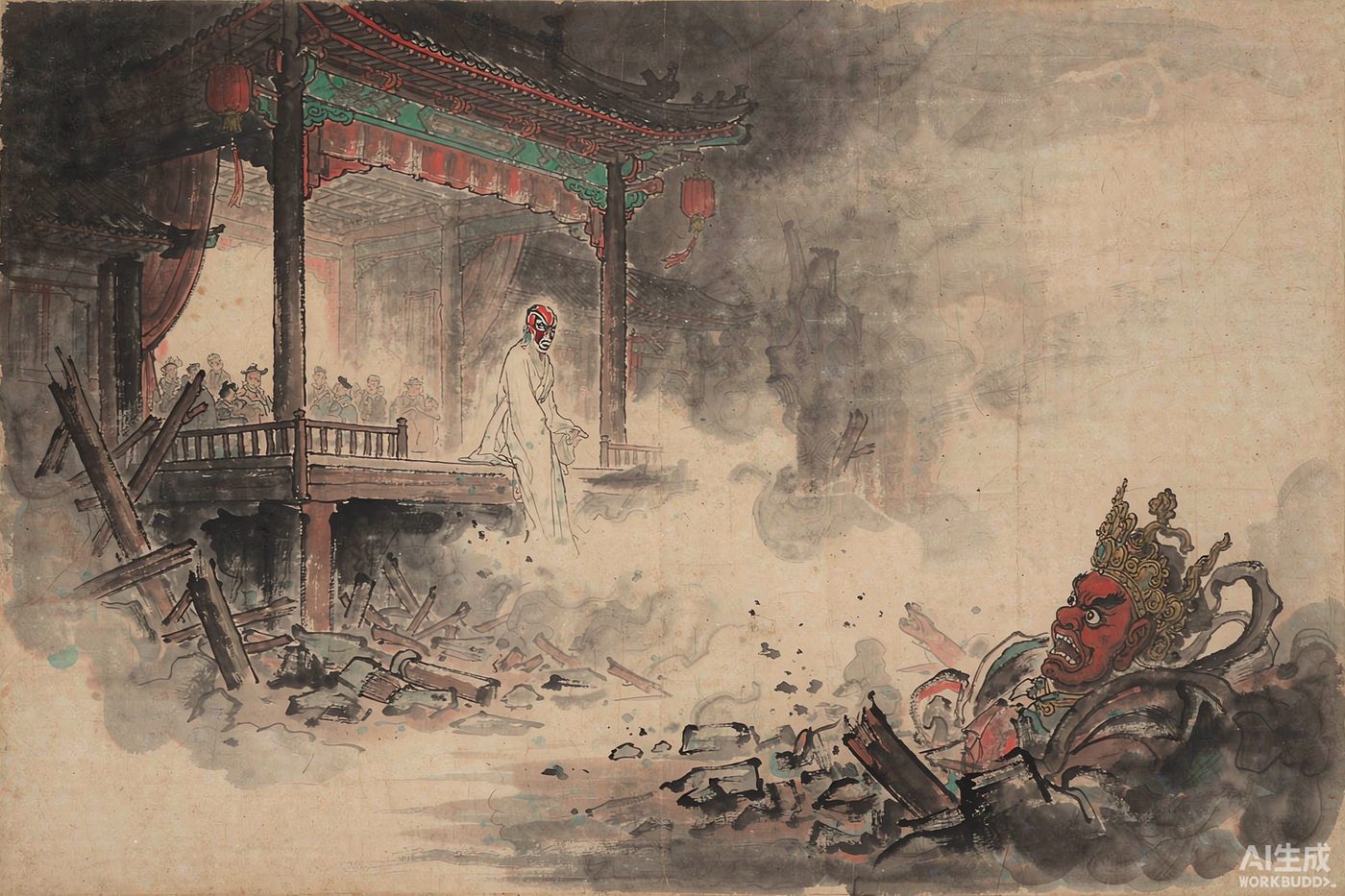
As they reached Suqian the ghost said: “A certain village is staging opera; shall we go and watch?” Li went with him to the foot of the stage. After a few scenes the ghost suddenly vanished, and there was only the sound of flying sand and hurled stone; Li went back to the boat and waited. As the sky darkened the ghost arrived in fine array and said: “I shall not return. I am here to be the Emperor Guan.” Li was aghast: “How dare you be the Emperor Guan?” He said: “The Guanyin and the Emperor Guan in this world are all ghosts impersonating them. The opera the other day was the discharge of a vow to the Guan god. The Guan god to whom the vow was discharged was even more of a rogue than I, and so I flew into a rage, fought him and drove him out. Did you not hear the sound of flying sand and stone?” With that he bowed his thanks and went. Li carried the five hundred taels and paid them to his wife and children.