Chen Jue, academician-in-waiting, whose courtesy name was Yuancheng, was a man of Fujian, by nature drawn to the Way. In the Shaoxing era he had served on the staff of the Prince of Qi, Han Shizhong; afterwards he fell foul of the chief minister Qin Hui and was set aside for years, and so gave up all thought of an official career.
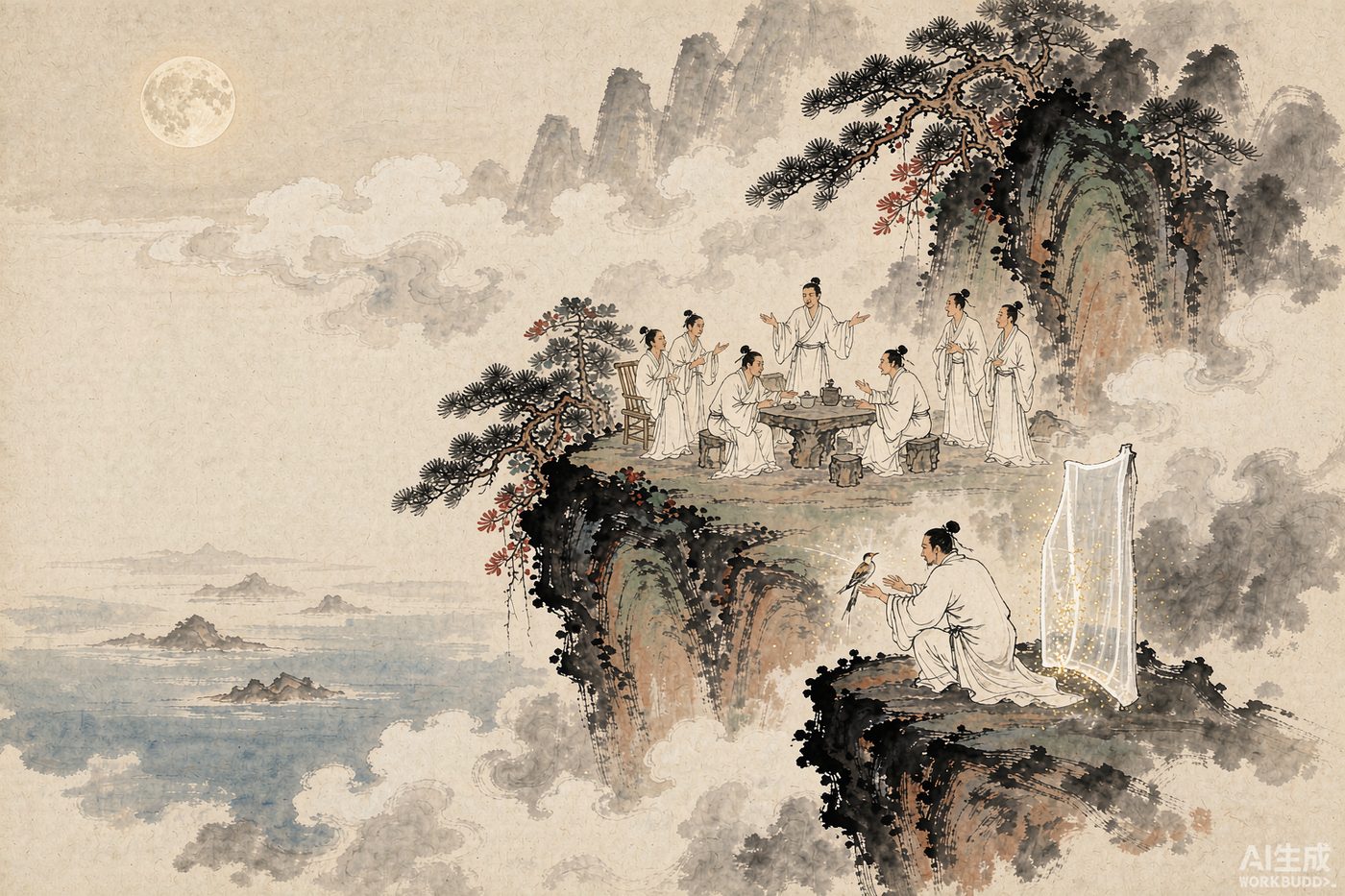
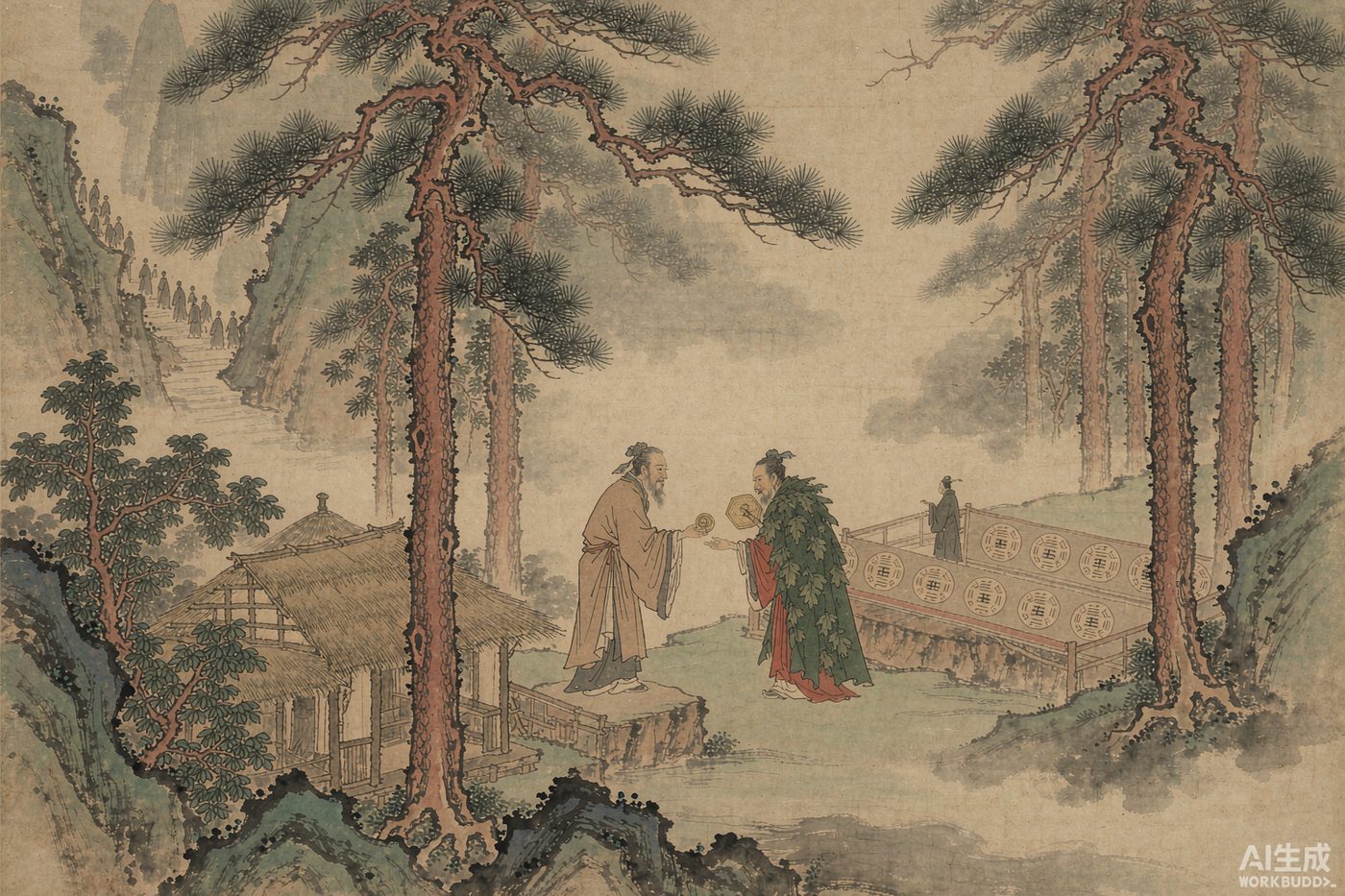
He built a thatched hut south of the Damao peak at Jurong, sent away his wives and concubines entirely, raised an eight-trigram terrace, and worshipped the stars at dawn and dusk. In his leisure he guarded the spirit and looked inward; he was quiet and had few desires. He bought several tens of acres below the mountain to support wandering adepts. Every year in the second month, at the birthday of the Lord of Great Mao, gentry and commoners and Taoists flocked to offer incense; seventeen shrines held rites and not a mat was empty; and north of the mountain, the Yuanfu Wanguan palace had the greatest throng of all.
One day Chen went to pay his respects there and met a stranger — tall and lithe, with green eyes and square pupils, of striking and careless elegance, dressed in a coat of oak leaves, carrying a fan of eight angles — who blocked the road and begged. There was one large Chongning cash in Chen’s box, and he threw it to him. The stranger took it gladly.
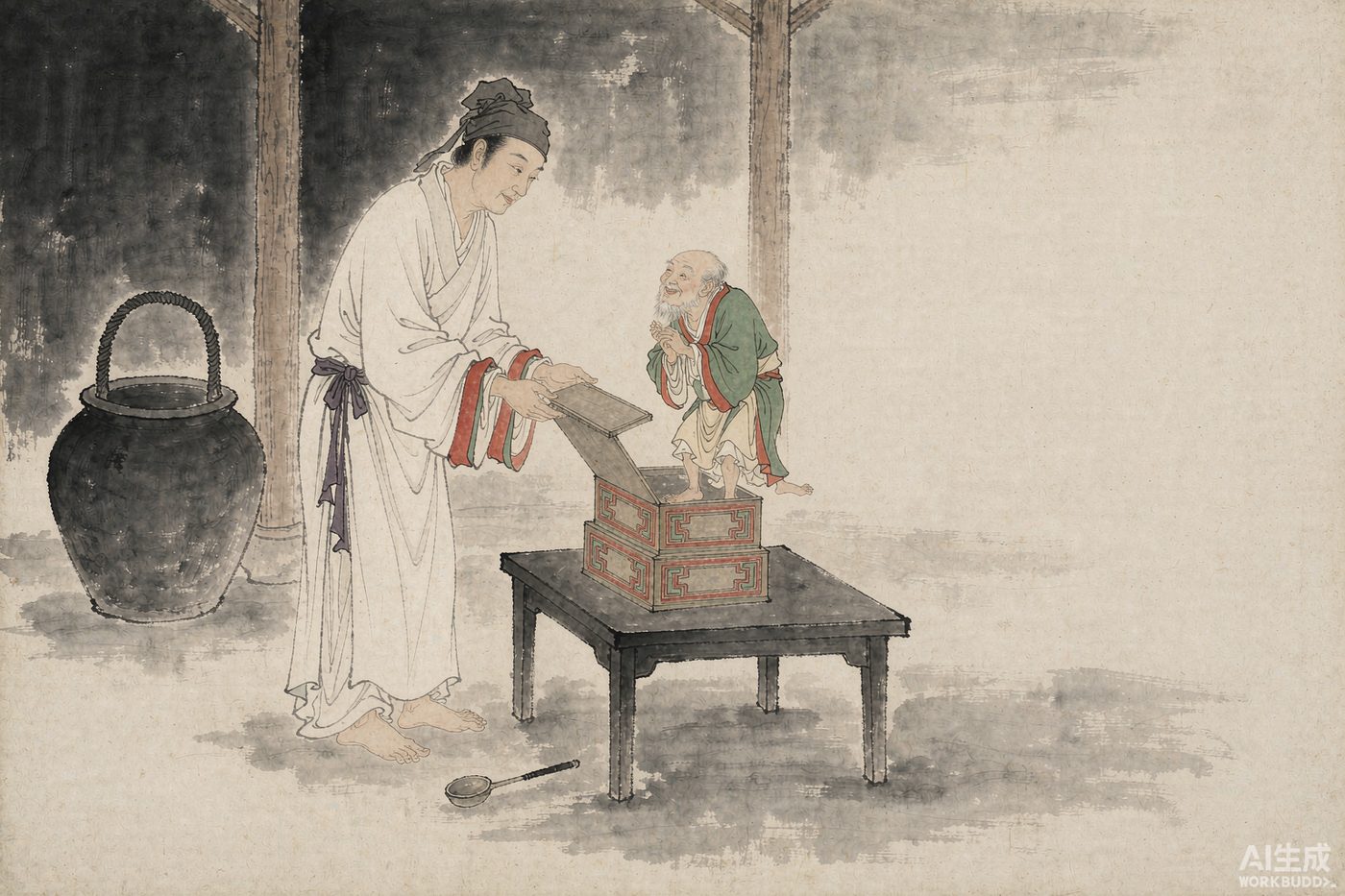
Then he said: “You have given me money. I cannot be without a return.” And he handed the money back to Chen. Chen looked at it in astonishment — it had become two coins. He turned: the stranger was gone. And when he got back to the hut and took them out, they were gold. His wonder grew.
That night the man came to him in a dream.
“I am Lu Dongbin. You have the bearing of an immortal, and so I have made trial of you. Your will to study the Way is keen indeed — but your works that reach other creatures are not yet evident. Exert yourself.”
And he taught him the methods of swallowing breath and refining the true, of flying talismans to cure disease, and made an appointment to meet him again in thirty years.
When Chen woke he gave up meat and wine entirely, and practised the Celestial Heart Orthodox Rite. Strange hauntings and uncanny afflictions were cured on the spot by his talisman-water, and the purifications he performed for others were very often effective. Year followed year in the mountains; his step grew light and swift as though he flew, and Taoists and laymen alike gathered to honour him.
After Qin Hui died, the men in power, being his old friends, urged him to return to public life. At first he held to his resolve and refused; in the end he was overborne by his nephews’ pleading, and took a sinecure at home. Liu Xinshu, commissioner of the Huai and the Yangzi, made him a counsellor; then he was given prefectures once or twice, and restored to his former rank. His heart for the Way grew ever slack, and his arts no longer worked at all.
In his last years he kept concubines again. His back was bent and stooped, his sight and hearing dimmed, and he was nothing like the man he had been.
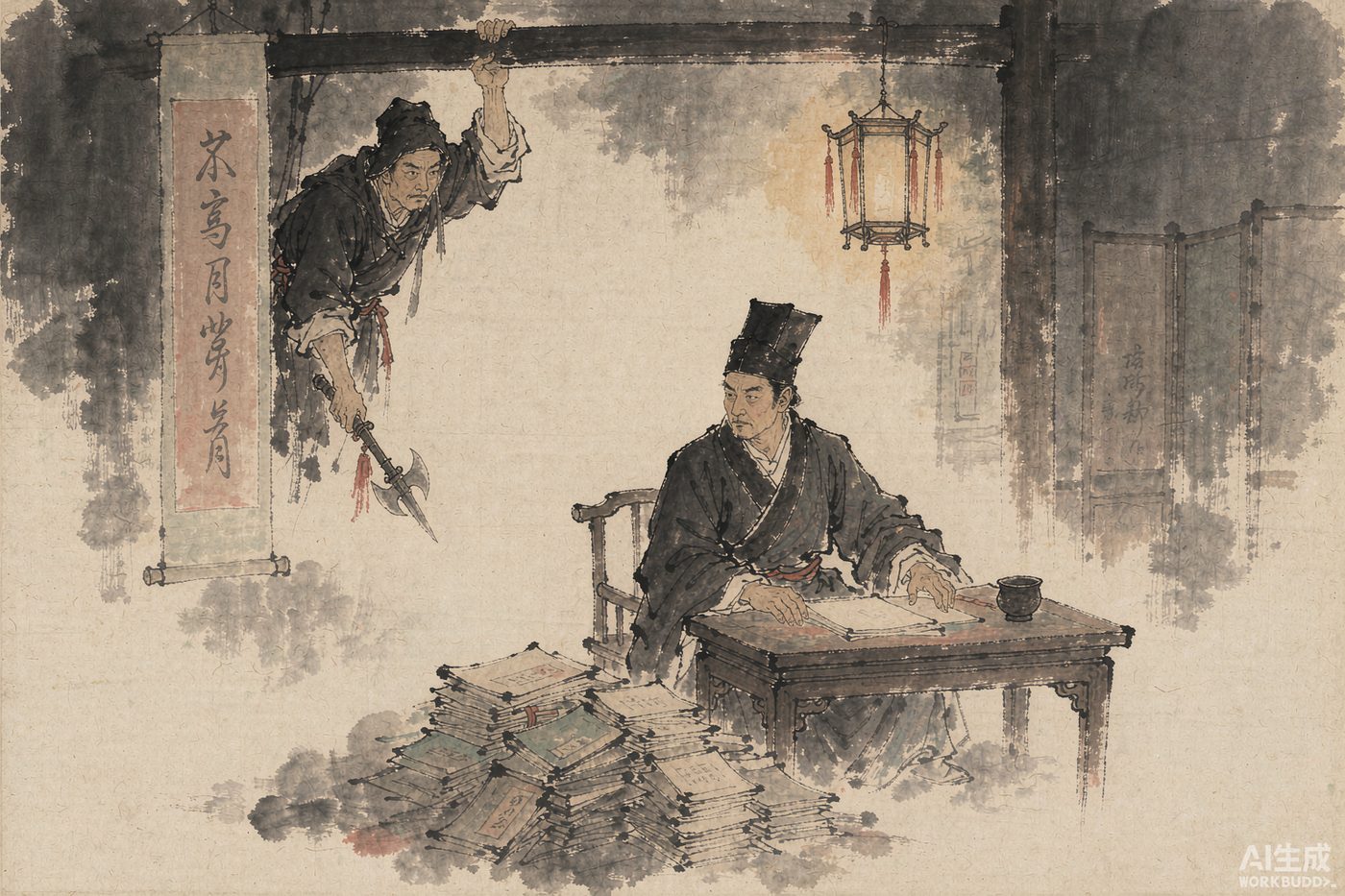
And once, while he was bathing with a brazier of glowing coals beside him, he seemed to see a spirit rebuking him — and he fell into the fire, and died with half his body burned away.
His granddaughter’s husband Li Xun, who was registrar of Jurong at the end of the Shaoxi era, told the story.