Liu Rui of Gu’an sold chickens for a living. He was twenty, and rather good-looking.
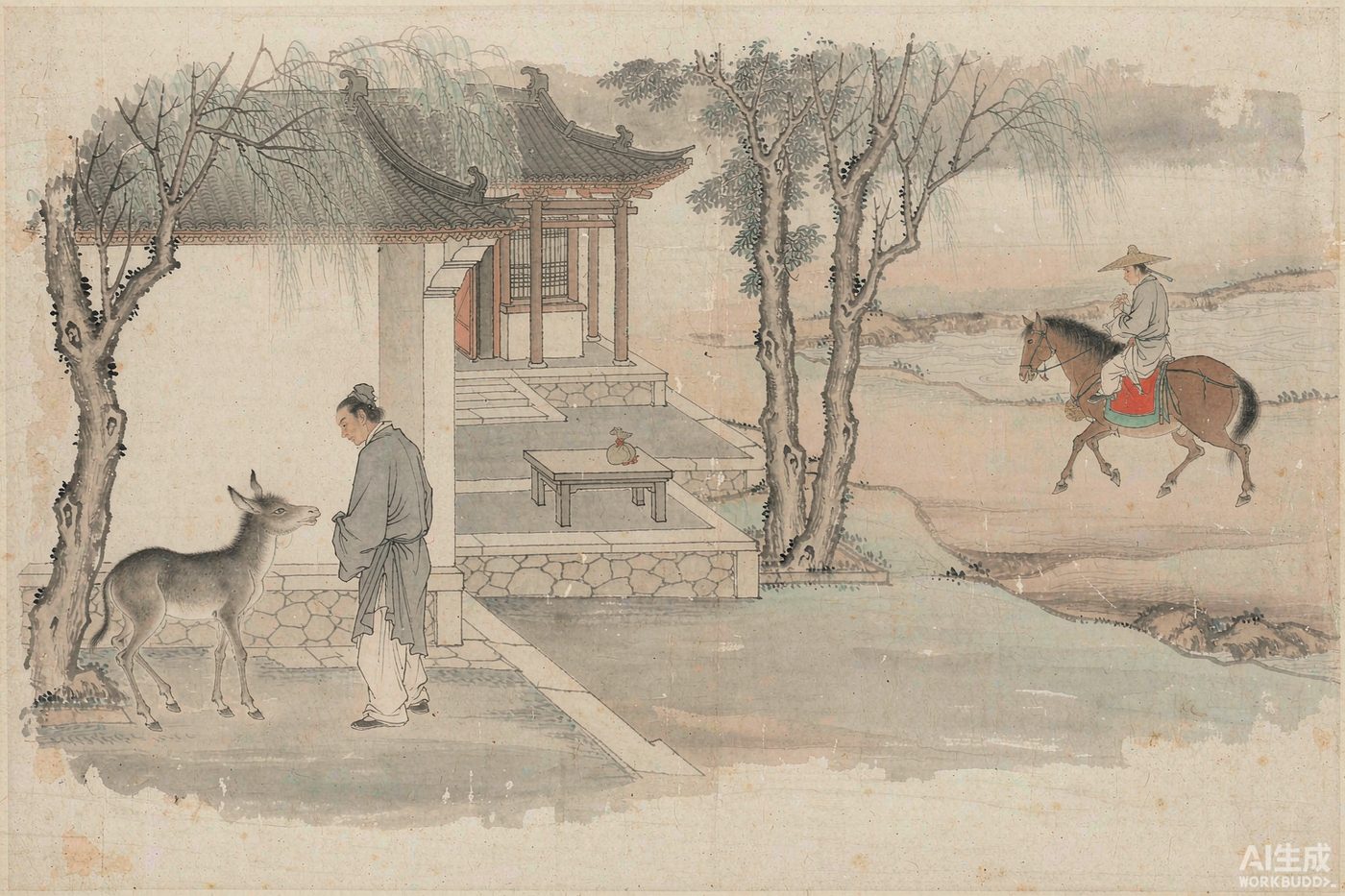
One day he was driving a dozen or so chickens towards town when, near the gate, he saw a woman of unearthly beauty, who called: “Are you come, Liu? Sit on this stone with me. I have something to say. I am an immortal. I am fated for you, which is why I have been sitting here waiting. You need not be afraid — I will not harm you, and I will be good for you. But your former fate only runs three years.
“When you go and sell your chickens you will meet a man who buys the lot. You can clear your pole and come home empty, and you will get eight thousand four hundred cash.”
Liu said yes and went on, thoroughly frightened.
In town the chickens went exactly as she had said. Now he was more alarmed, took her for a demon, and tried to avoid her by going home by a different road. The woman was already sitting in his house, laughing. “Fate was settled long ago. How could you avoid it?”
Liu had no choice, and married her, and she was entirely like a person.
In the morning she said: “This house is too small. I am not used to living in it. I need a few rooms built.”
Liu said: “All I have is the eight thousand from the chickens. How could I build a house?”
“Do not trouble yourself. I know the landlord is not you either — is the land your uncle Liu the Scabby’s?”
“It is.”
“He is in the gambling shed just now and has lost two thousand five hundred cash. Go at once. He is bound to borrow the silver from you. Give him the amount, and you will have the land.”
Liu went to the gambling shed, and there indeed was his uncle, tied to a tree by men dunning him for gambling debts, who was overjoyed to see Liu. “If my nephew will pay my gambling debts, I am willing to give him the house and land by deed.” Liu paid, took the deed, and went home.
The woman added three storeys of lofts beside the house, quite spacious, and in a moment the furniture was complete, though nobody knew where it had come from.
The neighbours heard of it and came begging to see her. Liu asked if they might. “Why not? But there is a Wang the Fifth among them, a thoroughly bad lot. I detest the man. Tell him not to come.” Liu told Wang, and Wang would not have it. “Everyone else is received. Why am I excluded?” And he came in with a rush along with the neighbours.
They all bowed and called her sister-in-law and asked after her, and she returned their courtesies pleasantly. Wang the Fifth laughed. “And how did you find it, sister, last night?”
She cursed him. “I knew long ago how much evil you had stored up. I would not let you come, and you still dare to be so insolent!” Then she shouted: “Bind him!” And Wang’s hands were tied behind his back and he was kneeling. “Slap his face!” And Wang slapped himself without stopping.
The neighbours all knelt and begged for him. “For the neighbours’ sake — throw him out!” Wang went out stumbling and crawling on all fours, and afterwards fled far away and did not dare live in the village again.
She bore Liu a son, clear-eyed and grave and taciturn. The family became moderately well off and Liu no longer sold chickens.
One day she suddenly set out wine, put the child in Liu’s arms, and wept and could not stop. Liu asked in alarm what was wrong.
“Do you not remember what I said about the three years? Three years are up. The number fixed by Heaven does not err by a hair. It cannot be more. But after I go you may marry again. Tell your next wife to look after my son, and understand that I shall often come to see him. I can see people; people cannot see me.”
Liu wept bitterly.
She got up and walked straight out. Liu caught her sleeve. “Since you came, we became moderately well off. Now you are going, how am I to live?”
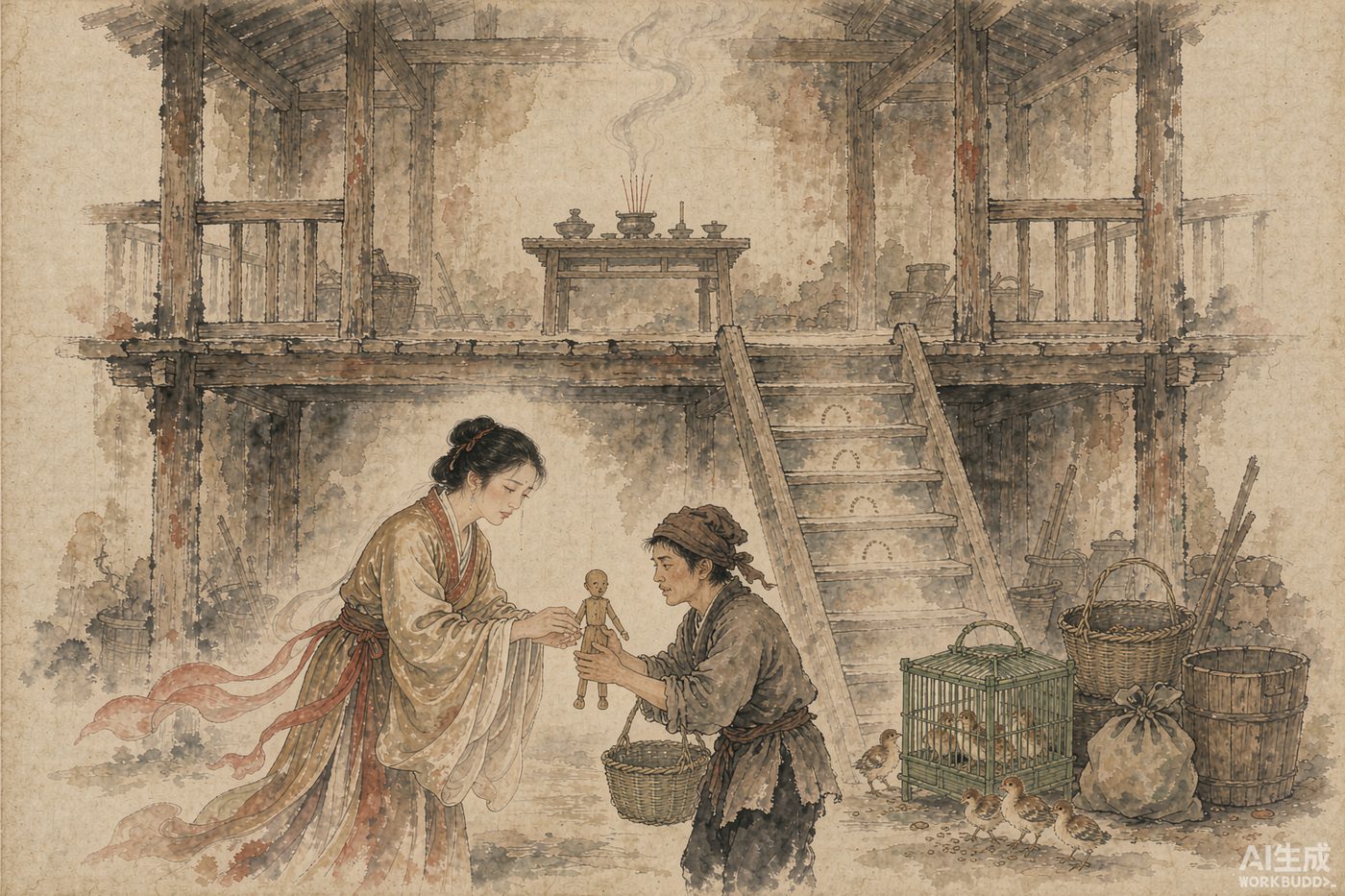
“That is a fair worry. I have thought of it too.” She took from her sleeve a wooden doll, rather over an inch long, and gave it to Liu. “Her name is Zi, her personal name is Buyu — What the Master Did Not Discuss — and she is my maid. She knows the past and the future. Set aside an upper storey for her and worship her, and consult her in all your business.”
Liu said in astonishment: “Zi Buyu — is she not a monster?”
“Yes.”
“Can a monster be worshipped?”
“I am a monster too. How is it that you took me for a wife? You should understand that the kinds of beings are not uniform. There are people who are worse than monsters, and there are monsters who are better than people. You cannot argue from a single case. Only this maid is so ugly that I named her What the Master Did Not Discuss, and will not let her be seen. Worship her in the upper storey, and listen to her voice.”
Liu did as she said, put the doll in the upper storey and burned incense to it. When they called “Lady Zibuyu” she answered at once like an echo. The whole household heard her voice and never saw her form. When food and wine were taken up to the storey, the plates came down empty, and only the sounds of eating and drinking were heard. On the ladder there were footprints, and the little bow-shaped shoes were very small.
When the woman was leaving she slept in Liu’s arms three days and nights. In the morning he reached for her and she was gone, with the windows not opened, and nobody knew by which way she had left.
They worshipped Lady Zibuyu three years. Ask her anything and she answered; ask her for a plan and it profited them.
Then one day the woman came back out of empty air, took Liu by the hand, and said: “Has your family got three thousand ounces of silver?”
“It has.”
“Then your measure of good fortune is full. It is not only I who go. I am taking Lady Zibuyu too.” After that they called up to the storey, and no one answered.
Her son was named Zhao, and entered the county school of Gu’an. Hua Tengxiao, the garrison commander, saw him himself.