Zhao Jing of Hangzhou came of a family originally from Cixi. He had a younger brother of a rigid and severe disposition. After the brother married, there was a clever maid in his wife’s family to whom he had never once shown a pleasant face. Jing had his way with her in secret; his brother’s wife knew nothing of it.
Before long the maid was pregnant. The wife’s father suspected his son-in-law. The maid too put up a false story against him, and the husband could not clear himself; and in his mortification he hanged himself.
Two years later, at Jing’s father’s birthday, with guests and friends assembled for the feast, Jing and the maid suddenly fell to the ground and began to babble, and did not come to themselves until the night had passed.
What they said was this:
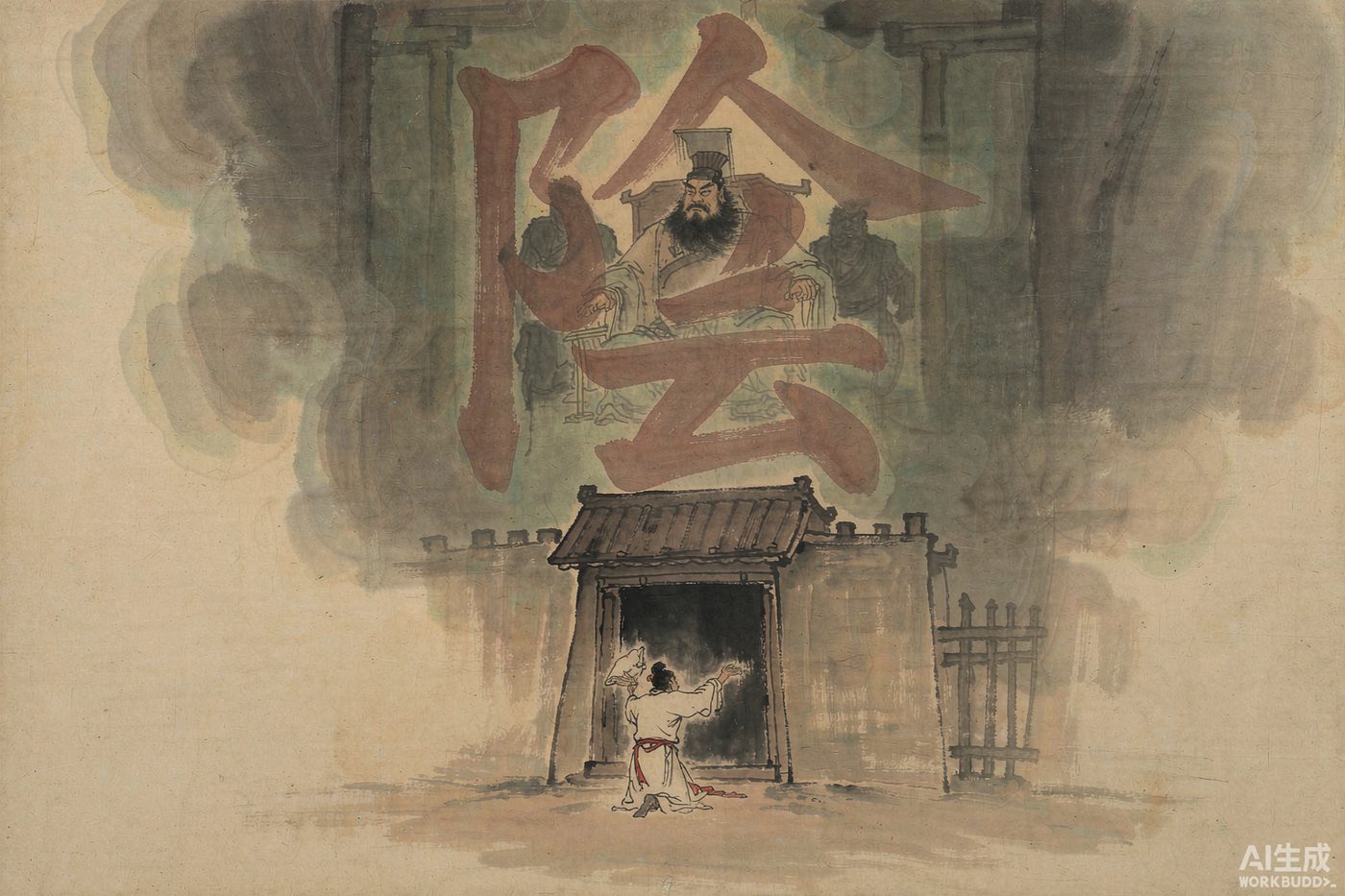
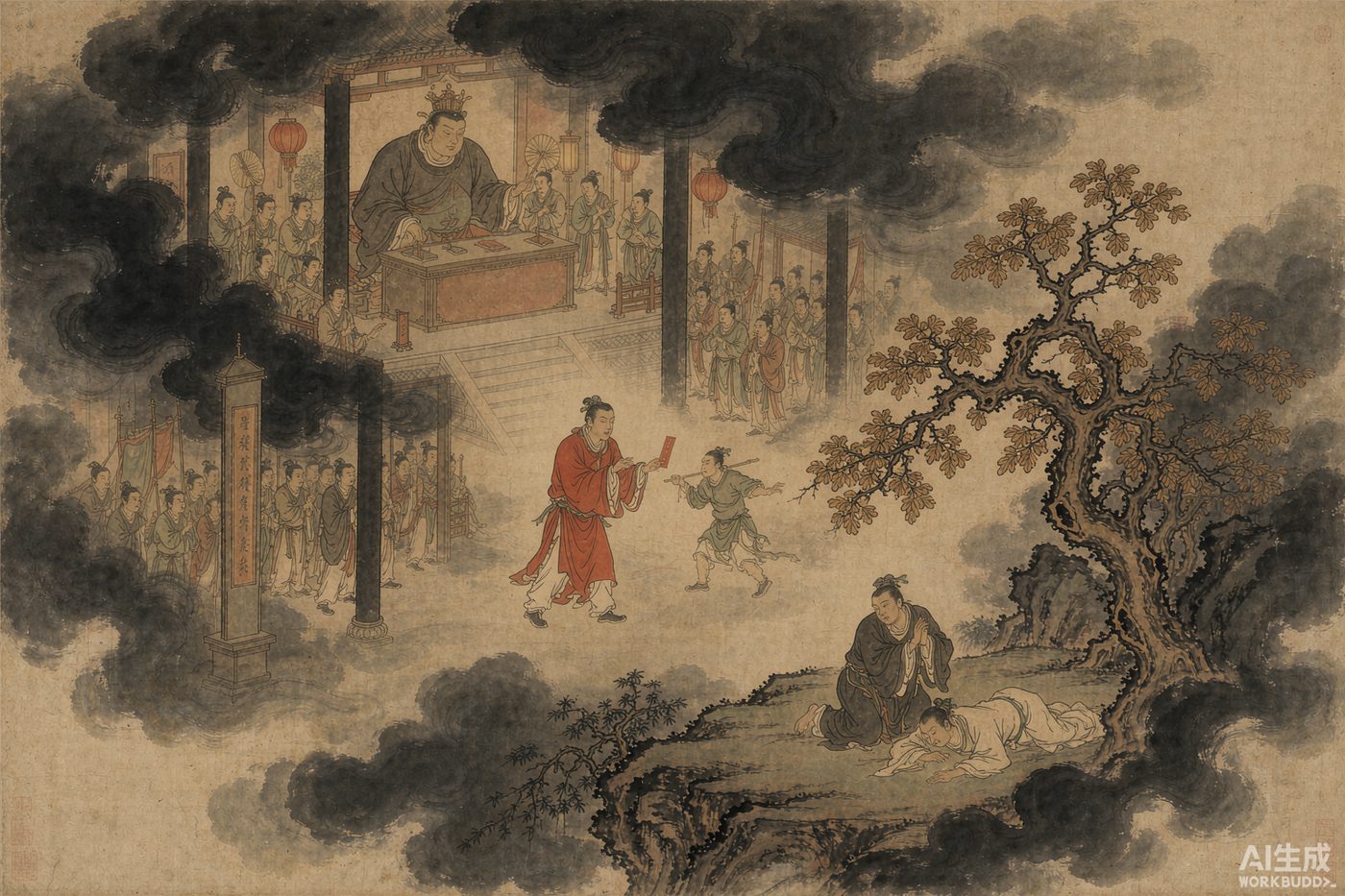
“We were seized and taken to the courts of the dead, and chained outside the great gate. Presently we heard the drums beat and the court go into session; the ghost runners took us by the hair and flung us down at the foot of the steps, and there was one in a crown with hanging beads seated above, and our brother was brought up to give evidence against us.
“Jing and the maid both submitted to the charge. We did not dare argue. The judgement was about to be settled when suddenly the word came: the Minister Zhao has arrived. On the red card was written your kinsman of the same year, Zhao Wenhua, bows his head.
“The officer of the dead straightened his cap and gown and went out to receive him, giving orders as he went: take the prisoners back and chain them where they were.
“I looked up and saw a couplet on one of the pillars:
Man and ghost are but one barrier, and not one joint of it leaks; yin and yang have no two principles, and from reason and number there is no escape.
It was signed: written by Tao Wangling of Kuaiji.
“I was still staring at it when the word came: the Minister is leaving. The officer called Jing and the maid and gave judgement.
“This case should be judged under the statute on causing death through adultery, reduced by three degrees. In view of the Minister’s speaking for you, you are provisionally returned to the light. And besides — the man was a grown male. What was there about an affair with a serving-maid that he could not simply have admitted, that he must go and take his own life? It is thoroughly contemptible. You are therefore spared, and sent back to the world of the living.”
Nobody in the family could think why Zhao Wenhua should have shielded Jing.
One day they asked the elders of the clan about it, and learned that Wenhua was their ancestor in the seventh generation. He had curried favour with the chief minister Yan, and his descendants were ashamed of him, so the name was never spoken — and nobody had known.