Zhang Xiuzhu of Pingjiang was a poor man’s daughter, and the closest friend of Shusun, sister of the successful candidate Gao.
Shusun had been betrothed to a Zhou, and was widowed before the wedding; her brother had her keep her vow at home.
Xiuzhu’s own husband died in a wrestling match. Her father forced her to marry again. After coming home to visit, she went to see Shusun as she always had.
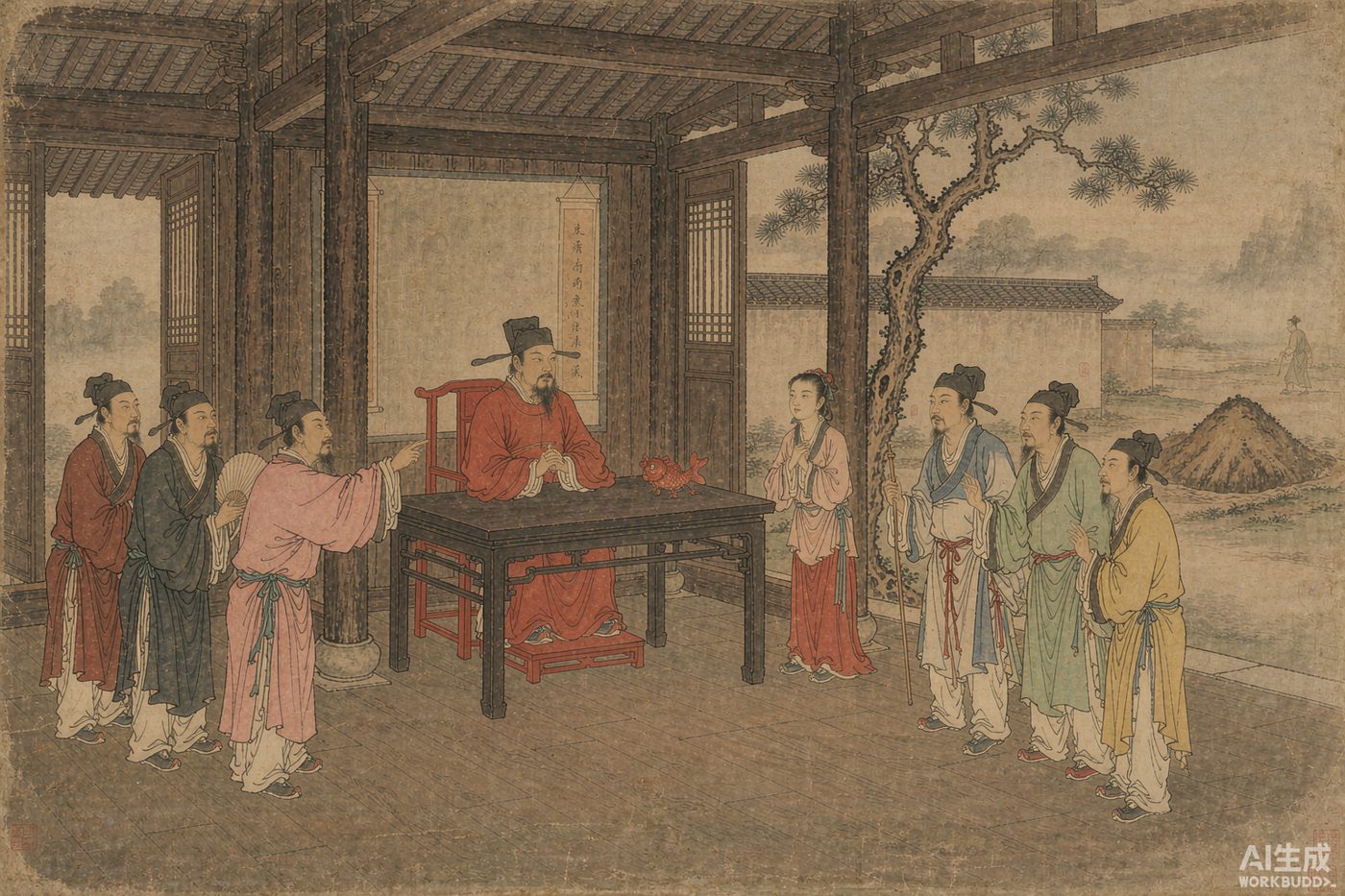
Shusun’s brother was a rigidly upright man. He shouted at her: “A woman who has married twice — do not enter my house. There is a virtuous girl in these women’s rooms. Do not lead her into wrong with wanton ways.”
Xiuzhu wept. “I was born at a thatch gate, but I know the women’s rule. It is only because my aged father has no one to lean on, and I could not keep both filial duty and chastity. That I am not chaste is my fate.”
Gao said: “The pot is already broken, and you still boast it whole. This is what is called putting a bold face on it. What is there in it to value?”
Xiuzhu had no answer. She went out, took to her bed from the anger, and within the month was dead.
Shusun, living in her brother’s house, was unhappy and went about joyless, and day by day grew thinner. When she was near death she saw Xiuzhu standing at the foot of the bed.
Shusun said: “Have you come to lead me away?”
Xiuzhu said: “No. Formerly, when your brother’s hall reproached me, I died of the anger. Now your living soul is already wandering the waste. I want to borrow your honoured body and attach to it, and keep thirty years of bitter widowhood in your place — so that they may know that my unchastity was forced by a father’s command, and not that I wished to be the woman of Hejian.”
Shusun said: “If it is so, then all that my life left unfinished will be held up by you. Though I die, what regret is there?”
At that she died, smiling.
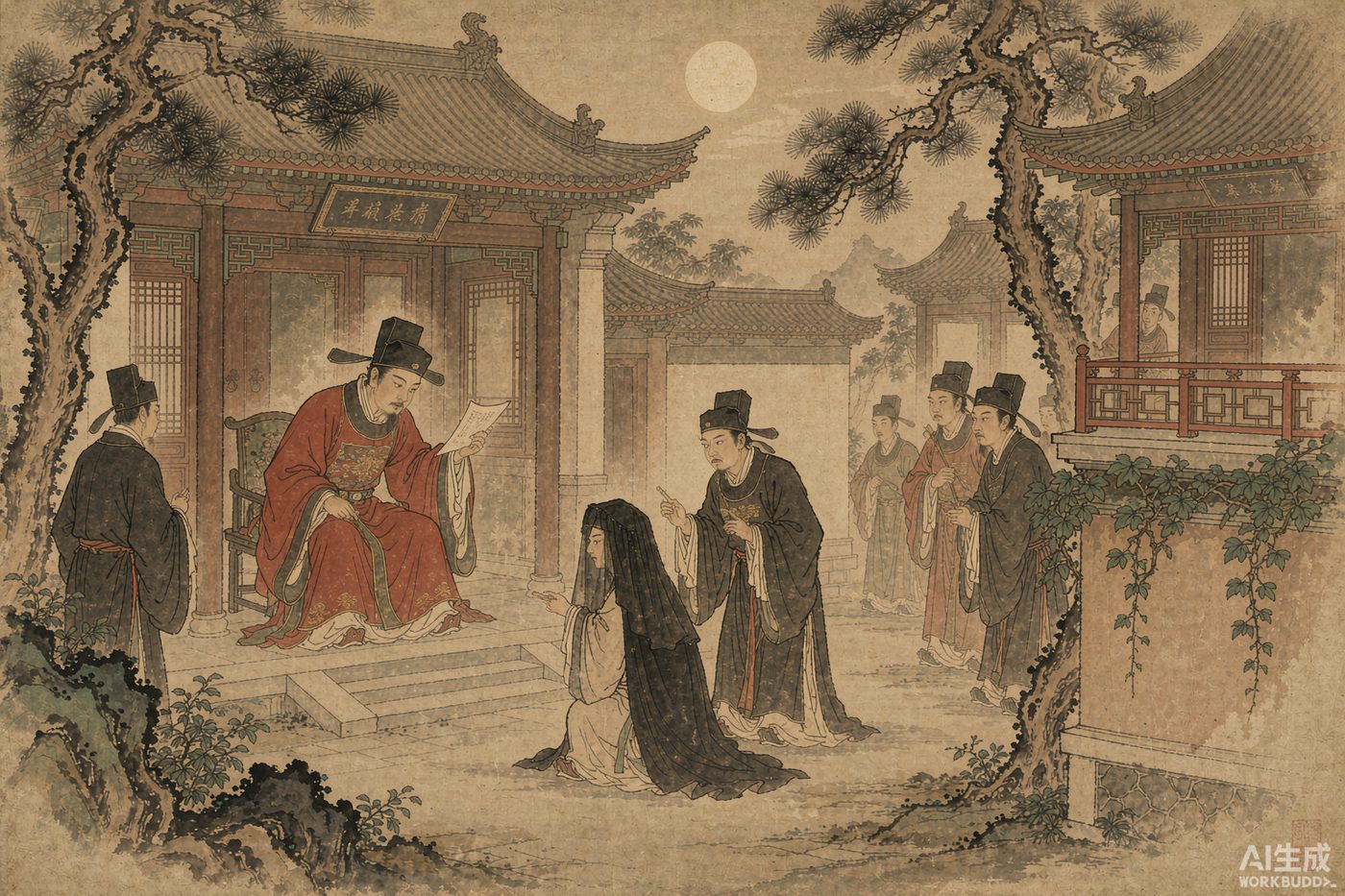
Her brother and the household stood round weeping. The corpse suddenly sat bolt upright and said: “Lay out the mourning for me. Make ready a plain carriage. I am going to the Zhou house to keep my vow.”
Her brother thought it was a wandering soul not yet settled, and pretended to agree. But the girl grew violent with impatience, and he had no choice but to send word to the Zhou, and they came with a chair and carried her over.
From the day she entered the Zhou house her hair hung loose and wet with weeping, and she put on no powder. Once, when she went out with the water-jar, a neighbour’s son admired her beauty; she came home, took a knife to her face, and ruined her looks on the spot.
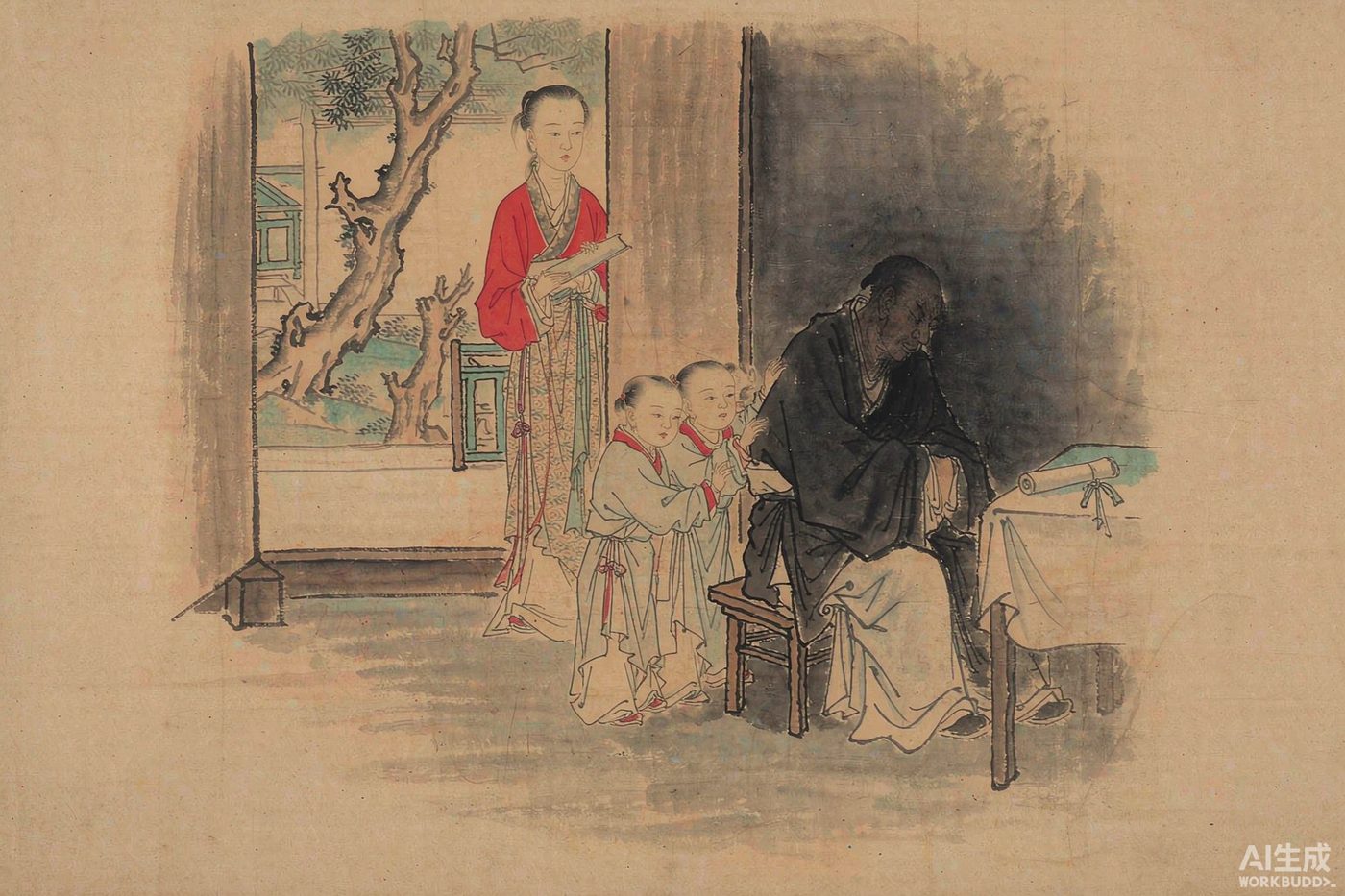
Morning and evening she prepared the washing-water and held the basin and the ewer and served her husband’s parents. By this her name for chastity and filial duty spread through the village.
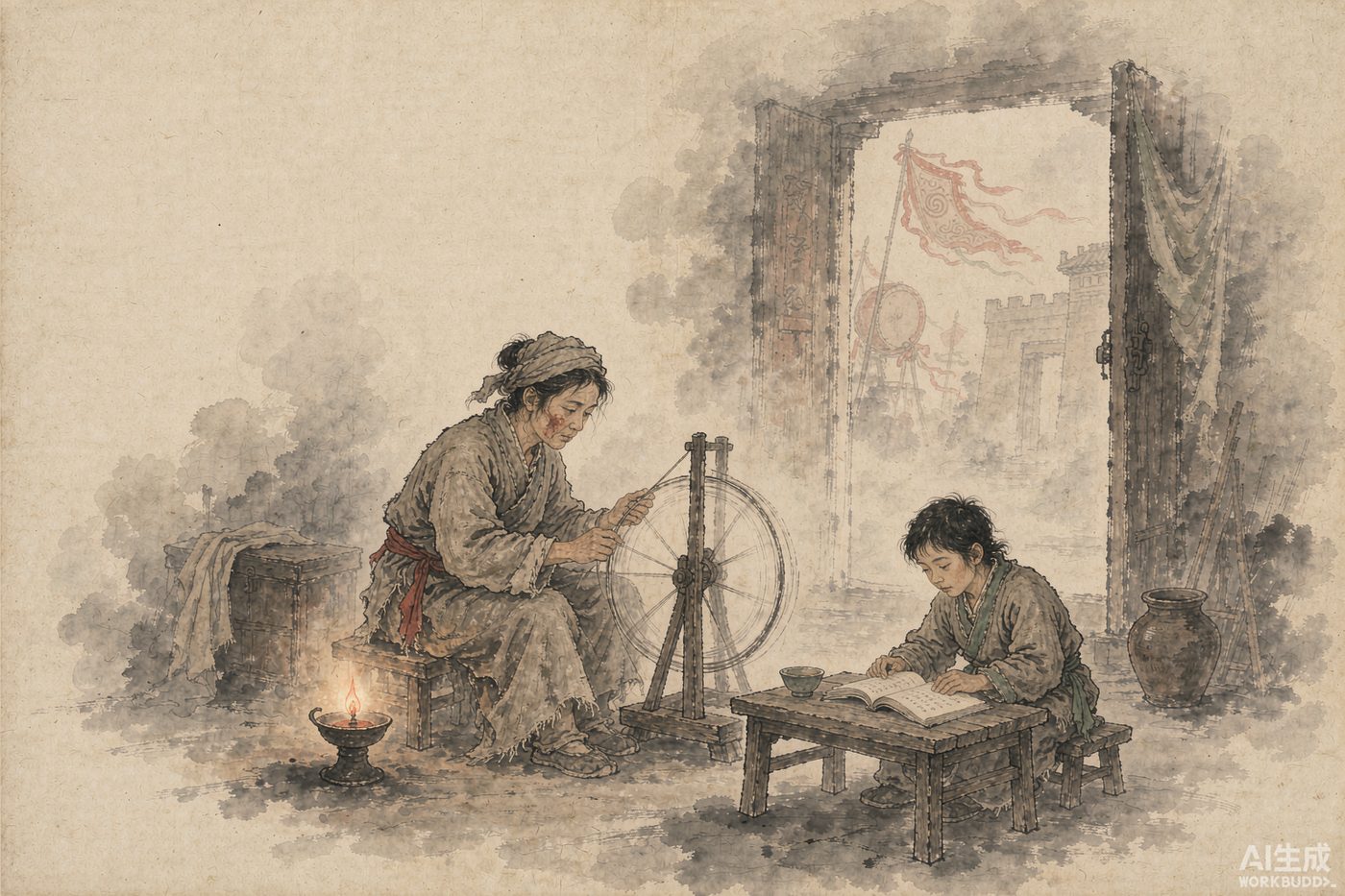
Her father-in-law pitied her, and chose a good boy of the clan to be her heir. The girl drove him at his books, and spun every day to pay for lamp oil. Her heart wore out and her strength was spent, and for thirty years she never once smiled.
Then the boy got into the prefectural school, and petitioned for a commendation of his mother’s chastity.
The girl stopped him urgently. “For a minister to be loyal to the end, for a son to be filial, for a wife to keep chastity — these are all what lies within one’s own part. Why this?”
The prefect heard of it, thought well of her resolve, and sent a plaque with drums and music to the door.
That day the kinsmen of both houses filled the gate with congratulations.
The girl called her brother alone into the inner room, and asked him: “How does a sister’s conduct through her life compare with Zhang’s daughter?”
He said: “That unclean woman. To speak of her defiles the teeth and the cheeks. How could you be measured against her?”
She said: “Ha! Brother truly has no eye for people. You are one who judges a hero by whether he won.”
He said: “What talk is this?”
She said: “Zhang’s daughter was forced by her father’s command, and so could not rest in her chamber. Had she stood where I stood, she too would have ended clean.”
He laughed. “You favour your own favourite, and so you say this. I cannot force myself into agreement.”
She said: “Then by your reasoning, I am the chaste woman and Xiuzhu the unchaste.”
He said: “Yes.”
She said with a long breath: “The pedant’s eye is short; he cannot measure a person. I will tell you the truth. I am Xiuzhu. Your words did not understand me, and I died of the wrong. So I borrowed your sister’s body to make my first resolve clear — that it may be known that a pot broken because there was no help for it was never different from a whole one. From now on, do not say that I put a bold face on it to laugh the thing off.”
Her brother was dumbfounded.
She said: “Formerly, with your sister, I was close as bone and flesh. Now, happily, I have guarded her purity for her and brought no disgrace on the one below ground. The business is finished. I beg to go from here. I wish you to keep it secret always, to make whole the good name of your women’s rooms.”
She finished, composed her face, shut her eyes, and died sitting upright.
Her brother fell face-down and bowed. “I was wrong! I was wrong! I will never again hold this way of judging toward the scholars of the world.”
He came out sighing, and told both clans, and everyone called it a marvel.
Later, when the historian Feng compiled his Biographies of the Chaste and Filial, he still wrote her name as Shusun — following what Xiuzhu had wanted.
The Duo comment: “She let go of her own heaven, and kept for another person a chastity that neither itched nor pained. Is this what is called the plum withering in the peach’s place? Yet in the widow’s curtain she carried out her resolve, so that the dead lived and the living died; on the road of the springs she made her heart clear, so that the white was stained and the stain made white. A gentleman grieves at her resolve, and pardons her heart.”