Stories/ 续子不语/ The Emperor's Flowing Nectar

The Emperor's Flowing Nectar

帝流浆

SourceXu Zibuyu (What the Master Would Not Discuss, Continued)
AuthorYuan Mei
EraQing dynasty · Qianlong–Jiaqing era
Writtenc. 1790
ImmortalFox SpiritTransformation
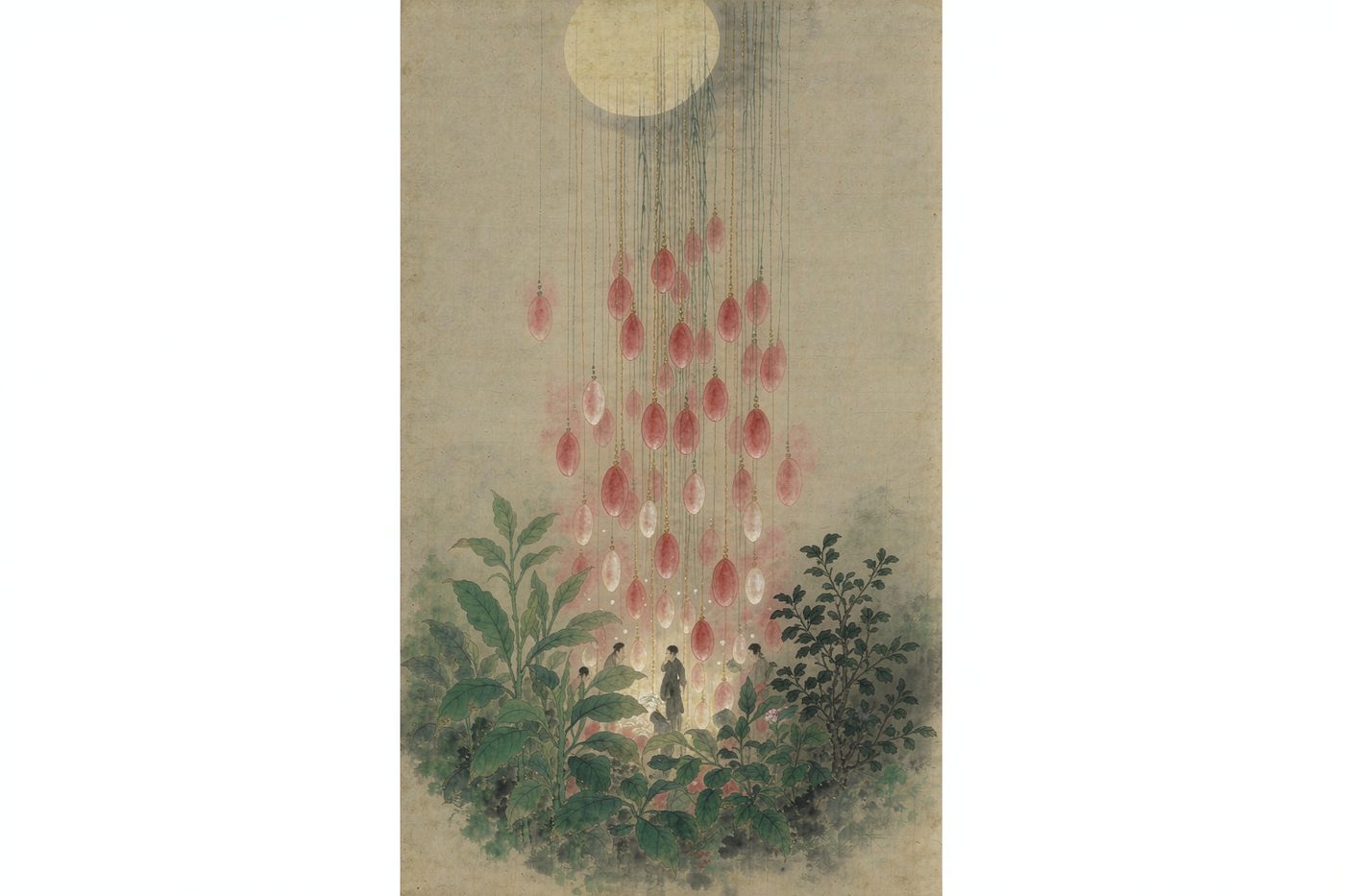
A full moon over a garden with countless olive-shaped droplets strung by golden threads drifting onto glowing herbs and shrubs
Illustration generated by AI, based on the ancient Chinese text.

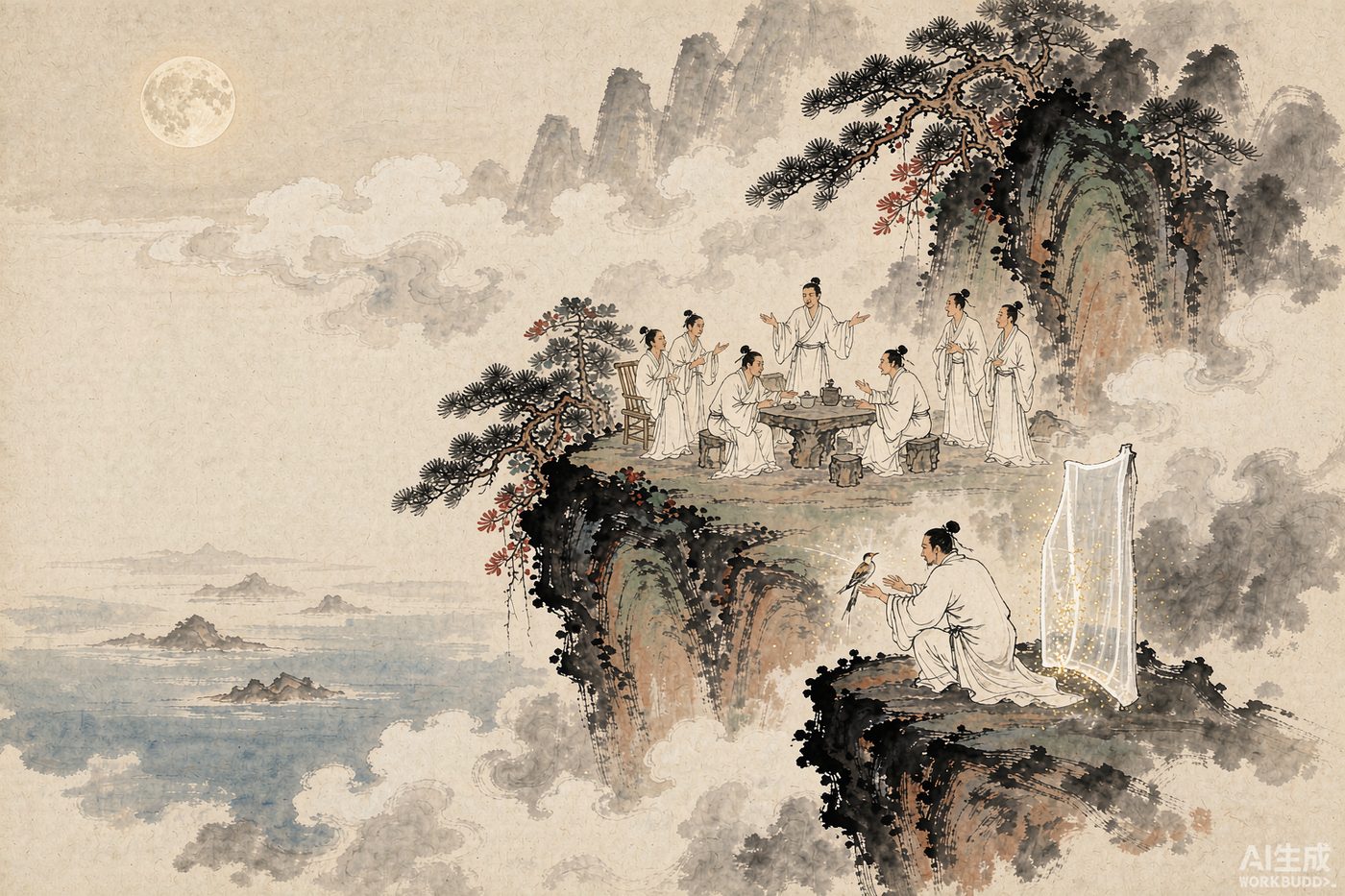
Fang Yanji was skilled at the planchette. Every year his spirit-medium had to be a different immortal, and in the fifth year of the Qianlong reign the spirit who came was a Perfected Man named Chen, courtesy name the Old Bearded One, who liked to talk at length with people.

One day everyone asked him why drowned ghosts always smell of sheep. Chen said:

“When a person’s po enters the earth and touches water it goes rank. The rivers are all mud and filth at the bottom, and a po soaked in it turns to the smell of sheep within seven days. Any river ghost with that smell on it cannot harm people. Only after five years, when the smell has gone, can it do anything.”

Someone asked about people burned to death.

“The burned are incomplete in their five limbs, and must find a companion to merge with before they can take shape. Sometimes two, sometimes three. And the rule for merging is: the old do not merge with the young, and men do not merge with women.”

And then he said the thing worth remembering:

“When a plant or tree becomes a spirit it must receive the essence of the moon. But not on just any night — it must be the moon of a gengshen night.

“Because on the gengshen night the moonlight contains the Emperor’s Flowing Nectar. Its shape is like countless olives, with ten thousand strands of golden thread strung together and hanging down.

“Any plant of the human world that receives its essence can become a spirit. Foxes and ghosts that eat it can manifest their powers.

“The reason is this: plants have a nature but no life. The flowing nectar has a nature, and can supply what is missing — the life. But foxes and ghosts already have a life of their own, so for them eating it is simply of great benefit.”
Original classical Chinese text · 原文

凡草木成妖,必须受月华精气,但非庚申夜月华不可。因庚申夜月华,其中有帝流浆,其形如无数橄榄,万道金丝,累累贯串垂下。人间草木受其精气即能成妖,狐狸鬼魅食之能显神通。以草木有性无命,流浆有性,可以补命;狐狸鬼魅本自有命,故食之大有益也。

From 《帝流浆》, Xu Zibuyu juan 4 — the fullest statement in the collection of what the moon actually carries.

Source. From Xu Zibuyu (What the Master Would Not Discuss, Continued) (续子不语), by Yuan Mei , c. 1790. The original text is in the public domain; this English rendering and the accompanying notes are original work.

Keep Reading

Related Stories

Qing dynasty · late 17th century · 聊斋志异

The Taoist of Mount Lao

崂山道士

A rich young man climbs Mount Lao to learn magic from a Taoist master, endures a month of woodcutting, and comes home certain he has mastered the art of walking through walls.

ImmortalTrickster
Qing dynasty · Qianlong era, c. 1736–1788 · 子不语

The Fox Licentiate

狐生员劝人修仙

A governor-general is reading late when a fox comes in sideways through the window crack, thickens into a scholar, bows — and delivers the most detailed cost-accounting of becoming an immortal anywhere in Chinese fiction.

Fox SpiritImmortalTransformation
Qing dynasty · Qianlong era, c. 1736–1788 · 子不语

Climbing the Sunbeam

鬼攀日线才能托生

Asked how rebirth actually works, a spirit who has been dead four hundred years explains: on the winter solstice a single thread of sunlight falls across the Mountain of Shadows, the frozen dead thaw, and they climb.

GhostUnderworldImmortal